Hand holding USA flag over hungarian flag in Budapest, Hungary.
Image Credit: Shutterstock.

13 myths we still believe about US history

There are quite a few parts of American history that sound believable enough, but once you start looking at the details, you realize they’re far from the truth.

The sinking of the Lusitania caused America to enter World War I

RMS Lusitania coming into port
Image Credit: Wikimedia Commons.

The Lusitania, an ocean liner, went down on May 7, 1915. That much is true. But the United States didn’t declare war until April 1917, nearly two years after the Lusitania sank. It wasn’t a direct cause of the U.S. entering the war.

The sinking killed almost 1,200 people, including 128 Americans. It certainly made many people mad, but Woodrow Wilson was determined to keep us out. It was only after Germany returned to unrestricted submarine warfare and the Zimmermann Telegram became public that we entered the war. 

Ellis Island officials changed immigrants’ names

A window in the Ellis Island Immigrant Hospital
Image Credit: Rhododendrites/Wikimedia Commons.

People love to repeat the same story about Ellis Island all the time. You know, the one that says that officials changed immigrants’ names to make them more American-sounding. It’s just not true. Officials at Ellis Island checked immigrants against passenger lists.

These were created way before the ship even reached New York. It’s not like they were there, trying to rewrite surnames because some of them seemed difficult. Any name changes tended to come later and were, more often than not, the immigrant’s own choice.

Large numbers of immigrants were rejected at Ellis Island

Group of Italian immigrants waiting at Ellis Island by Lewis Hine
Image Credit: Wikimedia Commons.

That’s not all for Ellis Island. There’s a grim image people have of it, one that involves desperate families being turned away in huge numbers. But it’s not accurate. 98 percent of the people processed, in fact, were admitted, meaning only around 2 percent were refused entry.

They were usually refused after medical checks or legal questions, for example. There were also concerns these individuals might need public support. Being detained didn’t always end in deportation, as many were released afterward. That’s not to say it was a stress-free place, though.

Slavery in what became the United States began in 1619

Black slave begging his owner
Image credit: Ash & Pri.

Some people treat the start of American slavery as something that officially began in 1619, nice and cleanly. No way. It’s true that captive Africans arrived in English Virginia that year, yet slavery already existed in Spanish-controlled parts of North America. 

The Spanish had enslaved Africans and Indigenous people in places like Florida. That was before Jamestown’s famous arrival. To put it another way, 1619 was a turning point in the English colonies, but it wasn’t the first time slavery existed in the future United States.

Quilts contained secret directions for the Underground Railroad

Handmade quilt
Image Credit: Shutterstock.

There’s a pretty common myth about the Underground Railroad that just isn’t true. No, slaves didn’t rely on codes in quilts to help them escape their masters. There were no codes telling them when to leave and no codes telling them where to go. There was no such thing.

Historians have never found any evidence of quilt codes existing at the time. It seems that this idea became popular long after slavery. Yes, Harriet Tubman relied on guides, and yes, she relied on disguises, boats, wagons, and trusted contacts. But probably not quilts.

The Statue of Liberty was created to welcome immigrants

Statue Of Liberty At Manhattan In New York United States. Liberty Island. Port Of New York Scene. Statue Of Liberty At New York United States. Boat Sailing Scenery.
Image Credit: Shutterstock.

It’s pretty normal these days to imagine the Statue of Liberty as a giant welcome sign for immigrants. That wasn’t the original pitch, though. The French gave it as a gift to celebrate liberty and the relationship between France and the United States. 

It was later, in 1883, that Emma Lazarus wrote ‘The New Colossus’ while officials were trying to raise money for the pedestal. Her poem wasn’t even put inside the monument until 1903. Immigrants had sailed past it for years already, and the meaning changed. Funny how that happens.

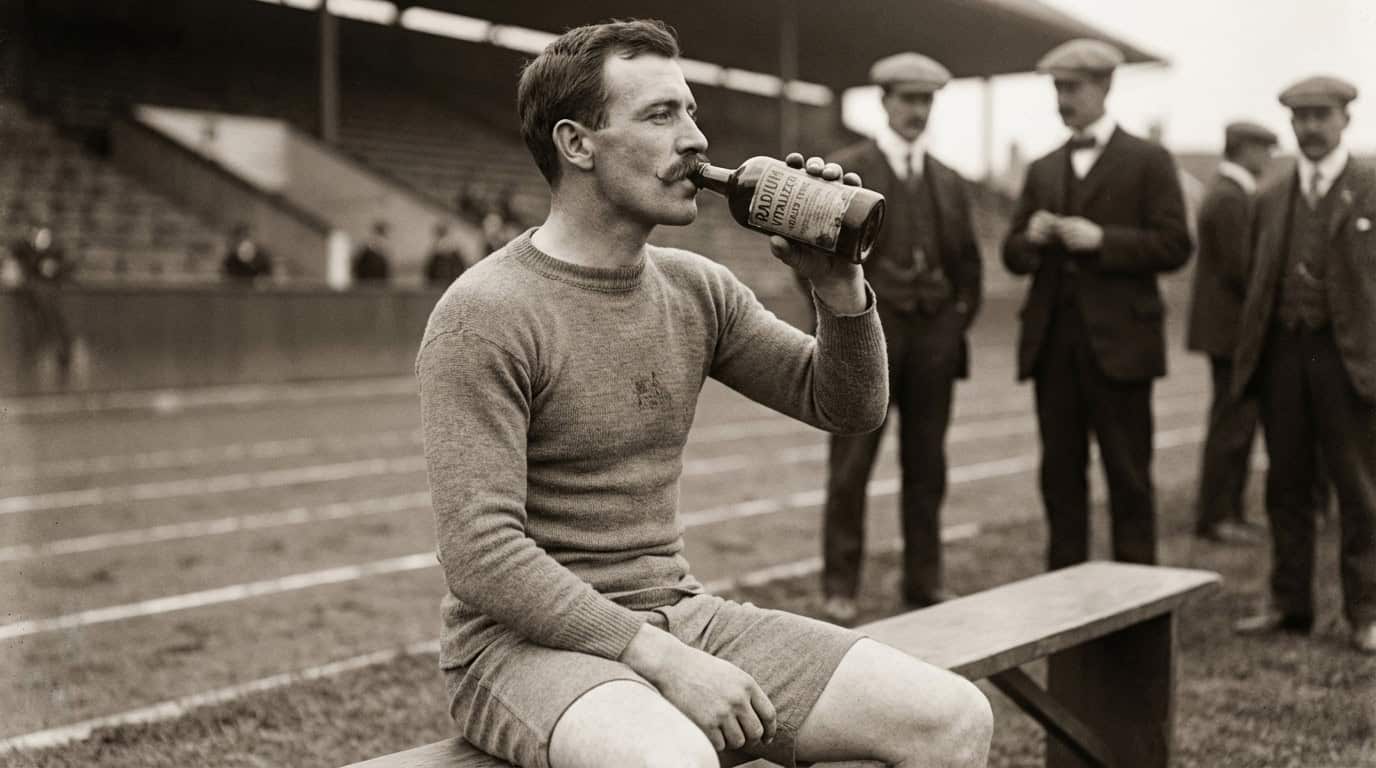
Prohibition made it illegal to drink alcohol

Prohibition. Alcohol was mostly banned, yes, but doctors were legally allowed to prescribe alcohol as a medicine, and pharmacies could fill the prescription. It was usually just whiskey or brandy. Still, people could go to their doctor and get a prescription for alcohol during a time when ordinary alcohol sales were completely banned. What a loophole.
Image Credit: Ash & Pri.

Prohibition sure was a controversial time in America. Except, it wasn’t as controversial as some people seem to think, because, no, it didn’t make drinking alcohol a federal crime. The Eighteenth Amendment and the Volstead Act mainly banned making and selling alcohol.

You couldn’t transport intoxicating drinks, either. Anyone who already owned alcohol was perfectly free to drink it at home. It wasn’t a blanket ban, either, since there were exceptions for medicine and religious ceremonies, for example. Getting new alcohol was the hard part.

Richard Nixon was impeached

Washington, DC. USA. 1990 Former President Richard Milhous Nixon during visit to capital hill
Image Credit: Shutterstock.

Just because people say that Richard Nixon was impeached doesn’t mean that he was. It’s true that the House Judiciary Committee approved articles of impeachment over Watergate. They wanted to impeach him for obstruction of justice, abuse of power, and contempt of Congress. 

Yet it’s also true that the full House never held the vote needed to impeach him. Nixon actually resigned on August 9, 1974, before the House got that far, and Gerald Ford later pardoned him for possible federal crimes. Nixon came close to the line, but never crossed it.

The Pony Express lasted decades and connected the whole country

USA - CIRCA 1960: A postage stamp printed in USA, Pony Express Centennial Issue, shows Pony Express Rider, circa 1960
Image Credit: Shutterstock.

The Pony Express. It’s something that feels like it must have been around forever, but really, it wasn’t. The service ran for only about 18 months, from April 1860 to October 1861. It didn’t even connect the entire country, just a nearly 2,000-mile route between Missouri and California.

The invention of the telegraph made this way of delivering mail pretty outdated. It’s not like it was even that successful, anyway, since the Pony Express was essentially bleeding money for those short 18 months.

Molly Pitcher was one woman

Molly Pitcher engraving
Image Credit: Wikimedia Commons.

Turns out, Molly Pitcher was a bunch of different women, not a single Revolutionary War woman. Historians tend to agree that the name was a general nickname for women carrying water to soldiers and cannon crews. 

Most of Molly Pitcher’s story was probably based on Mary Ludwig Hays, who fought at the Battle of Monmouth. But Pitcher also seems to be based on other women, like Margaret Corbin, who did similar things. Molly Pitcher was more of a symbolic figure than anyone real. 

Washington, D.C., was built in the middle of a swamp

Swampland
Image Credit: Shutterstock.

School tours and political jokes love to act like Washington, D.C. used to be a giant swamp. Doesn’t make it true, though. The area included farms and hills before Europeans came over. It also had dry land, and, sure, some marshy ground near the Potomac and Anacostia rivers.

But it wasn’t mostly a swamp, far from it. It’s thanks to the hot summers and mosquitoes that the swamp story stuck. Muddy streets and poor drainage had their part to play in it, too. There was swampy land. It just wasn’t everything.

The 1950s were a golden age for the average American family

Happy 50s style parents sitting on sofa and looking at adorable children playing at home
Image Credit: Shutterstock.

When you think about the 1950s, you probably imagine TV kitchens and spotless suburban lawns. It was supposedly a time of great success for the average American family. True, many families did gain steady jobs and new homes, but millions still lived in poverty. 

Segregation was also legal across much of the country. Women barely had any rights at home, let alone in the workplace. We also can’t forget how common addiction and abuse were back then. Peace might’ve existed for some households, perhaps, but not for everyone.

The Old West was a place with virtually no government or law

Old rough western cowboy with gray beard and brown hat holding rifle. Low key studio shot.
Image Credit: Shutterstock.

The thing with the Old West is that gunfights make better movies than permit offices. That’s why the boring, yet real, paperwork side of the Old West doesn’t really exist in the movies. Genuine western towns had sheriffs and judges, sure. They also had taxes, councils, and rules.

They weren’t places of total freedom where anything went. Gun laws were more common than you might realize, too, especially in places like Tombstone and Dodge City. Carrying guns in town was restricted over there.

Sources: Please see here for a complete listing of all sources that were consulted in the preparation of this article.

10 smartest first ladies in US history

Cleveland, Ohio, USA, July 18Th, 2016 Presidential candidate Donald Trump and his Melania at the podium during the Republican National Convention in the Quicken Arena.
Image Credit: Shutterstock.

America’s first ladies have often been far more than ceremonial figures, with many bringing exceptional intelligence, education, and influence to the White House.

10 smartest first ladies in US history