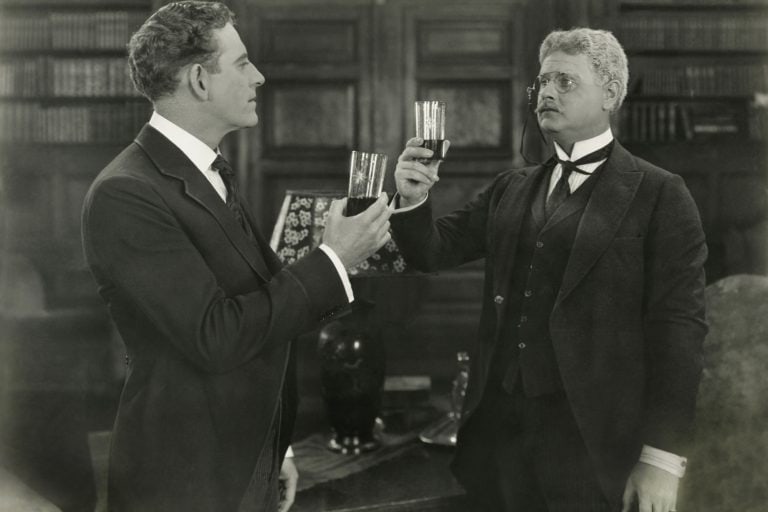

Most people remember the 1920s for flappers & speakeasies. But there was something even stranger going on. Even though the U.S. outlawed alcohol almost everywhere, doctors could still hand out prescriptions for whiskey. Yes, really.
Why were they allowed to do this & who could get one of these prescriptions? Let’s find out.
Featured Image Credit: Shutterstock.
What’s coming up
You’ll learn about:
- When the nationwide ban actually began & what the law said
- How the prescription system was set up
- The rule changes that tightened the loopholes
- How it all wound down in 1933
The nationwide ban

In January 1919, the Eighteenth Amendment was ratified & kicked in a year later on January 17, 1920. This date marked the start of nationwide enforcement against alcohol. To handle the details, Congress had already passed the National Prohibition Act, which was better known as the Volstead Act, in October 1919.
The law ruled that anything over 0.5% alcohol was officially considered “intoxicating liquor.” As such, beer, wine & spirits were all off-limits for anyone who wanted them for a drink.
However, the law didn’t completely ban alcohol because doctors with federal permits were allowed to prescribe alcohol. There were specific guidelines they had to follow, though, including:
- Keeping records of every prescription they wrote
- Staying within specific limits on how much they prescribe
- Sending patients to licensed pharmacists, who also had to log every fill
Medicines already listed in the United States Pharmacopeia or National Formulary didn’t even count against the ban, just as long as they weren’t fit for drinking. This allowed cough syrups & tonics with alcohol to still circulate.
How a “booze prescription” actually worked

Anyone who wanted whiskey “for their health” would go to a doctor with a permit. They’d write up the prescription on Form 1403: Prescription Blank, National Prohibition Act. These forms were government-issued & tracked.
As you can probably imagine, the rules were specific about this. Doctors could only prescribe one pint of spirits to the same person in ten days & they weren’t allowed to do refills. Pharmacies also had to record every transaction.
Interestingly, whiskey was sometimes called spiritus frumenti, according to some of the surviving forms. Form 1403 looked just like a standard prescription. Except that instead of antibiotics, it prescribed whiskey.
What doctors actually prescribed whiskey for

One of the most common whiskey prescriptions was for fighting off respiratory problems. Yes, doctors gave out whiskey for pneumonia & tuberculosis, even bad colds, as well as for people who had the flu. This was a time when the 1918 pandemic was still fresh in everyone’s memory.
People believed that having a little drink would ease their breathing & calm their coughing fits. They also thought it’d give patients some comfort while they recovered.
But that’s not all. Circulation & heart troubles also brought people into doctors’ offices, including high blood pressure. Some doctors thought whiskey acted as a stimulant or relaxant, depending on the dose. There were also people prescribed whiskey for depression as a “mood booster” when other treatments weren’t available.
Medicine vs. alcohol

In 1916, the United States Pharmacopeia removed whiskey & brandy from its list of approved medicines. The American Medical Association agreed with this a year later. They passed a resolution saying alcohol had no solid medical basis & shouldn’t really be used that way.
Ironically, though, when Prohibition began, the federal law still allowed doctors to prescribe it. It didn’t matter that science disagreed with using alcohol as medicine because the paperwork said something else entirely.
The alcohol didn’t stay wide open forever, though. On November 23, 1921, Congress passed the Willis-Campbell Act as a supplement to the Volstead Act, which completely outlawed beer prescriptions.
It also capped 100 prescription blanks every 90 days for each doctor unless there were special exceptions. The Willis-Campbell Act kept the one-pint limit in place while also adding combined caps when doctors prescribed wine & spirits together.
Essentially, Congress wanted to shut down anyone treating a prescription pad like a liquor license.
What the Supreme Court said
Doctors & brewers pushed back against the law, but the courts didn’t budge. This included two notable cases:
- James Everard’s Breweries v. Day (1924): the Supreme Court ruled that Congress had every right to ban medicinal beer.
- Lambert v. Yellowley (1926): the Court upheld both the pint-per-ten-days rule & the 100-prescriptions limit.
Sure, it was an unusual system. Yet it was entirely constitutional.
The end of an era

Just before Prohibition ended, Congress changed the paperwork system. The Medicinal Liquor Prescriptions Act of March 31, 1933, replaced those old blanks with special liquor revenue stamps, although by then, the entire Prohibition structure was on its way out.
On December 5, 1933, the Twenty-First Amendment was ratified. This repealed national Prohibition entirely, which also meant there was no more prescription whiskey. At least, not officially.
Sources: Please see here for a complete listing of all sources that were consulted in the preparation of this article.
Like our content? Be sure to follow us.


