

Looking for love hundreds of years before Tinder meant rigid rules, chaperones and some seriously weird customs.
The parlor courting stick
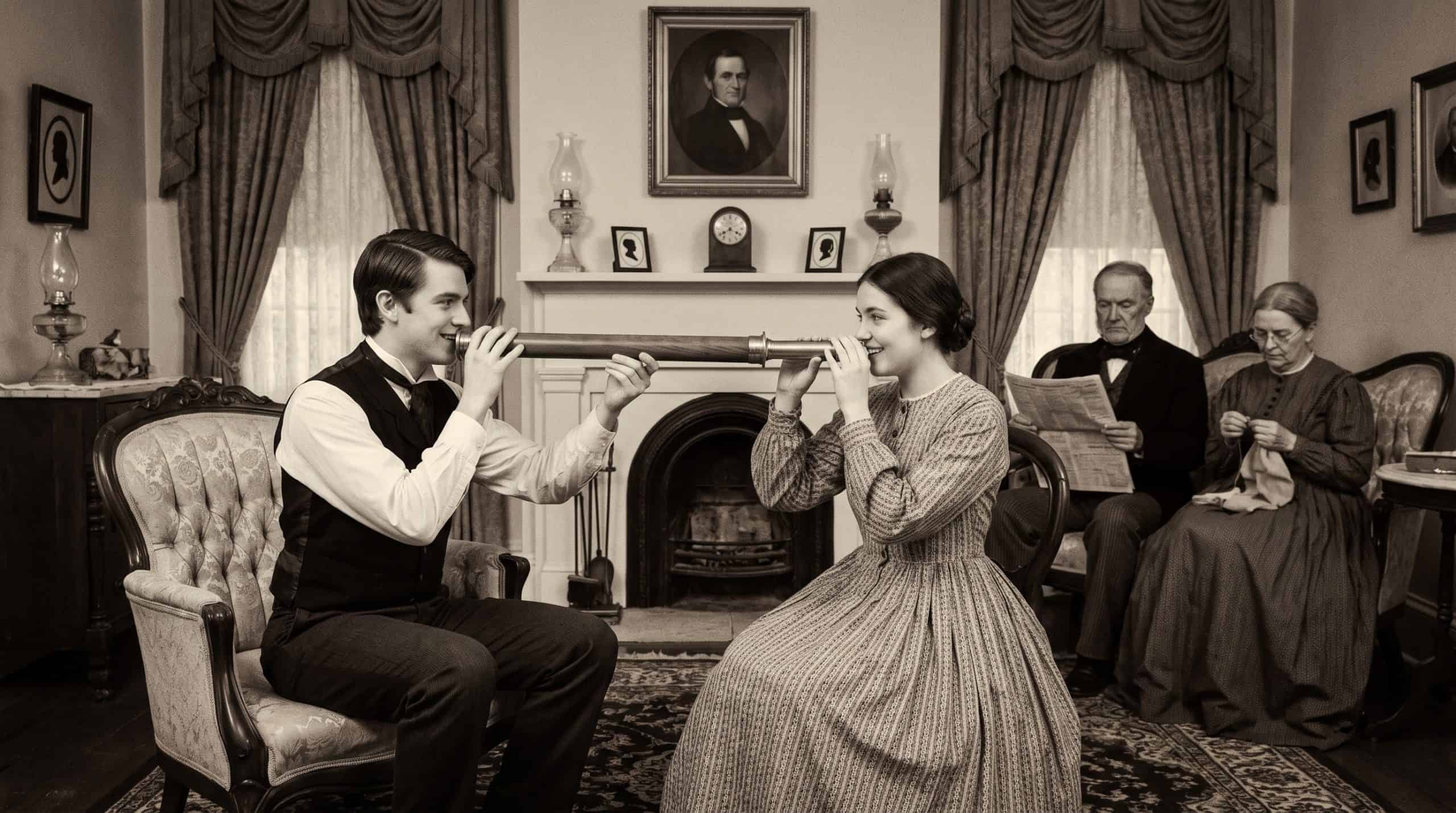
The parents of couples in 19th-century New England were almost never convinced to leave their children alone in a room together. To help lovers speak privately in a room filled with overbearing parents, many families offered adolescents something called a “courting stick.”
Essentially a hollow six-to eight-foot-long wooden pipe with two mouthpieces and fitted earpieces on each end, this bewildering device allowed partners to whisper freely into one another’s ears by literally bending down toward each other.
A young man would sit at one end of the parlor while his sweetheart sat at the other end. No other person in the room could hear a word being spoken, allowing the couple to make plans or simply flirt like crazy.
Secret “lover’s eye” miniatures
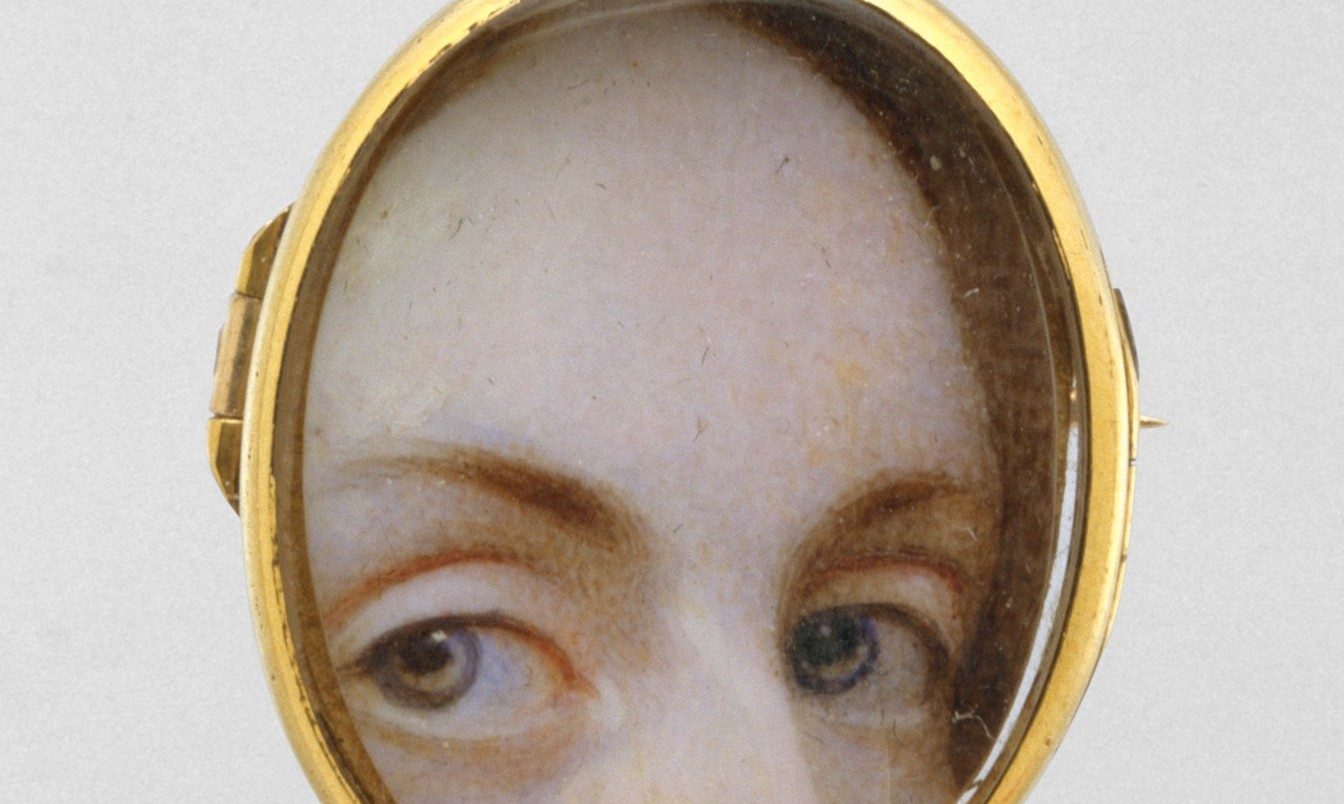
When gentlemen in Britain or America wished to carry a portrait of their romantic interest discreetly while still courting them, they could commission a “Lover’s Eye.”
These were watercolor portraits on ivory, depicting just the subject’s eye, brow, and surrounding skin
Inserted into lockets, rings, or pocket watch cases, these miniature portraits were kept secret enough that if an interfering parent or gossiping friend were to glance at the jewelry they would have no clue whose face was concealed inside.
Clandestine flirtation cards
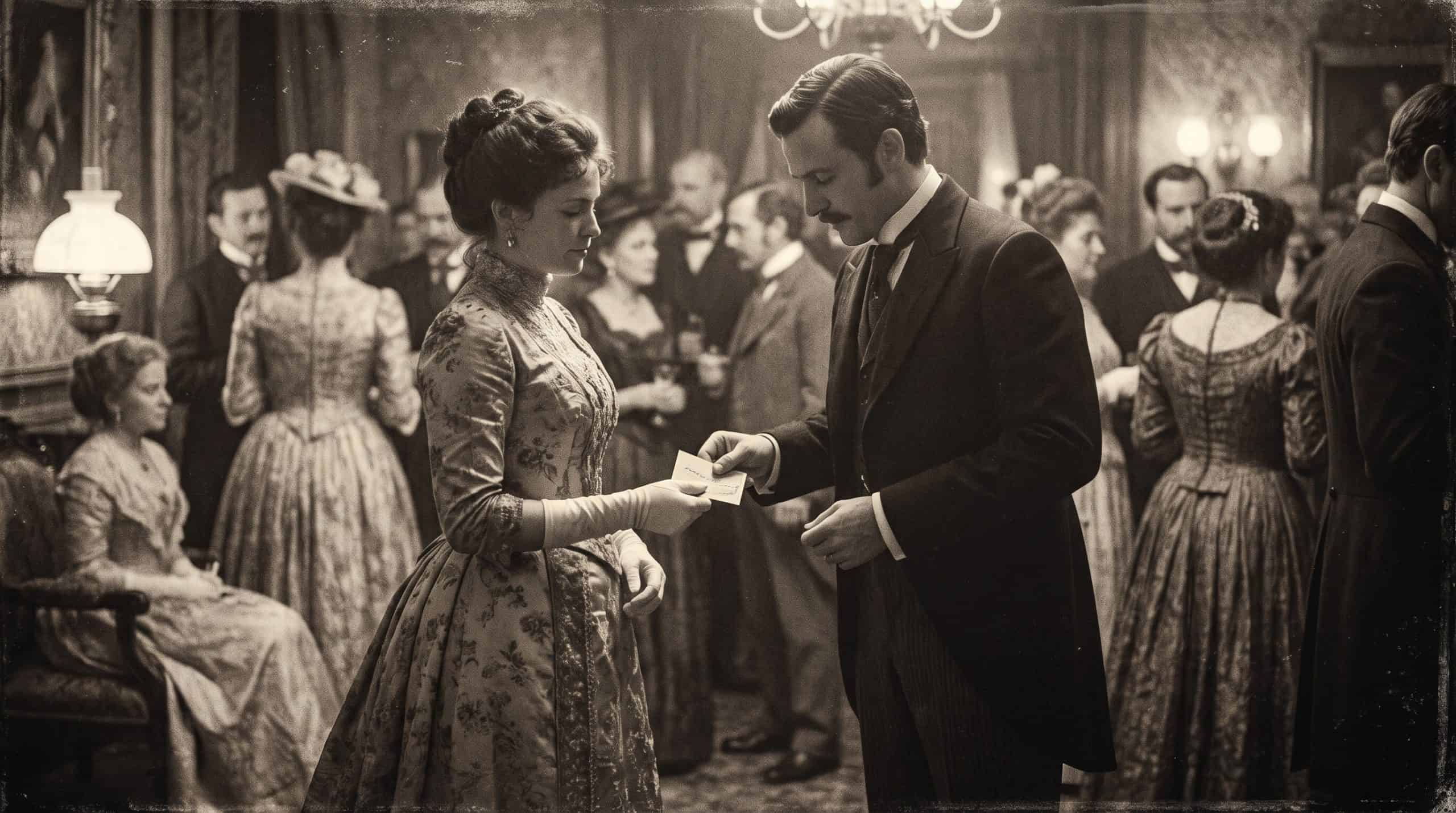
In the late 1800s, men throughout America used inexpensive, small visiting or acquaintance cards also called escort cards.
Instead of typical business cards, fellows would use these little folded notes, packed with flirty lines, brain teasers, or rather direct phrases, to subtly kick off a chat with a lady like “May I C. U. Home?” or “Not Married and Looking.”
During dances or busy social gatherings a gentleman could slip one of these flirtation cards into a woman’s hand or glove.
Apple sweating in the Alps

In the 1800s, folks in rural Austria and alpine Europe observed a rather queasy courtship custom at their village dances.
Apfelschenkel was a ritual where a woman hid a halved apple up under her arm pit all night while she danced. By dawn, the flesh of the apple would absorb her sweat and smell like her body.
At daybreak she offered the sweaty apple slice to her favorite beau. If he liked her too, he proved his affection by eating the apple slice in front of her.
Whittling Welsh love spoons
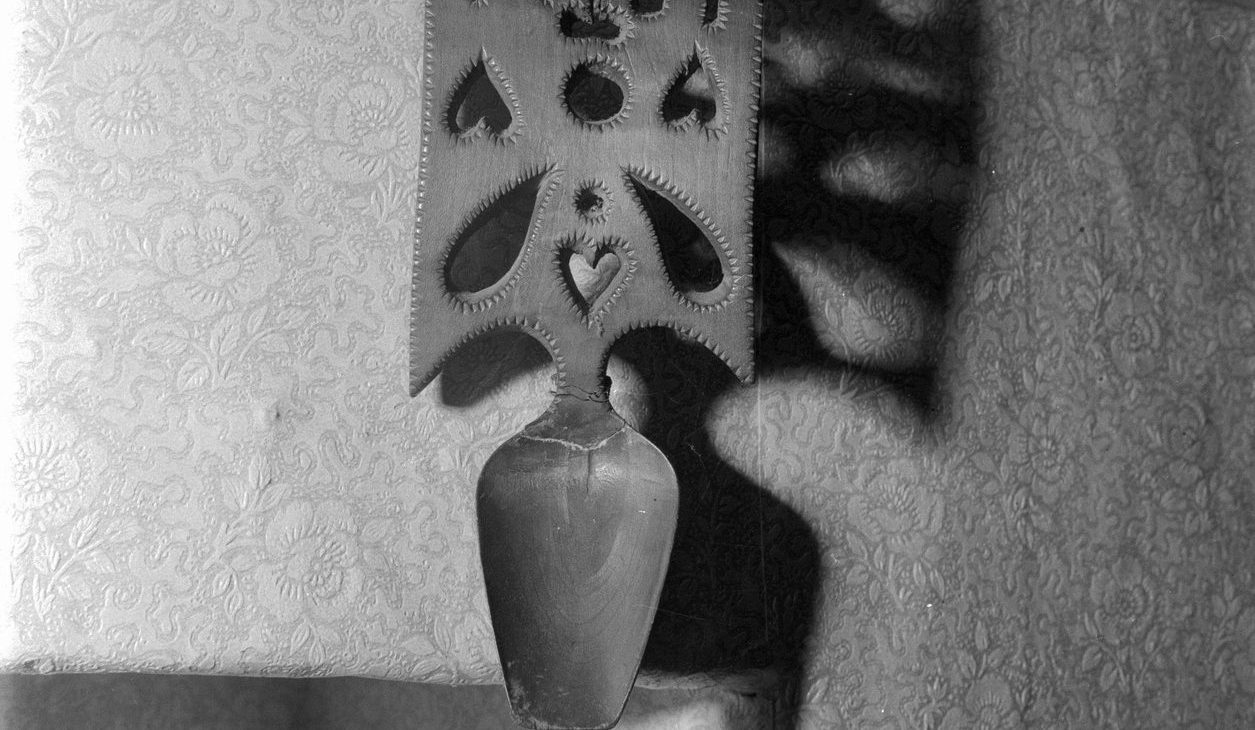
A Welshman didn’t simply ask a woman out on a date. It could take him many months to carefully carve a single piece of wood into a complex, purely ornamental spoon.
An unbreakable bond was symbolized by carving chains, and carving keys conveyed the message, “You possess the key to my heart.” Carving hollowed cages with loose wooden balls inside represented the man’s hopes for the number of offspring he would have with her.
He would give the spoon to his intended beloved to show he was serious, that he wanted to marry her and build a life with her. He also needed to show that he had the patience and skill to provide for her.
Father-controlled courting candles
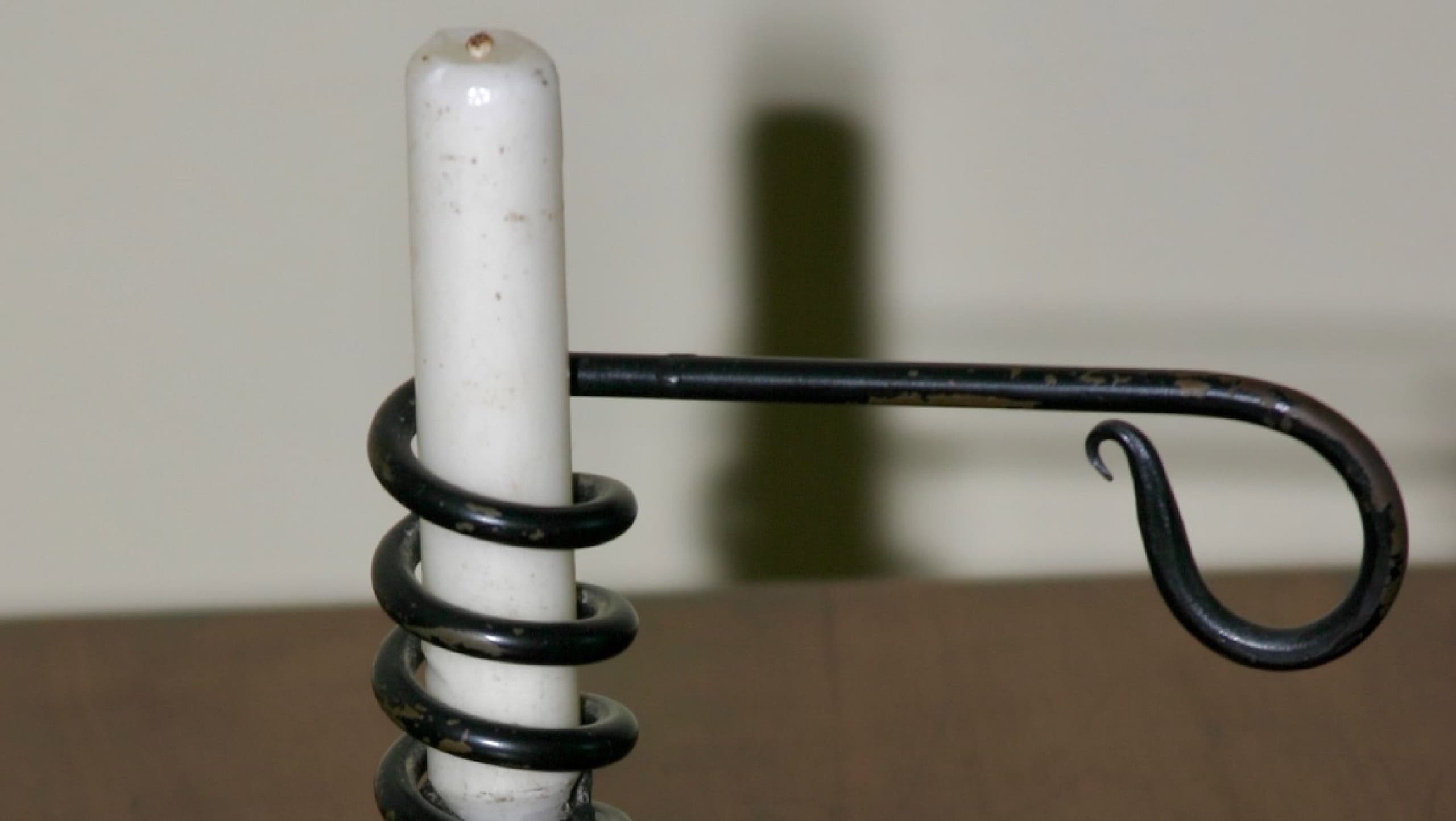
Dating in rural America used to be regulated by a handy bit of hardware known as a courting candle. Made from wrought iron, it was fashioned into a tube that resembled an extra-stiff spring.
When a young man wanted to take his sweetheart out, how long he could stay was based on how tall the candle was sitting on a metal shelf with vertical grooves. Parents could rotate the shelf up and down.
If the father thought well of the young man’s intentions, he’d lower the shelf, giving the couple the full duration the candle permitted. But should he find the young man undesirable, the father would raise the candle as close to the flame as possible.
When the candle burned down, their date was over.
Window Climbing (Fensterln)
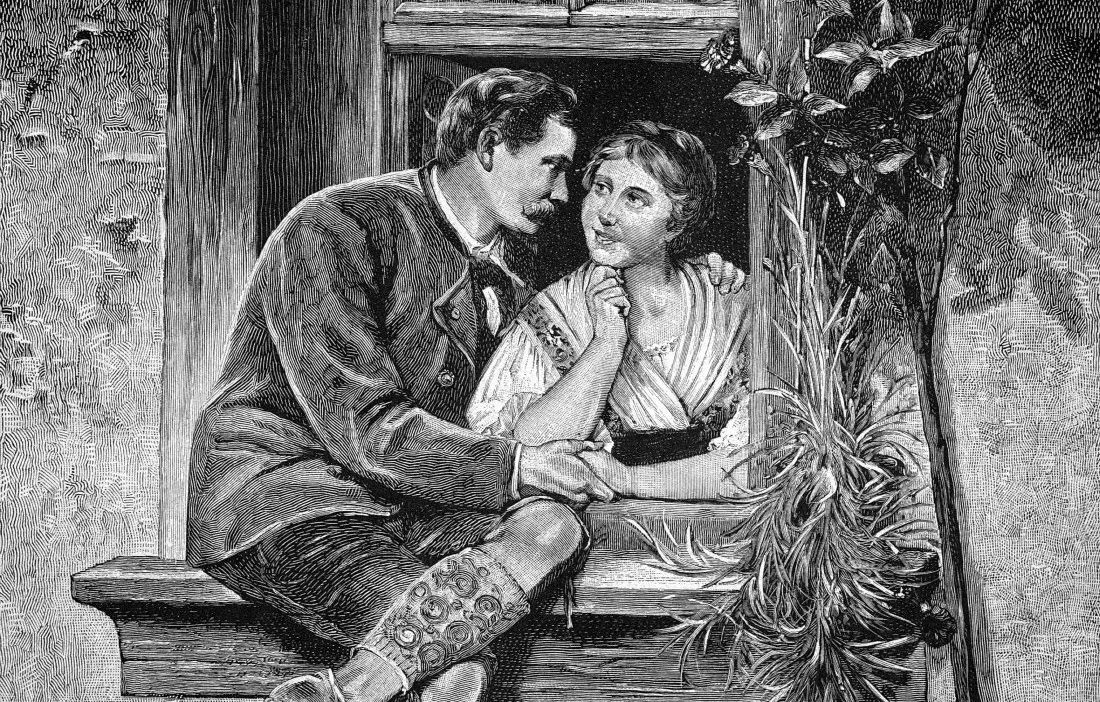
Courting couples in rural areas of 19th century Bavaria and Austria participated in a risky nighttime activity known as Fensterln (pronounced “fenster-line,” which translates to “windowing”).
Suitors would lug a heavy wooden ladder through town after dark and ascend it to their beloved’s upstairs bedroom window.
Although many parents prohibited their children from participating in such acts of trespassing, villages generally accepted fensterln-ing as a rite of passage that proved a young man’s strength, endurance, and drive.
Wearing jewelry made of human hair
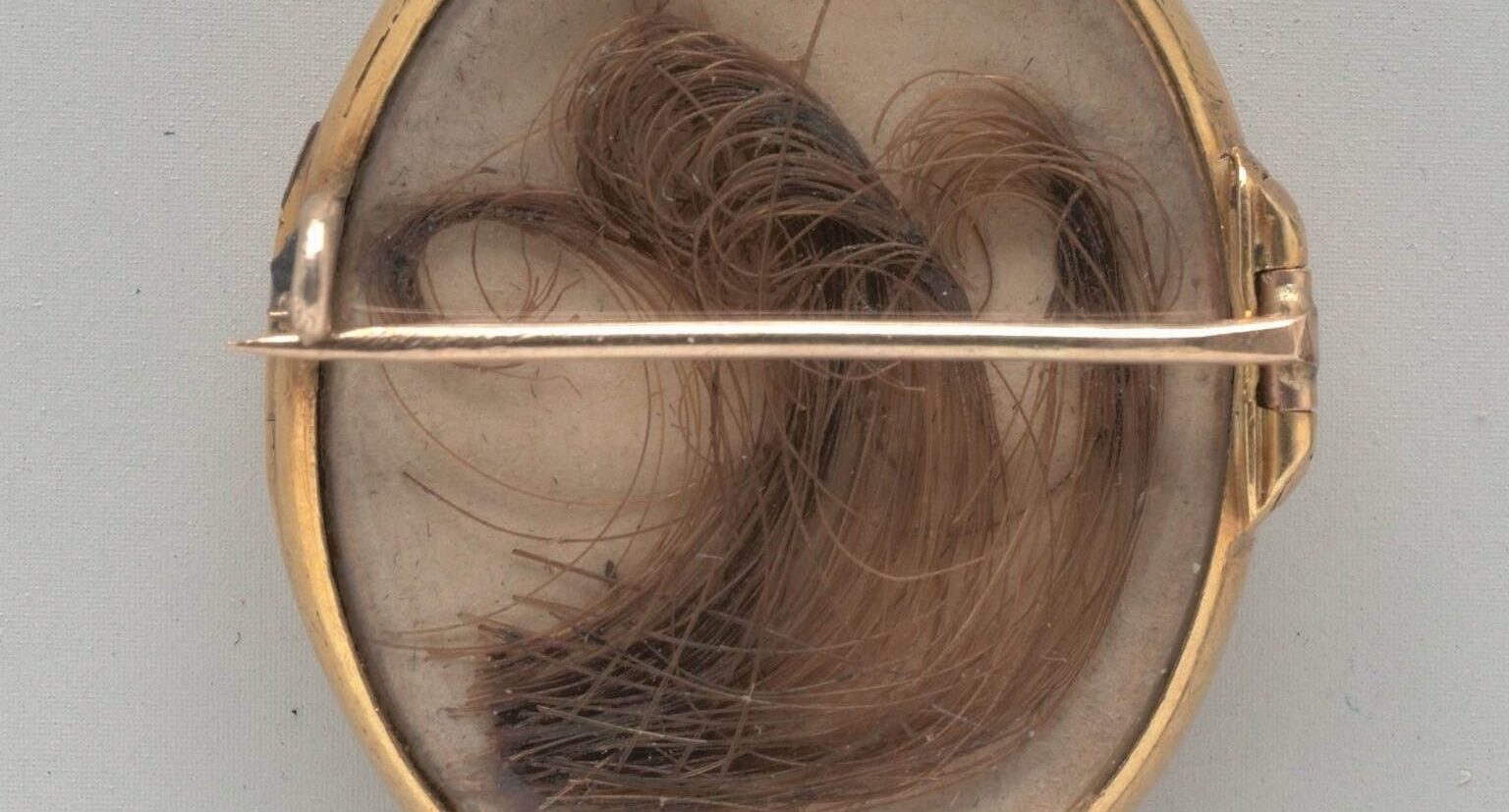
It was a common practice for Victorian men to ask for a bit of their sweetheart’s hair to be made into jewelry.
Skilled craftsmen created intricate watch chains, pins, rings and braided bracelets from human hair.
Since human hair never perishes, having a part of your beloved’s literal body next to your skin or in your vest pocket was seen as a token of eternal devotion during the mid-to-late 1800s.
The practical thimble proposal
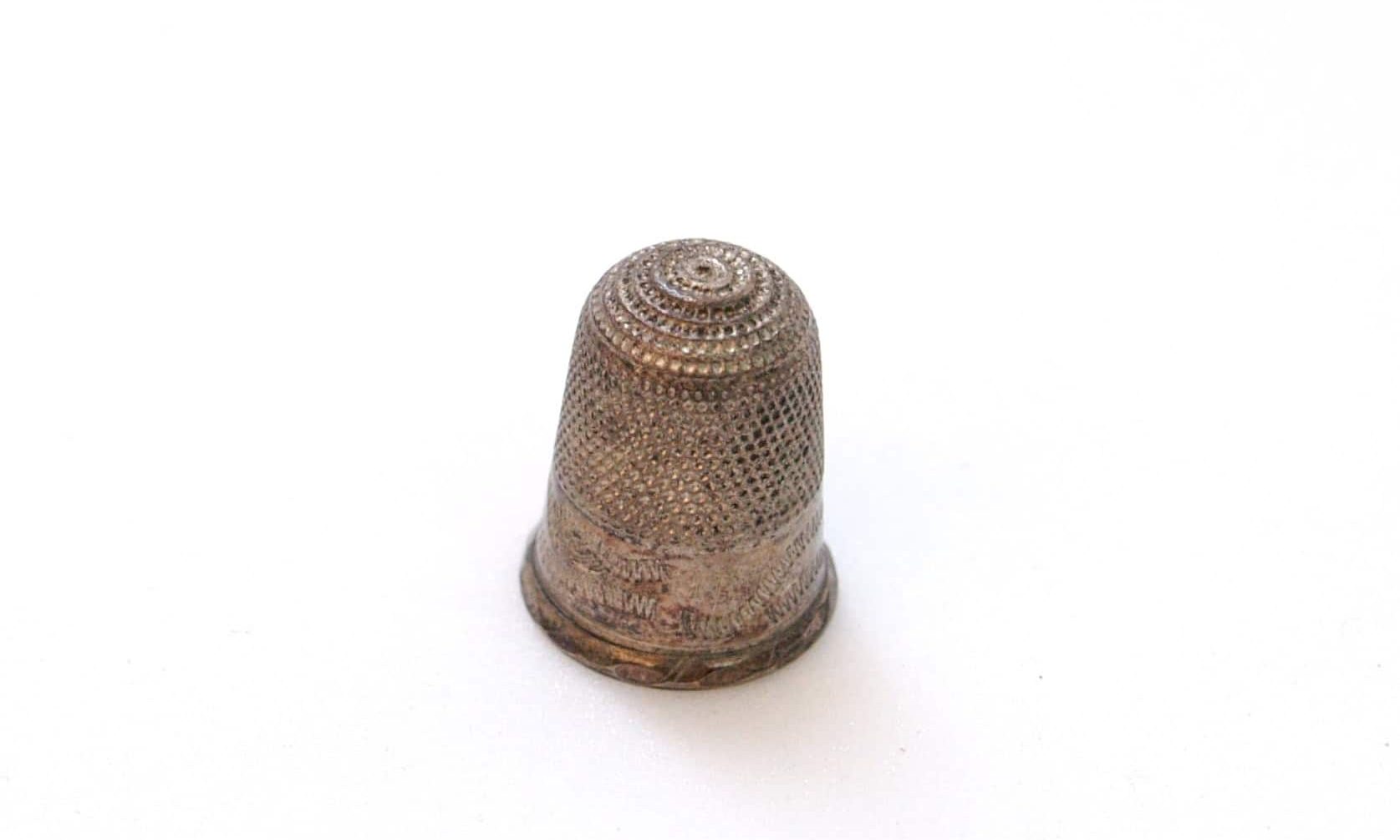
In tight American communities that frowned upon fancy items such as diamond rings being a sign of vanity, gentlemen proposing presented his intended with a practical metal thimble.
The gift showed that he valued her homemaking abilities and saw her as thrifty and hardworking enough to help build a homestead together.
Following acceptance of the proposal and commitment to marry, the woman would then saw or file away the thimble’s domed portion. She would then wear the flat band of metal as her wedding ring.
Bed bundling sacks
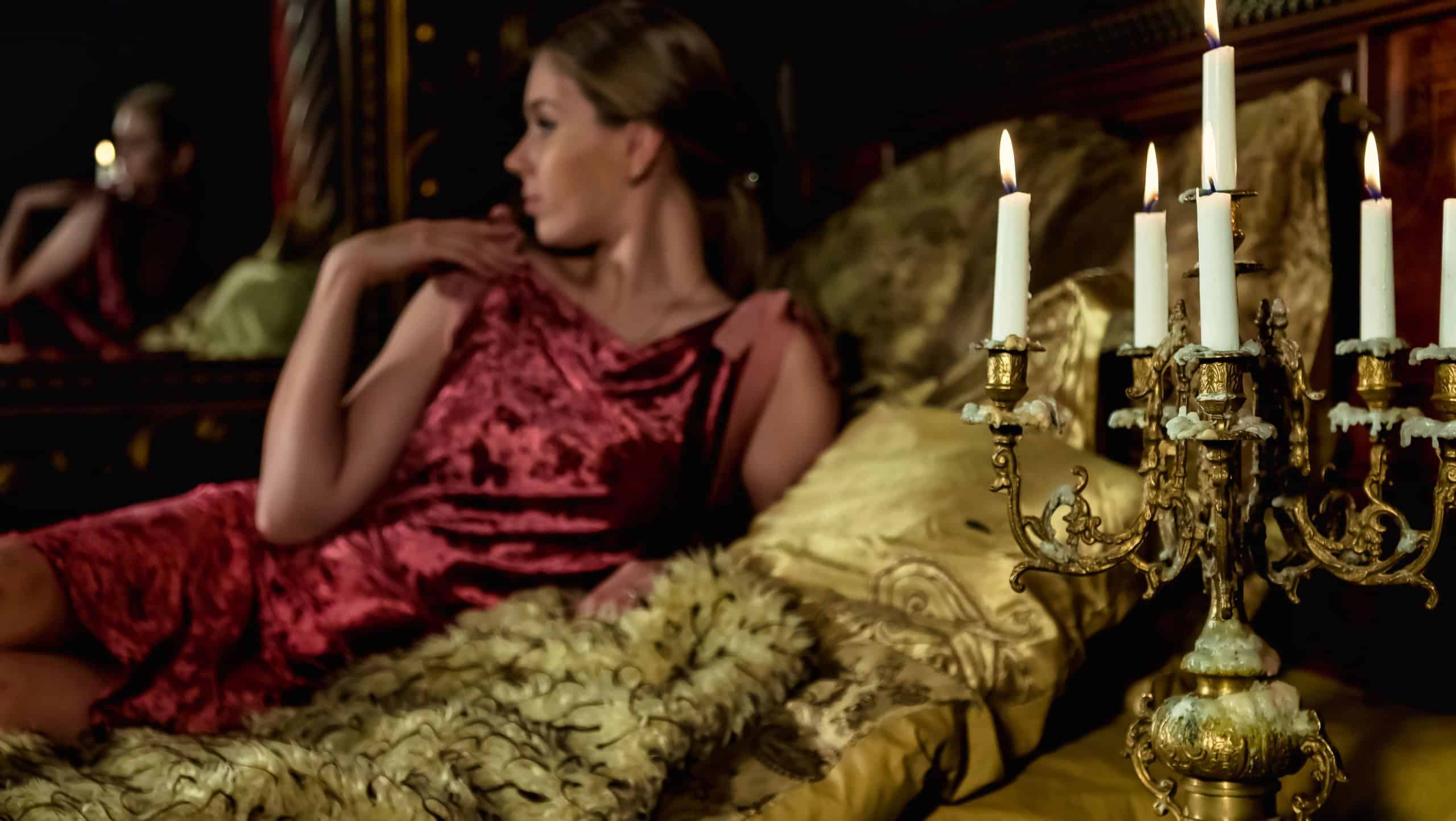
In some colder areas of rural New England and Pennsylvania in the early 1800s, suitors who traveled many miles to court were allowed to spend the night and sleep in bed with the woman to conserve firewood and provide warmth.
To ensure the courtship remained chaste, physical barriers were imposed. The young woman was commonly secured within a weighty canvas bundling sack using a zipper or ties.
Sometimes, a thick wooden board, referred to as a bundling board, served as a divider running straight down the mattress between the two.
“Giving the mitten”

During the 1800’s, American etiquette stated that if a man offered a gift of finely tailored gloves to a woman, it meant he wanted to give her his hand in marriage.
If she didn’t feel the same way about him and didn’t want to insult him in public, she would send him only one knit mitten in return.
This quiet gesture let both parties avoid public embarrassment and launched the popular 1800s idiom “getting the mitten.”
The true lover’s knot handkerchief

In 18th century Britain, sailors and migrant laborers often gifted their sweethearts with custom cotton handkerchiefs, decorated with detailed nautical knot diagrams or affectionate poems, prior to their departure on long journeys.
Before giving it to her, the man would tie an actual physical true-lover’s knot into one corner of the handkerchief.
If she kept the knot fastened while he was at sea, it signified her continued loyalty. Should she loosen it, he’d know their relationship was over by the time he got back.
Face-distorting contests at village fairs

In the 19th century, across England and Scotland, lads from the working class at village gatherings would put themselves through tough or silly physical tests, all in the hopes of impressing the ladies present.
Perhaps the most famous of these face-contorting contests was called “gurning.” In this peculiar contest, eager young men would poke their heads through a leather horse collar and twist their faces into the most ridiculous, exaggerated expressions they could manage.
Champions of these odd rural challenges showed they had the swagger, wit, and self-effacing charm women found appealing.
The shoe-drinking toast
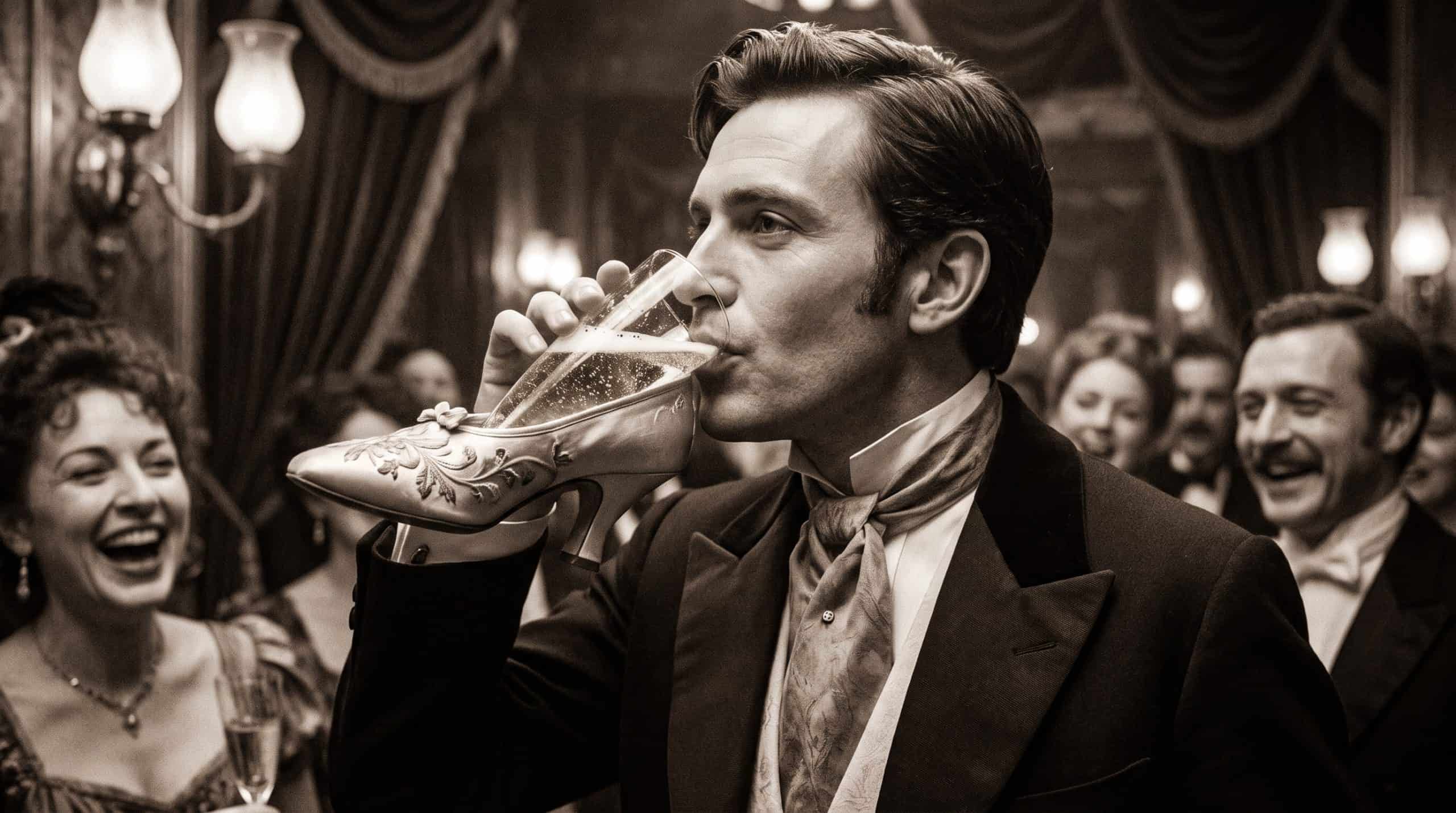
This unusual display of romantic surrender was a common sight among affluent men in Europe’s vibrant nightspots of the 1800s, such as Paris, Vienna, and Berlin.
A gentleman would snatch a woman’s silken dancing slipper, fill it with champagne, and then raise a toast to her loveliness for all the late-night revelers to see.
Though considered vulgar and outrageous by stuffy chaperones, receiving such a shoe toast from a handsome suitor was the ultimate romantic gesture to young ladies of the time.
Sources: Please see here for a complete listing of all sources that were consulted in the preparation of this article.
Like our content? Be sure to follow us.
13 historical suitors who were rejected in public
There’s always pressure that comes with popping the question in front of an audience, but these historic figures got some of the coldest reactions imaginable.


