

Lifting weights twice a week doesn’t mean you’re simply ‘getting stronger’ once you turn 50, and here are the exact effects it has on your body.
It starts where age usually chips away first
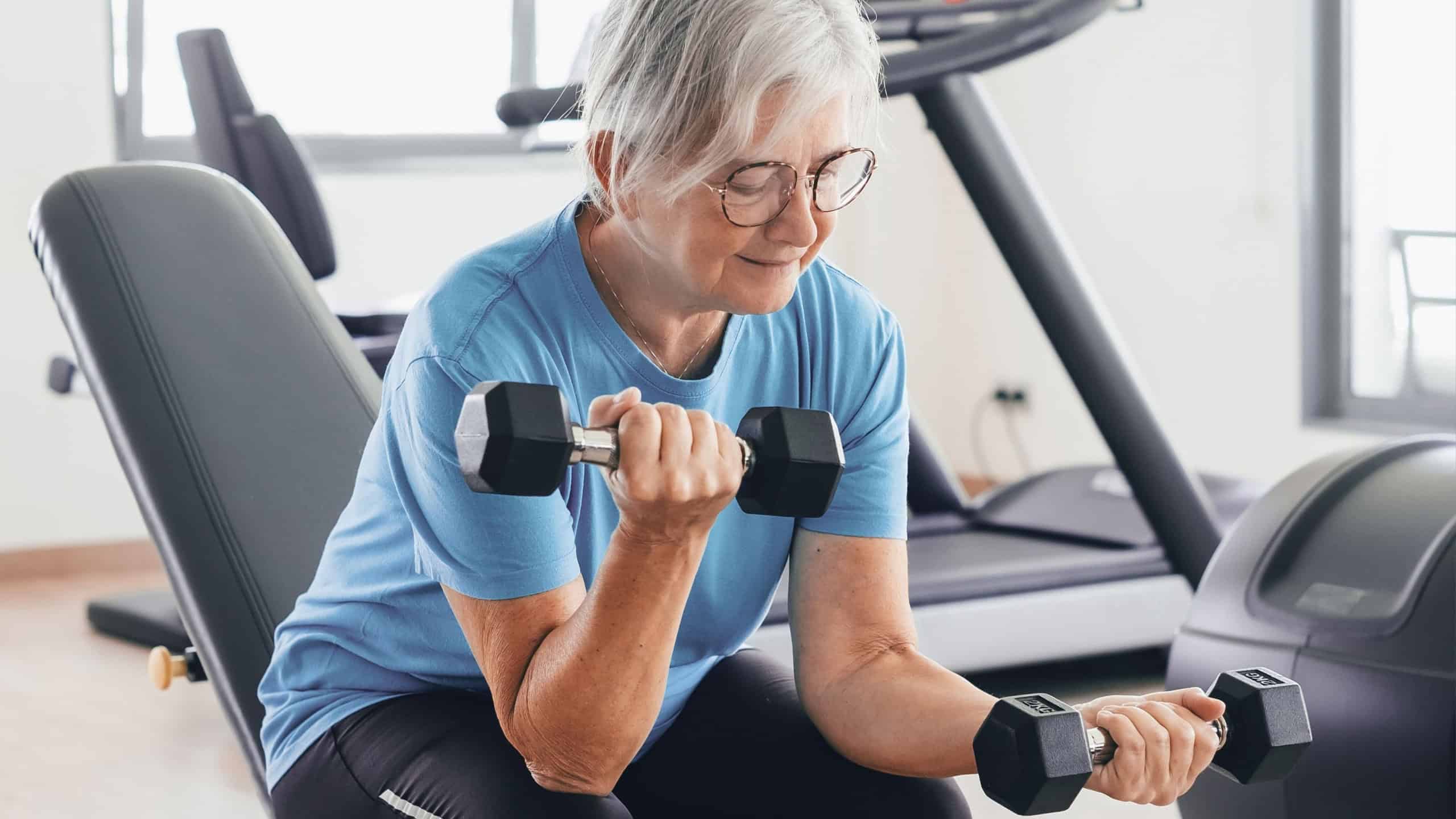
We’ll start with the effect that most people expect, although not necessarily in the way that they might think. Muscle loss happens rather slowly after the age of 50, especially in the legs, and that’s why it’s so easy to miss.
Research shows that lifting twice a week can increase an older adult’s muscle mass and strength. Such effects happen even when you lift for a short period.
But by far the most interesting fact is that these gains can happen without any obvious visual changes. It’s part of the reason that a lot of people underestimate the effect that lifting has on their bodies. Yet it’s there.
The shift isn’t only about size
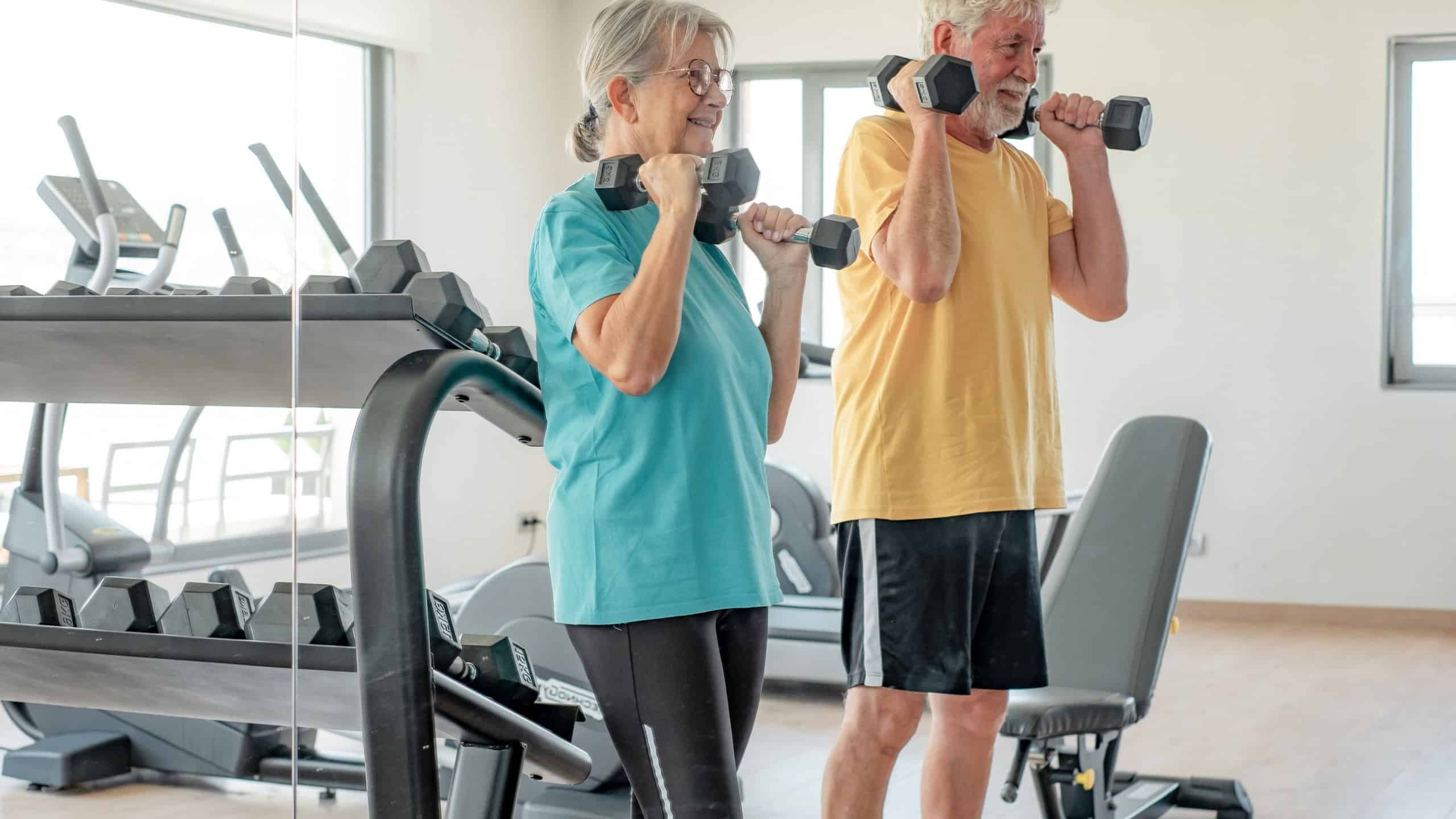
Did you know that your muscles can get better without getting much bigger? Yes, really. It’s something that researchers refer to as ‘muscle quality,’ which essentially refers to how much strength you can get out of the muscles you already have.
One 2021 study found that older adults tend to have better muscle quality after doing resistance training. Their muscles showed improvements in both structure and function.
While you might not see a big size jump, science proves that your muscles are working differently. They’re more efficient than they were before.
The picture changes under the surface

Let’s not forget that bones respond to pressure as well, and lifting weights does exactly that. It’s clear when older adults do resistance training because the signs appear in bone density scans. It’s especially obvious in their spine and hips.
Specifically, it can improve your lumbar spine, total hip, and femoral neck bones. A 2024 review also found similar improvements.
Feeling stronger has nothing on actually being stronger, and it seems that weightlifting twice a week could place useful stress on your bone tissue.
Some of the change shows up in how you stand up

You might be surprised to know just how much strength standing up from a chair actually takes, and it’s one of the first movements to decline with age. That’s where weightlifting comes in.
Studies on resistance training in older adults consistently show that they’re able to stand up from a chair better after training. They can stand up faster or with less effort.
Sure, it’s a relatively simple action that’s easy to overlook. But it’s one that researchers look at directly because it’s a good indicator of your lower body strength in real life, rather than a gym setting.
Your walking pattern can get cleaner

You’d think that walking feels automatic. However, the truth is that it depends on things like strength, timing, and balance, all of which need to work together for you to walk properly.
According to a 2026 review, resistance training helped older adults improve their gait. They were able to walk faster and showed better movement patterns. What does that mean in the real world?
Essentially, it doesn’t matter that you might not be ‘training for walking’ because lifting weights twice a week could improve how your body pushes off the ground and how stable you feel. It may also make each move feel a lot easier, step by step.
Going in a better direction

Your muscles play a surprisingly important role in how your body handles sugar. It’s a lot more noticeable when you get older. In one 2021 study, resistance training was found to improve insulin sensitivity for older adults.
A separate study took that conclusion one step further by discovering that older adults with type 2 diabetes saw improvements in their symptoms after strength training. It sounds strange, but it’s true.
Your muscle tissue helps to absorb glucose from the blood, so when you train your muscles regularly, you’re helping to change how your body processes sugar. You’re improving on the inside and out.
Pressure inside the system can come down

Here’s one you probably won’t notice without a cuff and a reading. Studies show that older adults who do resistance training regularly experience a drop in blood pressure, and the effects are particularly clear with those suffering from high blood pressure.
It’s not like they were doing extreme workouts, either. They simply did strength training consistently during the week.
That means that while you’re focusing on reps or weights, the way blood moves through your body is changing, and the numbers are a great example of that.
Ignore the scale

After training, you might try stepping on the scale to see how much you’ve lost, only to find that it’s the same number. What’s going on? It’s not to worry, as you are still losing weight, it’s just going from different places.
A 2022 study found that resistance training can reduce your body fat percentage and total fat mass, as well as visceral fat. This fat is the one that sits around your organs.
It may not be clear that you’re losing weight, but where you’re losing it really counts, as well as what it’s made of. It’s part of the reason why your clothes might fit differently when the scale hasn’t changed much.
Even sleep can shift

It seems strange to think that lifting weights could change how you sleep. But studies have found exactly that. One randomized trial in older adults discovered that they experienced better sleep quality after resistance training.
They fell asleep more easily or stayed asleep for longer. Of course, such effects aren’t instant, nor are they always obvious, but these effects do appear to show up over time.
Who would’ve thought there’d be such a clear connection between going to the gym and a better night’s sleep?
Part of the change happens deep inside muscle cells

One study involved older adults training twice a week for six months. Researchers then found that the participants’ muscle cells behaved differently after doing so, especially in the genes related to energy production.
It turns out, working out often may partially reverse age-related declines in your muscle cells. To put it another way, your muscles aren’t only getting stronger on the outside.
The way your body produces energy and uses it changes, too. But those are hardly differences that you’d be able to see directly.
Sources: Please see here for a complete listing of all sources that were consulted in the preparation of this article.


