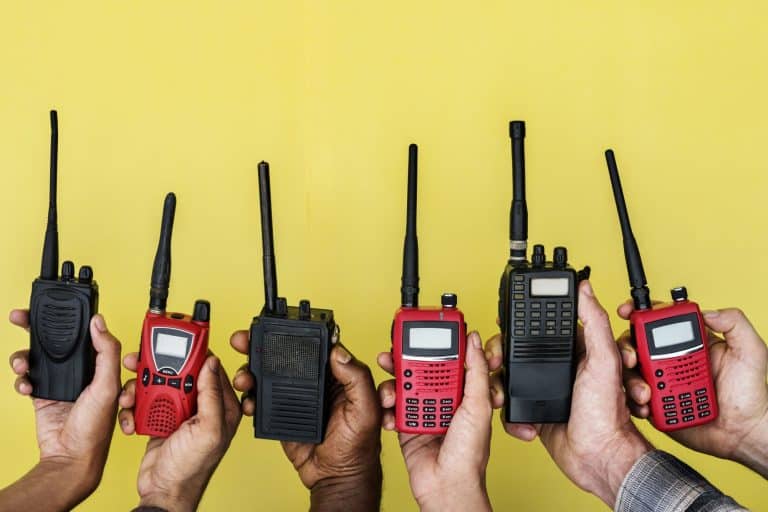

Although walkie-talkies used to be a popular way to have a quick chat, inside U.S. prisons, they’ve never been allowed for incarcerated people. Federal rules only permit radios that receive signals. You’re not allowed to have ones that can send them. But what happened next is where things get interesting.
What did they do? And how did they do it? Let’s find out.
Featured Image Credit: Shutterstock.
Key takeaways
Here’s what you’ll learn:
- The specific rules that banned walkie-talkies in prisons
- When & why those rules appeared
- What inmates turned to instead, and how those devices got inside
- How well those replacements work
What the ban actually says

The federal Bureau of Prisons’ property rule is quite clear. One approved radio per inmate. But it’s only for listening, like AM/FM or maybe a clear-channel station, and it doesn’t include two-way radios. Those are strictly for staff.
Of course, some states take this one step further. In Ohio, it’s against the law to give someone behind bars “a cellular telephone, two-way radio, or other electronic communications device.” This means that walkie-talkies are completely banned.
These rules became part of the Federal Register back in the early ’80s & they’ve always included the bans on sending signals.
But then, in 2010, Congress decided to make things even stricter. This was through the Cell Phone Contraband Act, a law that specifically criminalizes having a cell phone at a federal prison. You’re not allowed to sneak one in, either. This was a modern addition to this slightly older ban.
Why walkie-talkies are off-limits

You might be wondering what the reason is for the ban. It’s mostly because a walkie-talkie allows you to push a button & talk instantly, with no logs or trace. That’s exactly what the Feds don’t want. They need to be able to see exactly what inmates are talking about & with whom.
In fact, federal auditors & inspectors have openly stated that any device allowing unmonitored conversations is a security problem. So they’re all banned.
Another issue is with consumer two-way radios. You know the ones, they’re the cheap kind that you can buy at big-box stores. However, these work on open bands & are easy to use near facilities, so outsiders could pass on important information to these prisoners. Federal law states that prisons aren’t allowed to jam signals, so there’s only one option.
Banning walkie-talkies.
What replaced walkie-talkies inside
Some inmates are smart, though. Rather than using walkie-talkies, they began relying on contraband cell phones because they’re smaller & easier to hide. They’re also more useful than any radio since they can do so much more.
Reports from the National Institute of Justice show how common these cell phones have become. In 2017, South Carolina reported about one confiscated phone for every three people in custody, although Oklahoma said it was closer to one for every six. Over in Mississippi, corrections officers confiscated around 1,800 phones in one year.
Once they seize these phones, many states keep them stored in Faraday bags. Michigan is one of the places that does so. This way, the phones can’t keep sending texts after officers have a hold of them.
How do they get them in? They do so in all manner of ways, such as through staff or visitors. Some were thrown over fences by people on the outside & a few even got drones to drop them in.
Prisoners also tried using cheap two-way radios, like the kind kids take camping, because they’re widely available & run on simple bands. Some of them went old-school by using kites, although these aren’t the flying kind. These are notes that people slip under doors or tuck into books, maybe even handed off during movement.
How those phones were powered and kept running

But one of the biggest issues with these phones is how to keep them powered. After all, you can’t exactly plug them into wall outlets like at home. To do so, inmates rigged together chargers from whatever they could find, with some reports claiming they used wires pulled from lamps or spliced off TVs. Prisoners will even tap medical equipment cords to get what they need.
Did the replacements actually work?
Despite what you might think, these contraband phones worked almost too well. In Mississippi, a managed access system blocked more than 200,000 calls in just one month at a single prison, which just goes to show how common these phones were.
A 2011 GAO report also shows that thousands of phones have been taken across both federal & state prisons. And that’s with the constant searches. These phones just keep popping up.
Of course, prison officials aren’t going to let this slide, so they began relying on technology to help them fight back. Managed access systems were one answer. These stop calls before they connect inside the prison & essentially make the phones useless. There’s also the old-school option of X-ray machines & signal detectors, which are still rather useful.
While walkie-talkies have never had a place in the hands of incarcerated people, that hasn’t stopped the need for quick & private communication. Prisoners smuggle contraband cell phones in & use them until they were blocked or seized. They’re a low-tech solution to a maximum-security problem.
Sources: Please see here for a complete listing of all sources that were consulted in the preparation of this article.
Like our content? Be sure to follow us.


