

Almost everyone has a photo album in their house…somewhere. It probably smells like dust & glue. Those family photo albums used to be everywhere, and for a while, they were the main way families kept their memories together. But now they’re disappearing.
What happened to them? Where did they go? Let’s find out.
Featured Image Credit: Shutterstock.
Key takeaways
You’ll learn about:
- The earliest albums people actually bought for their homes
- Kodak’s role in making albums popular
- When the decline set in & why digital took over
- The new forms of photo albums today
The first albums people brought home
During the 1860s, you could walk into a store & buy a photo album off the shelf, one with leather covers and fancy brass clasps. It also had pages with neat little slots for pictures. Stores sold these albums in huge numbers. Identical copies appeared in American homes everywhere.
Most of the time, they were designed for cartes de visite. These were tiny portraits mounted on cards & families slid them into the windows of the album pages. They’d mix relatives with friends, sometimes even including portraits of famous figures or royalty.
Some of the reasons these photos caught on were that they were cheap & easy to carry. They were also fun to swap. As such, they became the most popular image format & albums were created just for them.
By the 1860s, families were no longer simply taking pictures. They were collecting them & showing them off. They also built these albums like personal libraries.
Kodak turns the album into a household habit

Several decades later, Kodak changed everything in 1888 with a simple camera that you didn’t need to develop yourself. Instead, they’d process the film & mail the prints back. It meant that anyone could be a photographer.
But by far the biggest change to photo albums came in 1900 with the Brownie camera. It sold for just a dollar & over 100,000 of them flew off shelves that first year. Now, families had boxes full of prints. Where would they put them? Well, in those albums, of course.
Most photo albums at that time were made with the same heavy paper (often black) & included photos held down with little corner mounts or glue.
Then came the “magnetic albums.” These have sticky pages & plastic overlays, which, while convenient, aren’t actually all that great. Conservation labs now warn that those adhesives damage photos as they age through yellowing & wrinkling. Even sticking too hard can be a problem.
How albums were used at home
Throughout the 20th century, albums were the default way for people to organize their family lives. It didn’t matter whether it was a birthday or a road trip. Once film became cheap & easy to process, the album became a running entry of everyday life.
However, things changed by the late 1990s. Digital cameras, then phones, made printing photos optional. Researchers often call this the “third phase” of photography, one that involves files instead of paper & storage on drives. There are very few photo albums on shelves, just cloud collections instead.
Facebook is also like a modern album. People can select & arrange pictures in posts, almost in the same way that they used to fill a page.
Many libraries have also seen this change. Now, they’ve stopped publishing guides on how to mount photos in corners, and instead, they’ve started publishing “personal digital archiving” handbooks. This includes teaching people how to name files & what formats to use, as well as how to keep backups.
What “decline” looks like in practice

Of course, photo albums didn’t disappear overnight. They disappeared in three ways, which were:
- Buying habits
- Sharing
- Institutions
To begin with, families stopped stocking up on refill pages & corners. They began thinking that they’d order occasional prints for framing, rather than for every important memory. Social media feeds also turned into digital albums. These give people the same kind of selection & arrangement options, just on a screen.
Lastly, museums & archives moved their attention to digitizing historic albums to allow people to see the scans while keeping the originals safe. It’s the best of both worlds.
These include Yale’s carte-de-visite albums from the 1860s, featuring ornate clasps & windows. Yale University Press’s book Galleries of Friendship and Fame also has American photo albums between 1861 & the snapshot era. There’s also the Met’s album that shows off a mix of royalty and ordinary portraits.
The album hasn’t vanished
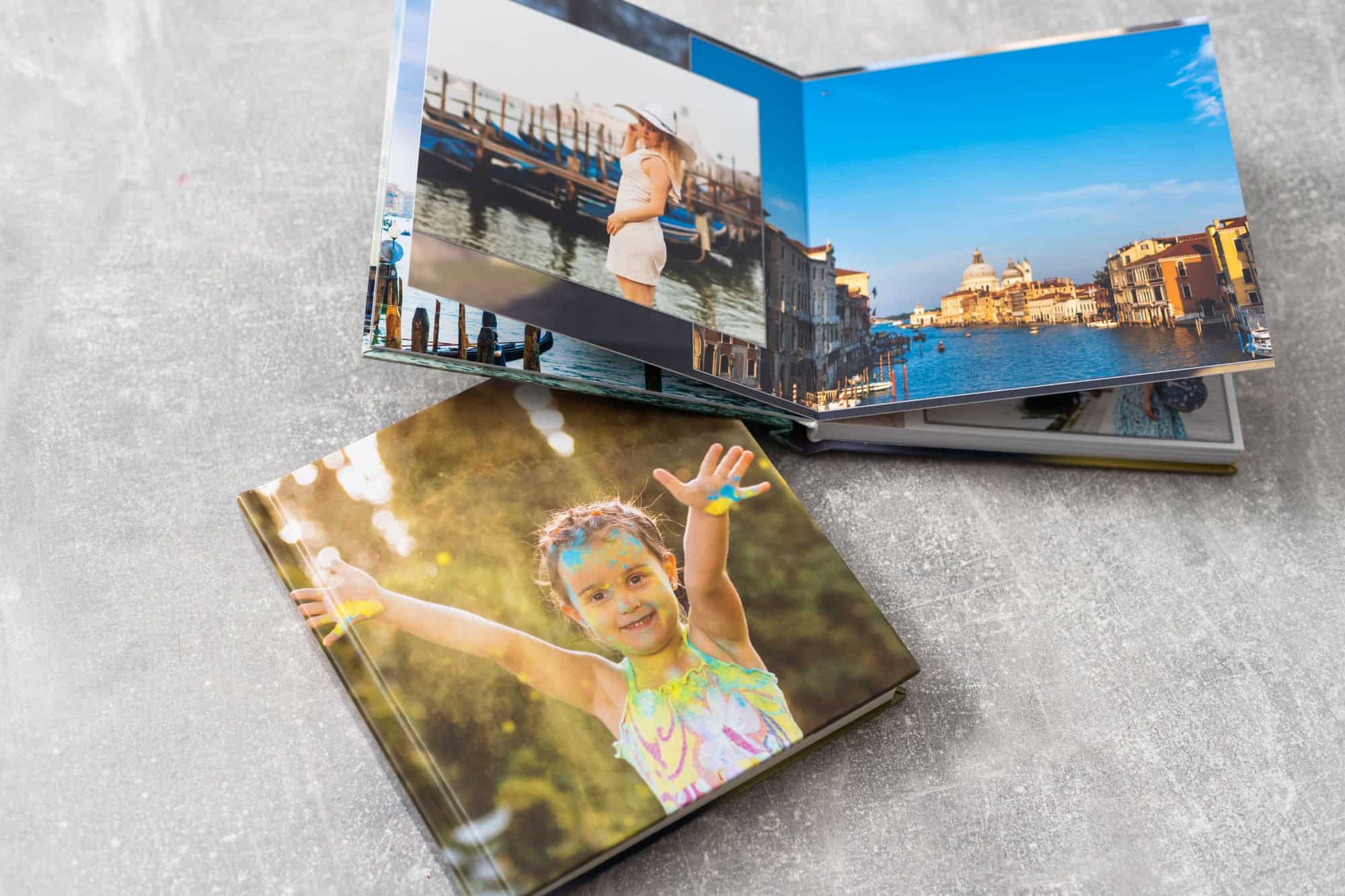
The important thing to remember is that lots of people still make books. They’re simply designed online now. Print-on-demand photobooks allow you to drag & drop digital pictures into layouts and order a glossy, bound copy.
There are even new versions where you scan a printed page with your phone to pull up extra multimedia. This way, the physical book ties directly to digital content.
So while photo albums might be declining, they’ll never truly go away.
Sources: Please see here for a complete listing of all sources that were consulted in the preparation of this article.
Like our content? Be sure to follow us.


