Spending time with your grandkids is always fun, and doing science experiments makes it even better. I remember the first time I did a simple experiment with my grand dad and I loved it. We used to do these easy experiments once every week and it was a great way for me to learn about the world while having fun.
In this list, I will share with you 10 such simple Science experiments you can try with your grandkids!
Featured Image Credit: RDNE Stock project /Pexels.com.
Volcano Eruption
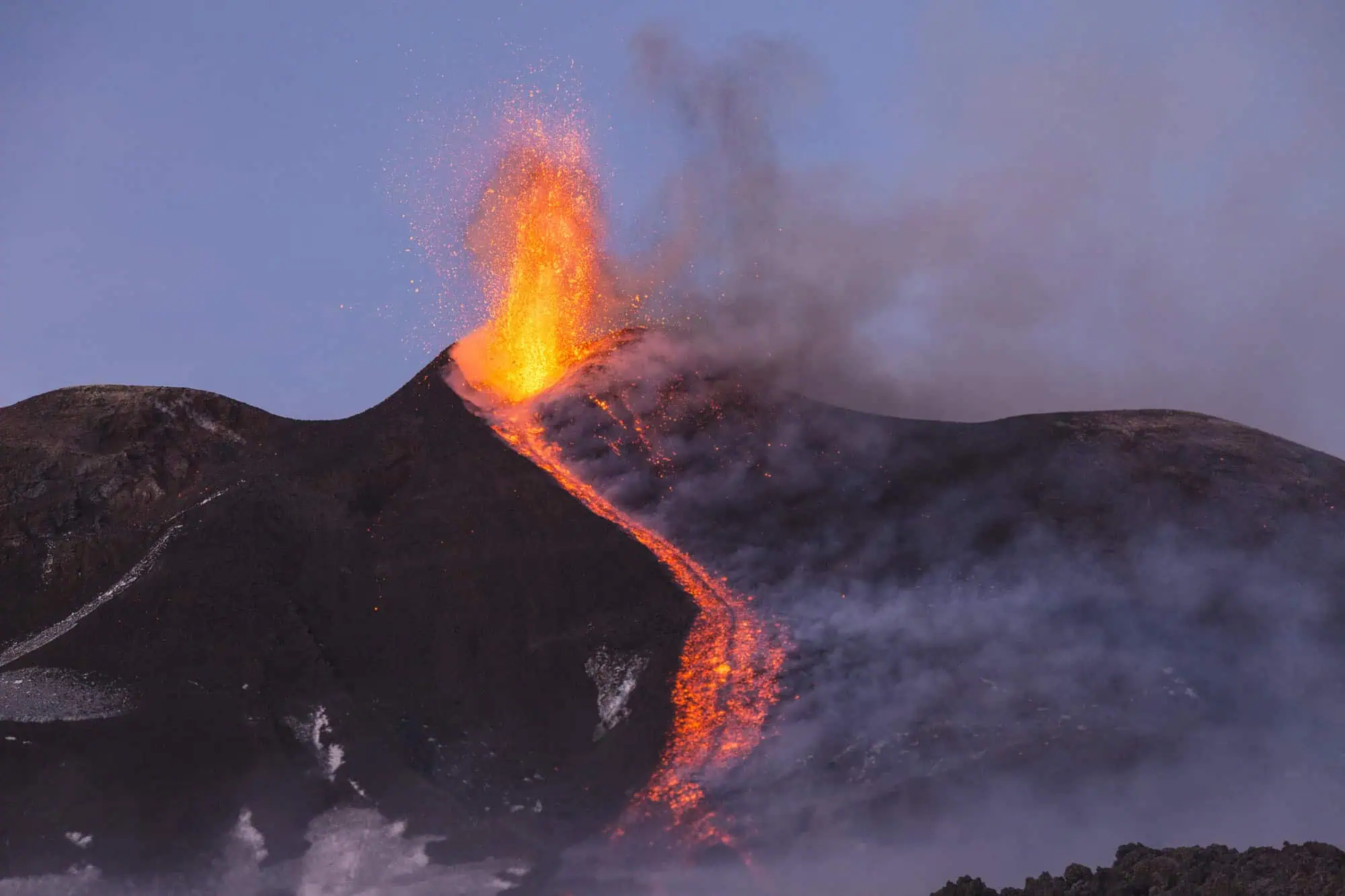
Mix baking soda, vinegar, and a few drops of dish soap to create your own tiny volcano. Build a clay or dirt mountain and pour white vinegar with a few drops of dish soap into it. This chemical reaction creates a fabulous foamy “eruption” that gets the kids talking about acids and bases.
Homemade Slime

Slime is a cool way to get your grandkids interacting with non-Newtonian fluids.
Pour some liquid glue into a small bowl, add 1 tbs of baking soda, 1-2 drops food coloring, 2 tsps of saline solution and mix well.
When the mixture thickens, knead the slime with your hands until it becomes firm.
Have a chat with your grandchildren and tell them about the polymers involved here — those that combine to form what appears as liquid, but behaves very much like something solid.
Like our content? Be sure to follow us.
Rainbow in a Glass

This will be a little more difficult, but you can make your own rainbow that just looks so cool in a glass using sugar, water, and food coloring.
In four glasses add 1,2,3 and 4 tablespoons of sugar respectively. Add water and stir, until the sugar dissolves.
Then add red food coloring into the 1st cup, yellow food coloring to the second, green will be for third and blue color into fourth. Get an empty glass and splash the blue liquid in, then pour the green in followed by the yellow liquid and finally the red (squeezed on top).
Here, the trick is to add different quantities of sugar in each layer so that the density of liquids differs. Your grandkids will be amazed as you alternately stack pure colors without commingling.
Balloon Rocket

You will need a balloon, a straw, tape and some strings to make a balloon rocket. Fasten the string on two ends (to two chairs for example), and slide a straw onto it at one end — The straw should be able to move freely on the string.
Next – inflate your balloon (don’t tie it) & stick it with two pieces of tape to the straw. Now you should let the balloon go and it will shoot across the string with tremendous power (air pressure).
This demonstrates Newton’s Third Law of Motion: For every action (air pressure) there is equal and opposite reaction (movement in the opposite direction of air pressure).
Dancing Raisins

Get a glass of sparkling water and add some raising to it. The raisins will start to go up and down because carbon dioxide molecules stick to them. This simple experiment teaches about buoyancy and gases in liquids.
Invisible Ink

Take a piece of white paper and write something with lemon juice. As the lemon juice dries up, hold the paper closer to a candle and the letters will become visible — teaching your grandkids about the oxidation phenomena of some chemicals.
Walking Water

Place three glasses on the table, put colored water in two of them, and keep one empty. Layer the glasses, spaced with folded paper towels dipped in water. The water “walks” from one glass to the other through capillary action — a great visual on how plants and trees move water up their stems.
Magnet Maze

Draw a maze onto cardboard and act out the mouse using your paperclip or coin. After that, pass the paperclip through the maze with the help of a magnet placed just below the board.-It is a simple, hands-on way to show kids how magnets and magnetism work.
Milk Fireworks

Pour milk in a shallow bowl and then put 3 drops of food coloring. Next, take a cotton swab and tap some dish soap onto the top of the milk. The colors mix and swirl like fireworks! It demonstrates to kids the concept of liquid surface tension and how soap takes it away.
Egg in a Bottle

Get a hard-boiled egg and a glass bottle with an opening that is only slightly smaller than the width of the egg. Tear off a piece of paper to set on fire. As soon as you drop the paper inside the bottle, place the egg on the top of the bottle opening. The pressure in the bottle drops as the flame goes out, drawing the egg inside. (This experiment is an excellent example of how air pressure works.)
Disclaimer: This list is solely the author’s opinion based on research and publicly available information.
Like our content? Be sure to follow us.
Read More: