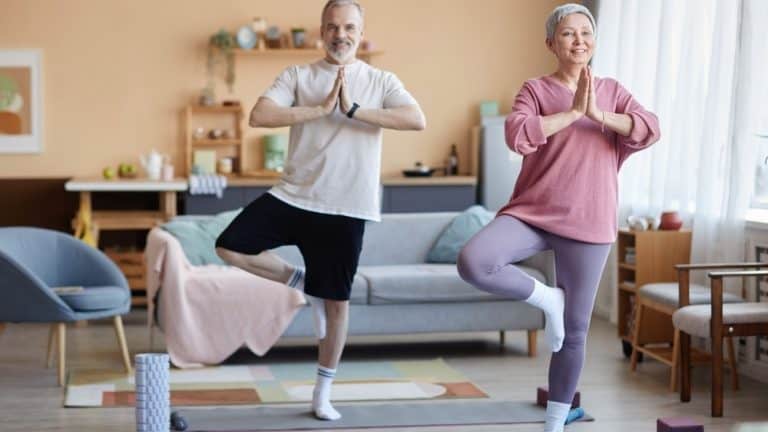

Balance can reveal a surprising amount about how well your body is functioning after 60, and these eight simple movements can put it to the test.
On one leg
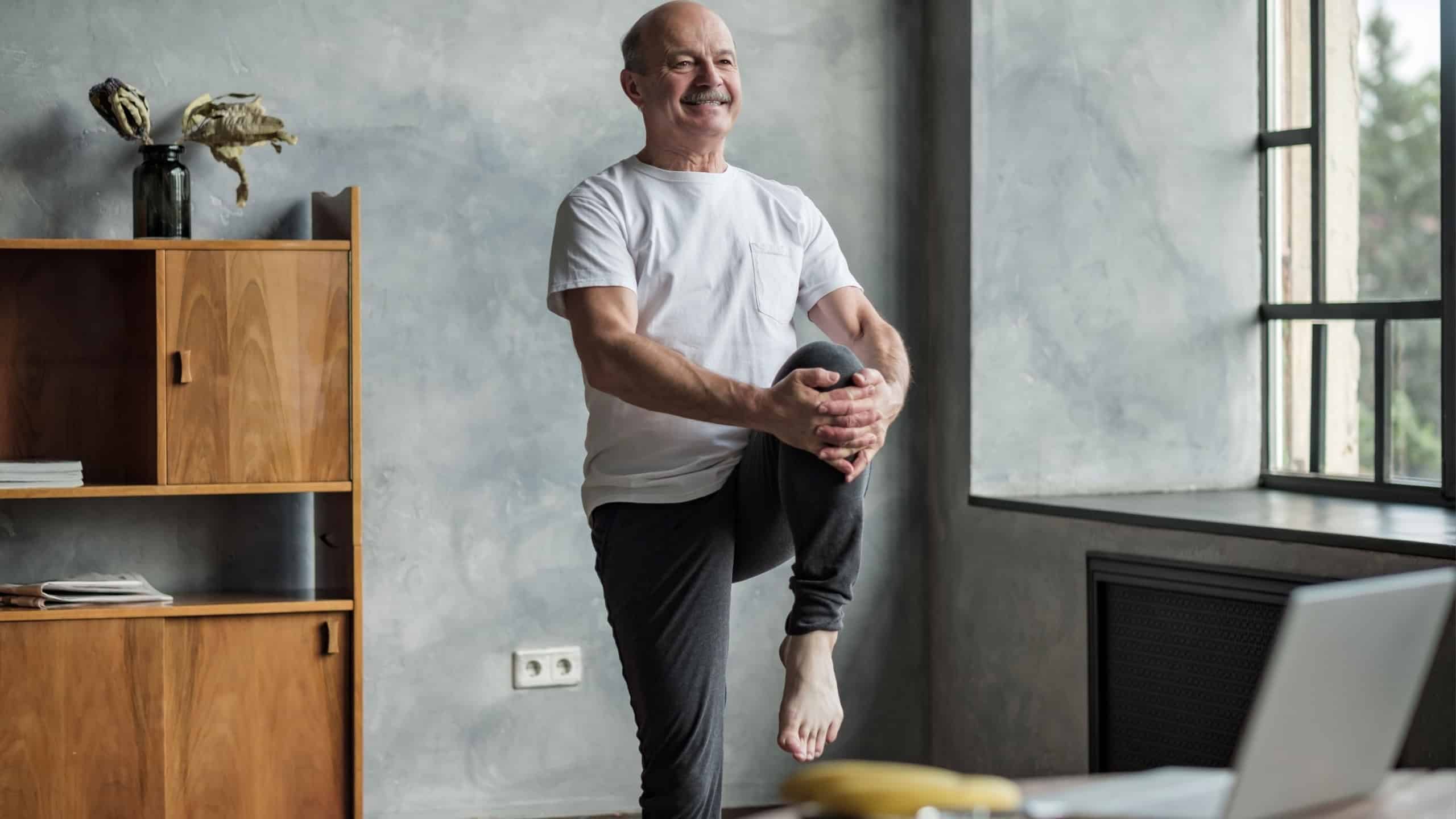
Balancing on one leg is deceptively difficult. To lift your foot off the ground and stand upright without wildly bobbing around, your ankles, legs, core, vision, and nervous system all have to coordinate. If you’re able to hold the position easily for a short period on each leg without holding onto anything, that’s a good sign.
Heel to toe
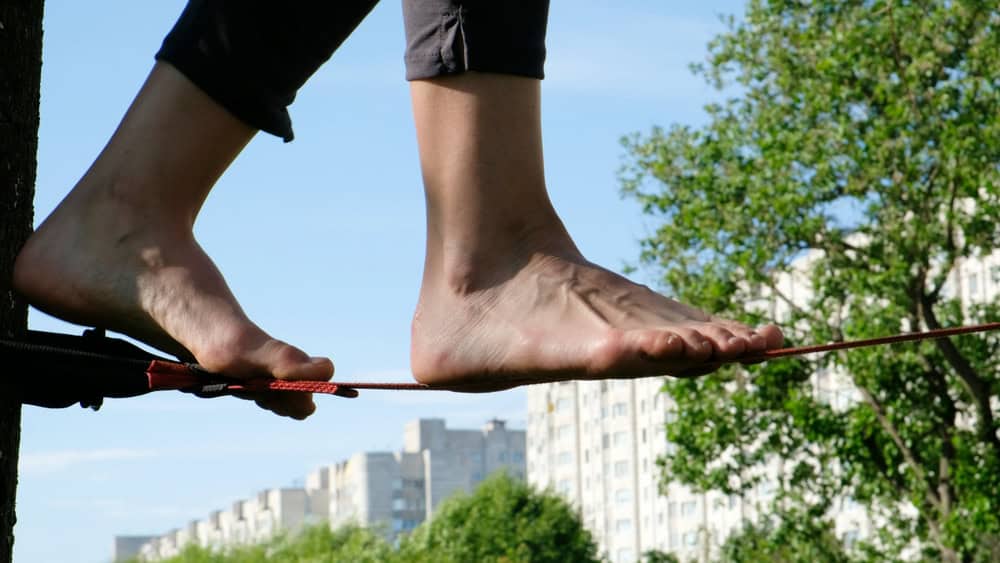
Position one foot right in front of the other with the heel of your front foot resting on your back foot’s toes, as if you were on a tightrope. Standing with such a narrow base of support cuts your normal balance comfort zone almost in half. It forces your balance system to become more active.
Resist the urge to take a quick side step. If you can maintain your balance without stumbling, you are working on a very functional skill.
The straight line
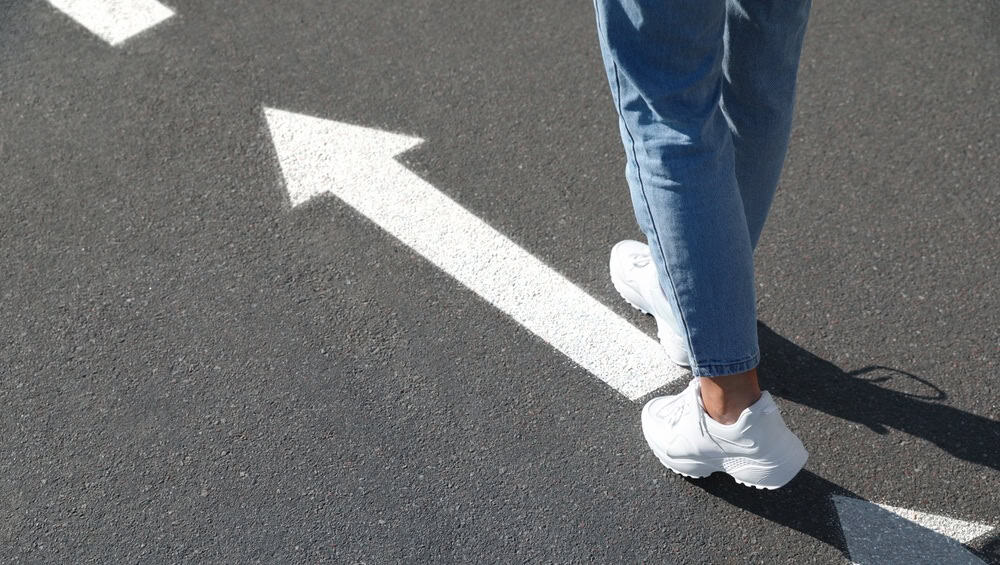
Turn that heel-to-toe position into motion by taking several slow, tandem steps in a straight line. Your heel lands right in front of the opposite toes each time. Walking in this manner challenges your dynamic balance because your body must constantly shift weight while operating with a significantly narrower base than normal walking.
Up on your toes
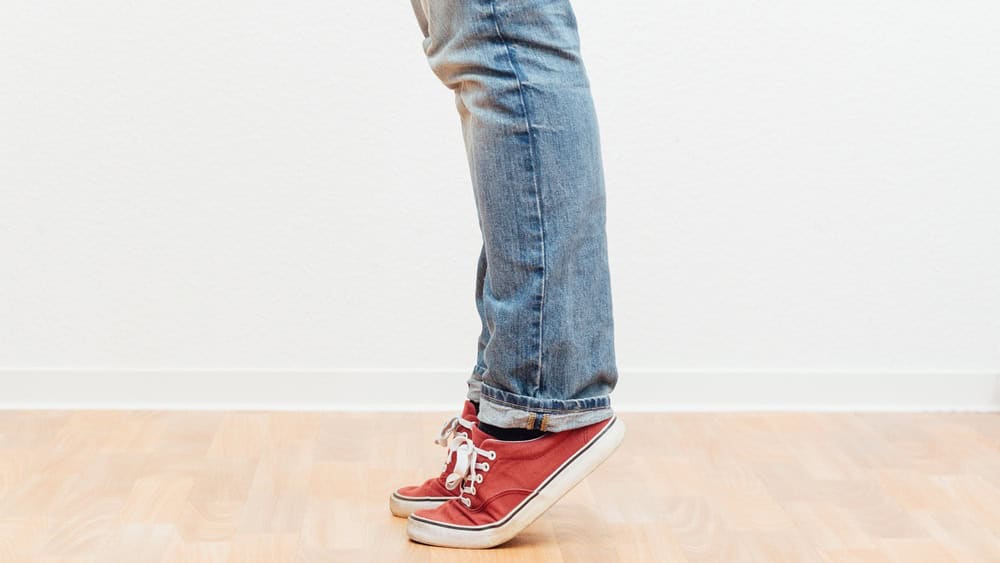
Stand up slowly on the balls of both feet, hold for a moment, then lower back down with control. This works your balance as well as calves and ankles that stabilize you while walking and ascending stairs. Lowering yourself slowly counts as well; simply slamming your heels back to the ground defeats the exercise.
The chair test
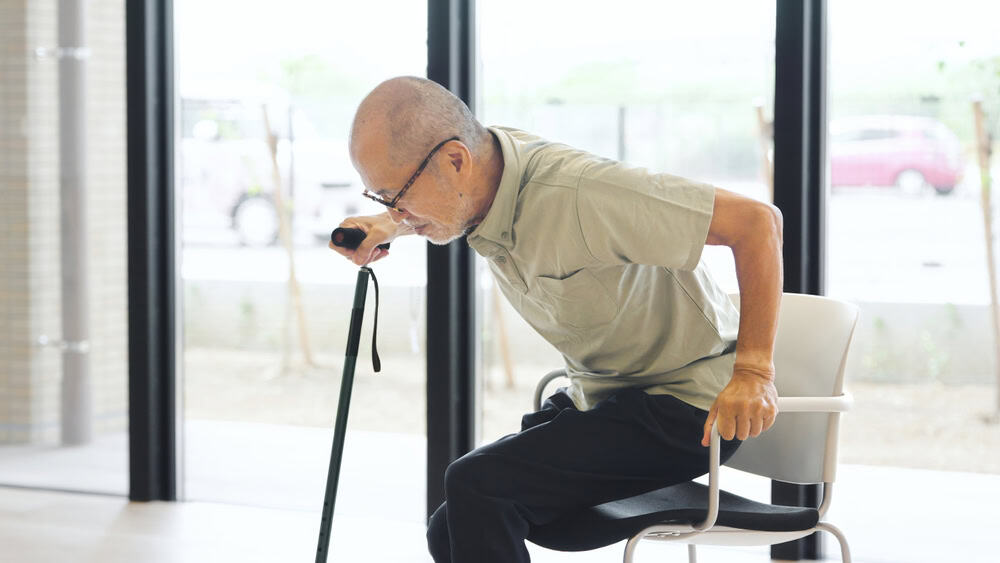
Sit down in a chair, stand up without using your hands (if safe to do so), and slowly lower yourself back down with control. Perform the motion again. This exercise incorporates stability with leg and hip strength training. Sitting and standing from chairs, cars, and beds all rely on versions of this movement.
A step behind
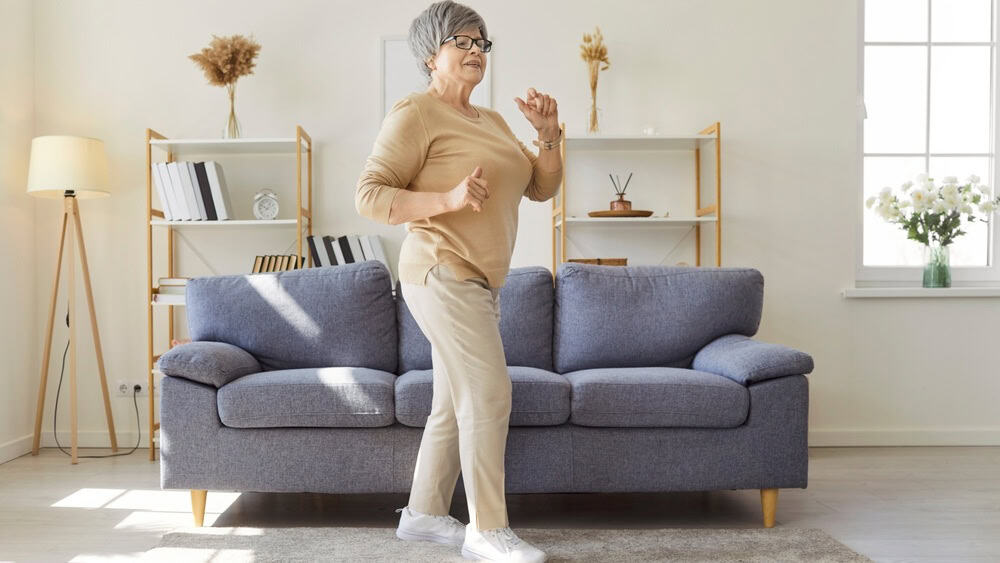
Try to walk backward slowly for several steps in an open, hazard-free space. The motion throws off your coordination and body awareness because you can’t see exactly where your feet will be landing. It’s more difficult than it seems; use something stable to hold onto if needed and don’t try this close to stairs, rugs, pets, or other objects.
Over the invisible line

Visualize an object on the floor and cross over it sideways without stepping on it. Return to your original position. Lateral movement works your hips and balance differently than walking forward. The ability to shift your weight, lift your foot up, set it down properly, and regain your balance translates to real life when dealing with curbs, crowds, and unpredictable obstacles.
Turn and settle
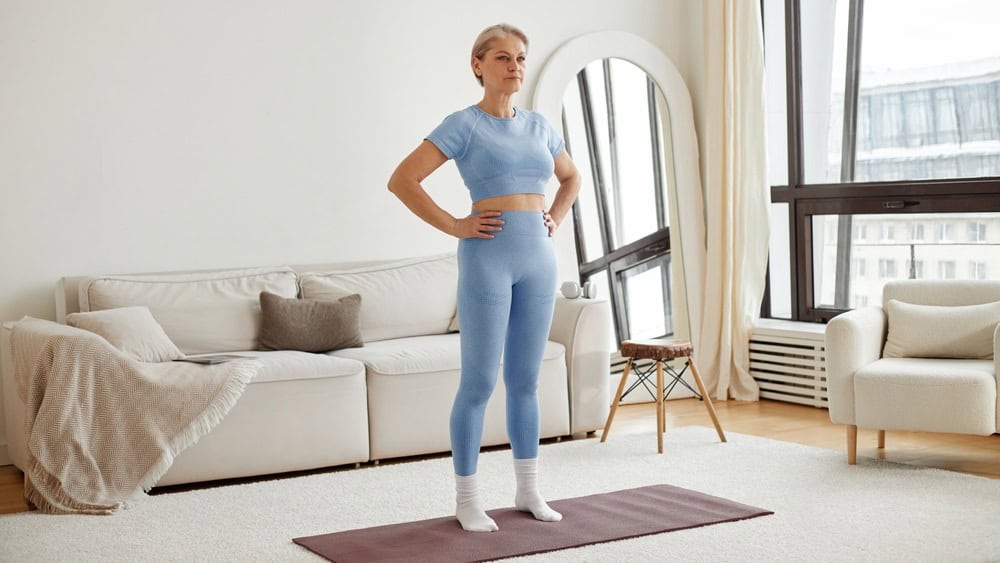
Stand up, turn slowly, and return to a stable standing position without losing your balance or having to hold onto something. Turning involves real-life balance skills since we don’t always fall forward while walking. By turning gracefully, managing your motion and stabilizing right away, you are addressing coordination, strength of your legs, and dynamic balance all at once.
Like our content? Be sure to follow us.
