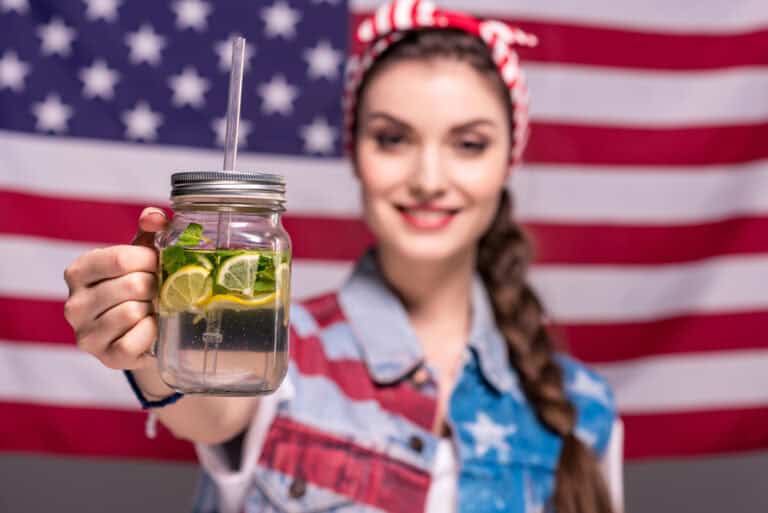

While we’d like to think most of our drinks are all-American favorites, a lot of them actually come from other parts of the world. That’s right—a lot of energizing cans and refreshing sodas traveled far before becoming common drinks in the United States! Here are eleven everyday drinks that aren’t as American as you think. Of course, there’s nothing wrong with that but it’s interesting to see how different their origins really are.
Featured Image Credit: NatashaFedorova/Depositphotos.com.
Red Bull

Grabbing a can of Red Bull for a quick energy fix feels like second nature but this powerhouse drink was actually born in Austria & inspired by a Thai energy drink called Krating Daeng. In 1987, entrepreneur Dietrich Mateschitz introduced Red Bull and he later adapted the recipe to suit Western palates. It didn’t take long for Red Bull to become popular across Europe before eventually making its way to the U.S. to give us that boost of energy we need.
Sprite

While Sprite feels like a classic American soda, it actually started its life in Germany as the Coca-Cola Company developed it in 1959 as “Fanta Klare Zitrone”—meaning Clear Lemon Fanta. They introduced it to compete with 7 Up with its crisp lemon-lime flavor and in 1961, it was rebranded as Sprite. It then launched in the United States and bubbled its way into American hearts.
Fanta

Fanta was born out of necessity in wartime Germany because during World War II, trade embargoes made it impossible to import Coca-Cola syrup into the country. To keep the business afloat, the head of Coca-Cola Germany, Max Keith, created a new drink using available ingredients like whey & apple pomace, which eventually became Fanta in 1940. It spread throughout Europe & eventually arrived in the United States after the War ended.
Like our content? Be sure to follow us on MSN.
Ginger Beer

We use ginger beer in a lot of popular American cocktails but ginger beer didn’t come from the U.S.—the spicy drink began in England during the mid-18th century. It was originally a fermented alcoholic beverage made with ginger, sugar, water & a starter culture, with a stronger punch than today’s versions! But it evolved to become the mostly non-alcoholic soft drink we know now so it’s a piece of British history with every sip.
Eggnog

Eggnog is a holiday favorite in America that we often associate with Thanksgiving & Christmas festivities—but its origins are in medieval Britain. It evolved from “posset,” which was a warm ale punch made with eggs and figs, then, over time, they added milk and spices like nutmeg. The drink eventually crossed the Atlantic to the American colonies, where people replaced the traditional sherry with rum because it was more widely available.
Capri Sun

As kids, most of us loved Capri Sun—those handy juice pouches seem so American but they actually come from Germany. Rudolf Wild invented them in 1969 and he named the drink after the Italian island of Capri to give people a sunny, carefree image. As such, it’s more of an import than a homegrown favorite, even if it does exist in kids’ lunchboxes across the country!
Seltzer Water

Many people who want to lose weight might drink seltzer water because it’s a refreshing, calorie-free drink—but the term “seltzer” comes from Selters, a town in Germany known for its natural mineral springs. In the 18th century, other European countries imported bottled Selters water and they became obsessed with it. We now produce seltzer water locally in America but the idea of carbonated mineral water started in Germany.
Perrier Sparkling Water

Likewise, Perrier Sparkling Water is another popular choice for Americans who want a fizzy, mineral-rich drink but most of them don’t realize that Perrier comes from France. It has been bottled at the source in Vergèze since 1863, later becoming famous for its natural carbonation & distinctive green bottle. You’re sipping on a piece of French drink history whenever you sip it!
Lipton Iced Tea

There’s nothing quite like drinking some Lipton Iced Tea on hot summer days and while many of us love it, Lipton was founded by Sir Thomas Lipton in Scotland in 1890. The brand started with tea leaves from Ceylon (now Sri Lanka) and became popular in Britain before expanding worldwide. Every refreshing glass of iced tea has its roots across the Atlantic—although we have our own take on it now!
Schweppes Tonic Water

Schweppes Tonic Water is a mixer in most American cocktails (like gin & tonic) but despite it being quite common here, Schweppes was founded in Geneva, Switzerland. Johann Jacob Schweppe founded the company in 1783 and it helped pioneer carbonated beverages before later moving operations to London. As such, Schweppes tonic water is European in all sense of the word!
Bloody Mary

You’ll find someone sipping on a Bloody Mary during most brunches in America and that’s mostly because of its spicy kick & reputation as a hangover-cure. Most of us assume it’s an American invention—but it was actually created in Paris in the 1920s by bartender Fernand Petiot. He mixed vodka with tomato juice & seasonings at Harry’s New York Bar, a popular spot for American expats, then the cocktail later made its way to the U.S.
Disclaimer: This list is solely the author’s opinion based on research and publicly available information.
Like our content? Be sure to follow us on MSN.