

There are so many things that we Americans do without thinking about them, but try doing those things abroad, and you’ll find that conversations become a lot more awkward or even uncomfortable.
The question that gets too personal

It’s quite normal in the States to ask someone, ‘What do you do for a living?’ within a few minutes of meeting them. You’re just talking about your jobs, after all, so there’s no harm in that. Except there is when you’re in other countries.
Many European countries, like France and England, find that question too personal. They’re not expecting to get into their jobs with someone that they’ve just met, and they’d rather establish more of a relationship before they get into it.
Getting friendly a little too quickly

There’s another thing that usually happens when we meet someone. Giving a handshake doesn’t always seem friendly enough, so instead, we’ll go straight in for a hug, even when we’ve only just met someone.
There’s nothing technically wrong with that. The thing is, though, immediately having physical contact with a stranger can be offensive to people in other countries. People in places like Japan would prefer to bow, while in Malaysia, any kind of public display of affection is inappropriate.
The innocent-looking hand gesture

Whenever there’s someone standing across the room and you want them to come over, you might gesture for them to come here. You know the one, it’s where you curl your index finger toward yourself a few times. It’s not something many of us even question.
Yet it’s actually quite insulting in places like the Philippines, as people over there associate the gesture with calling dogs instead of people. It’s hardly a flattering comparison. Over there, you’re best off using a palm-down motion to make someone come over.
A finger pointed the wrong way

It’s a similar issue with pointing. While it might be acceptable to point at someone in America, people in many other countries don’t see it the same way. In fact, in Malaysia, it’s rude to even point at objects, too.
They’re more likely to gesture with their right thumb and keep their other fingers curled underneath. They’re not wrong, really. It does seem a little rude to point directly at someone, rather than using their name.
The gift-opening dilemma

After you’ve given someone a birthday present, you probably want to watch them unwrap it, because then you can see their reaction. Opening gifts in front of everyone is part of the celebration here. Yet in other countries, doing so is highly offensive.
People in Japan will politely put your present aside without opening it, as they believe opening gifts privately will stop the giver from getting embarrassed. There’s no guarantee that the receiver will like the present, after all.
Arriving at the advertised hour

American etiquette rules are pretty clear about what time you should arrive at an event. If the party starts at seven, you should arrive at 7 p.m. on the dot, or shortly before. That’s the time you agreed to meet, so it makes sense.
But you shouldn’t try that in places like Spain or Latin America. The host will likely still be getting dressed, and you’re supposed to arrive a little later than the time on the invitation, depending on the occasion. They think it’s rude to arrive at 7 p.m. because the host isn’t ready yet. How odd.
Rewriting the restaurant menu

American servers hear requests to change an order all the time. In fact, in some restaurants, they practically encourage customers to build their own meals by changing what’s on the menu. It doesn’t work that way abroad.
What you see on the menu is exactly what you’re going to get, no adjustments or substitutions. They tend to have fixed recipes or set meals that you have to follow. It’s a different story with dietary allergies, of course, but you can’t swap the sauce for something you think tastes better.
Claiming a nationality from generations ago
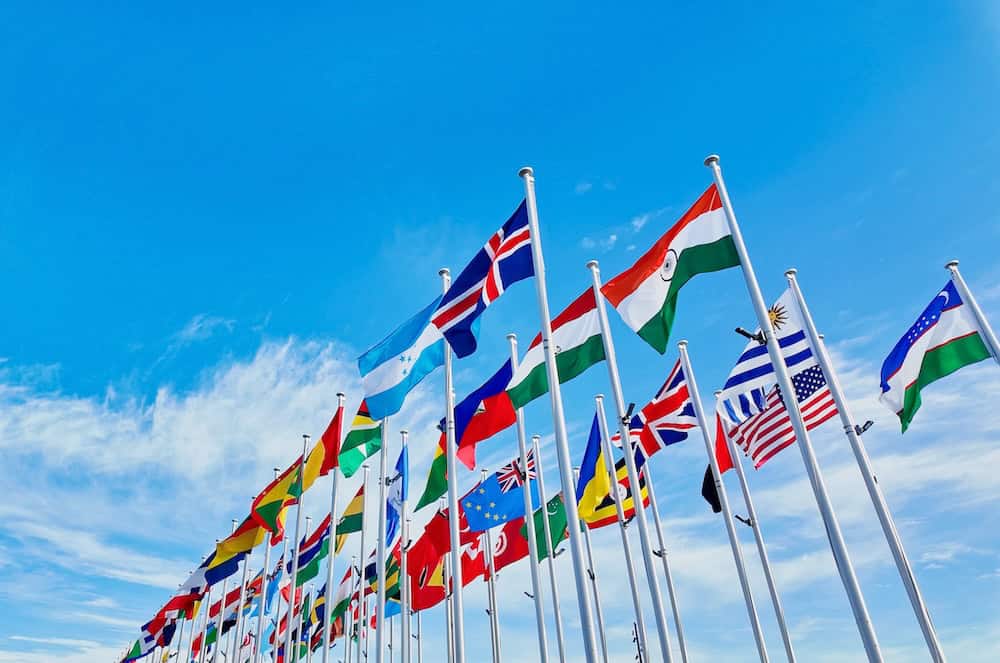
It’s normal for us to claim our heritage when we’re talking to people. Take, for example, an American who goes to Dublin. They might tell the locals that they’re Irish, despite the fact that they were born in Ohio, their parents were born in Ohio, and they don’t have an Irish passport.
This is also their first time visiting Ireland. Yes, we often use our nationalities to describe our family backgrounds, no matter how long it’s been since our ancestors immigrated. But people in other countries might find these claims fake. They get offended when some of us say we’re Irish-American, when really, we’re just American.
Getting political with strangers
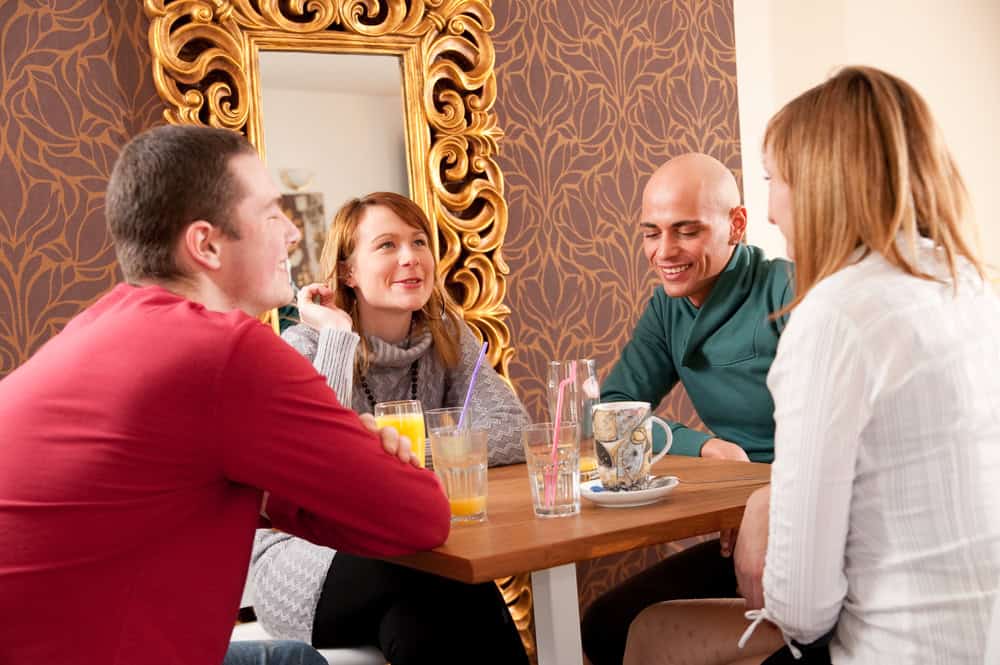
Politics are a big thing in every country, so talking about them isn’t strange. But it is strange how we’re so open to asking someone about political leanings. We might’ve just met someone, and you can guarantee that the question of whether they’re a Republican or Democrat will come up.
It’s a bit much for a first meeting. In fact, it can be a little offensive to ask someone how they are politically, because it reveals a lot of personal information about them. They might not want to share that straight away.
A prayer nobody requested

Don’t get us wrong, people who say, ‘I’ll pray for you’ usually mean it with the best intentions. They’ll usually say it when someone’s going through a difficult time, and in many American religious communities, it’s a normal way to offer support.
But it ignores one simple issue. The person you’re speaking to may not be religious, and while they might appreciate the sentiment, it could also make things pretty awkward. It brings religion into a discussion that really had nothing to do with it.
When a conversation becomes a business pitch

Networking is something so common in the United States that we do it at practically any event. You could be at a friend’s birthday party, for example, having a conversation about nothing important. But then someone starts talking about their latest business venture.
They suggest connecting on LinkedIn, and soon enough, a simple social gathering has become a place to make professional connections. That kind of approach can seem rather forward in other countries. You’re supposed to build trust gradually in order to form a professional relationship.
The phrase that ends an argument

When someone questions an American’s behavior or choices, there’s one thing they’ll very likely respond with. They’ll say, ‘It’s a free country.’ It’s true, America is a free country, but saying something like this can be a little confusing.
The person saying it hasn’t explained themselves or tried to get other people to see their point of view. No, they’ve simply reminded everyone that they’re free to make their own decisions. It’s quite a dismissive phrase, and that’s why it annoys some people.
The correction everyone can hear

It’s no secret that, as Americans, we’re pretty direct, and that includes the way we approach mistakes. A lot of us aren’t afraid to correct someone in front of other people, even when they’re halfway through a sentence.
But this kind of behavior is quite disrespectful in other places. Places like Hong Kong take saving face a lot more seriously than we do, so correcting someone in public can actually be offensive.
A compliment that sounds disappointing

The line, ‘Your dinner was quite good’ sounds like a compliment. Here in the United States, it is. But over in the UK, people would actually be a little offended if they heard it, as they use ‘quite’ in a different way.
We use ‘quite’ to mean ‘very.’
British people, however, use ‘quite’ to mean ‘fairly’ or ‘moderately.’ You might say something was ‘quite good’ because you loved it, yet a British person could be a little offended. They think you mean that the food was just okay.
The injury that gets an unexpected reaction

The word ‘fanny’ can be pretty offensive, too. We use it in America as a rather harmless term for someone’s backside, and the strangest thing about it is that it’s quite old-fashioned. It has a completely different meaning in the UK.
Over there, they use ‘fanny’ to talk about lady parts, and that means the line, ‘I’ve hurt my fanny,’ is far more offensive in the UK. Don’t be surprised to see people blushing when they hear it.
Sources: Please see here for a complete listing of all sources that were consulted in the preparation of this article.
11 normal 1950s social practices that would be unacceptable now

If you crack open a few etiquette manuals from the 1950s, you’ll find an endless list of rules people were supposed to live by; many are weird, antiquated, or offensive by today’s standards.
11 normal 1950s social practices that would be unacceptable now

