

Electrical mistakes are pretty easy to miss, and here are thirteen common errors that many homeowners make.
Behind the couch
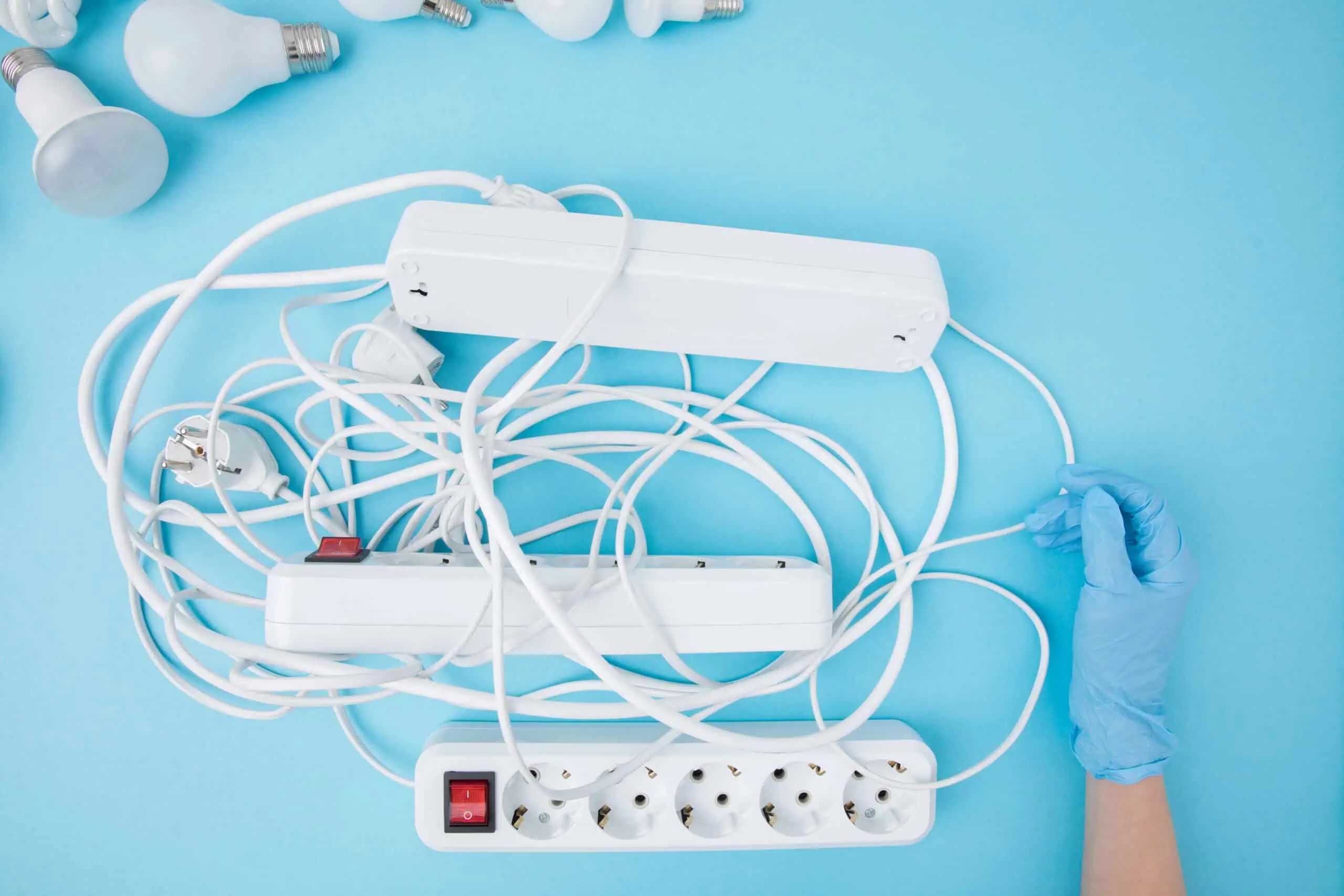
You’ll start with something simple, like moving furniture, and then you realize that the outlet isn’t in the right place, so you grab an extension cord to fix it.
The problem is when you simply leave it sitting. Months might go by, sometimes years, and the cord is still there, despite the fact that extension cords aren’t meant to replace permanent wiring.
It doesn’t matter that they might seem to work fine long-term because that temporary setup behind the couch or bed is something that the Electrical Safety Foundation International (ESFI) warns about. You’re better off adding an outlet where you actually need one instead of plugging in another cord to make things easier.
Under something soft

Another big mistake comes from where the cord goes, as a cord that disappears under a rug is a huge problem. Sure, it’s out of sight and nobody trips over it. But the Consumer Product Safety Commission has specifically warned that running cords under fabrics poses a risk, while the ESFI has said that covering cords can trap heat.
It gets even worse when you put furniture on top because it may press or bend the cord at the same time. Regardless of whether the cord looks damaged, the inside might be affected, and it’s far better to keep the cords visible. Don’t tuck them away under anything soft or heavy.
One more thing plugged in

One outlet turns into two. Then four. Out of nowhere, you have a strip plugged into another strip because you believe you’re solving a space problem, yet the ESFI warns that you shouldn’t plug extension cords together.
They also advise against chaining multiple outlet devices. Yes, that includes stacking power strips on top of each other.
The issue comes from how the load builds up across connections, rather than the strip itself, and continually needing ‘one more step’ is a sign that your setup needs to change. Leave the number of plugs as they are.
The wrong kind of shortcut

Any high-wattage appliances you might have, like a heater or microwave, may not necessarily fit where you want them. A quick fix is to get a multi-plug.
But that’s where the problem starts, as the ESFI says that you should plug large appliances directly into a wall outlet, while things like space heaters should never go into extension cords.
It’s the same issue with electric blankets. Unfortunately, these appliances draw more power than those setups are designed to handle, but the fix is simple. Items that heat up or draw a lot of power should go directly into the wall, no other substitutions allowed.
The warm little warning

Sure, you might notice that an outlet feels slightly warm, yet since everything still works, you probably ignore it.
That’s a problem. According to the CPSC, any electrical items that feel warm can be a sign of unsafe wiring conditions, including cords or faceplates that might be heating up.
You should also take loose-fitting plugs as a warning sign. Rather than testing them again later, you should stop using any warm electronics immediately and get them checked. It’s not normal for them to be hot.
The buttons nobody presses

It’s easy to ignore outlets with ‘test’ or ‘reset’ buttons, and most people notice them only when they move in. They soon forget that they’re there.
However, the ESFI has said you should be checking these outlets every month by plugging something into the outlet and pressing ‘test.’ You then have to confirm that the outlet switches off before pressing ‘reset.’
An outlet that doesn’t do that isn’t doing its job, and that’s a problem. These outlets are meant to help with any dangerous conditions. Sadly, you’ll never know whether they’re working or not unless you actually test them properly, so make sure that you do that.
Too close to the sink

Outlets near water aren’t always set up the way that they should be, and the CPSC says you need to put Ground Fault Circuit Interrupter (GFCI) protection in bathrooms and kitchen counters. It’s the same with outdoor areas.
But the detail that most people miss is the fact that an outlet may look normal even when it’s missing GFCI protection.
In terms of outdoor outlets, you’ll need to make sure the cords are rated for outdoor conditions, while grounded tools require proper connections. Where the outlet is isn’t as important as whether it’s actually equipped to be in that specific location.
The bigger fix that isn’t a fix

A blown fuse becomes a guessing game in some homes, and some people decide they’re going to fix the problem by replacing the busted fuse with a higher-rated fuse. It should stop it from blowing, right? Wrong.
Doing so actually constitutes a serious fire hazard because it allows more current in the fuse than the circuit was actually designed to handle.
In fact, it’s quite a serious problem in older fuse boxes that have Edison-base sockets. Pay attention to fuses that keep blowing. Rather than being random, it’s often a sign that something on that circuit is taking in more energy than it should, so you’ll need to investigate to find out what the problem is.
The missing third prong

People tend to improvise when a three-prong plug doesn’t fit, and they’ll remove the ground pin or use an adapter that doesn’t ground it properly. Big mistake.
The CPSC has said that you should never defeat the grounding feature or break off the ground pin because it’s how you keep the plug safe.
The third prong helps the device handle any electrical faults. An outlet that doesn’t match the plug is a signal that it’s time for you to change the setup instead of the plug. You really shouldn’t risk it.
The gadget that seems helpful

There are a few plug-in fixes that genuinely seem like they’ll solve a problem almost immediately, including things like outlet tighteners. They’re supposed to hold plugs in place.
However, the truth is that these ‘fixes’ can interfere with proper contact in the outlet, leading to overheating and all sorts of other drama.
It’s the same issue with adapters that turn light sockets into plugs because those setups aren’t properly grounded. Really, you should pay attention to a plug that won’t stay in.
It’s telling you that the outlet has become worn and you need to replace it, rather than getting something to ‘adjust’ the connection. It won’t fix the underlying issue.
The date your house was built

The wiring itself may actually be part of the issue, and it’s not something you can necessarily see from the outside. Homes that were built or rewired between 1965 and the mid-1970s often include something called aluminum branch-circuit wiring, and that’s a real problem.
Homes with this wiring are 55 times more likely to have fire hazard conditions in outlet connections.
Copper wiring, on the other hand, is much safer, yet the difficult part comes from the fact that there aren’t always visible warning signs before you see the problem. But it’s there, waiting to be found.
The tiny jolt people shrug off

So many people laugh off a quick zap from an appliance, usually because they think it’s static or a case of bad luck. But not according to the ESFI.
They say that mild shocks, alongside flickering lights or burning smells, are warning signs that something’s not quite right with your electricals.
Take these issues as a sign that there’s a problem, rather than brushing them off as being something weird. The advice is simple. Stop using the outlet or device that gave you a shock, and make sure to get it checked before it happens again.
The cracked piece people ignore

Yes, a chipped outlet cover seems to only be an aesthetic problem because it still works and nothing seems to be broken electrically. You probably push fixing it down the to-do list.
Despite that, cover plates aren’t optional and they have to be in good condition, meaning there shouldn’t be any exposed wiring left uncovered.
A cracked plate can allow part of the outlet to become exposed, although it might not seem obvious at a glance. As such, take a few minutes to swap the cover out. It’ll close off any exposed areas completely and prevent you from dealing with any nasty shocks.
Sources: Please see here for a complete listing of all sources that were consulted in the preparation of this article.
12 smart tricks to lower your electric bill

Whenever your electric bill shows up, it might make you do a double-take because even though you’ve turned off lights and avoided using the AC, the numbers aren’t changing much. However, there are a bunch of things that you probably haven’t tried yet, but they actually help reduce your bills. Here are twelve smart tricks to lower your electric bills. No complicated upgrades—just some things that people often ignore, yet could save you some money.

