

There have been some rather creative ways of punishing people throughout history, and some of them have to be seen to be believed.
A barrel you had to wear

Anyone who drank too much alcohol would potentially have to suffer a rather unusual punishment called the ‘Newcastle cloak.’ No, it had nothing to do with actual clothing. The criminal would have to climb into a barrel and walk around town wearing it. British writer Ralph Gardiner wrote about it in 1655.
He said the offenders were marched around the English city of Newcastle upon Tyne while wearing wooden casks. These had holes cut for their head and arms. The offenders would rest the barrel on their shoulders. It’s not entirely clear how common this punishment was, but we know it definitely existed.
Silence came with a lock

Telling someone to be quiet was one thing. The scold’s bridle took it to a whole new level. This was a kind of iron cage that was locked around the wearer’s head, and it included a bit that would press down on their tongue. It was used from the 1500s onward in Britain.
To make things worse, some versions of it included spikes, just so it was more uncomfortable. The punishment was generally meant for outspoken women, known as scolds. These were women who kept arguing or were verbally abusive, as well as those causing public trouble. Some places forced the scold to parade through town wearing the cage.
The chair went straight into the water
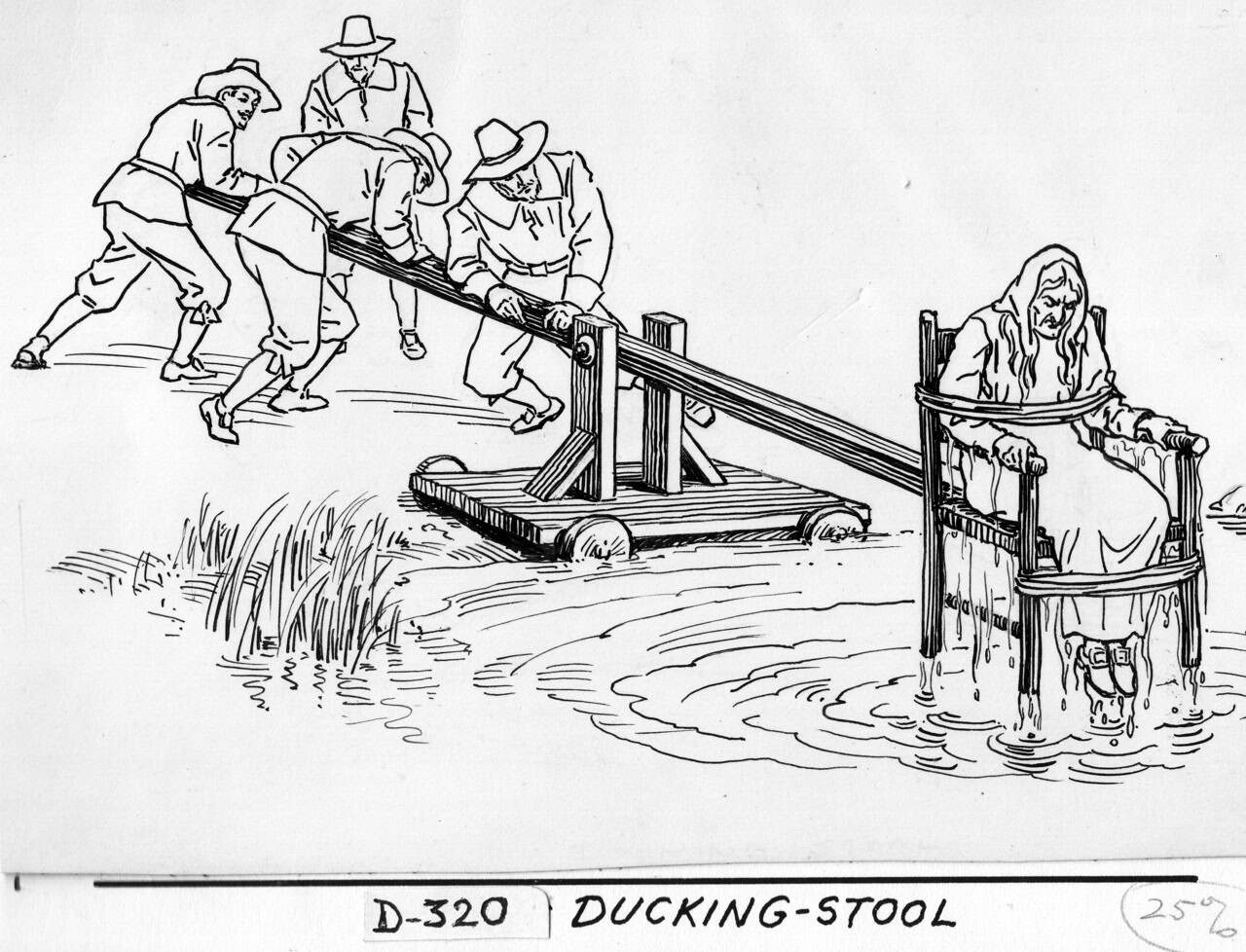
Public punishment became something else, thanks to the ducking stool. It involved strapping an offender onto a chair that was fixed to a long wooden arm. Then, they were lowered into water, sometimes more than once. This was another punishment particularly associated with scolds, although other criminals could be punished this way, too.
Dishonest bakers, brewers, butchers, and apothecaries were sometimes forced to go on the ducking stool, for example. The last recorded use of the stool was in 1817 in Leominster, England.
Hard work that achieved nothing

The crank might not sound like a horrible punishment, but it was. Some Victorian prisons used it on inmates. Prisoners were forced to stand or sit in a cell turning a handle, or crank, that moved paddles inside a box. They’d sometimes do it thousands of times. That might not sound terrible, yet the punishment didn’t actually do anything useful.
The goal was to wear an offender down through sheer boredom and pointless labor. They would sometimes have to crank it a certain number of times before receiving food, like 6,000 to 14,400 turns over six hours. Guards could tighten the crank to make each turn harder if they wanted to.
Tar, feathers, and a public parade
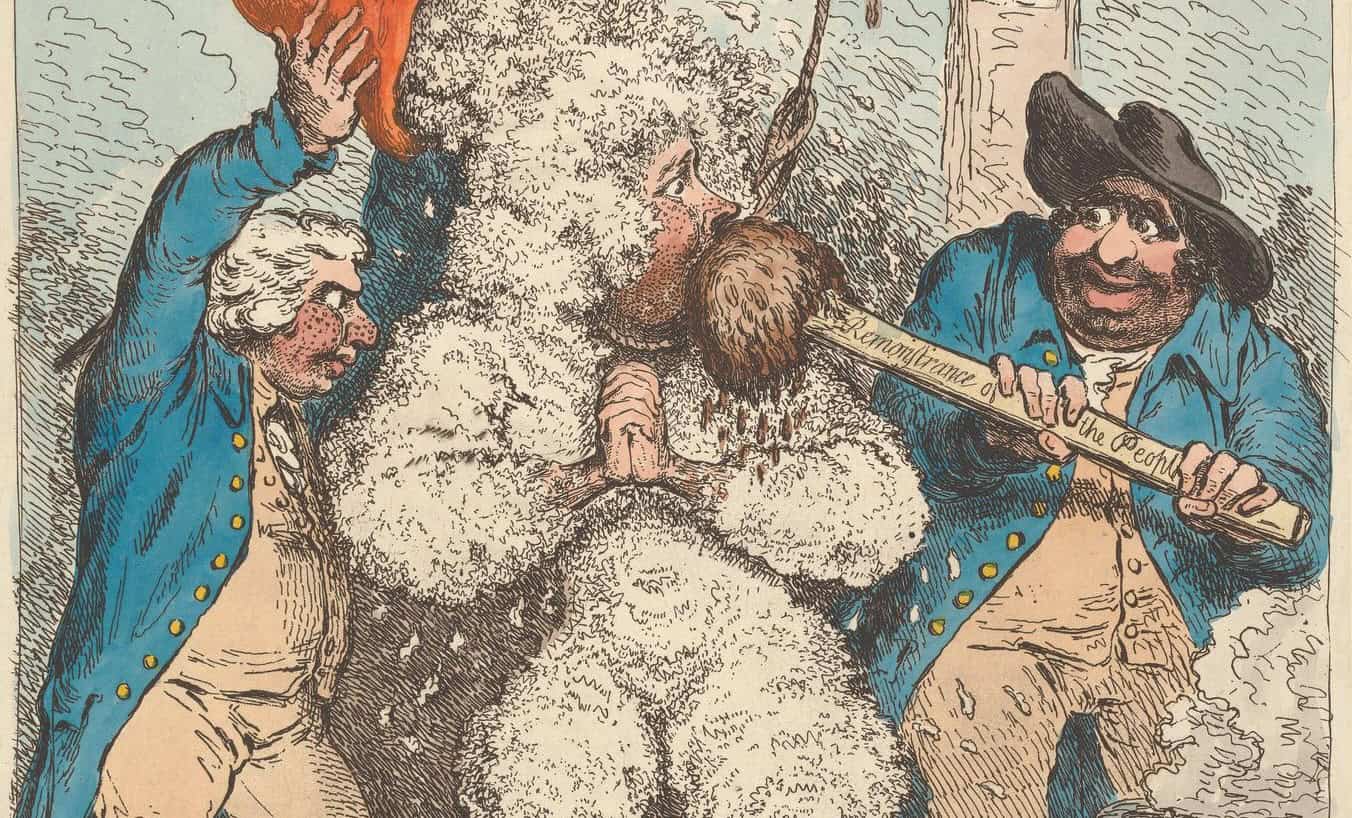
Tarring and feathering seems like something from cartoons, yet it was very much real. It was quite a popular punishment before the American Revolution. A crowd would smear sticky tar or another heated material onto a victim, then dump feathers over them. These would stick to the substance.
All sorts of people could be punished this way, including customs officers and Loyalists, as well as enemies of local political causes. One of the most famous examples was John Malcolm, a Boston customs official. He was tarred and feathered in January 1774, then paraded around the city. Unlike other punishments, however, it wasn’t court-ordered, but rather vigilante justice.
The pillory could get much worse
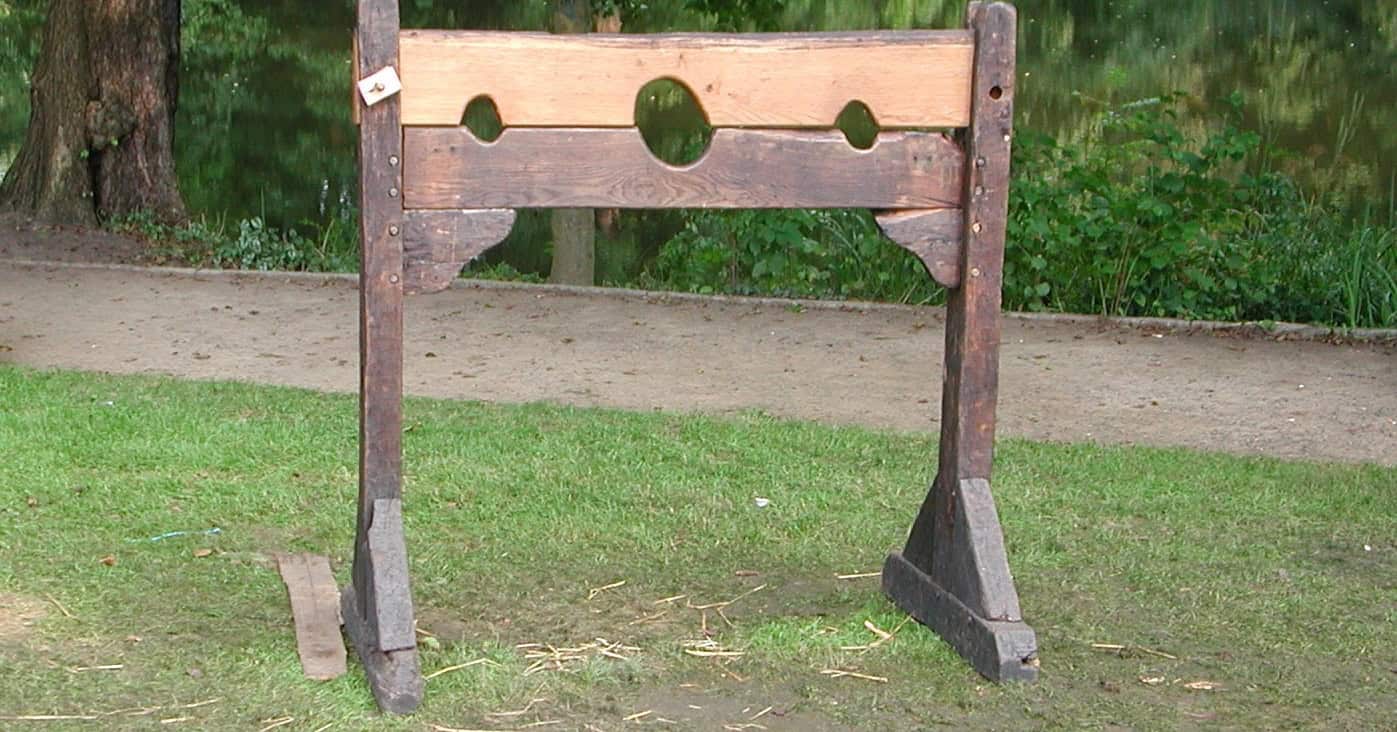
Most people know about pillories. These were a kind of punishment where someone would be forced to stand with their head and wrists locked in a wooden post. But there was an even worse version of it that involved putting nails through someone’s ears.
Yes, really. Catholic layman Thomas Pound was one of the people punished this way, and in 1604, his ears were nailed to pillories. Printer Roland Jenks also faced the same punishment, although in a worse way. He was told he’d have to cut himself free and leave part of his ears on the pillory. Ouch.
An ear could be part of the sentence

Not all ear punishments involved them being nailed down, though. In some cases, they’d simply remove them as part of a punishment known as ‘ear cropping.’ It was used as a criminal punishment in Britain and colonial America for particular types of offenses.
Colonial North Carolina said that a convicted perjurer, aka someone who knowingly lies under oath, could be fined and put in the pillory. They would be barred from giving testimony, and then have both ears cut off. The goal wasn’t simply physical pain, though. By cutting off a person’s ears, you made them publicly identifiable as a criminal and also humiliated them.
Refusing to answer brought more weight
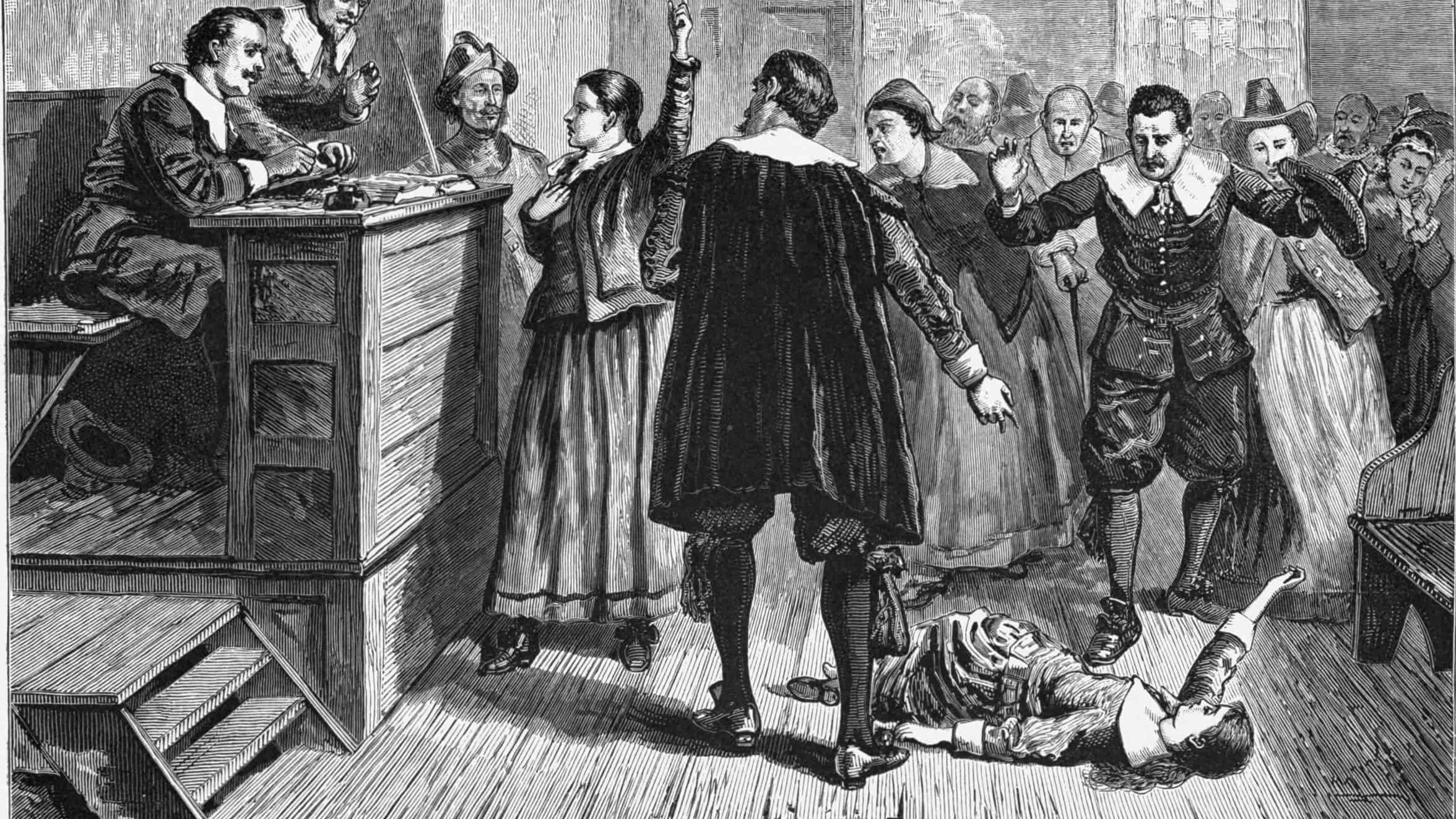
You couldn’t refuse to plead during a trial in old English courtrooms. Well, technically, you could, but it was at the risk of facing a punishment called peine forte et dure that was absolutely horrible. The non-pleader would be laid down and have boards placed over the body.
Then, weights were gradually added until the offender gave a plea or died. It was something that happened to Giles Corey, who refused to plead during the Salem witch trials in 1692. He was pressed to death. Weirdly enough, it took until 1772 for peine forte et dure to be made illegal.
Even fidgeting had its own stocks

Kids today have fidget spinners for when they can’t keep their hands still, but schools didn’t always treat fidgeting so kindly. They would punish children with finger stocks. It was exactly what it sounded like, a kind of small wooden restraint with holes for the fingers.
Some versions would force a child to put their hands behind their back. It wasn’t only for fidgeting, however. A few schools would punish children with finger stocks if they wriggled or struggled to sit quietly like they were expected to.
Turning up the heat

Being boiled alive was a genuine punishment in Tudor England, at least for a short time. It was written into law in 1531 as part of something called the ‘Acte for Poysoning.’ Essentially, this law made murder by poison a form of treason, punishable by being boiled to death.
That’s exactly what happened to Richard Roose. He was a cook accused of killing two people by poisoning food in the Bishop of Rochester’s household. He was boiled to death in 1532 in Smithfield. Margaret Davy was executed the same way in 1542, although by 1547, the law was removed.
Sources: Please see here for a complete listing of all sources that were consulted in the preparation of this article.
15 things most people believe about history that are completely made up

Some of history’s most famous stories are nothing more than myths and misconceptions that have very little basis in fact.
15 things most people believe about history that are completely made up

