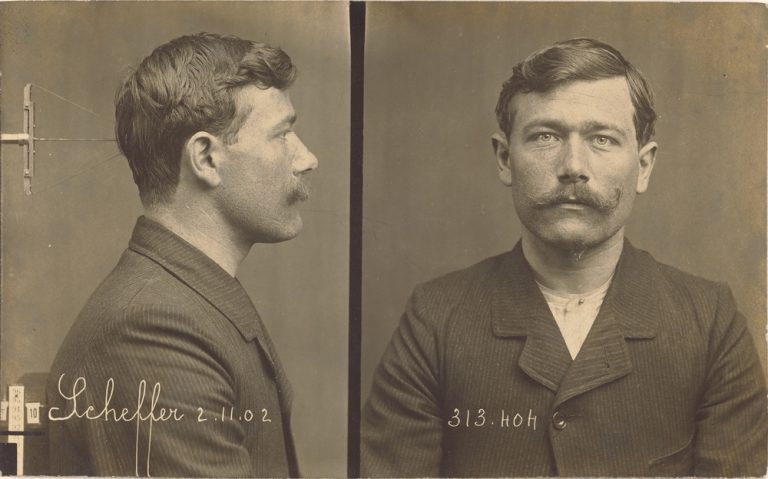

Some of these became celebrities while others have long since been forgotten, but browsing through these surviving mugshots gives an interesting look at crime in the Great Depression.
John Dillinger
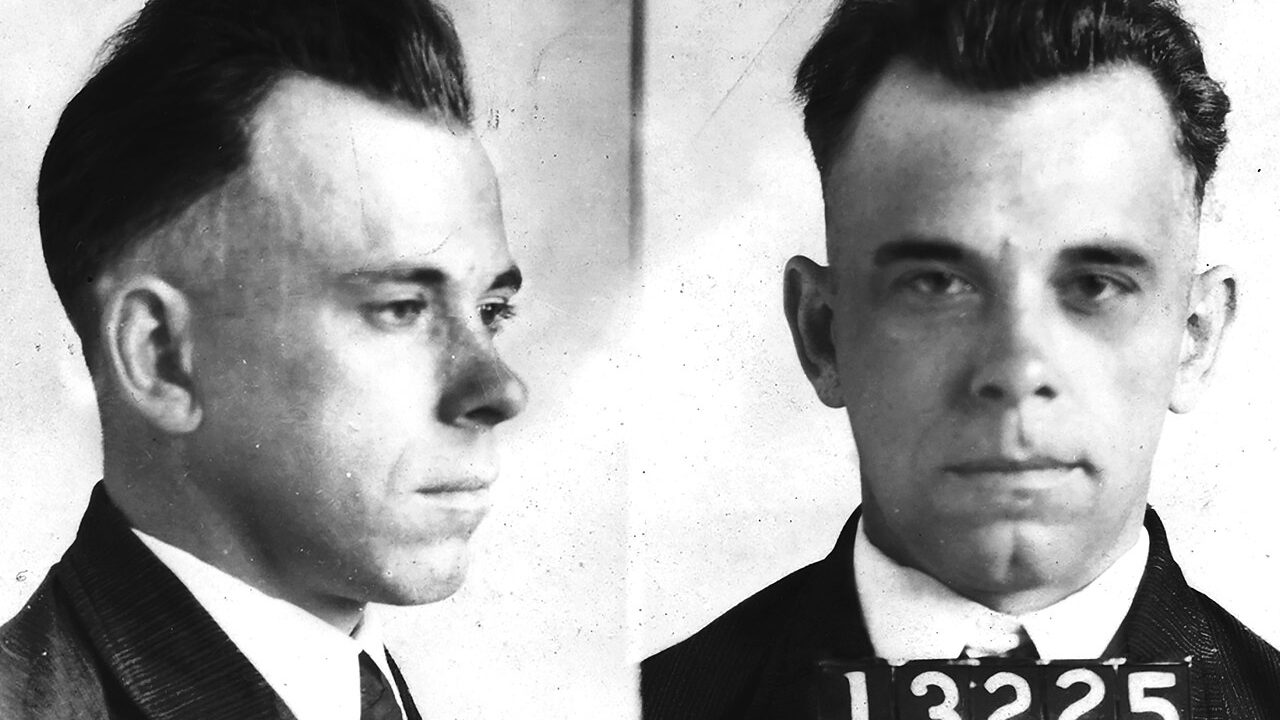
By 1933, John Dillinger was one of the nation’s most wanted bank robbers. He and his gang robbed banks all over the Midwest. Numerous escapes from prison only added to his notoriety, and newspapers across the country helped create his folk hero status.
Compared to the media’s embellished mugshot, Dillinger looks like a fairly normal guy. Eventually, the FBI would dub him “Public Enemy No. 1.” He met his end outside Chicago’s Biograph Theater in July 1934, when he was shot and killed by federal agents as he tried to flee.
Lucky Luciano
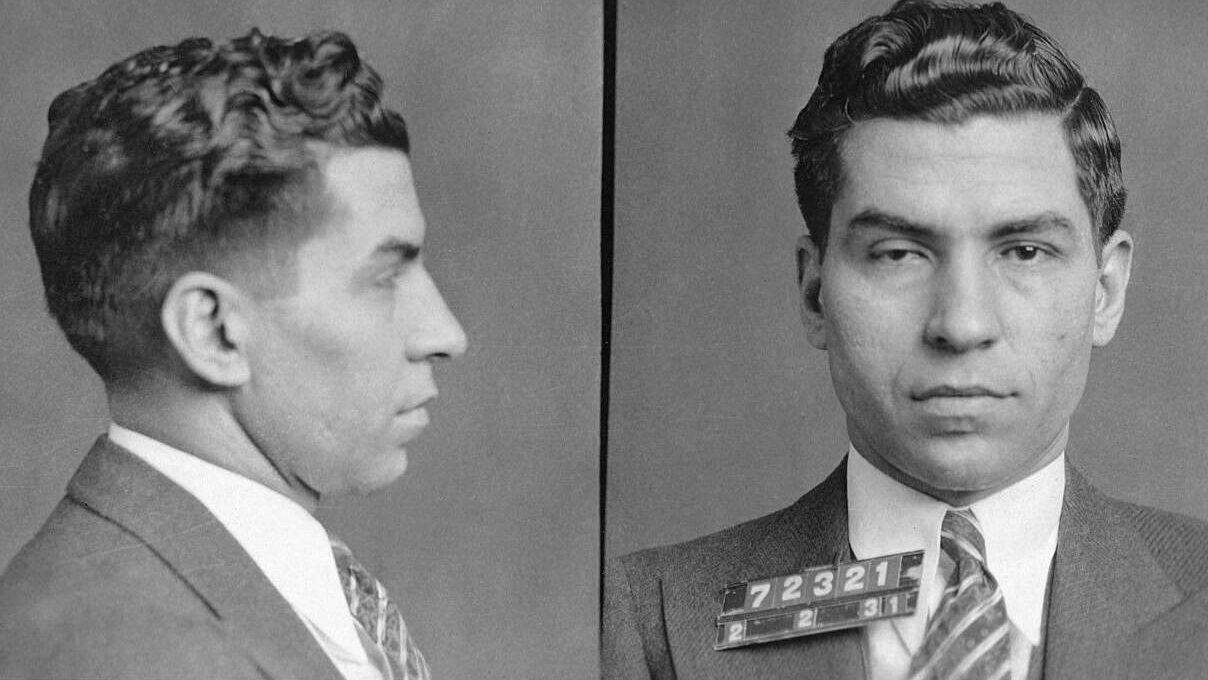
Charles “Lucky” Luciano was perhaps one of the most powerful organized-crime bosses in American history. In the early 1930s, Luciano helped to reorganize New York’s Mafia into what he thought was a more efficient operation, with the city’s big crime families working together instead of waging wars against each other all the time. Luciano got his wealth primarily through illegal gambling and other rackets.
Luciano was convicted of compulsory prostitution in 1936 and sentenced to a long prison term. He was released ten years later under the condition that he be deported to Italy, where he spent most of the rest of his life.
Machine Gun Kelly
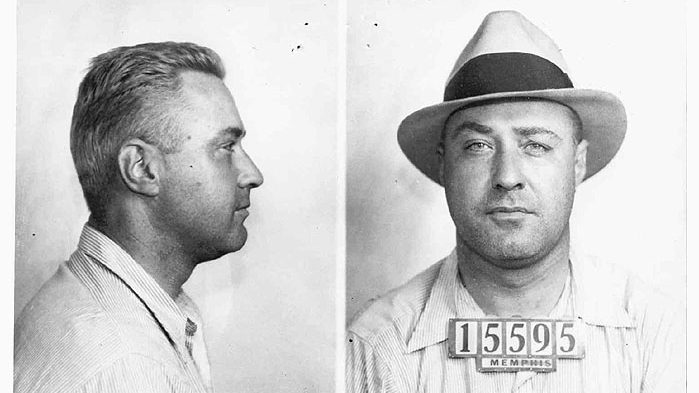
George “Machine Gun” Kelly rose to national notoriety in 1933 after he kidnapped wealthy oilman Charles Urschel from his Oklahoma City home.
Kelly and his gang demanded an unprecedented ransom for Urschel’s release; however, Urschel quietly committed important details to memory during his captivity and provided police with a wealth of information upon his release. Kelly was later arrested in Memphis and given a life sentence.
Kathryn Kelly
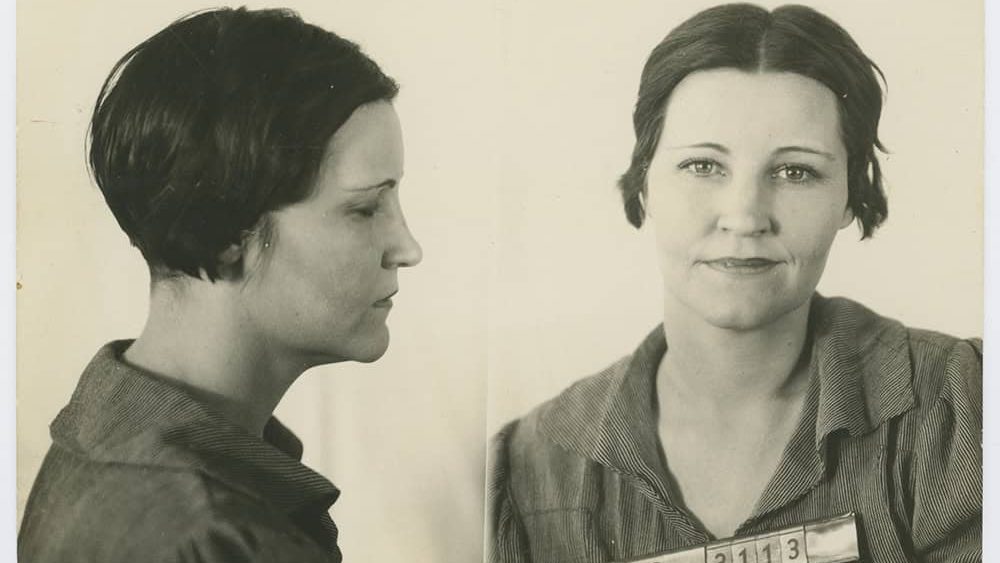
Machine Gun Kelly’s wife, Kathryn Kelly, aided her husband in crime. She assisted in buying him the machine gun that he got his legendary alias from and conspired with him in the kidnapping of Charles Urschel, as well as what happened to him after it. Kathryn herself was sentenced to life in prison after she and her husband were arrested in 1958.
Alvin Karpis
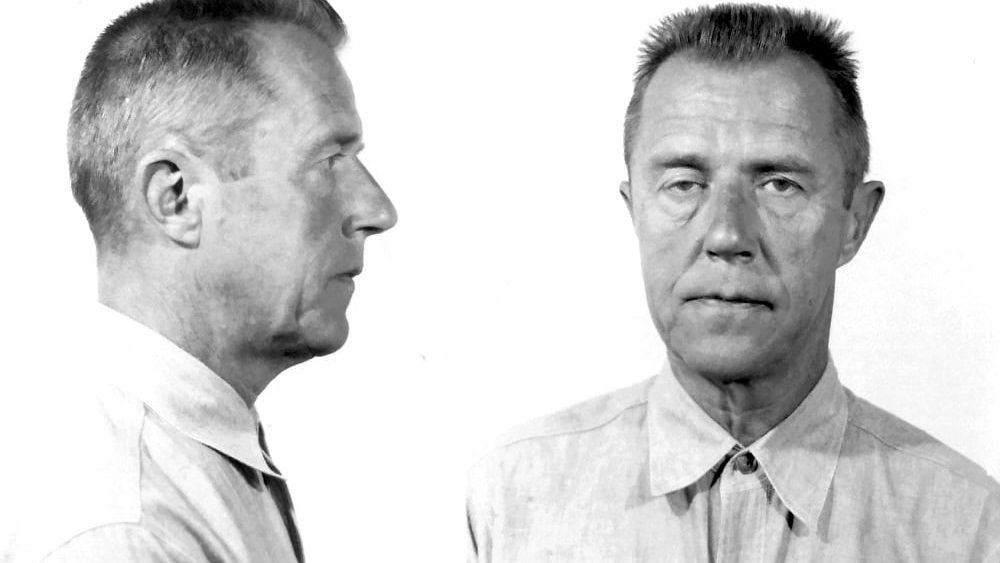
Unlike most of his Depression-era criminal peers, Alvin “Creepy” Karpis lived to see life after crime. He rose to prominence in the Barker-Karpis Gang, which committed robberies and infamous kidnappings. After the FBI named Karpis “Public Enemy No. 1,” J. Edgar Hoover himself attended Karpis’ 1936 arrest in New Orleans.
Karpis spent decades behind bars in federal prisons, including time at Alcatraz. He was released from prison and lived until the year 1979.
Baby Face Nelson
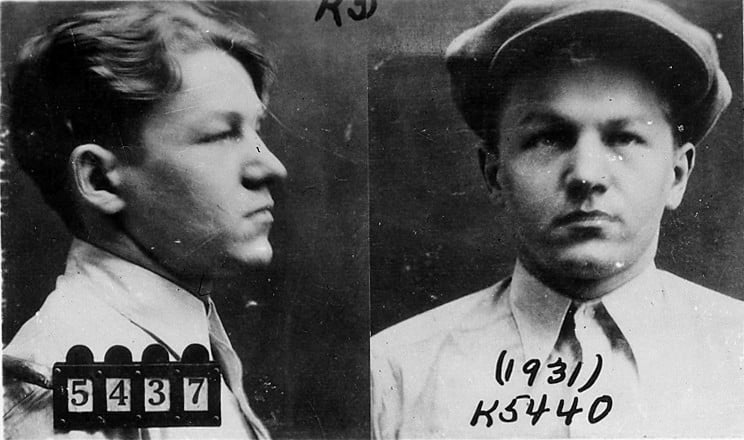
Lester Joseph Gillis, better known as Baby Face Nelson, despised the nickname he got from his youthful looks. Behind that baby-faced look was one of the most violent criminals of his time.
Nelson robbed banks and gained notoriety for shooting at law-enforcement officers. Following Dillinger’s demise, Nelson was appointed Public Enemy No. 1 by the FBI. Nelson was fatally wounded in a shootout with federal agents outside Chicago on November 19, 34 and died that evening.
Clyde Barrow

Long before Bonnie and Clyde, Clyde Barrow had a criminal history that included burglaries and robberies. He had already burgled and robbed people and was a seasoned car thief while members of the Barrow Gang had killed several people.
Clyde looks different in mug shots before movie producers glamorized Bonnie and Clyde. By 1934, police in multiple states were searching for Bonnie and Clyde. Clyde was just 25 years old when he was murdered with Bonnie in Louisiana.
Al Capone
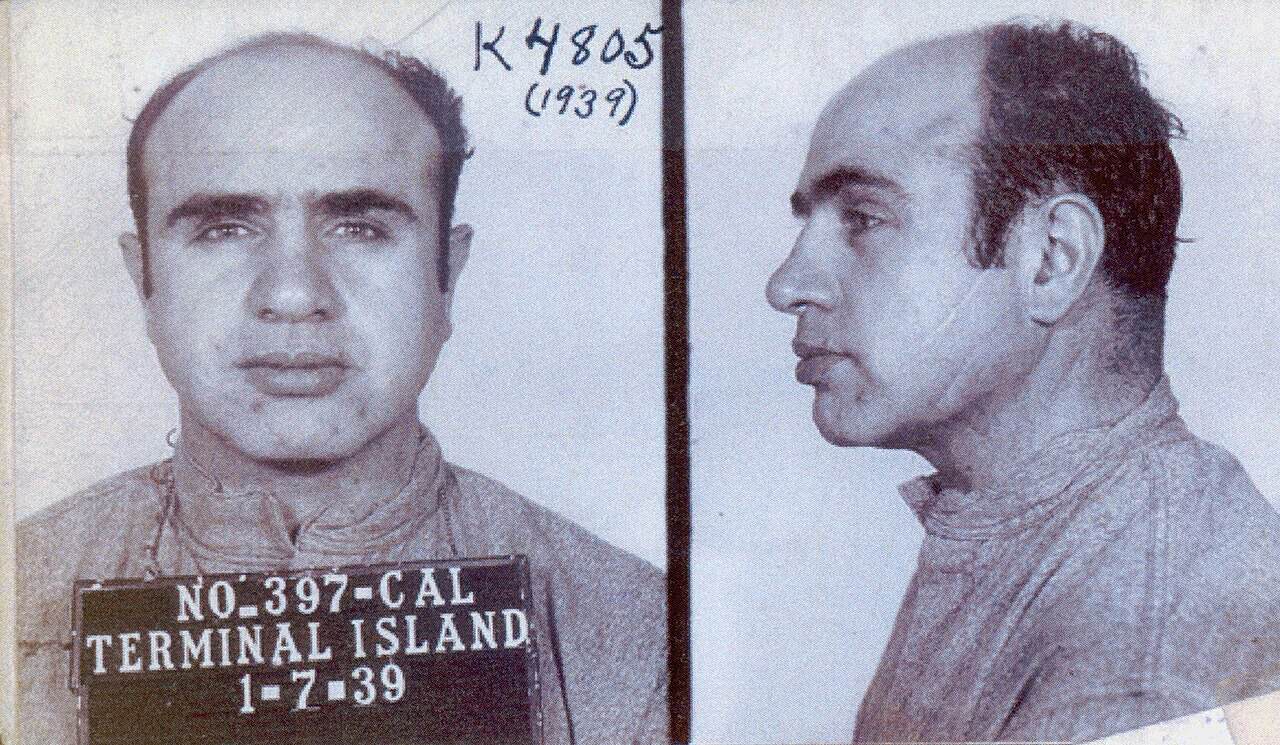
Al Capone rose to notoriety as the United States’ most well-known gangster during Prohibition by gaining a huge fortune through bootlegging and gambling rackets and other criminal activity in Chicago.
Although law enforcement could not easily link him to bootlegging murders, they were eventually able to get him on charges of federal income-tax evasion. He was convicted in 1931 and spent time in prison at Alcatraz. Illness caused him to be released from prison in 1939. Capone died in Florida in 1947.
Arthur “Doc” Barker
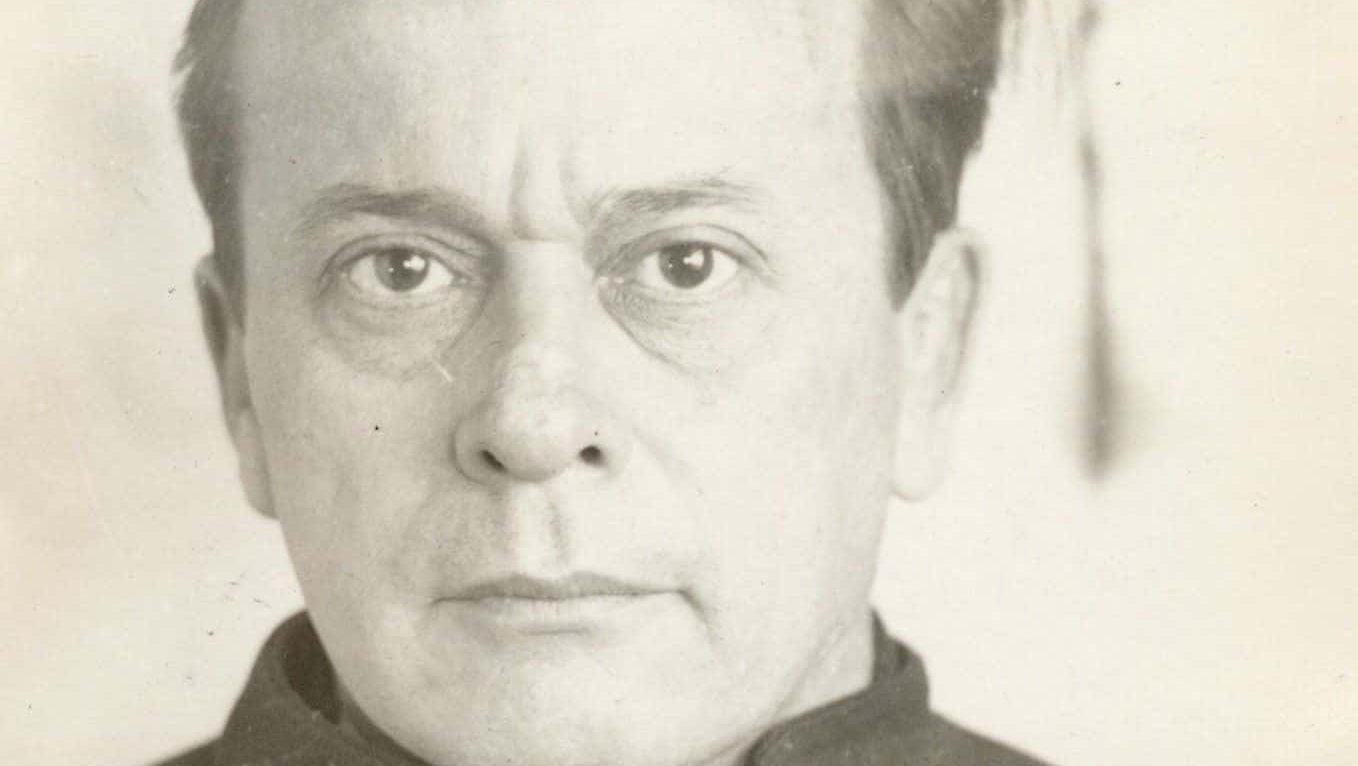
Arthur “Doc” Barker was part of the infamous Barker-Karpis Gang that committed robberies and kidnappings throughout the Great Depression era. Barker was involved with the 1933 kidnapping of wealthy businessman William Hamm, and later became associated with the kidnapping of banker Edward Bremer.
Barker was sentenced to life in prison following his arrest and eventual transfer to Alcatraz. Barker tried to escape the prison known for never having had a successful escape in 1939, but was shot by guards and later died of those injuries.
Dutch Schultz
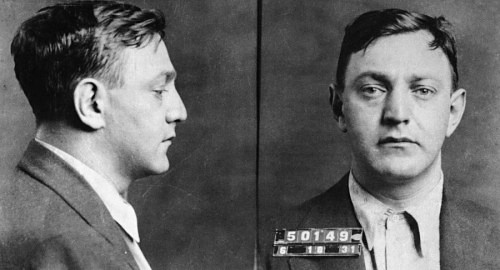
Arthur Flegenheimer, better known as Dutch Schultz, was one of the most infamous criminals in New York City during the Prohibition and Great Depression eras. He profited enormously from bootlegging and other illegal activities such as gambling rackets, and became infamous for his use of violence against competitors and perceived slights.
Schultz was targeted by federal prosecutors several times, mostly for tax violations. He twice evaded conviction on charges in highly publicized trials.
However, after Schultz offered money to have New York prosecutor Thomas E. Dewey killed in 1935, other crime bosses allegedly felt Schultz was too big a threat to further protect. Schultz was shot by gunmen at a restaurant in Newark and died the next day at age 33.
Sources: Please see here for a complete listing of all sources that were consulted in the preparation of this article.
Like our content? Be sure to follow us.

