

Most zippers are just there, on jeans & coats, whatever. But they weren’t always seen so innocently. When zippers first appeared, some people thought they were too suggestive. Here’s the story of how a little metal fastening device made waves in the fashion world.
Featured Image Credit: Shutterstock.
Key takeaways
Here’s what you’ll learn:
- When the modern zipper took shape and got its name
- How and when zippers jumped from galoshes to couture
- Why zippers became so shocking
- What critics & commentators actually said about indecency
- The 1937 “Battle of the Fly”
- The ways the industry changed
From gadget to garment
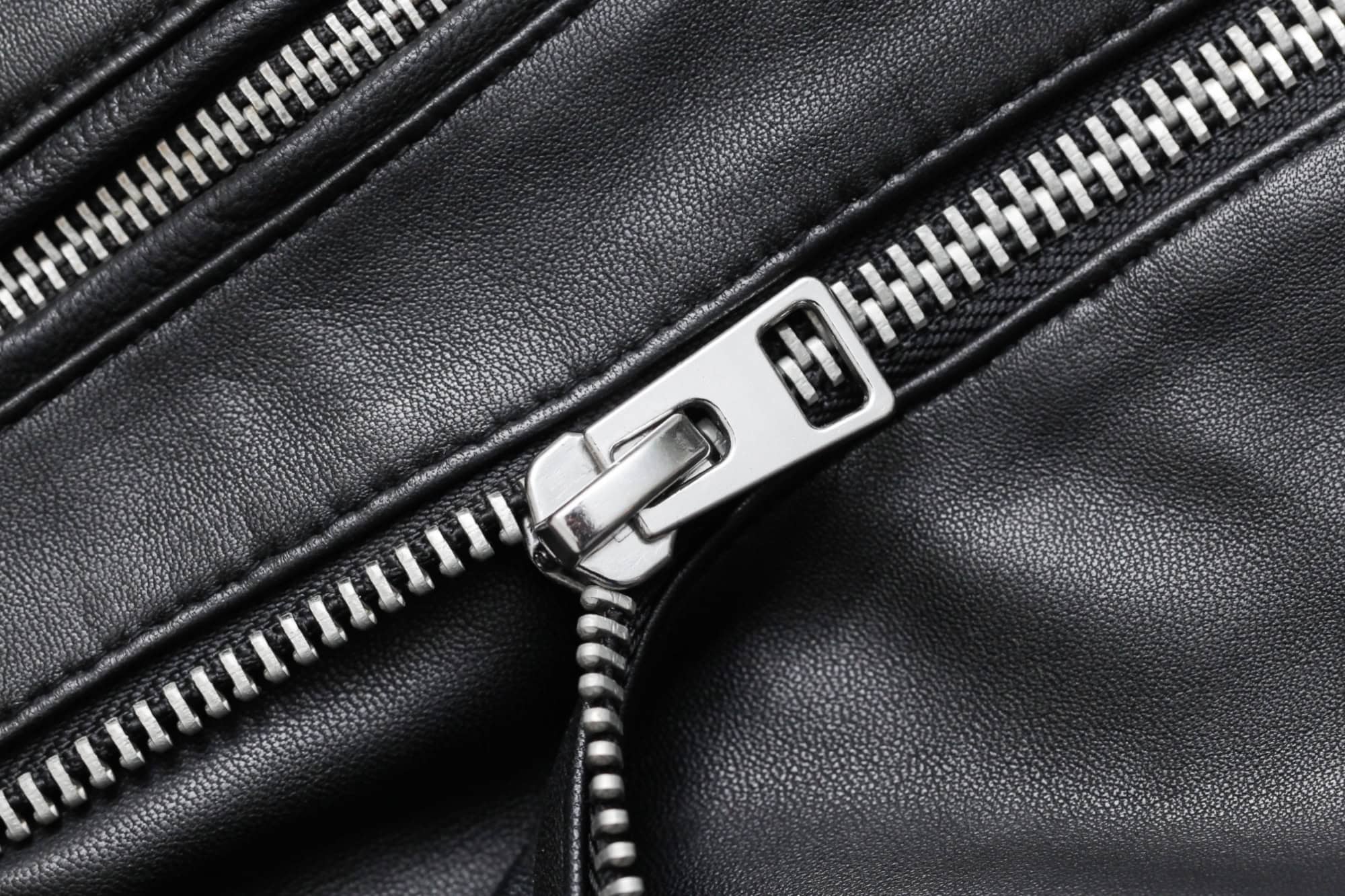
The story kicks off in 1917. Gideon Sundback, an engineer, received a U.S. patent for his “separable fastener,” which was essentially the zipper we know today. It had metal teeth & a slider that locked them together.
Before this, closures were clunky. They were either hooks, laces, or buttons. But Sundback’s design changed things.
However, in the 1920s, you wouldn’t find zippers on clothes just yet, as the B.F. Goodrich Company put them on rubber overshoes first. They gave them the catchy name “zipper.” While the name stuck, for a good while, they were only on boots & bags. Clothing would take another decade or so.
But by 1935, things changed. Designer Elsa Schiaparelli in Paris put zippers on her couture dresses & she didn’t try to hide them either. Some of her gowns had shiny, oversized zippers running right down the back. At the time, that was quite controversial…and definitely not something everyone was ready for.
Why some called zippers scandalous
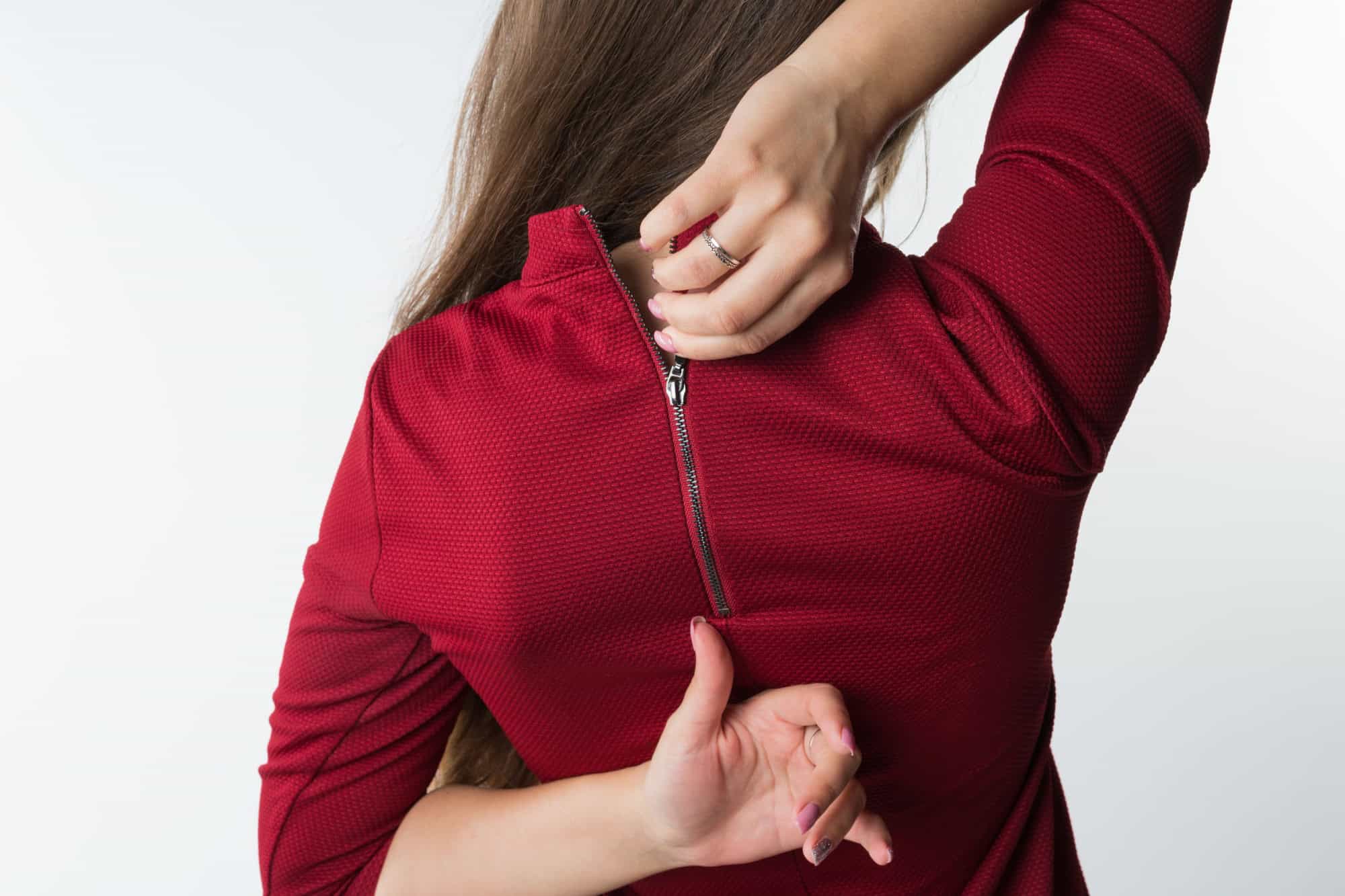
The issue that many critics had wasn’t necessarily the design. No, the biggest complaint was that zippers made it “too easy” to get undressed. People worried it sped things up & that clashed with social norms.
While it might sound strange today, just think about how they felt. People went from dozens of tiny buttons to one swift pull. That alone was enough to cause talk of indecency.
That’s not all. There was also the visibility issue, as Schiaparelli turned zippers into actual design lines. She placed them across curves & sleeves, sometimes in shiny gold, so they didn’t exactly blend in, but instead, they drew attention to the body. That was rather daring for the conservative tastes of the time.
Pop culture picked up on the idea, too. In Aldous Huxley’s 1932 novel Brave New World, zippers show up a lot in scenes about quick dressing & undressing. That just reinforced the connection between zippers and…well, you know what.
When it happened
Here’s a quick timeline of what happened:
- 1917: Sundback’s patent for the modern zipper
- Early 1920s: Goodrich markets “Zipper” overshoes
- 1932: Brave New World makes zippers part of pop culture
- 1935: Schiaparelli puts visible zippers in couture dresses
- 1937: The “Battle of the Fly” makes zippers part of men’s trousers
The immediate consequences

Fashion houses had to adjust quickly. Soon enough, back zippers became common in women’s clothing, mostly because they were less risqué than zips down the front. Ads also appeared in the mid-30s that showed zippers as something useful for families. What was the selling point? Kids could finally dress themselves without fumbling with buttons.
Production had to catch up, too.
By 1937, the demand for women’s zippers was so high that Talon, the leading manufacturer, had to change factory lines to make soft-colored “ladies’ zippers.” There was even a zipper shortage that year because dresses were selling faster than supply could keep up. How strange is that?
The 1937 “Battle of the Fly”
Then came the Battle of the Fly. On one side, you had the old-school button fly that had been around forever. On the other side was the zipper fly, which companies were pushing hard that year.
It started in Paris. French tailors started switching from buttons to zippers on men’s pants, and American brands didn’t want to fall behind, so advertisers began advertising the zipper fly as being quicker & neater than all those buttons. It was also less fussy.
How attitudes changed

Within just a couple of years, what seemed daring turned into common sense. Magazines like Esquire argued that zippers were tidier than buttons for men’s fashion. No more gaps, no more mishaps. They also ran flashy spreads showing off zipper-front trousers as the new standard of modern menswear. This sense of practicality completely changed people’s idea of zippers.
Meanwhile, high fashion normalized them. Schiaparelli kept showing zippers season after season & then department stores picked it up. Soon enough, the shock factor fizzled. Shoppers became used to how quick & neat zippers were. As a result, the moral panic almost entirely disappeared. Zippers slid into everyday fashion without a fuss.
And the rest, as they say, is history.
Sources: Please see here for a complete listing of all sources that were consulted in the preparation of this article.
Like our content? Be sure to follow us.
