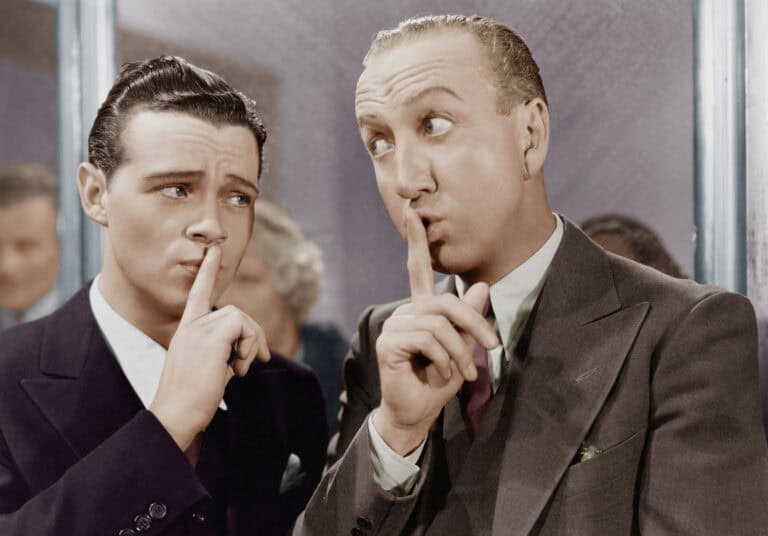

The world has changed a lot since the 1980s, and so have the things we say. Back then, people talked differently, often without realizing how their words might affect others. Some phrases were common in everyday conversations, but today, they would be seen as outdated or even offensive. Times have shifted, and with that, our understanding of respect and sensitivity has grown. What once might have seemed like an innocent comment can now come across as rude or insensitive. In this list, we’ll look at 12 things people used to say in the 1980s that nobody dares to say out loud today.
Featured Image Credit: everett225 /Depositphotos.com.
“She’s Asking For It, Dressed Like That”

In the 1980s, people sometimes blamed women for getting unwanted attention because of how they dressed. They thought if a woman dressed a certain way, she was inviting bad behavior. Today, we know this isn’t true. No one asks for bad things to happen because of their clothes. It’s important to place the blame on those who act wrongly, not on the victim.
“AIDS Is A Gay Disease”

When AIDS first appeared, many believed it only affected gay men. This led to a lot of unfair treatment and fear. The truth is that anyone can get AIDS, no matter who they are. Today, we understand that this idea was wrong and harmful. Education has helped us see that spreading false information can hurt people and create unnecessary fear.
“You’re Too Pretty To Be Smart”

This kind of comment, often said as a compliment, suggests that beauty and intelligence can’t go together, especially for women. It reinforces the harmful stereotype that if a woman is attractive, she can’t be smart, or if she’s smart, her looks don’t matter. Today, people recognize that this thinking is insulting. It reduces a person’s worth to their appearance and undermines their abilities.
“Women Should Stay Home After Getting Married”

In the 1980s, it was often expected that once a woman got married, her primary role would be to stay at home, take care of the house, and raise children. This idea was so ingrained that many people didn’t even question it. Today, however, this belief is seen as outdated and limiting, as it ignores a woman’s right to choose her own path (building a career, staying home, or a mix of both).
“That’s So Gay!”

This phrase was used casually to describe something as uncool or undesirable. People didn’t think twice about it back then. But now, we recognize how harmful and offensive it is. Using “gay” in this way disrespects the LGBTQ+ community and perpetuates negative stereotypes. Today, we’re more aware of the impact our words can have on others.
“Boys Don’t Cry”

Telling boys to hide their emotions was common advice in the past. It was believed that showing feelings, especially sadness, made a boy weak. But now, we understand that this kind of thinking is damaging. Encouraging emotional expression in everyone, regardless of gender, is important for mental health and well-being.
“You People…”

This phrase was often used to talk down to minority groups, implying that they were different or less than the majority. It’s a way of speaking that’s dismissive and disrespectful. Today, we recognize how hurtful this kind of language can be, as it alienates and dehumanizes people.
“What’s Your Real Job?”

This question was often directed at people in creative or unconventional careers, like artists, musicians, or freelancers. It implied that their work wasn’t legitimate or valuable. Nowadays, we recognize that all work, especially creative and non-traditional careers, contributes to society in meaningful ways.
“Mixed-Race Couples Have It Tough”

Back then, people said this to acknowledge the challenges mixed-race couples faced due to societal biases. But saying this also suggested that these relationships were naturally harder, which wasn’t fair. Now, we celebrate diversity and know that love isn’t about race. Comments like this can be unnecessary and harmful.
“People with Accents Should Try to Speak More Clearly”

This comment was often aimed at those who weren’t native speakers, implying that their way of speaking wasn’t good enough. It showed a lack of respect for different cultures and languages. Today, people are more likely to appreciate the diversity in how we speak and the effort it takes to learn a new language. Everyone deserves to be heard, no matter how they sound.
“All Asians Are Good At Math”

What might have seemed like a compliment was actually a harmful stereotype. This kind of thinking reduces a whole group of people to a single trait and ignores the individuality and diverse talents of each person. Today, we understand that such generalizations are unfair and can put undue pressure on people to meet certain expectations.
“Stop Acting Like A Sissy”

Calling someone a “sissy” was a way to shame boys and men for showing any behavior that wasn’t traditionally masculine, like being emotional or gentle. This phrase reinforced rigid gender roles and made people feel bad about being themselves. Nowadays, we know that it’s important to allow people to express themselves freely without fear of being judged or labeled.
Disclaimer: This list is solely the author’s opinion based on research and publicly available information.
Like our content? Be sure to follow us.
Read More: