

Some stories, despite sounding unbelievable, are completely real, even with the odds stacked against them.
A very rough run

Dylan McWilliams probably had the worst kind of luck you could ever have in the wild. It started in 2015. He was hiking in Utah when a rattlesnake bit him, which is bad enough. It got worse two years later.
While he was camping in Colorado, a bear grabbed his head and dragged him. The bear eventually let him go.
Then, another two years later, McWilliams was bodyboarding in Kauai when a shark bit his leg, leading to him needing seven stitches. The last incident happened when he was only 20 years old. Imagine surviving all that before 21.
The couch nap

Ann Hodges wasn’t exactly looking for space rocks. But they found her. On November 30, 1954, she became the first person in human history to be hit by a meteorite. It all happened while she was napping in Sylacauga, Alabama.
A meteorite came straight through the roof and bounced off the radio, then it hit her in the thigh. The rock weighed around nine pounds. Thankfully, Hodges only ended up with a bruise on her leg. She made history, too.
The ranger and the sky

Roy Sullivan was the kind of guy who liked being outdoors. He worked in Shenandoah National Park in Virginia, after all, and he experienced something absolutely incredible. He was struck by lightning. Not once. Not twice. Not even three times.
Turns out, he was struck around seven times in total between 1942 and 1977. They struck him all over, including his leg, eyebrows, shoulder, ankle, chest, and stomach. He survived every single one. What are the chances?
The trip home

Being in Hiroshima on August 6, 1945, was practically a death sentence. It was the day America dropped the first atomic bomb. That was exactly where Tsutomu Yamaguchi was, and he was hurt in the blast, even being temporarily blinded. So what did he do?
He decided to go back to his home city, Nagasaki. The U.S. dropped the second bomb there three days later. Yes, really. He became the first person officially certified as surviving both bombings, although others were recognized later. But Yamaguchi was the first.
The impossible fall

There’s no reason to worry about being on a plane. They’re some of the safest methods of transport, after all. That is, unless your name’s Vesna Vulović, who was a flight attendant on a Yugoslav Airlines plane that broke apart on January 26, 1972. She fell 10,160 meters.
That’s about 33,333 feet, and she fell without a parachute. Somehow, she survived. Vulović was later found alive near a village called Srbská Kamenice and was the only survivor of the crash.
The ship problem

That’s not all for transport disasters. The White Star Line company has become infamous for its ship disasters, and Violet Jessop knew all too well about them. She was on the Olympic in 1911 when it collided with HMS Hawke. But that didn’t stop her.
A year later, she worked on the Titanic when it hit an iceberg and sank, too. You’d think that’d put her off ship sailing for a while, yet she continued working at sea during World War I. She served on the Britannic, which also sank after hitting a mine. Talk about bad luck.
The comet timing
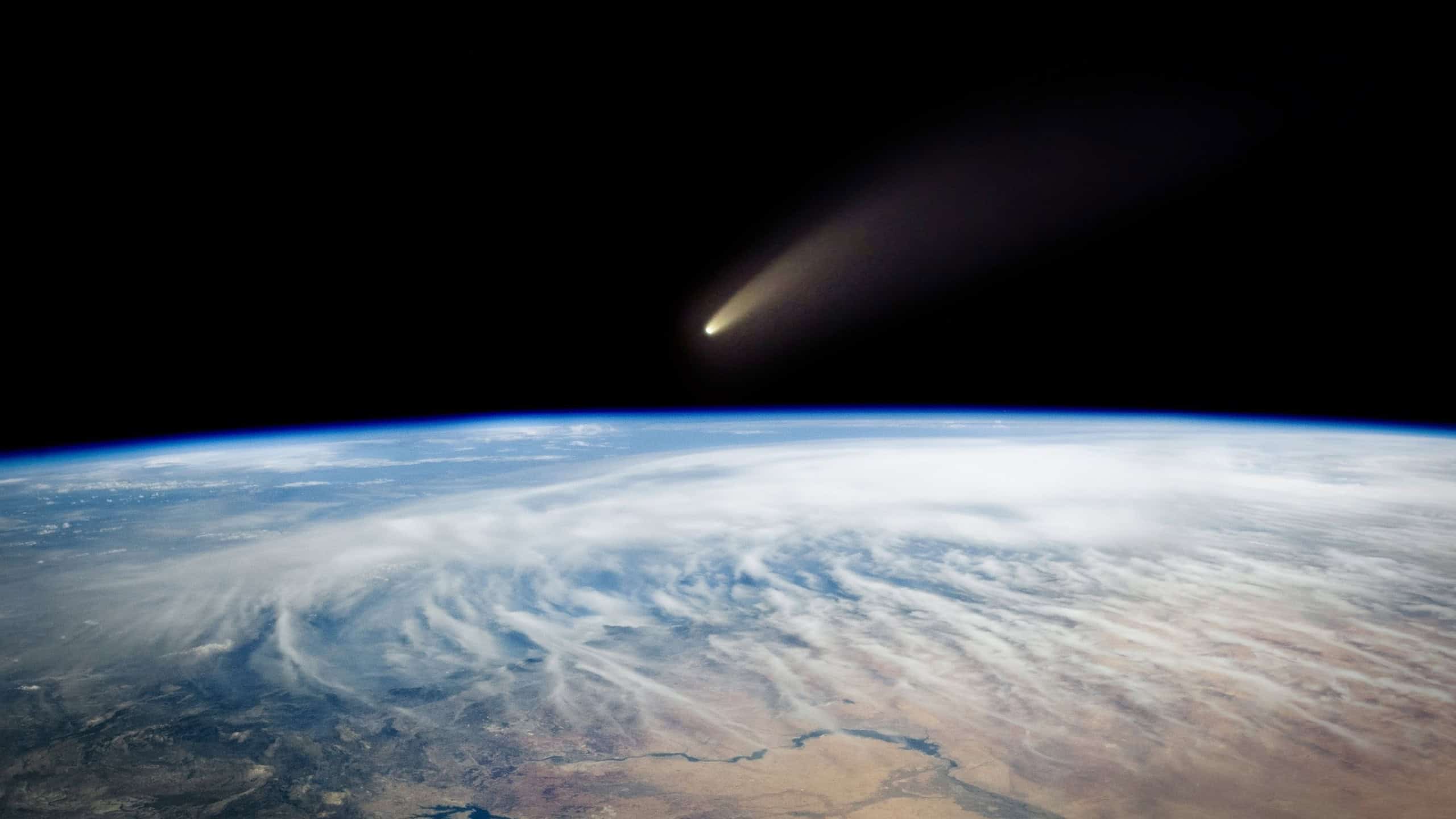
In 1835, Mark Twain came into the world, the same year that Halley’s Comet went past the Earth. Twain later said that he’d go out with it. He was right. Halley’s Comet returned in 1910 and reached its closest point to the Sun on April 20.
The next day, Twain died, April 21. It’s not exactly the same day, but it seems that Twain’s prediction was right, even though it was practically impossible.
The name in the story

Edgar Allan Poe was another writer with weird prediction skills. He wrote a book called The Narrative of Arthur Gordon Pym of Nantucket in 1838, and it was about a bunch of shipwrecked sailors. The sailors, who were desperate for food, killed and ate a man called Richard Parker.
It’s almost exactly what happened in 1884. The yacht Mignonette sank, and the starving survivors killed and ate the cabin boy. His name? Richard Parker. It doesn’t get creepier than that.
The second ticket
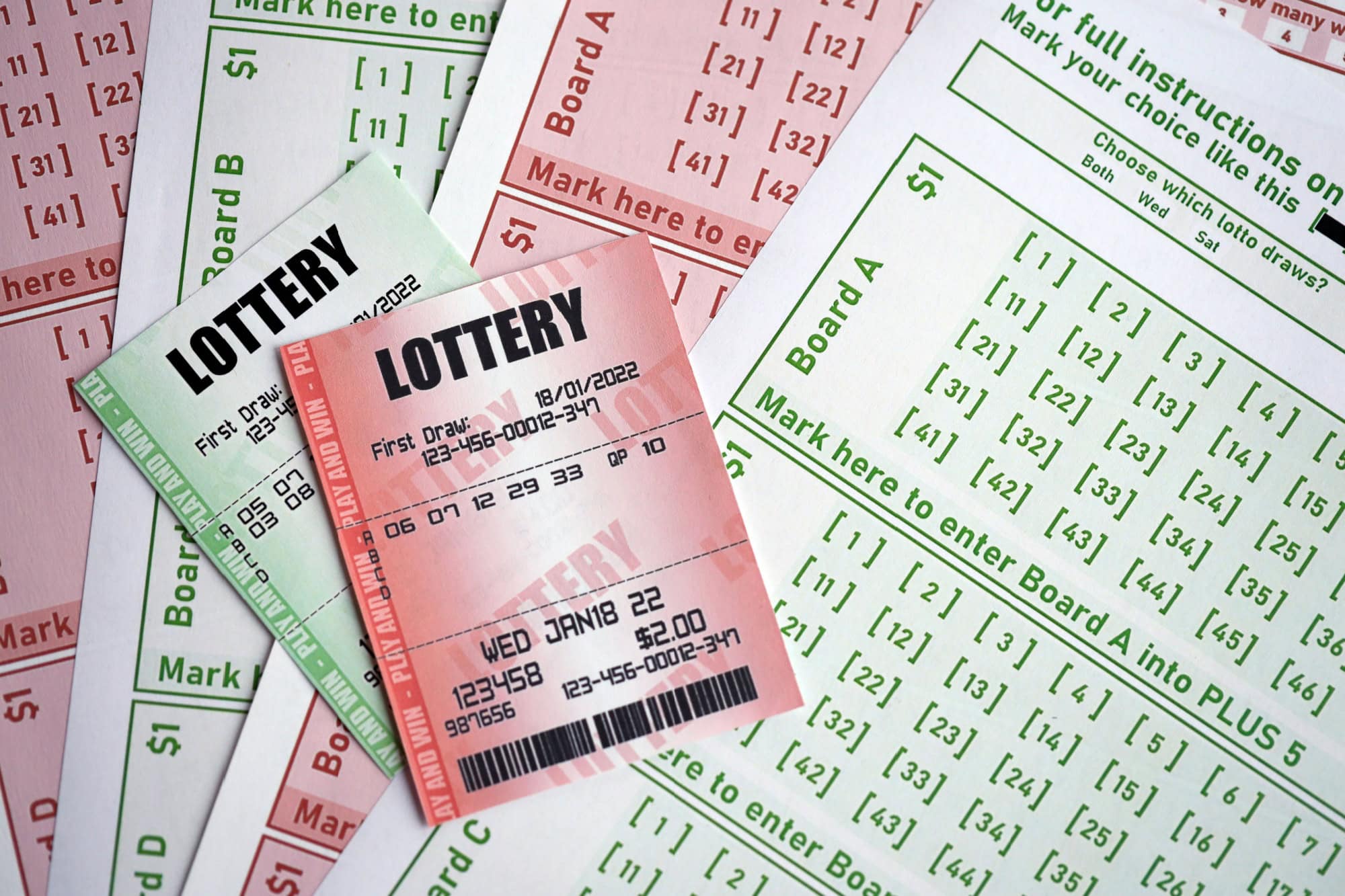
Winning the lottery once is sheer dumb luck. Try winning it twice. It’s exactly what happened to Evelyn Adams, who won the New Jersey Lottery twice in four months. The first win came from the Pick-6 jackpot in October 1985. She got $3.9 million.
That’d be enough for most people, but in February 1986, she won again and received $1.4 million. The odds of that happening are one in 15 trillion. That’s why Adams became the nation’s very first two-time lottery millionaire, and one of the few to do so.
The same six balls

Here are some more unlikely lottery events. In September 2009, Bulgaria’s winning national lottery numbers were 4, 15, 23, 24, 35, and 42. They rolled the balls again four days later. The exact same numbers came up again in an absolute freak of chance.
Later, a mathematician worked out the possibility of that happening, and it was one in four million. Eighteen people picked the numbers correctly the second time. Now that’s what we call luck.
The family surprise

One of the most recent weird coincidences came in 2026. Twins Michelle and Lavinia Osbourne were born in Nottingham, England, in 1976. But it turns out they weren’t actually twins. Yes, they had the same mother, but something called heteropaternal superfecundation happened.
It basically means that two eggs from the same cycle were fertilized by two different men. Essentially, they were half-twins. It’s one of the rarest kinds of medical incidents, and the truth only came out when they were forty-nine years old. The story made national news.
The baseball double

You can’t beat Johnny Vander Meer’s week in 1938. You just can’t. He was pitching for the Cincinnati Reds on June 11 when he managed to stop the Boston Bees from getting even one hit. That alone, a no-hitter, is pretty rare. He did it again four days later.
Vander Meer managed to get yet another no-hitter against the Brooklyn Dodgers at Ebbets Field. Weirdly enough, that was the second game ever played on that field. There’ve been over 9,000 men who have pitched in MLB. None of them has gotten close to that victory before.
The lucky round

It’s not like Dale Whitnall walked onto Durban Country Club and thought he’d make history. But he did. During the 2025 South African Open, he managed to get a hole-in-one at the 179-yard second hole. That’s impressive enough.
However, he did it again during the 149-yard 12th hole, despite being ranked 545th in the world at the time. Those were his first-ever holes-in-one during a tournament. We bet the competition wasn’t feeling great after.
The long black streak

August 18, 1913, was a completely bizarre day for the roulette table at Monte Carlo. Black came up once. Then it happened again. And again. And again. Apparently, the wheel landed on black 26 times in a row, and any roulette player will tell you that’s extremely unlikely.
Players kept putting money on red. They figured the streak would surely end, but they were wrong. The odds of a black coming up twenty-six times on a single-zero wheel are one in sixty-eight million.
Sources: Please see here for a complete listing of all sources that were consulted in the preparation of this article.