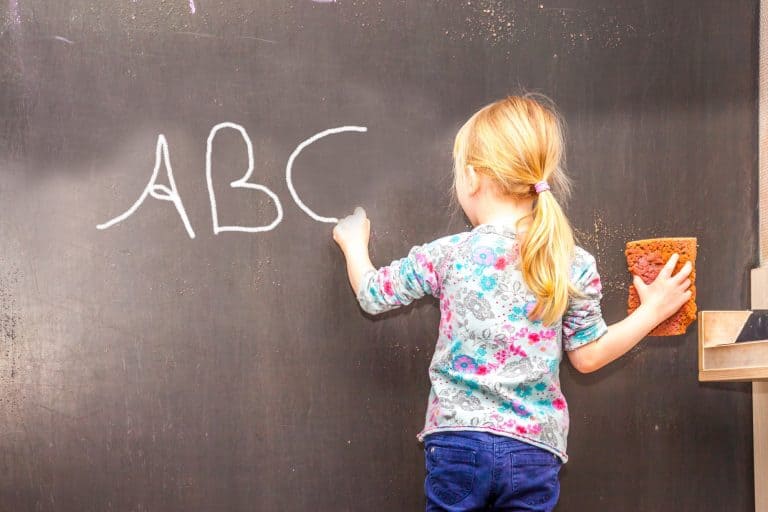

Left-handed kids haven’t had it easy. For many centuries, people thought that doing things with your right hand was proper & pure, while doing so with your left hand was practically a sin. It’s a mindset that made its way into classrooms & even official rules. Thankfully, these punishments and attitudes changed, for the most part.
Why was being left-handed even punished? And why did it stop? That’s what we’re going to find out.
Featured Image Credit: Shutterstock.
Key takeaways
You’ll learn about:
- Why being left handed was considered bad
- Classroom punishments used in Europe & North America
- How Asian countries handled left-hand writing & eating
- Cultural rules in parts of Africa about the “left” hand
- Why we stopped forcing left-handers to switch
Why people were punished or corrected

Why the obsession with being right-handed? There are a few reasons:
- Rituals & purity rules
- School neatness
- Etiquette & hygiene
In terms of rituals, many cultures encouraged using the right hand for sacred acts & the left hand for unclean ones. Handwriting manuals also expected right-hand cursive. That’s why so many teachers saw left-hand writing as sloppy or incorrect, so they tried to “correct” their students.
There’s also the fact that, before toilet paper was invented, people used their right hand for everyday tasks and the left for other stuff. Yuck.
Schoolroom punishments in the UK & Ireland

In the early 1900s, any lefties in a British or American school were likely to be “corrected” by their teachers. This involved tying kids’ left hands down so they couldn’t write with them & setting up desks in a way that prevented them from using the left side. Some of the worst cases involved receiving a sharp rap across the knuckles if you dared to switch back.
Ireland took things further by debating the matter in parliament. In 1965, one senator told the story of a teacher who beat a girl simply because she had written with her left hand. Sadly, this kind of punishment wasn’t a rarity.
The situation in Europe

In Latvia, under the Soviet school model, children had their hands tied. They were forced to retrain every day to make sure they only used their right hand. Many other Soviet schools took correction quite seriously & they didn’t tolerate left-hand writing. They drilled kids until they wrote with their right hand.
Then came the late 1980s. In 1986, the USSR Health Ministry issued new recommendations that actually recognized left-handed kids, along with calls for protecting them. And rightly so. By 1989, schools received specific guidelines on how to support lefties instead of forcing change.
East Asian views
It was a similar issue in Japan. Surveys from the 1980s & 1990s showed very few kids admitted to writing or eating left-handed because of the intense social pressure to be “right.” But things did change over generations, with younger groups later reporting left-hand use more than their parents did.
Chinese & Taiwanese cultures also discouraged left-hand writing. This was often through calligraphy rules, which made right-hand use the standard. A 2007 study in Taiwan even found that around 60% of naturally left-handed kids had been forced to switch to their right by their school & family members.
African views

Several African communities also discouraged using the left hand. This was mostly because it was tied to taboos & using your left hand for greetings or eating wasn’t allowed. In fact, teachers reinforced those customs in school through beatings or by treating lefties as wrong. Just reaching for food or a pen with the “wrong” hand was enough to be corrected.
Where formal punishment stopped in the West

So how did it end? Surprisingly, it came with broader bans on corporal punishment, like the Education (No. 2) Act 1986 in the U.K. This banned hitting kids in state schools & this law covered punishment for left-hand use too.
In the United States, the idea that you had to “fix” lefties began disappearing in the mid-20th century. Doctors & educators openly questioned whether retraining was harmful & their voices only grew louder in later decades.
There was no big national law that banned punishment for left-handedness in the U.S. Instead, it just disappeared as ideas in education changed & corporal punishment rules tightened. Families stopped seeing left-handedness as a problem.
Left-handed people’s challenges today

Sadly, lefties still suffer from some issues today, as there’s still a slight bias towards right-handed people in offices & hospitals & workshops. Of course, it’s not a punishment. But these small daily hassles do stack up.
Take medicine, for example. A lot of surgical tools are built with right-hand use in mind, so left-handed med students are often told to just “work around it.” Many everyday tools, like power tools & office gear, also often favor the right side. Dealing with these issues over & over gets rather annoying.
Thankfully, nobody’s tying hands to chairs anymore. But left-handed people still have to deal with systems that weren’t built with them in mind. Until the fixes become the standard, lefties will keep working in a world that still assumes right is the only way.
Sources: Please see here for a complete listing of all sources that were consulted in the preparation of this article.
Like our content? Be sure to follow us.