

Music probably isn’t the first thing that comes to mind when you think about Nazi Germany. But the fascist regime went after jazz in a weirdly obsessive & fearful way, through laws and restrictions. That didn’t stop people, though. Young fans kept sneaking records & bands bent the rules. The music never fully went away until the war ended.
When? How? And why? Let’s find out.
Featured Image Credit: Shutterstock.
Key takeaways
You’ll learn:
- The messy way the Nazis banned jazz & the rules they wrote to control bands.
- Why officials labeled the music as “degenerate”
- What the ban looked like in practice
- How fans reacted
- How it all finally came to an end
Why the regime targeted jazz

Let’s start with the reasons for the ban. The Nazis saw jazz as everything they hated, primarily because a lot of its leading figures were Jewish. It was also American, and it was linked to Black culture. That was enough for officials to classify it as “degenerate music.”
The Reich Chamber of Culture and the Reich Chamber of Music controlled practically all music in Nazi Germany. As such, without their approval, you essentially couldn’t work. In 1938, the “Degenerate Music” exhibition in Düsseldorf featured officials mocking jazz & swing, along with modern composers.
What the “ban” actually looked like

It’s easy to think that they had a blanket ban on jazz. But it wasn’t that simple. They had membership rules that cut out Jewish musicians & orders from radio chiefs. There were local bans on dances.
One of the big turning points came in October 1935, when state radio made it illegal to broadcast jazz. From then on, jazz was officially gone from the airwaves, and around the same time, the regime also rolled out strict band guidelines.
Bands had to limit “foxtrot rhythms” to no more than 20% of their set. Worse still, Nazi officials had their own decrees that included shutting down swing dances in towns & cities across the country.
The regime sometimes tolerated jazz-lite arrangements or bands that disguised the rhythms. However, the core message was always the same. Jazz didn’t belong.
When the restrictions took effect
The timeline pretty much worked like this:
- 1933: The regime sets up the new culture system that requires musicians to receive Chamber membership
- 1935: The German radio cuts jazz broadcasts & dance-band rules cap swing at 20%
- 1937–1938: Local bans increase & Düsseldorf hosts the “Degenerate Music” show
- 1941–1942: Police begin heavy crackdowns, especially on youth in Hamburg.
How enforcement worked on the ground
The bans seemed all-encompassing on the surface. But in practice, they were uneven. Some inspectors let things slide at dance halls as long as bands toned it down. Others didn’t.
In cities like Hamburg, the Swing Youth scene took root, leading to police carrying out raids & confiscating records. They also shut down hangouts. By the early 1940s, hundreds of teenagers had been arrested & interrogated. Some were sent to detention centers or concentration camps.
People’s reaction

Musicians responded in different ways to the bans. Some of them played along, literally, by sticking to approved repertoires, while others disguised jazz flourishes in their sets or played underground gigs.
It was a different story with fans. The Swing Youth weren’t shy about dressing in British-style clothes & collecting American records, nor were they scared about dancing to banned songs. That’s why the police in Hamburg recorded 383 arrests connected to swing between 1940 and 1942.
Despite the risk, the jazz scene was proof that young people kept finding ways to hold on to the music they loved.
Nazi propaganda jazz bands
Ironically, though, the Nazis ended up using jazz when it suited them. One odd case was a group called Charlie and His Orchestra, a state project that worked under the Propaganda Ministry. They recorded swing tracks in Berlin.
They sounded like the kind of big band music people in Britain or the U.S. were already listening to. However, they swapped the English lyrics for those that pushed pro-Nazi messages. One example was how they reworked “St. Louis Blues” to no longer be about love & heartbreak. Instead, the lyrics mocked Winston Churchill.
But these recordings weren’t meant for German listeners at all. The jazz bands shipped the records out & broadcast them on shortwave radio. For who? The Allied countries. The goal was to slip propaganda into music that would catch the ear of soldiers or civilians overseas. Everyday listeners couldn’t tune in to hear them inside Germany. Talk about irony.
How and why the restrictions ended
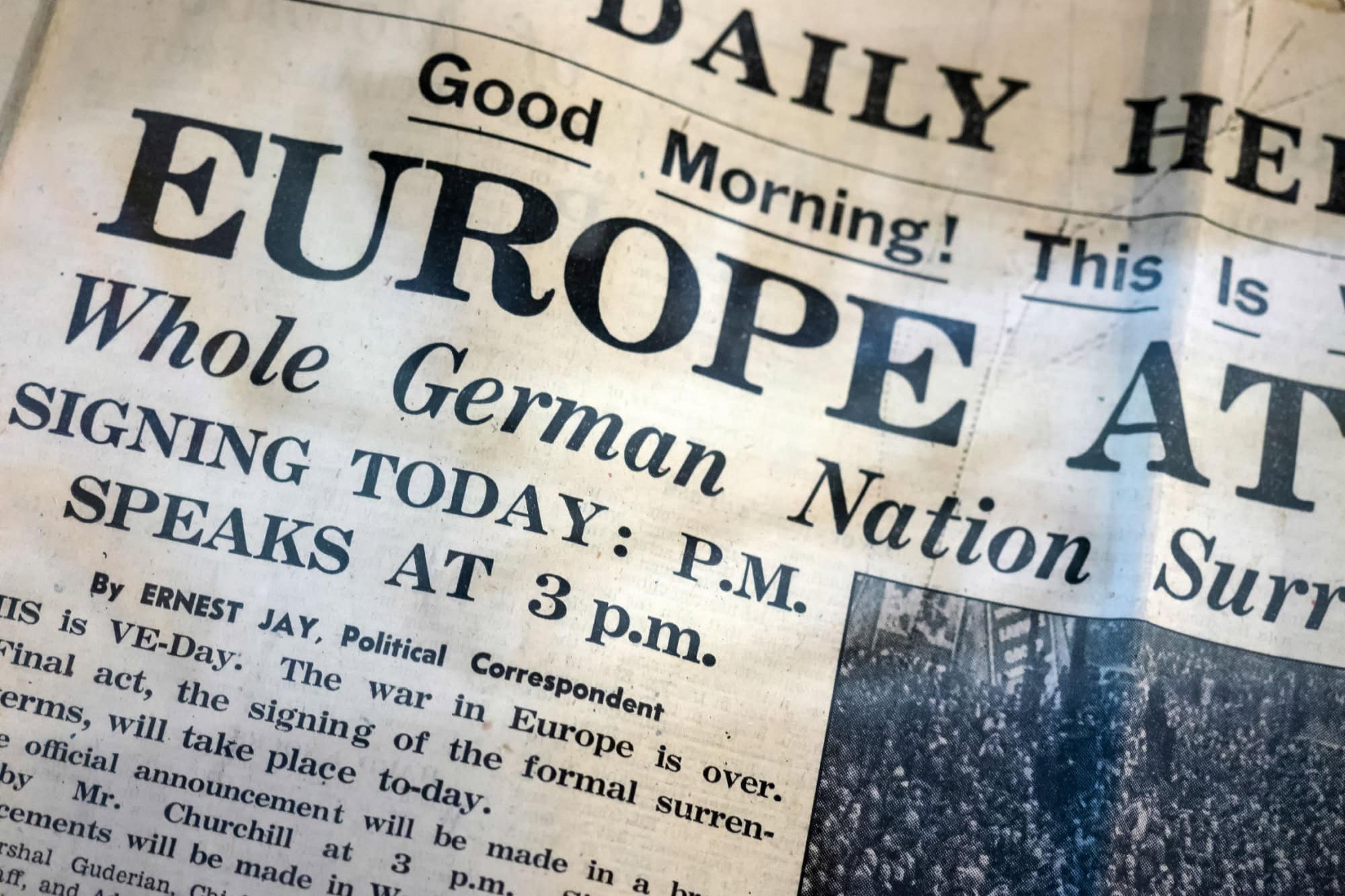
It didn’t take a special law to bring jazz back. No, it took the fall of the regime itself. In October 1945, the Allied Control Council shut down Nazi organizations, including the cultural chambers that had enforced the bans. American & British forces started broadcasting jazz over the Armed Forces Network (AFN) at the same time.
German listeners could finally hear jazz on the radio by the summer of 1945. In Berlin & other cities, jam sessions popped up almost immediately. It makes sense. Now that the Nazi bureaucracy was gone, music was free again.
Sources: Please see here for a complete listing of all sources that were consulted in the preparation of this article.
Like our content? Be sure to follow us.