Even now, the Earth has plenty of amazing places that continue to confuse the greatest scientists. For example, there are places where waterfalls run red & others where mysterious lights dance over the sky. What’s going on?! While we might not have the answers, here are eleven real places that we’re still unsure about. There’s a whole lot more to learn about the world around us. You just have to know where to look!
Featured Image Credit: Argentique /Depositphotos.com.
The Moeraki Boulders, New Zealand

Along Koekohe Beach on New Zealand’s South Island are huge spherical boulders that look like something from another planet. Some of these stones are over 6 feet wide & weigh several tons. They’re also almost perfectly round! Geologists believe they formed about 60 million years ago through something called concretion but we’re not sure of the exact conditions that created them.
The Hessdalen Lights, Norway
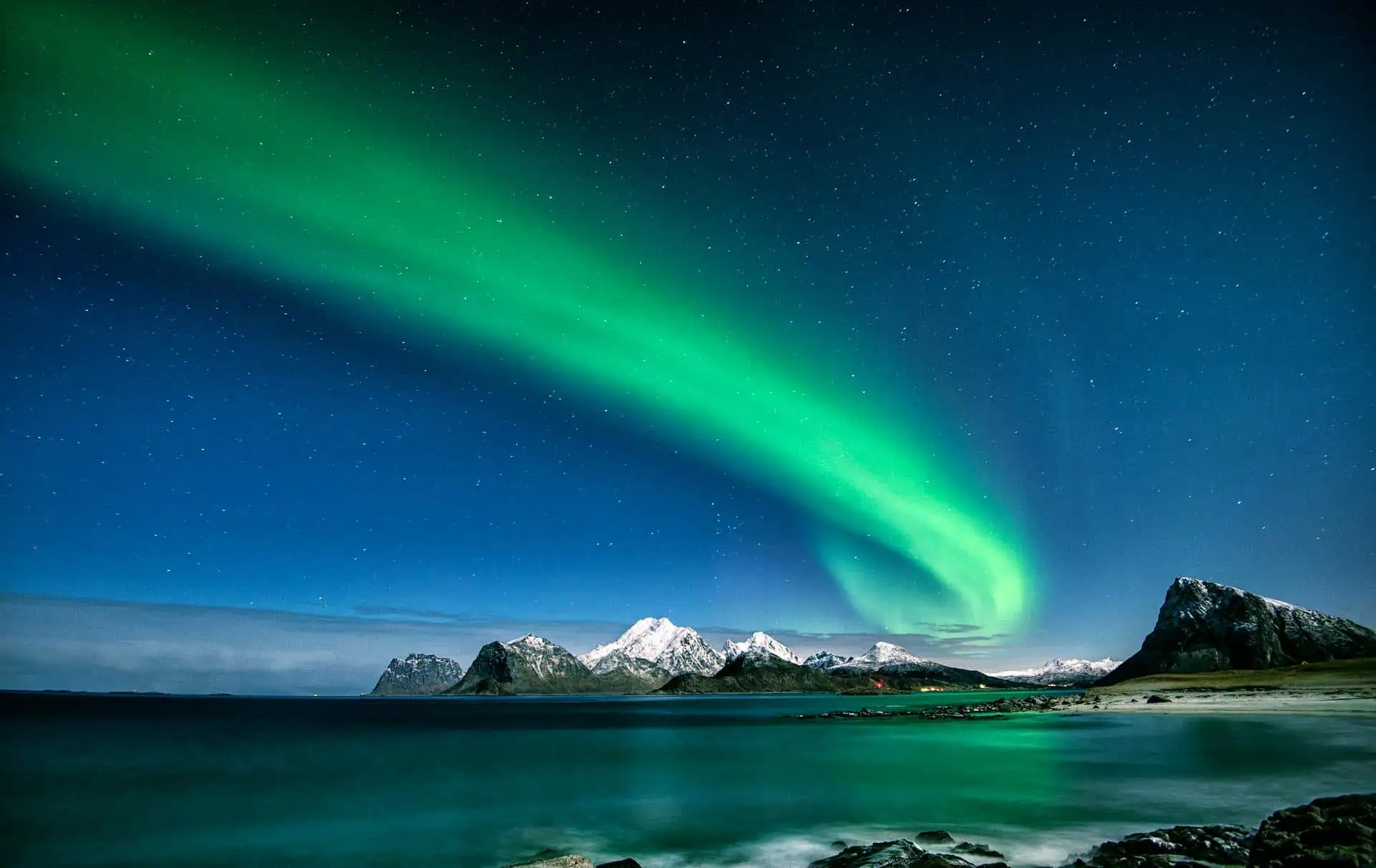
Since the 1940s, people in Norway’s Hessdalen Valley have witnessed strange glowing orbs floating in the sky and these lights come in various colors. And they don’t follow any predictable pattern—sometimes they dart around quickly & other times they hover silently for minutes. They’ve appeared during the day and night. While researchers have set up monitoring stations to study them, nobody has figured out what’s causing these mysterious lights.
Like our content? Be sure to follow us.
The Eternal Lightning of Catatumbo, Venezuela

Likewise, the sky puts on a light show almost every night in the spot where the Catatumbo River meets Lake Maracaibo in Venezuela. It happens up to 260 nights a year, with lightning flashing upwards of 28 times a minute! Of course, scientists have some theories yet we’re not sure of the exact cause.
The Boiling River of the Amazon, Peru

In Peru’s Amazon rainforest lies a river that seems straight out of a legend. It’s called Shanay-Timpishka, which means “boiled with the heat of the sun”—that’s rather apt, given that the river reaches temperatures up to 200 degrees Fahrenheit (about 93 degrees Celsius)! What’s weird is that there’s no volcanic activity nearby to explain why the water is so hot.
Blood Falls, Antarctica

Antarctica’s Taylor Glacier has a waterfall that looks like it’s oozing blood and that’s why it’s called Blood Falls. But that’s not the mysterious part, as scientists believe the color comes from iron-rich water oxidizing when it hits the air. No, the interesting thing is that microbes live in this isolated, sunless environment. They survive without fresh nutrients or oxygen & scientists can’t understand how!
Lake Hillier, Australia

Lake Hillier is on Middle Island off Western Australia’s coast and it’s famous mostly for its bright pink color. The lake is about 2,000 feet long and is surrounded by a rim of sand & dense eucalyptus trees. However, unlike other pink lakes, Lake Hillier’s colors don’t change—even when it’s bottled. Scientists think the color could come from specific algae or bacteria that produce pigments. But they don’t have a definitive explanation.
The Devil’s Kettle, Minnesota

In Judge C.R. Magney State Park in Minnesota, the Brule River does something really odd—it splits into two streams when it hits a rock outcrop. One side flows over the rocks like a normal waterfall. The other side goes into a deep hole called the Devil’s Kettle and seems to vanish. People have thrown all sorts of things into the hole to see where the water comes out but those items never reappear. Where does the water go?!
The Sleeping City of Kalachi, Kazakhstan

In 2013, in the small village of Kalachi in Kazakhstan, people began falling asleep suddenly & couldn’t be woken up for days. When they did wake up, they were often disoriented and suffered from memory loss or headaches. The sleeping sickness has affected more than 100 residents! Doctors tested for things like carbon monoxide poisoning & radiation from a nearby abandoned uranium mine yet there’s no clear cause.
The Sailing Stones of Death Valley, California
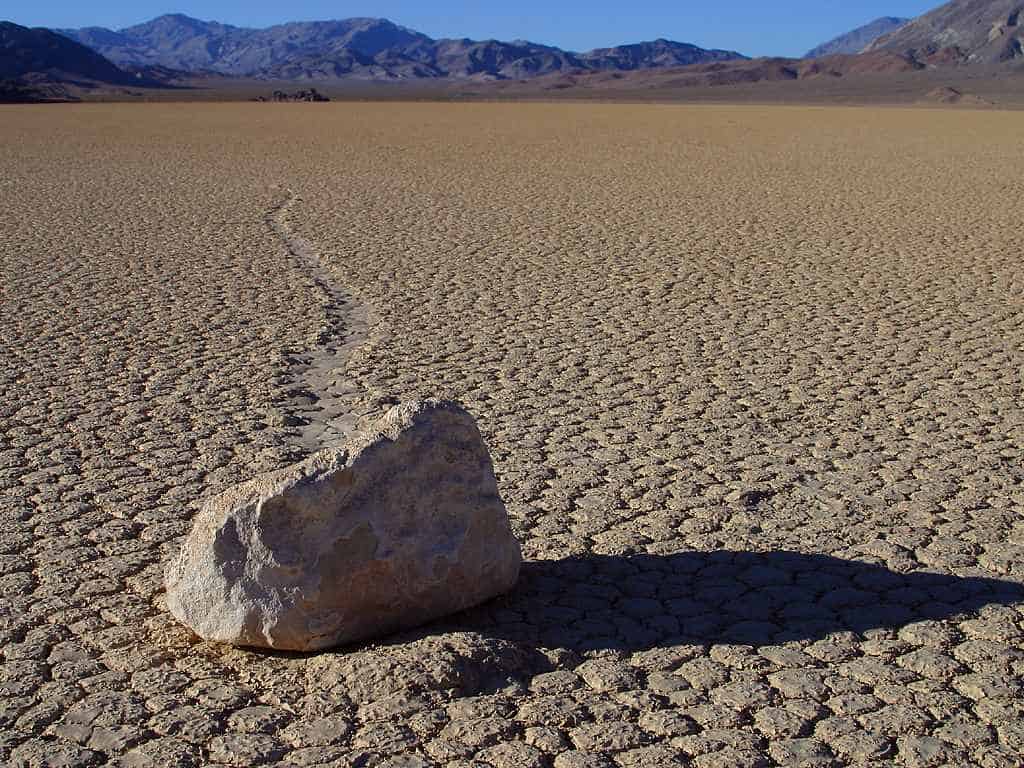
Over in Death Valley is an area called Racetrack Playa, where rocks weighing up to several hundred pounds glide across the dry lake bed—all on their own. These stones leave long trails etched in the cracked mud that show the path they’ve taken. But we’ve never seen them move! Is it strong winds? Magnetic fields? Or something else entirely? We don’t know.
The Crooked Forest, Poland

Near the town of Gryfino in Poland is a peculiar forest where about 400 pine trees are all bent at the base. These trees curve sharply to the north just above ground level before growing straight upwards. As you might expect, people have been curious about them for decades! Some people think farmers might’ve made them bend to make curved timber for furniture or shipbuilding. However, there’s no solid proof or records to back that up.
The Underwater Ruins of Yonaguni, Japan

Off the coast of Japan’s Yonaguni Island, divers found some massive stone structures submerged under the sea. These formations have sharp edges & flat surfaces—they look like human structures! But some people believe they’re natural rock formations created by tectonic activity & underwater currents. Either way, we can agree that they’re strange!
Disclaimer: This list is solely the author’s opinion based on research and publicly available information.
Like our content? Be sure to follow us.
Read More: