

Despite what you might think, most liars don’t twirl a mustache & cackle—instead, they say things that sound normal but have hidden signals. There are a select number of phrases that you’ll hear when someone’s trying to bend the truth, even if they don’t realize it. These go beyond the obvious signs like “trust me” or “honestly” and are, in fact, much subtler. Let’s look at thirteen phrases that often signal that someone is lying. You may not notice these unless you’re paying close attention.
Featured Image Credit: Voyagerix /Depositphotos.com.
“Why would I lie about that?”

Liars use the question “Why would I lie about that?” almost like a defense mechanism because it’s not actually asking for an answer—it’s trying to push you away from digging deeper to find the truth. It’s a saying that sounds logical on the surface, yet it’s trying to sidestep the issue by pretending there’s no reason to lie. This kind of person avoids saying what’s true and aims to convince you that their words are honest.
“To be perfectly clear…”

Starting a sentence with “To be perfectly clear…” often means that the person is about to be anything but clear and it adds a sense of formality where it isn’t needed. They’ll use it to distract others or sound more confident than they actually feel—essentially, they’re overcompensating for questionable facts. You’ll usually hear it before a long explanation that doesn’t really answer the original question and this sense of confidence sounds more rehearsed than natural.
“Like I said…”
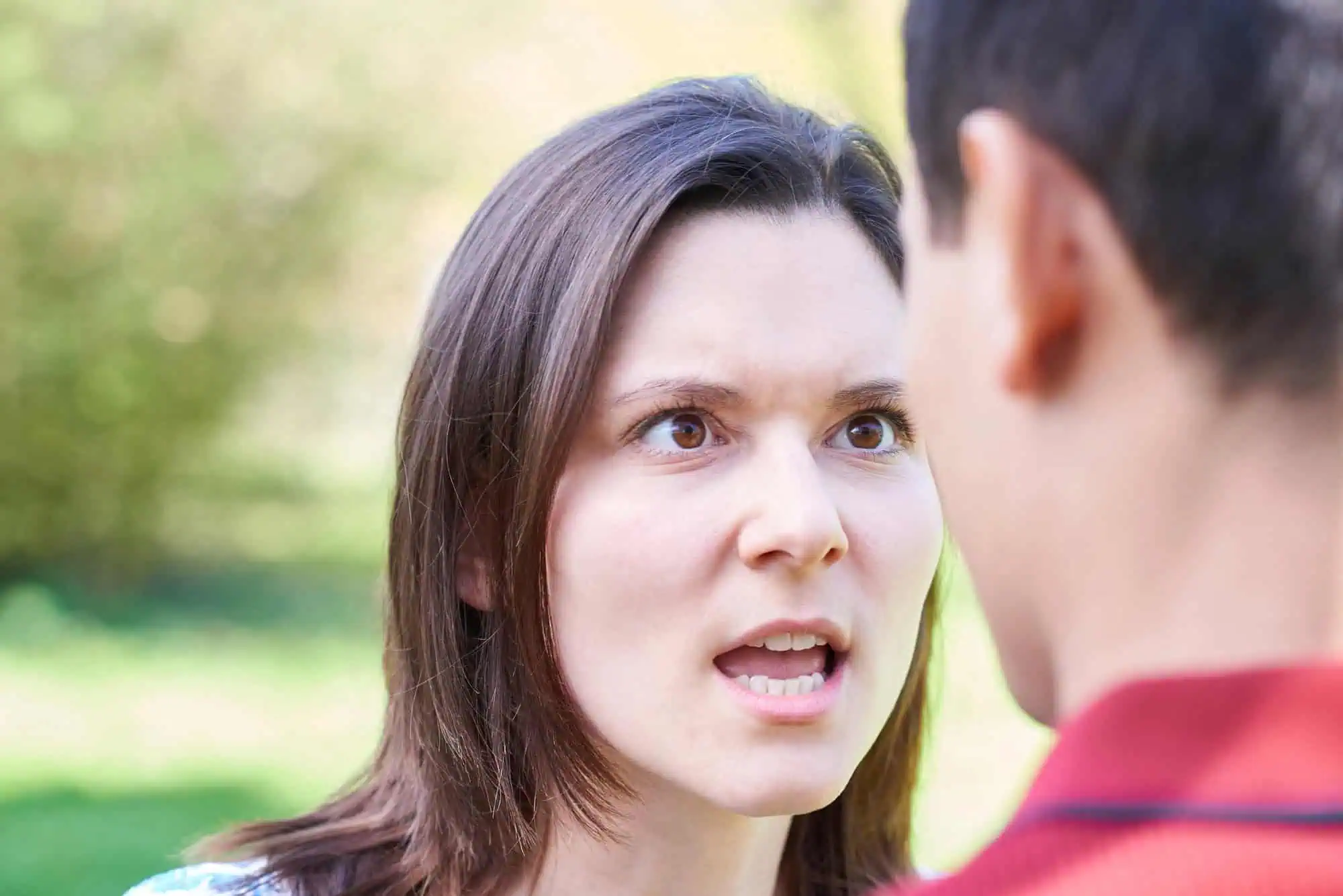
Anytime a liar wants you to stop asking questions, they’ll say, “Like I said…” because this saying implies they’ve already told the truth, even if they haven’t. It also creates fake pressure, like you missed something or should’ve remembered it, regardless of the fact that they never actually said it before. You’ll hear it when someone wants to shut down the conversation quickly and they’re annoyed that you’re still curious.
“Well, technically…”

Whenever someone says, “Well, technically…” they’re usually trying to twist a story to fit a version of truth that’s kind of true—it’s essentially a way to slip through loopholes. People use it when they know the details matter and they’re trying to dance around them without completely lying, whether they’re explaining rules or times of an event. Rather than trying to explain, they want to make their version of the story sound acceptable without getting called out on a lie.
“I was just about to tell you…”

Timing matters when you hear “I was just about to tell you…” and it’s a phrase many liars will use right after they get caught. Instead of owning up, the person acts like they were already going to tell the truth, which makes them seem proactive—but they’re really just reacting to pressure. In the majority of cases, they had no plan to tell you what was going on until they had no other option.
“As far as I know…”

People who say “As far as I know…” are often distancing themselves from the responsibility of telling the truth, as such a saying leaves them some room for deniability. It sounds like honesty, but it’s really just giving them a back door if you catch them in something later. They don’t want to be blamed if it turns out to be false, so they’re hedging their bets without actually committing to anything solid.
“I swear on my life”

Big promises like “I swear on my life” aren’t usually necessary when someone’s telling the truth—it’s overkill because people who are being honest usually just explain what happened. But when the stakes feel high, liars sometimes use dramatic phrases to make themselves sound sincere, as they’re desperate to seem believable. It’s usually not part of how they normally speak and that makes this saying stand out even more. Don’t be surprised if their tone gets louder or more serious because they’re trying to use emotion to make up for weak facts.
“I’d never do that”

The absolute tone of a statement like “I’d never do that” is a red flag because real people don’t always speak in extremes unless they’re trying to shut something down quickly. Liars use this saying as they think it makes the lie sound stronger and you’ll often hear it when they’re being accused of something they’re uncomfortable explaining. It’s much easier to deny it completely than to deal with any middle ground, so they’re hoping to end the conversation right there.
“Believe me…”

The phrase, “Believe me…” is surprisingly common and it’s one that’s basically asking you to trust them instead of looking at the facts—they want the conversation to stop short of the details. They’re hoping that your instinct is to be polite, or at least give them the benefit of the doubt, which is important for them when they can’t back up what they’re saying. The tone is more important than proof and you’ll usually hear it when someone is trying to win you over without showing anything real.
“Why are you asking me that?”

Asking, “Why are you asking me that?” puts the pressure back onto the other person, rather than answering the question, which creates a sense of tension that works as a distraction. People sometimes use this when they feel cornered and want to make the other person feel like they’re the problem, even though it comes off as rather defensive. The goal is to shift the focus quickly so nobody notices they haven’t actually explained anything.
“That’s what I heard”

Here’s a classic way to pass the buck—saying, “That’s what I heard” is just another way of saying, “Hey, don’t blame me, I’m just repeating what someone else said.” It keeps the speaker out of the hot seat and helps them avoid criticism for whether or not the statement is true. You’ll often hear it when someone wants to gossip because it makes the speaker sound like they’re just an innocent messenger, with no name, no source & no responsibility.
“To be honest…”

While saying “To be honest…” might seem like a throwaway phrase, liars often use it as a warm-up before slipping something in that isn’t quite true and it’s meant to lower your guard. Ironically, people tend to use it more when they aren’t being totally honest, so be wary if the statement you hear after it sounds too clean or too perfect. People use it to buy credibility fast, especially when they’re nervous about being believed or want to make a good impression.
“You can ask anyone”

The saying, “You can ask anyone,” brings in imaginary witnesses as a way to make the speaker sound confident, but without actually offering any names as support. It pressures the listener to not actually ask anyone, which is usually the whole point—they’re trying to sound credible in a way that doesn’t involve actually proving anything. There’s no real invitation to check with others, they’re just hoping you won’t.
Disclaimer: This list is solely the author’s opinion based on research and publicly available information.
Like our content? Be sure to follow us on MSN.
Read More: