

While people talk about Americans like we’re one predictable group, a lot of the ideas about us were never accurate to begin with, and here are some myths that were always false.
Around the kitchen

Many people have heard that Americans essentially live on fast food, almost as though it’s a daily meal choice for most of us. But that’s not what the numbers say.
According to the CDC, only about 32% of adults eat fast food on a given day. On top of that, data from the USDA found that the majority of Americans still spend time cooking and cleaning up meals at home, rather than getting fast food.
The reason the stereotype stuck around is that fast food chains are everywhere. Unfortunately, normal home dinners don’t tend to make it into documentaries or clips on social media.
Behind the front door

Some people seem to believe that every American owns a gun, despite the fact that surveys show that it’s not true. Data from the Pew Research Center found that only around 32% of us claim to personally own one.
Of course, the numbers change quite a bit, depending on where you are. The gun ownership rate is much higher in rural areas than in cities, so even within the United States, it’s not the same.
So why did this stereotype stick around? It’s likely because people outside the country saw the most visible and extreme examples, then assumed it was normal everywhere. However, it has no real bearing in reality.
In plain sight

It’s wrong to say that Americans have no culture. However, for some reason, a few people keep peddling this myth, even though it’s clear that the United States has multiple cultures, rather than a single one.
The country has been shaped over the years by migration and movement that added to the long-standing Indigenous cultures that were already here. If the U.S. has no culture, then what exactly does the Smithsonian document?
Ignoring all the food traditions and festivals, as well as the music, that differ across each state is unfair. Really, the big problem comes from trying to find a single unified American style. It has never existed.
At the beginning
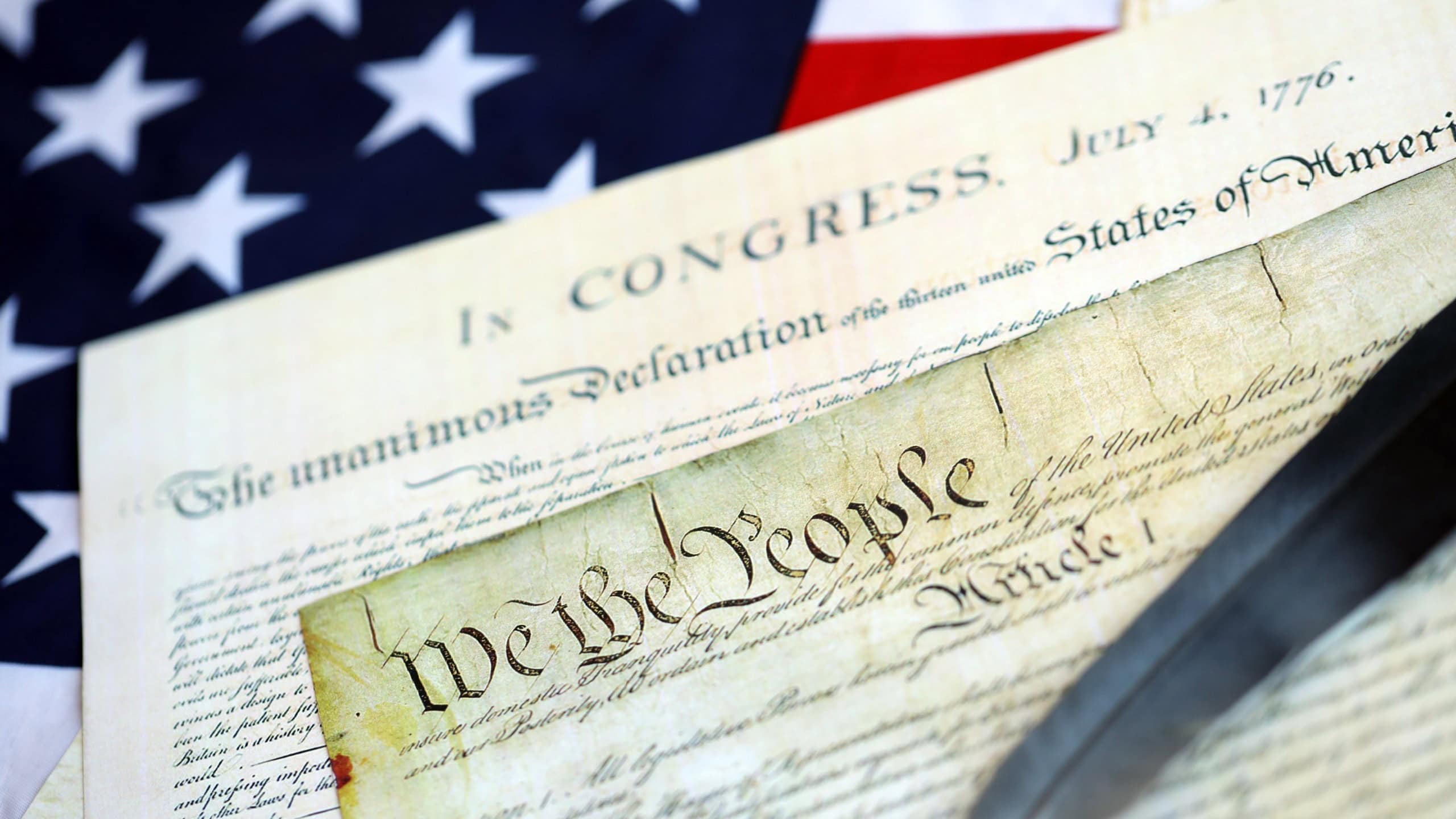
Likewise, while it might be easy to imagine that Americans immediately thought of themselves as a united group, that’s not really the reality. People identified with their state or their region, perhaps their community, quite early on.
In fact, the National Constitution Center said that states began organizing their own systems long before Americans had a strong national identity. The divide became even clearer during the American Civil War.
As you probably know, the country was split over its political and social differences, so it’s pretty clear that there was no real unity. That only came with modern expectations, and even then, it’s not perfect.
On the map
People on social media love sharing clips of Americans struggling to name countries, and that’s led to a stereotype that Americans don’t know geography. But they do.
Yes, geography has been part of American schools for a long time, and the field exists in many universities across the nation. There’s also the fact that there were over 143 million valid American passports in 2024, so we must have some concept of the world.
It’s a shame. Those clips of a few people giving embarrassing answers are a lot easier to share than the millions of people who actually knew the material.
In the classroom

Social media would also have you believe that Americans are all poorly educated. But that’s simply not true because public schooling spread quite early in the United States, especially during the 1800s.
High school was hardly a rare thing for very long. By 1910, enrollment was climbing quite fast, and graduation rates in the U.S. became the highest in the world by the mid-1900s.
Sadly, the stereotype of Americans being poorly educated emerged much later and never really went away. It’s simply not true.
In the class picture

Yes, it might sound nice to imagine that every American walks around expecting to become rich one day. It’s unfortunately not how most Americans describe themselves, though.
Gallup data shows that a large number of Americans identify as working class or middle class, rather than future millionaires, and the Pew Research Center has noted that news on economic mobility varies widely.
A lot of Americans actually doubt that they’ll ever experience upward movement. The truth is, the Chicago Fed research suggests that mobility is more limited than the rumors would have you believe. Our personal expectations are far more grounded.
In the crowd

So many social media users claim that all Americans think they’re the main character, although such an idea falls apart when you look closer at our everyday behavior.
After all, Census and AmeriCorps data make it clear that millions of Americans volunteer their time each year. We’re also big on giving informal help to those around us. But that’s not all.
The Census Bureau found that half of Americans aged over 16 have helped their neighbors in some way between 2020 and 2021. So how could we be treating others as background characters?
In the revolution

No, the Revolution didn’t involve everyone in the colonies being on the same page from the start. The idea that everyone pushed for independence together is simply false.
According to the National Park Service, many colonists actually stayed loyal to Britain due to business ties or religion. Sometimes they just didn’t know what to do.
Just look at South Carolina, for example, where, in 1775, around 1,900 Loyalists gathered against a mere 562 Patriot militia. 100,000 Loyalists left the new country after the war, so not everyone agreed with independence.
Sources: Please see here for a complete listing of all sources that were consulted in the preparation of this article.
American cultural quirks that stand out abroad

Many everyday American customs seem quirky or excessive to outsiders, standing out in funny and unexpected ways.


