
Truly, there’s no greater story than that of the American Revolution. A unified group of people, fighting back against a brutal oppressor…it’s the kinda stuff movies are made of! Unfortunately, some of the things we’ve heard about the Revolution are straight-up false and today, we’re going to debunk some of them. Here are eleven myths about the American Revolution. But don’t worry—even without the myths, this story is still rather incredible. We really did manage to defeat the British, even though the odds were stacked against us.
Featured Image Credit: mj0007/Depositphotos.com.
The Declaration of Independence was Signed on July 4, 1776

Everyone thinks that on July 4, 1776, all the Founding Fathers got together to sign the Declaration of Independence. But not exactly. July 4 was when they adopted the declaration—the actual signing didn’t start until August 2, 1776. It was quite a slow roll, with people signing over the next few months. Even in 1776, getting everyone in one place on time was a challenge!
All Americans Supported the Revolution

The idea that everyone in the colonies believed in breaking up with Britain is false. In reality, people were more divided and about 20% of the population were Loyalists, sticking with England. Clearly, not everyone was keen on independence. There was no real sense of unity nor did every American feel the patriotic spirit.
Like our content? Be sure to follow us.
The Boston Tea Party Was a Protest Against High Tea Taxes
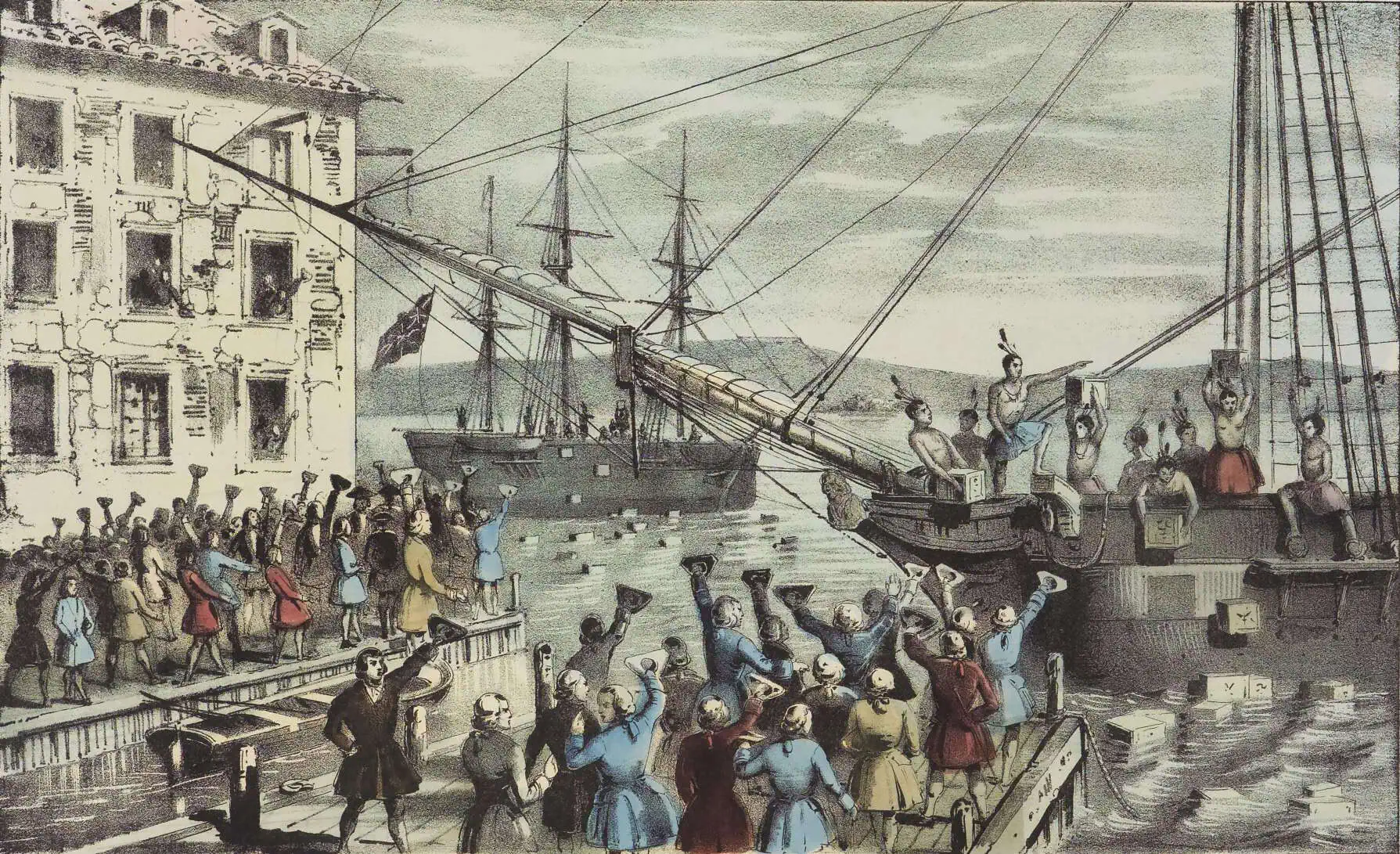
Sure, you might think the Boston Tea Party was supposed to reject high tea taxes but that’s not true. Instead, the focus was more on who controlled the tea market after the Tea Act of 1773. This law actually made tea cheaper! However, it also gave the East India Company a monopoly by cutting local merchants out of the picture. Rather, the Boston Tea Party was meant to give people the freedom to run their own businesses without a big company taking over.
The Continental Army Was Well-Trained and Equipped

The idea of the Continental Army being a well-oiled, fully equipped machine is also incorrect. They were scrappy and dealt with shortages of practically everything, including weapons and socks. Rather, their success comes from their determination & grit. You won’t find a greater underdog story in history. The Continental Army managed to win despite the odds and it’s one of the reasons we’re so proud to be American.
George Washington Never Told a Lie

The cherry tree story tells of a young George Washington who couldn’t lie about chopping it down. Yet it’s pure fiction. It was created by biographer Mason Locke Weems to show Washington’s apparent honesty, although there’s no evidence this ever happened. That’s not to say it’s a bad story. But let’s just remember that Washington was as human as the rest of us.
The Revolution Was Fought Solely by Americans

While we call it the American Revolution, we weren’t the only ones in the picture. The French were our important allies because they gave us both naval support and funding. In fact, the Revolution was more of an international effort than a solo mission. Having friends in high places (or across the ocean) is always useful—the American Revolution was no different.
The Battle of Bunker Hill Was a Decisive Colonial Victory

While we often hail the Battle of Bunker Hill as a great victory, it was actually a win for the British—at least on paper. The Americans were forced to retreat. However, the British suffered huge losses and this massively helped American morale. Essentially, it showed them they could stand their ground. It was a prime example of losing the battle but not the war since the Battle of Bunker Hill gave us the confidence to continue fighting.
Women Only Had Supporting Roles

Despite what you might’ve heard, women weren’t on the sidelines of the Revolution but rather right in the mix. Take Deborah Sampson, who actually disguised herself as a man to fight. Clearly, women were doing way more than just sewing & cooking—they’d spy and deliver important messages. The fight for independence wasn’t just a guys’ club as it comprised of many brave women, too.
Kids Watched from the Sidelines

Similarly, kids were also involved in the fight and they did a lot more than merely run around! Some were as young as 12 and helped out as drummers. They’d carry messages—or even step up as soldiers. Instead of only adults, these young people played a big part and proved that age is just a number when it comes to fighting for what you believe in.
The Revolution Was a Tax-Free Promise

After kicking the British out, you’d think Americans wanted to ditch taxes completely. But the truth is that “No taxation without representation” didn’t mean “no taxes ever.” Once America could do its own thing, the new government needed cash just like anyone else and taxes continued. This led to incidents like the Whiskey Rebellion. Even with independence, taxes were a part of life—the Revolution focused more on having a say in those taxes than removing them altogether.
All British Soldiers Were Brutal Oppressors

Movies love to paint British soldiers as heartless villains but that’s not the whole truth. Many of these “Redcoats” were just young men, far from home, following orders. Of course there were instances of brutality. But there were also moments of humanity because not every British soldier was out to terrorize the colonists. In fact, some British soldiers sympathized with the American fight. They were only there because they had to be, not because they hated Americans.
Disclaimer: This list is solely the author’s opinion based on research and publicly available information.
Like our content? Be sure to follow us.
Read More: