
Table of Contents
From bonfires and flower crowns to jumping over flames and dancing the night away, here are 10 ancient solstice traditions that are still celebrated today — and have evolved along the way.
Featured Image Credit: banderchenno /Depositphotos.com.
Midsummer Festivals (Scandinavia)

Swedes, Finns, and Norwegians celebrate Midsummer as a second Christmas — but with flower crowns and sunshine instead of snow. Families and friends gather to dance around maypoles, sing folk songs, and eat pickled herring and new potatoes. They light bonfires to chase away the bad spirits, and staying up all night to watch the midnight sun is a must-do. It’s a feel-good tradition that goes back to Viking times.
Stonehenge Sunrise Gathering (England)

Thousands of people flock to Stonehenge every year to watch the sun rise directly over the Heel Stone — just like ancient people did thousands of years ago. Modern-day Druids, pagans, and curious tourists arrive in silence to wait for the magic moment when the sun lines up perfectly. It’s spiritual, otherworldly, and one of the most iconic solstice spots in the world.
Kupala Night (Eastern Europe)

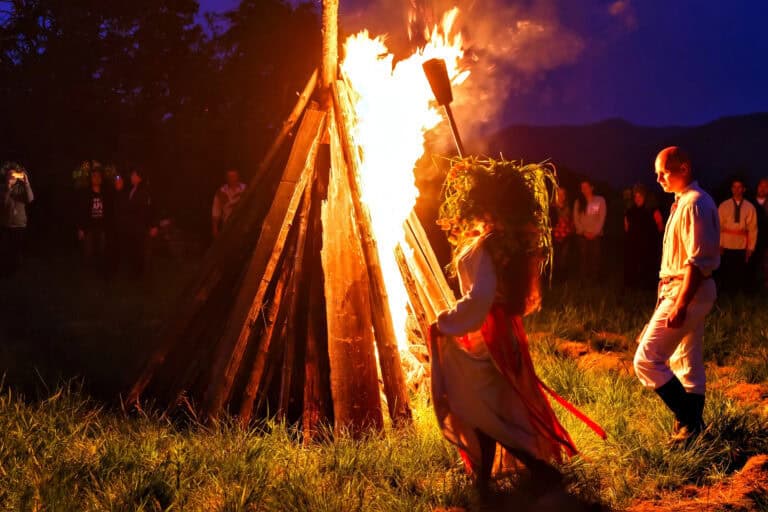
Celebrated mostly in Ukraine, Belarus, Poland, and Russia — and it’s equal parts ancient fertility rites and summertime mischief. They jump over bonfires to prove their bravery, weave flower wreaths to float down rivers (in the hopes they’ll lead them to love), and go on nighttime hunts for the mythical “fern flower” (which will grant them luck and wisdom). It’s equal parts romantic, wild, and deeply rooted in old Slavic traditions.
Inti Raymi – Festival of the Sun (Peru)

This is Peru’s version of celebrating the Inca sun god, Inti. Held in Cusco, the former Incan capital, days of dancing, parades, costumed processions, and rituals that recreate what the Inca would’ve done centuries ago. The main event? A dramatic reenactment of a sun ceremony at Sacsayhuamán fortress. Thousands come every year to reconnect with Andean culture and give thanks to the sun.
Sânziene (Romania)

Romanians celebrate Sânziene with flowers, magic, and sunshine. Girls wear white dresses and make daisy or wheat-flower crowns — which they throw on the roof to see if they’ll get married. They collect herbs they think are strongest on this night, and tales of fairies and love spells abound. It’s magical, mysterious, and still celebrated — especially in the countryside.
St. John’s Eve (Spain & Portugal)

Just around the solstice, Spaniards and Portuguese light bonfires on the beach and jump over them for good luck and a cleanse. In Barcelona or Porto, it’s a full-on festival with fireworks, music, dancing, and sometimes even midnight swims. It’s named after St. John the Baptist, but it’s packed with old sun festival vibes — fire and water to welcome summer.
Solstice Gatherings at Ancient Sites (Global)

You’ll find people gathering at Chichen Itzá (Mexico), Teotihuacan, or Machu Picchu to take in the spiritual energy of the solstice. Ancient sites were purposefully built to align with the sun’s path, and even today, people meditate, chant, and hold sunrise ceremonies at these spots. Some say it’s a time when energy shifts — and you can “recharge” just by being there.
Johannistag (Germany)

Germany’s Johannistag (St. John’s Day) combines Christian and pagan traditions. People celebrate on June 24 with massive bonfires — originally to drive away evil spirits and protect crops. People used to believe that fire could bless them with health, fertility, and happiness. Some villages still light fires, sing songs, and dance well into the night to honor this blend of sun and spirit.
Rasa Festival (Latvia & Lithuania)

In the Baltic countries, the summer solstice is celebrated with Rasa (or Joninės). People weave wildflower wreaths, jump over fires, search for “love flowers,” and sing ancient songs all night long. It’s a deep-rooted tradition that’s connected to nature — with love, fertility, water, and the sun all coming together in one joyful celebration. Yep, staying up to watch the sunrise is still part of it.
Día del Sol (Ecuador & Andes)

Andean indigenous communities still celebrate solar festivals linked to farming cycles. During the solstice, they make offerings to the sun, perform traditional dances, and gather as a community to thank the sun for warmth and good harvests. It’s not a flashy tourist event — it focuses on roots, respect, and preserving ancient Andean traditions in everyday life.
Disclaimer: This list is solely the author’s opinion based on research and publicly available information.
Like our content? Be sure to follow us.
Read More: