

People often think the Amish reject technology simply out of respect for tradition, but there are some practical reasons for their behavior.
Putting faith before convenience

For the Amish, the question isn’t whether a new technology is useful. It’s whether it helps them live according to their Christian faith. When it comes to technology, convenience should never become more important than spiritual matters like humility, self-discipline and piety.
Before they adopt anything new, they ask themselves: Will this draw me closer to God? Or will it feed my pride, materialism and sense of self-sufficiency?”
Protecting family relationships

Family time is highly valued in the Amish community. Families eat together, work together (children help their parents), and rather than spending hours in front of the television, they talk, read or visit with their neighbors.
They feel that many technologies pull people away from each other. They replace conversation with movies or texting and chatting on devices. They want to remove as many of these distractions from their lives so they can focus on their family.
Keeping their communities strong

Life in Amish society is built on interdependence. Family members and neighbors work together to build barns, harvest fields, care for the ill, and provide support whenever someone needs help.
They reject technologies that could cause people to want to isolate themselves from the rest of society. They strive to create a society where no one person does everything themselves.
Belief that simplicity leads to contentment

The Amish steer clear of always wanting something bigger, newer, and more expensive. Amish believe that simpler living means less jealousy, competition, and feeling the need to keep up with others.
Material things don’t define your success as much as faith, hard work, family, and service to others do. Restricting technology helps to maintain that feeling of satisfaction.
Carefully considering every new technology

Many people assume the Amish simply reject all inventions, but that is untrue. Each community debates if an invention will benefit or damage their lifestyle. Some Amish allow battery-powered tools, solar panels, or cell phones for business use while others forbid them.
They make these decisions collectively and over time. Convenience is secondary to the long-term well-being of the community.
Wanting to preserve practical skills

Tasks that are automated in modern society are often done by hand in Amish society. Farming, woodworking, sewing, baking, and many other traditional tasks are ways of passing along lessons of responsibility, patience, and cooperation from generation to generation, as well as ways of making a living.
The Amish fear that dependence on too many machines will cause these skills and traditions to be lost.
Wary of outside cultural influences

The Amish think that watching television, unrestricted internet, and social media provide people with values that aren’t in line with God.
Many communities avoid filtering everything and instead choose not to have those technologies. It allows them to maintain their language, culture, beliefs, and family dynamic without the outside world hovering over them.
Preferring a slower pace of life
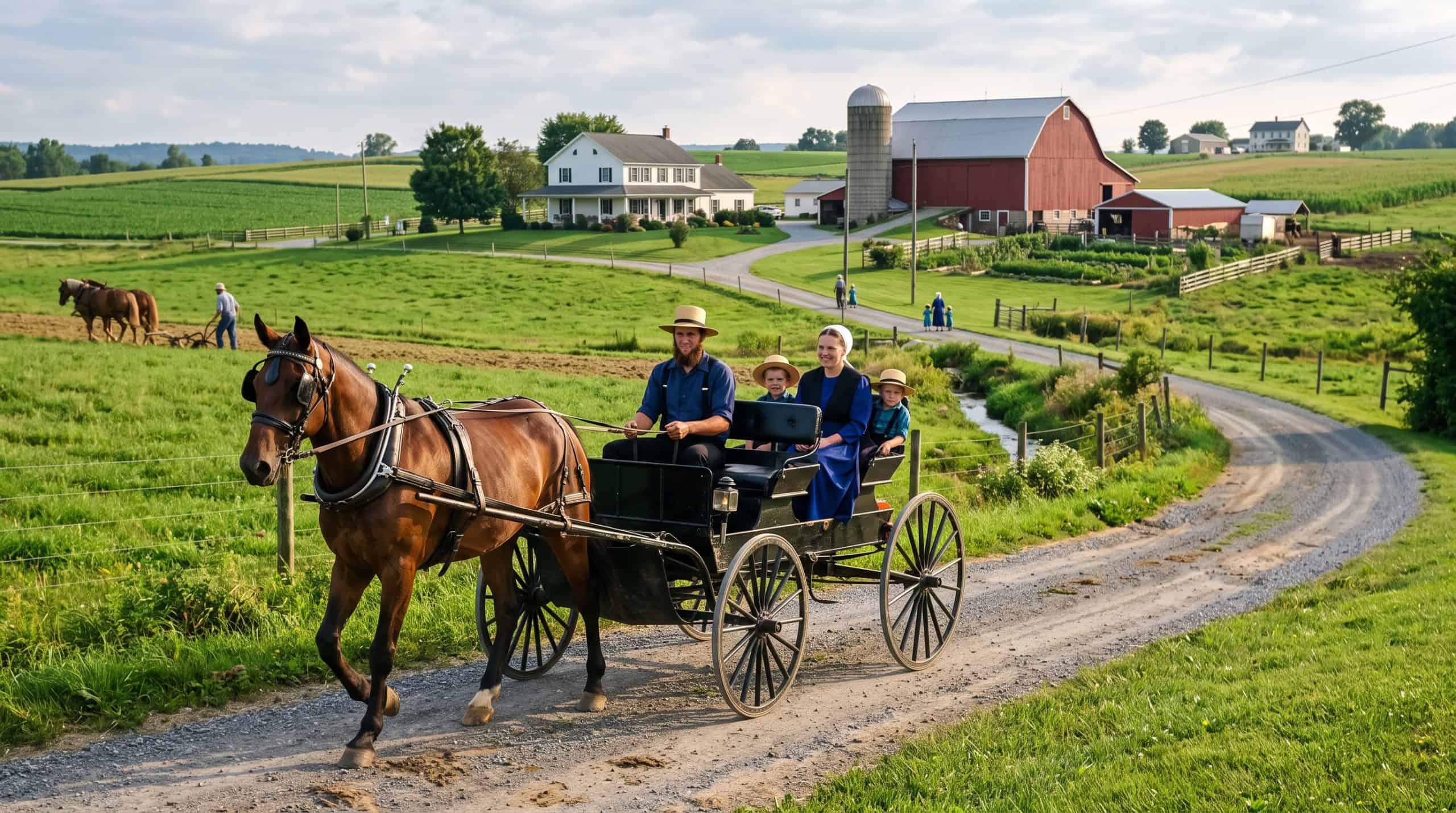
The fast-paced world of technology often leads people to expect everything instantly: conversation, fun, work. The Amish choose to slow down.
They take more time to eat with family, go to church, work with their hands, visit with neighbors, and attend community gatherings. Slowing down can allow us to enjoy the small pleasures of life and relieve much stress.
Like our content? Be sure to follow us.
10 surprising facts about the Amish community

There’s a lot more to this fascinating community than people who stick to horses & buggies and shy away from smartphones. Here are ten of the most truly surprising aspects of their lives that go beyond the bonnets and barn raisings.


