

They shattered barriers, made history and changed the decade.
Vigdís Finnbogadóttir

In 1980 Icelandic Vigdís Finnbogadóttir became the first woman in world history to be democratically elected head of state.
She was a divorced single mother who rose above significant obstacles. Few women held top elected offices at the time. In the 1980s Finnbogadóttir was President of Iceland. She became world-known for championing women’s rights, education, culture, and the environment.
The capital city of Reykjavík, Iceland, also provided the setting for a landmark 1986 meeting between the U.S. President Ronald Reagan and Mikhail Gorbachev.
Joan Jett

When big-time record labels wouldn’t stop rejecting Joan Jett, she decided she didn’t want the music industry calling the shots.
After being denied by 23 different labels, Jett and her producer Kenny Laguna established Blackheart Records in 1980, and independently released her music.
It turned out to be a great move. In 1982, “I Love Rock ‘n’ Roll” spent seven weeks atop the Billboard Hot 100 chart.
Jett proved that women can front hard-rock groups and be in charge of their own careers.
Florence Griffith Joyner

Florence Griffith Joyner, nicknamed Flo-Jo, redefined women’s sprinting at the 1988 Seoul Olympics. She walked away with three golds and a silver, shattering world records in the 100m and 200m races.
Her world records still stand to this day. Her colorful, one-legged racing suits, extravagant fingernails, and flashy personality also made her one of the most iconic athletes of the 80’s.
Flo-Jo proved that competitiveness and self-expression can go hand in hand.
Sandra Day O’Connor

Sandra Day O’Connor was appointed to the U.S. Supreme Court in 1981. President Ronald Reagan put her name forward to succeed Justice Potter Stewart, and the Senate gave its unanimous approval.
Soon after joining the Court, O’Connor emerged as a key figure on the Supreme Court. As a moderate who often provided the swing vote in closely divided cases, she helped shape American law during the 1980s and beyond.
O’Connor also broke the strongest glass ceiling in American law: she was the very first woman to hold a seat on the high court.
Grace Jones

Grace Jones was born in Jamaica and became a singer, model, and actress who made nonconformity look cool in the 1980s.
With her androgynous good looks, bold style, and audacious presence, Jones helped shape the sound and vision of music, fashion, and nightlife worldwide.
In addition to releasing groundbreaking albums including Nightclubbing, she became a household name for her portrayal of May Day in the 1985 James Bond movie A View to a Kill.
Grace Jones proved that music artists could transcend stereotypes of beauty and femininity and still achieve international success.
Wilma Mankiller
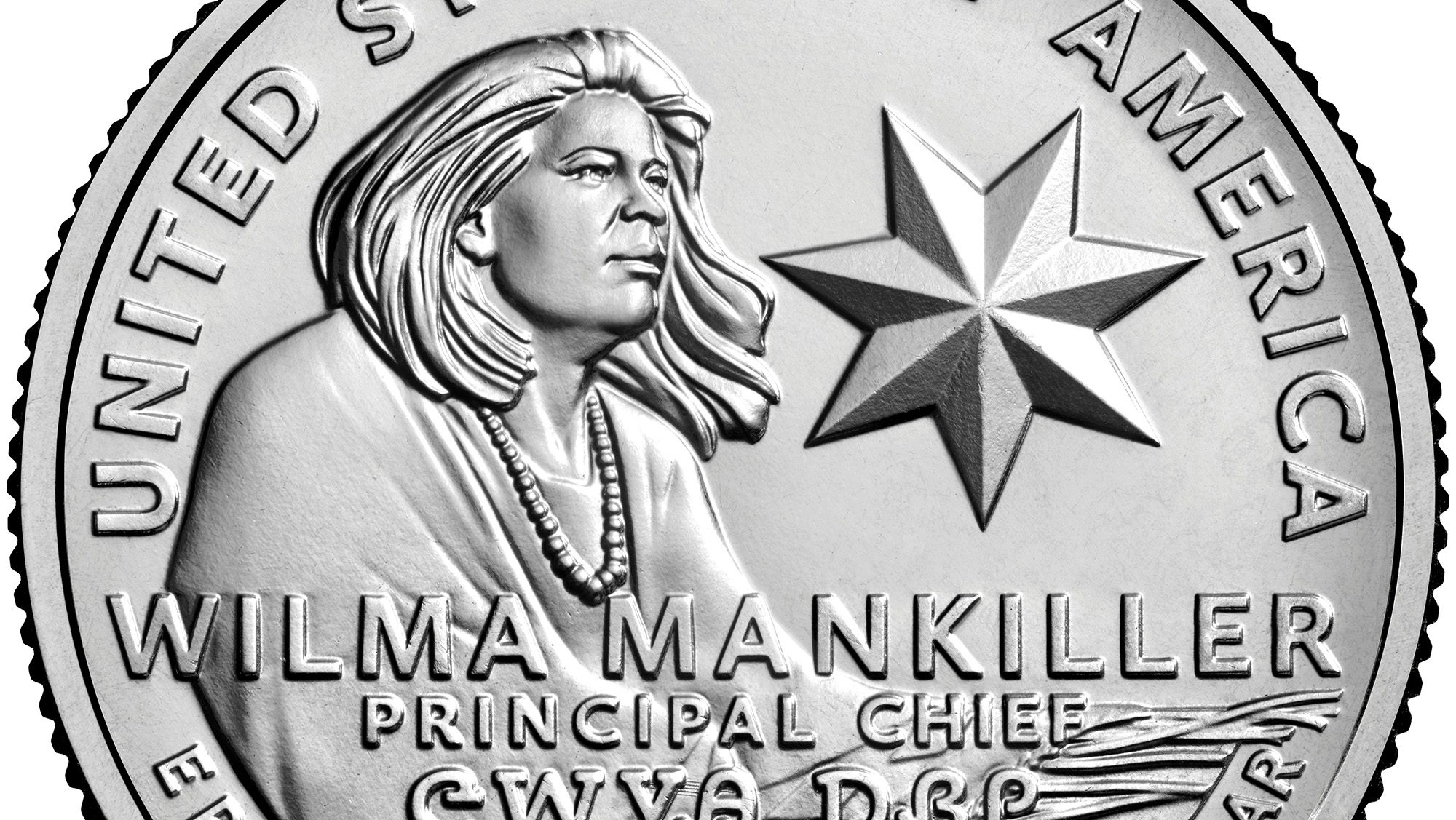
In 1985, Wilma Mankiller was elected as the first woman Principal Chief of the Cherokee Nation.
She took office during a time when the Cherokee Nation government was confronted with serious social and economic issues. She promoted community development as one of her top priorities.
Her time in office saw Cherokee communities actively working to improve health care, housing, education, jobs, and infrastructure. She championed self-determination by inspiring those affected by the development projects to take part.
Mankiller’s influence grew throughout the late 80s, making her a widely recognized Native American leader and a potent emblem of female political power.
Anita Roddick

Founder Anita Roddick helped transform The Body Shop into an internationally recognized brand by making ethics the centerpiece of her business.
The Body Shop became a global success during the 1980s. Roddick advocated against common industry practice at the time, championing refillable packaging, responsible sourcing and campaigning against animal testing.
The Body Shop launched its Community Trade initiative in 1987 with small producers and communities worldwide. Roddick proved the world that you could run a profitable business without compromising your values for people, animals, and the planet.
Katharine Graham

One of the most influential newspaper publishers and business leaders in America during the 1980s was Katharine Graham.
When her son Donald Graham was named publisher of The Washington Post in 1979, Katharine Graham stayed on as chairman and CEO of The Washington Post Company, a position she assumed in 1973 and would keep until 1991.
As CEO, Graham was the first female leader of a Fortune 500 company. During her tenure, The Washington Post Company diversified into other businesses besides newspapers, while Graham continued to uphold the newspaper’s editorial independence.
She proved women are every bit as capable of leading America’s largest companies.
Sheila E.

By the 1980s Sheila Escovedo, a.k.a. Sheila E., was among the most recognizable percussionists and entertainers in the music world. Her own single “The Glamorous Life” hit in 1984 and her work with Prince skyrocketed her fame even more.
In a pop landscape that frequently sidelined female instrumentalists for female singers, Sheila E. presented a rare combination of technical prowess and captivating performance.
Annie Leibovitz

Portrait photography legend Annie Leibovitz helped create the visual style of celebrity photography in the 1980s.
After working at Rolling Stone for a decade, she landed at Vanity Fair in 1983 and began shooting beyond musicians to include celebrity, politics, entertainment, and news.
Her heavily stylized portraits and use of lighting transformed celebrity photography into visual story telling that resembled fine art. Many celebrities were forever linked to the iconic images Annie created.
Corazon Aquino

Aquino became an icon for democracy in the Philippines in the 1980s.
The election of 1986 was hotly contested. Marcos was declared the winner while Aquino did not accept the results. Protests erupted over several days that became known as the People Power Revolution.
Aquino served as president after Marcos fled the country. She replaced his authoritarian regime and oversaw the restoration of democratic institutions and civil rights.
Political turmoil and attempted coups were prevalent throughout Aquino’s presidency, but she maintained an important role in restoring democracy to the Philippines.
Catherine Deneuve

Actress Catherine Deneuve continued to be a major French actress and international style icon throughout the 1980s.
One of her films during the decade was Paul Verhoeven’s The Hunger (1983), in which she starred alongside David Bowie and Susan Sarandon.
Modeling-wise, Deneuve was linked to Chanel No. 5 during the 1980s. The Los Angeles Times reported in 1986 that she had shot commercials for the fragrance some years before, when she was under contract with Chanel.
Deneuve remained a well-known actress around the world in the following decade as well. She earned an Academy Award nomination for Best Actress for her role in the film Indochine at the 1993 Academy Awards. The film was released in 1992, so that accomplishment is technically part of the 1990s.
Pat Benatar

Pat Benatar helped define what a female rock star sounded like in the 1980s. Songs like “Hit Me with Your Best Shot” and “Love Is a Battlefield” became radio staples and MTV fixtures.
She won four consecutive Grammy Awards for Best Female Rock Vocal Performance.
Her big voice, larger-than-life stage presence, and unwillingness to conform to expectations of women in music paved the way for future generations of women in rock.
Debi Thomas

Figure skater Debi Thomas opened up doors for people of color in the sport during the 1980s.
She won the first of her many titles as the first African American skater to capture the 1986 U.S. senior national title and become the first Black skater to win World Figure Skating Championship that same year.
Thomas won the bronze medal at the 1988 Calgary Winter Olympics in a performance versus Katarina Witt that would come to be known as the “Battle of the Carmens.” She attended Stanford University where she earned an engineering degree while skating.
Susan Butcher

Susan Butcher rose to prominence as one of the most dominant mushers of Iditarod history throughout the 1980s. She won the infamous Alaskan race four times; in 1986, 1987, 1988, and 1990.
Butcher’s four wins solidified her reputation as one of the sport’s best competitors. They also made her a household name in Alaskan sports culture. Susan was known for keeping a close eye on the health and fitness of her sled dogs.
Sources: Please see here for a complete listing of all sources that were consulted in the preparation of this article.
Like our content? Be sure to follow us.
13 unsettling facts from Hollywood’s history

Hollywood may be built on make-believe, but these unsettling stories from its past are very real.

