

You probably didn’t need these facts, but you’ll be glad you know them anyway.
Sea otters hold hands while sleeping

Raft groups of otters floating on open water will hold hands while sleeping so they do not get drifted apart by ocean currents. If they cannot hold hands, they entangle themselves in giant kelp fronds to keep themselves in place.
Otters also store their favorite rock in a loose skin pouch under their armpit so they can use it over and over again to break open clams and sea urchins.
Cotton candy was co-invented by a dentist

Ever wonder who invented cotton candy? Believe it or not, it was actually a dentist. Back in 1897, dentist William Morrison teamed up with confectioner John C. Wharton to create the cotton candy machine.
This machine spins hot sugar through small holes using centrifugal force, creating thin strands that make up cotton candy. They originally sold it under the name “Fairy Floss” at the 1904 Louis World’s Fair, where it went on to sell over 68,000 boxes.
Bananas are naturally slightly radioactive
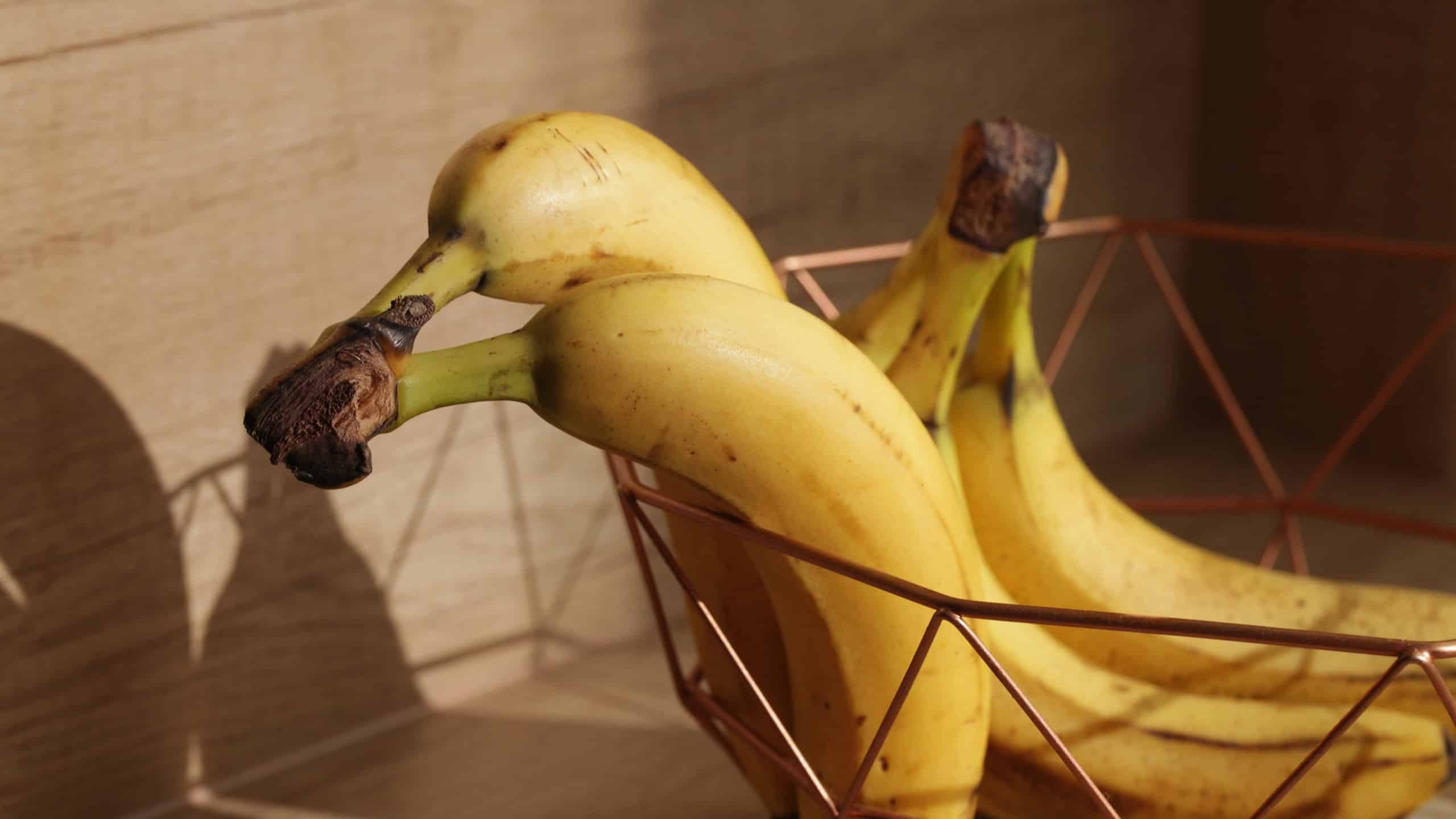
Bananas are well known for their potassium content. However, you may not be aware that a small portion of that potassium is the radioactive isotope potassium-40.
As such, every banana you consume emits trace amounts of background radiation. It’s actually so consistent that the “Banana Equivalent Dose” is sometimes used informally by scientists to communicate how little radiation something emits.
Wombat poop is cube-shaped
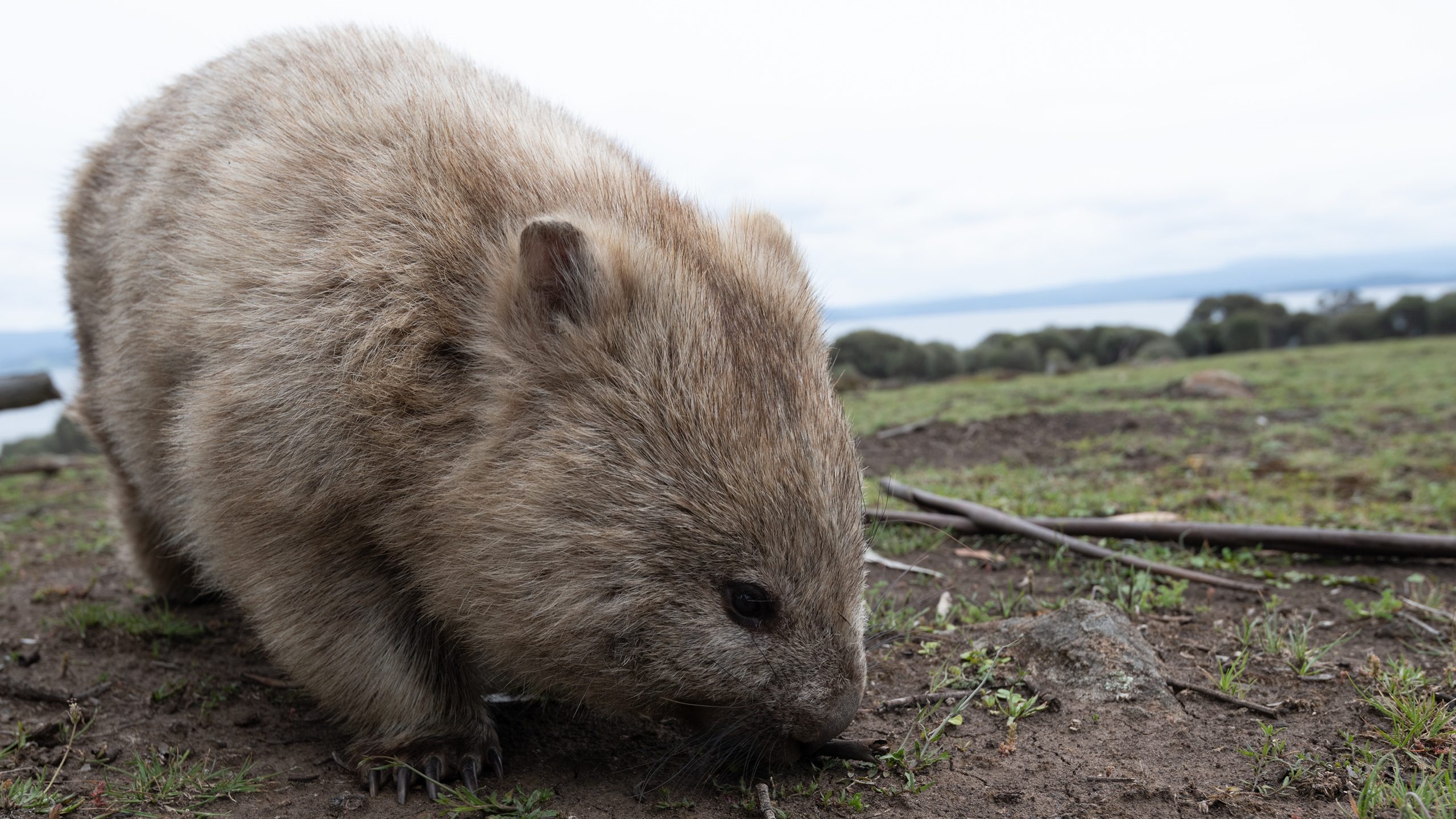
Meet the only animal in the world with cube-shaped poop: the Australian wombat. Cube poop isn’t just a quirky digestion thing either; it’s actually an essential part of how wombats communicate.
Poor eyesight has led wombats to rely on scent marking to orient themselves and stake their claim. They like to stash their droppings on higher ground like rocks, fallen trees and little hills to help waft their scent on the wind.
Cubed poop conveniently stays put on flat surfaces instead of rolling downhill like spherical poop would.
The original name for Bank of America was Bank of Italy

Bank of America may now be one of the world’s largest financial institutions, but it wasn’t always called that. The original name of the bank was the Bank of Italy. Back in 1904, Amadeo Giannini established the Bank of Italy in San Francisco with the goal of serving working-class Italian immigrants. Many banks at the time denied these immigrants basic services.
When San Francisco experienced a massive earthquake in 1906, Giannini wheeled out a desk composed of two barrels and a sheet of wood and began issuing loans to those affected by the disaster. The bank’s success allowed it to expand across the country, and it rebranded as Bank of America in 1930.
Cows have best friends

Most people think cows aren’t very smart. They couldn’t be more wrong. While monitoring heart rates and cortisol, scientists found cows preferred particular cow friends in their herd.
Paired with their beloved pasture pal, their stress levels were low and mental capacities remained high. Removed from their buddy, their heart rates increased and showed obvious signs of distress.
High heels were originally invented for men

The heel was originally not designed as part of women’s fashion, but as part of a heavy-duty male military shoe. Persian cavalry soldiers wore shoes with separate raised heels in the 10th century. The heels allowed their feet to lock into their stirrups when they stood up on their galloping horses in order to fire arrows.
In the late 1500s, Persian envoys came to Europe and European men wore heels to look tall, masculine, and rich. Women did not start wearing heels to emulate men for another hundred years.
Sloths can hold their breath longer than dolphins

Sloths are known for being incredibly slow movers on land, but in the water, they’re actually quite skilled. Sloths already have the slowest metabolism of any mammal, so they can decrease their heart rate to only one-third its normal speed.
By doing this, they are able to hold their breath for 40 minutes while underwater. That’s four times longer than a dolphin can go without breathing!
You can’t hum while holding your nose shut

Humming may feel like a mystical trick with your vocal cords, but it has very little to do with your mouth and everything to do with your nose. Your lips don’t open when you hum a note, so the only way your vocal cords’ vibrations can resonate is through a steady stream of air rushing out of your nose.
Pinch your nose closed, and you immediately cut off the airflow channel needed to create sound vibrations.
Squirrels are responsible for thousands of new trees every year

All summer and fall, squirrels bury thousands of nuts, seeds, and acorns in preparation for winter. Even with all that busy work, squirrels don’t dig up to 74% of the food they hide away.
Distances between caches and simple distractions or forgetfulness by spring mean millions of squirreled-away acorns sprout into healthy saplings every year. Their forgetfulness is one of the primary reasons forests regenerate worldwide.
Oxford University is older than the Aztec Empire

Aztec Empire and Oxford University tend to be things that most people don’t think belong in the same sentence. When you think about it in terms of chronology, however, you’ll find that just doesn’t add up.
Teaching at Oxford University had started by 1096. By the mid-1100s, they had established their university completely. Tenochtitlan hadn’t even been founded yet, and therefore the Aztec Empire had not risen to power in Mesoamerica until approximately 1428.
Scotland’s official national animal is the Unicorn

Scotland decided to pick something other than a real-world predator like a bear or eagle to represent their nation’s history. Instead, they opted for mythology’s most magnificent beast: the unicorn.
Adopted by King William I in the 12th century, the unicorn represented purity and wildness, and was considered untameable in Celtic tradition. Medieval lore held that the unicorn’s natural arch-enemy was the lion, which coincidentally happened to be England’s symbol of pride.
Liechtenstein once sent 80 soldiers to fight in a war

In 1866, Liechtenstein, one of the smallest countries in Europe, sent 80 men to defend a mountain pass on their border with Italy. They fought next to no battles and spent their days drinking beer and enjoying the scenery. At the end of the Austro-Prussian War, the original 80 men returned home safely.
But as they crossed back into Liechtenstein, there were 81. An Austrian officer had struck up a friendship with them and was coming home as their guest.
In 1923, jockey Frank Hayes won a race at Belmont Park despite dying mid-race

In 1923, journeyman jockey Frank Hayes became an unlikely sports legend at New York’s Belmont Park in the strangest of ways. Three-quarters into a steeplechase, Hayes, age 35, collapsed in a heart attack while riding his longshot horse Sweet Kiss.
Miraculously, he stayed on his feet in the saddle as the horse bolted down the remainder of the course. Sweet Kiss jumped the fence and sprinted to victory, leaving Hayes as the only jockey to win a professional race after dying.
The dot over the lower-case letters “i” and “j” has an official name

Did you know that the dot on top of an “i” or “j” has a grammatical name? It’s called a tittle. Medieval Latin copyists writing in cursive developed the tittle as a way to rapidly produce a small mark distinguishing minuscule letters when they abutted one another in text.
The word also led to our modern English idiom, “not one jot or tittle”, referring to the smallest part of something.
Sources: Please see here for a complete listing of all sources that were consulted in the preparation of this article.
Like our content? Be sure to follow us.
12 jokes that stop being funny after a certain age

I remember those school days, laughing at the stupidest jokes with my friends. I recently asked them about the jokes we used to love but can’t even stand now. The responses floored me.

