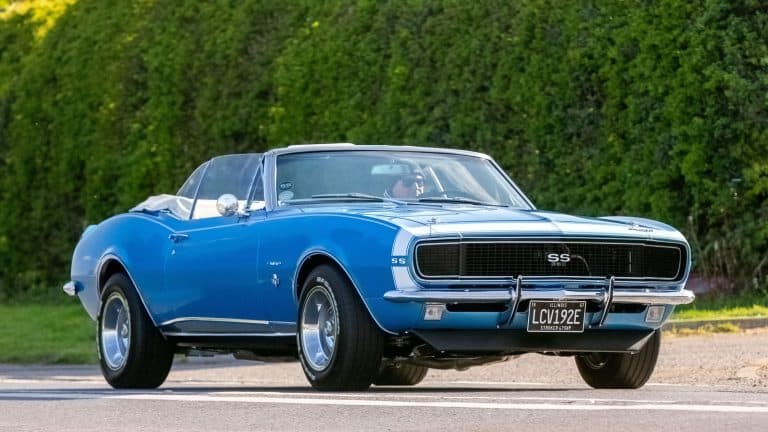

American life has been greatly influenced by cars and the top 15 most influential cars range from muscle cars to family sedans. We will never ever forget their glory age. These cars created the driving culture that our country is known for today.
Ford Model T (1908–1927)
The Ford Model T was what forever changed the way we drove. Not that it was the first car; no, Henry Ford didn’t invent the automobile, but it was the first truly popular car and the first one crafted using a factory line process that Ford developed. And it was the craft of the factory line that defined the automobile industry as a whole, a process that made cars cheaper and faster to make.
Chevrolet Corvette (1953–2021)
For decades, the Chevrolet Corvette has been lauded and recognized as the quintessential American sports car. As a result of this understanding, along with its long, wide, low frame and punchy power plant, the Corvette is the fantasy car for many people: a flat-out speed machine emblematic of the United States of America. This isn’t just a car, this is American pride and road love.
Ford Mustang (1964–present)
Well, in 1964, when the Ford Mustang debuted, fans hailed it as a flash of something fresh called ‘pony cars’. Affordable, sporty and fun, young drivers eagerly snapped up the little Mustang in droves. Named for a noble steed, it became one of the most recognizable automobiles of all time, a certain symbol of freedom and adventure.
Jeep: CJ/Wrangler (1945–present)
It echoes back to the Second World War when they dreamt up the first Jeep for the army and after which civilians wanted a Jeep too; and so the CJ (for civilian Jeep) was born, and the Wrangler took over from it. It took the boxy banner to places few other vehicular shapes could. You might want to be in a Jeep when you want to take a dirt track ‘off-road’ to no particular destination.
Chevrolet Camaro (1967)
About two years after Ford unleashed its Mustang at the New York World’s Fair in 1964, Chevrolet answered the call with the Camaro. Today, the 21st century Camaro is an icon of the muscle-car era. Power has always characterized the Camaro. The Camaro is the perfect American dream car for those who want speed and a little attitude.
Dodge Charger (1966–present)
The Dodge Charger became a muscle car in its most basic form. Though the Charger has been reborn numberless times since the 1960s, it has always been a physical embodiment of performance, and one of the most recognizable. You have likely seen this car millions of times, in films and on TV. It’s pretty much an icon of American muscle.
Tesla Model S (2012–present)
Before Tesla, electric cars had developed a reputation for being sluggish, dull do-gooders, and the Model S was instrumental in changing that perception. The brand was the catalyst for a revolution turning out sleek, plush, high-performance electric machines; and went a long way to making EVs cool and bringing to market a line of cars that can punch with its oil-burning competitors.
Ford F-Series (1948–present)
The Ford F-Series is America’s best-selling truck. It is the bruiser of the US economy grasped by every farmer’s fist or mechanic’s fingers. This is US brawn and toughness personified.
Toyota Camry (1982–present)
It’s not the sexiest car on this list, but given how Americans’ lives revolve around cars, that relative hunk of boring white metal, the Toyota Camry, might well be the most consequential. Robust as an ox and spacious, the Camry is the default family hauler for a large percentage of Middle America. Insofar as the Camry is neither exciting nor inspiring, it is preferred for its reputation for reliability.
Volkswagen Beetle (1938–2003, 2011–2019)
Any story of all-time best-selling cars would have to include the Volkswagen Beetle. The German-built compacts became cultural artefacts of the 1960s. The Volkswagen was a light, nimble, fastback. Not a big car, like the American ones, or anything like them. With its unique rounded shape and miniature size, it stood in contrast to the roadsters and pickup trucks of the US market. It was a car of that counterculture ethos, representing freedom and fun.
Chrysler Minivan (1984)
Chrysler’s 1980s-era minivan declared that all bets were off for the family car, forever. The minivan itself was a product that would become the quintessential car for families in my childhood, as it offered far more space and comfort than station wagons. Families travelling by van became a whole new lifestyle and altogether became an essential of American family life.
Honda Civic (1972–present)
The Honda Civic has been one of the best selling cars in the US. It’s always been reliable, traditionally decent on gas (a seduction strategy during the 1970s gas crisis), and consistently scores high on the combined value scales of practicality & fun. It’s an easily understandable design, and inexpensive to buy, making it a great first car for the beginner and great daily transport for the office worker.
Cadillac Eldorado (1953–2002)
It was the millionaire’s car of choice in the ’50s and ’60s, due to customizable color options & a big v8 under the hood. Thus the Eldorado helped to cement Cadillac’s reputation for making some of the world’s most luxurious automobiles.
Pontiac GTO (1964–1974, 2004–06)
Often referred to as the original muscle car, the Pontiac GTO was all about speed and horsepower, no frills; it was the car that heralded the beginning of the muscle car era in the US aimed at these younger demographics who loved big motors combined with some attitude. The GTO is a classic 1960s car, the epitome of US car culture.
Ford Explorer (1991–present)
The prototypical midsize SUV, the Ford Explorer, which became the first big hit behind the US SUV boom that began in earnest around 1992, will go down in history as A Vehicle That Was Just Right For A Family But Will Never Ever Be A Minivan. Ford helped to make SUVs the third-best-selling body type on the road today.
Like our content? Be sure to follow us.


