
The world lost some of its brightest minds and most influential personalities far sooner than expected, but some of them changed the world forever.
Srinivasa Ramanujan (Died at 32)

Ramanujan was born in poverty in Tamil Nadu. Even without any formal mathematical education, he’s noted for intuitively developing thousands of new mathematical identities.
After learning of his work from papers sent by Ramanujan, Cambridge professor G. H. Hardy invited him to London in 1914 and Ramanujan soon developed groundbreaking results on number theory and infinite series.
However, his health began to decline because of cold weather, being a vegetarian during World War I rationing, and tuberculosis. His health continued to decline rapidly after moving back to India, where he died in 1920 at age 32.
Masaccio (Died at 26)
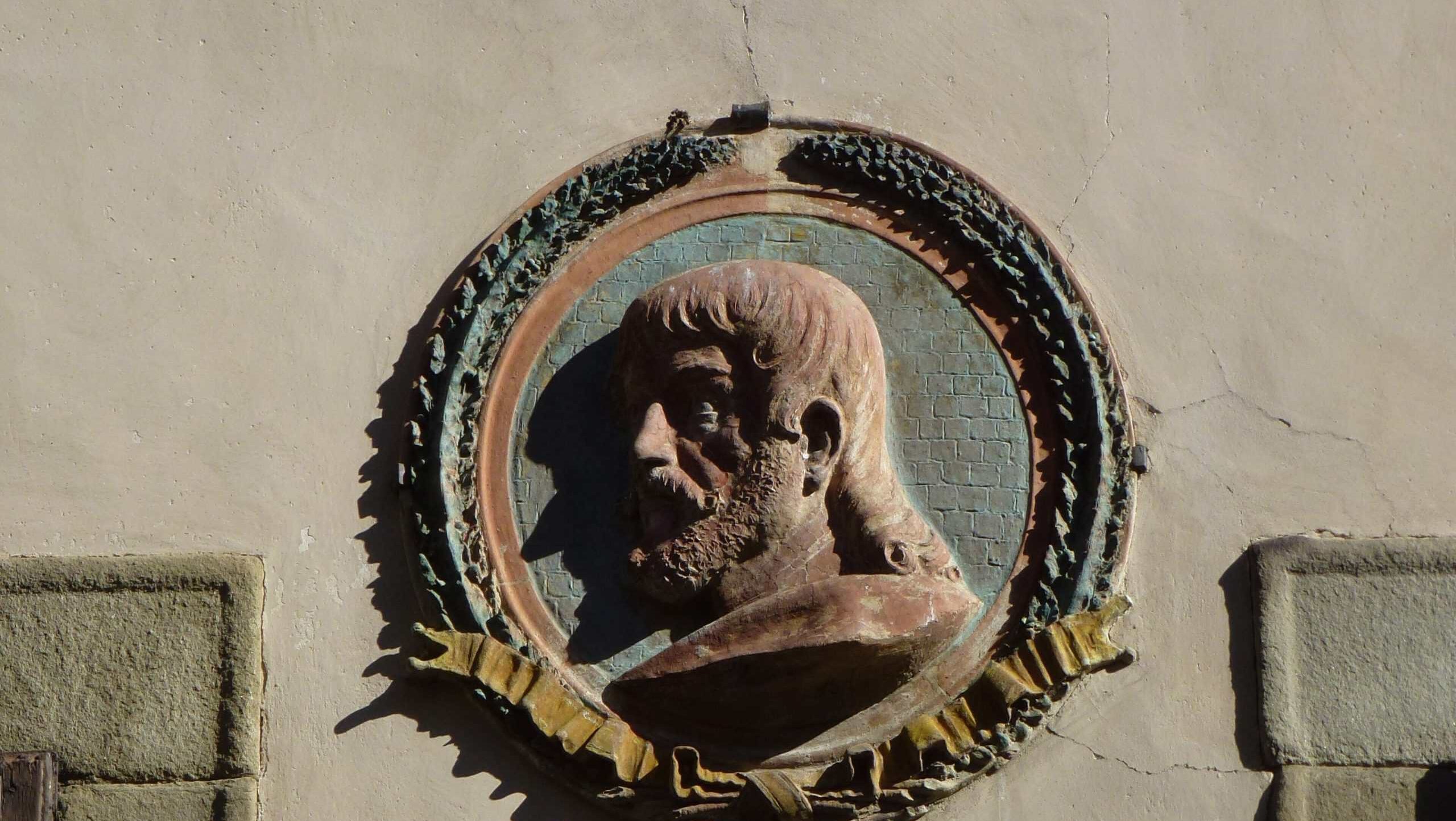
Masaccio is remembered as one of the great fathers of the Italian Renaissance. He brought scientific perspective to painting, along with more naturalistic proportions and realistic shadows (chiaroscuro).
His frescoes in the Brancacci Chapel in Florence would inspire countless other painters, from Michelangelo to Raphael. Masaccio’s life was cut short by a sudden death in Rome during 1428, when he was just about 26 years old.
The cause of his death remains a mystery, although rumors swirled that he was poisoned by envious competitors.
King Edward V of England (Died at 12)
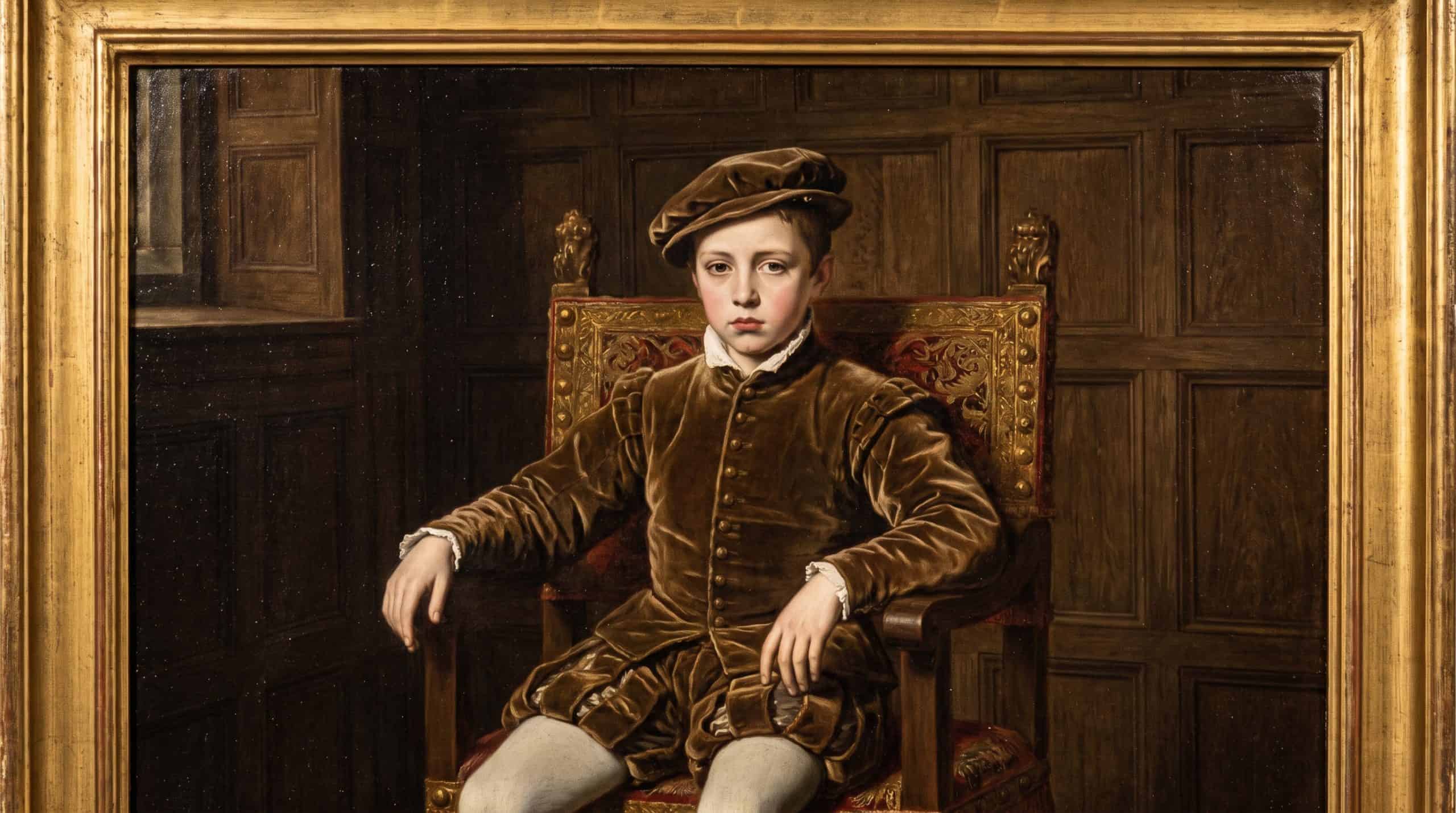
When Edward IV died in 1483, his 12-year-old son, Edward V, became king, though his coronation never took place.
Richard, Duke of Gloucester, the boy’s uncle, intercepted him on his way to London and had him and his younger brother, Richard of Shrewsbury, put in the Tower of London.
With Parliament’s declaration of their illegitimacy, the two boys disappeared from view by late summer 1483, leading to persistent theories that their uncle, Richard III, had them eliminated after assuming the throne.
Hypatia of Alexandria (Died between 45-65)
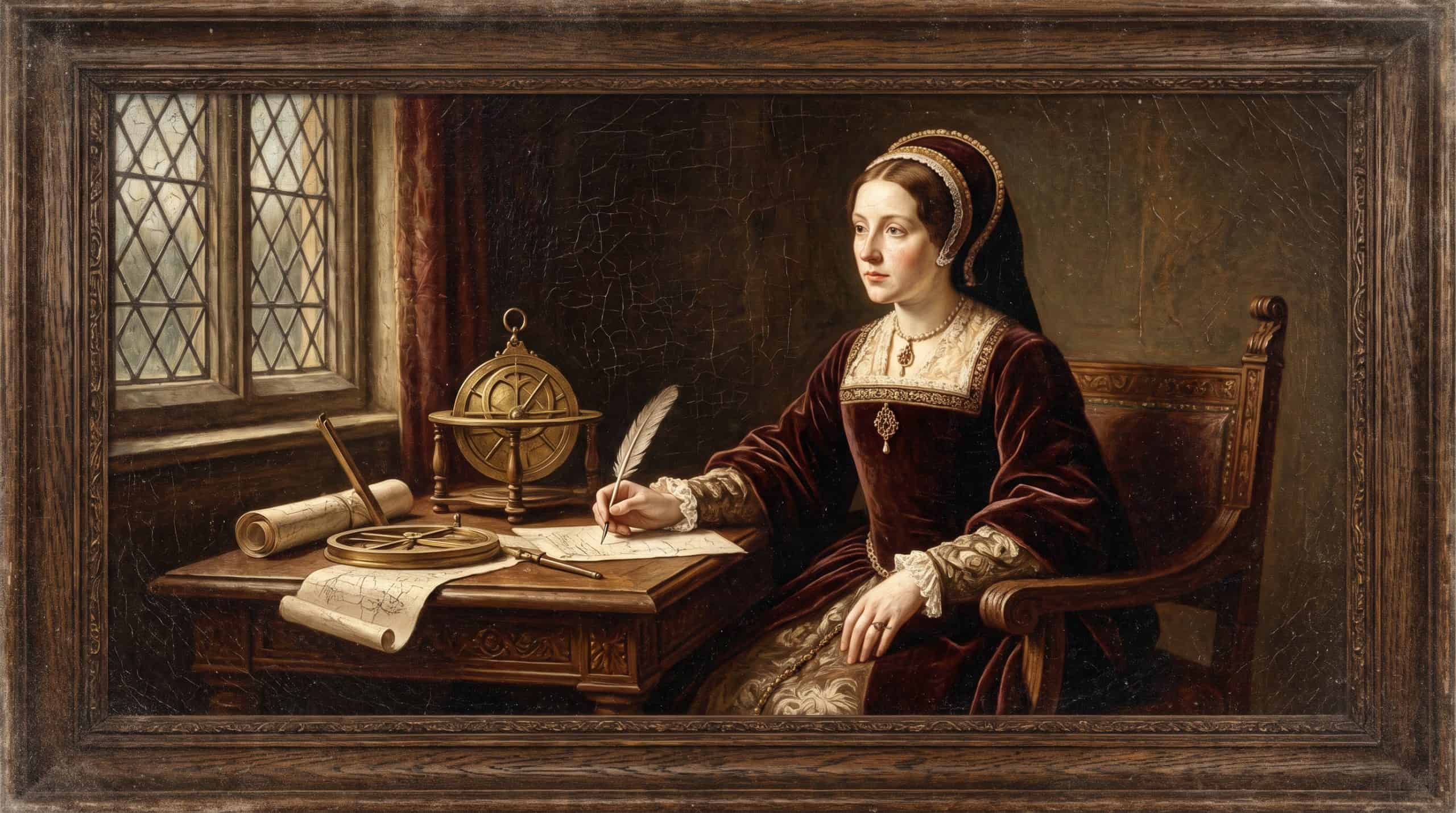
The astronomer, mathematician and Neoplatonist philosopher, Hypatia was among the most acclaimed thinkers of antiquity. She taught many of Alexandria’s finest minds during the early fifth century and quickly gained fame throughout the city for her wisdom.
Hypatia also became advisor to the Roman representative leader of Alexandria, Orestes. As such, she was eventually caught up in the political conflict between Orestes and Cyril, Patriarch of Alexandria.
In March of 415 AD, Hypatia was torn from her carriage by a Christian mob and dragged into the Caesareum, a former pagan temple repurposed into a church. The mob brutally killed her by scraping her flesh off.
Hypatia’s murder has long stood as a stark representation of the clash between political authority, religious extremism, and intellectual pursuit. The extent to which Hypatia’s murder was a political act is still a matter of scholarly discussion, but its gruesome nature is unparalleled among academic assassinations.
Niels Henrik Abel (Died at 26)

Young Niels Henrik Abel, just 19 at the time, proved the impossibility of a general radical solution for quintic equations. This groundbreaking mathematical discovery was even more impressive considering Abel’s age.
Brilliant at understanding elliptic functions, he died at 26 penniless and always struggling to be heard by the academic elite of Europe.
While traveling to see his fiancé during a particularly cold and snowy Norwegian winter in late 1828, Abel fell ill with tuberculosis and died of the disease on April 6, 1829. He was 26 years old when he died.
The final twist of Abel’s tragic life came two days after his death. A letter had arrived offering him a professorship in Berlin. And it was too late.
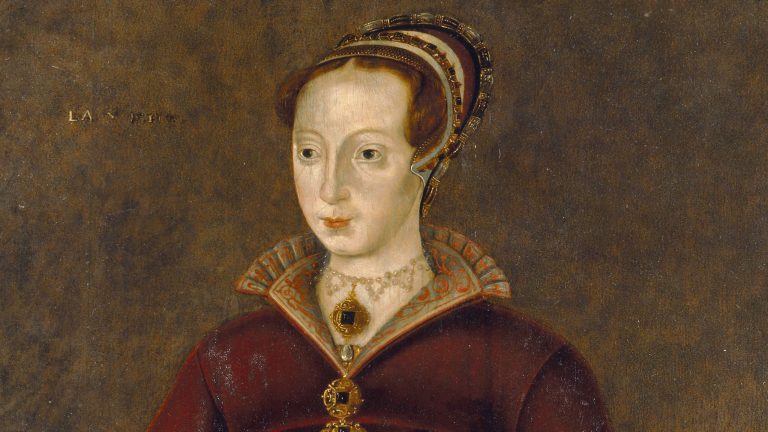
Lady Jane Grey (Died at 16)

Sold into marriage by greedy uncles eager to stabilize a Protestant rule after the death of Edward VI, teenage Lady Jane Grey was crowned Queen of England in 1553.
Jane’s reign would only last nine days.
Mary Tudor quickly mustered support to fight against Jane and for her claim to the throne. After her brief reign, Jane was removed from power and confined to the Tower of London. Mary was at first hesitant to execute her cousin, and it appeared she would let Jane live.
However, that notion changed when a Protestant uprising was staged, one that Jane’s own father took part in. With Jane now considered a threat to Mary’s reign, the young queen was sentenced to death.
Lady Jane Grey was brought to her execution at Tower Hill on February 12th, 1554. Jane bravely accepted her fate. The girl who had been Queen of England for nine days was just 16 when she was killed.
Évariste Galois (Died at 20)

Évariste Galois, at age 20, established the principles of modern group theory and higher algebra. His work forever transformed mathematics, particularly the understanding of polynomial equations and symmetry.
His life story is not as elegant.
Évariste Galois was a fiery republican who matured during one of the most tumultuous eras of French politics. In the aftermath of the 1830 Revolution, he found himself arrested on multiple occasions due to his republican efforts.
A mysterious duel, the reasons for which were never fully understood, took place in May of 1831. It is believed by many that the duel was the result of a dispute over a woman, but no evidence has ever surfaced to confirm any reason for the duel. Knowing he might die in the duel, Galois spent the evening prior writing out his mathematical developments and distributing them to his friends.
He was shot in the stomach the next day and he passed away on May 31, 1831, at just twenty years old.
Amedeo Modigliani (Died at 35)

Amedeo Modigliani was an Italian painter who lived and worked in France for most of his life. He is recognized for the unique style of his paintings, including elongated characters, mask-like faces, and provocative nude studies.
Modigliani suffered from poverty, poor health, and alcoholism. On January 24, 1920, Modigliani died of tubercular meningitis in Paris. He was just 35 years old when he died.
The story gets worse. The very next day, his pregnant partner Jeanne Hébuterne took her own life. She was 21 years old. Hébuterne died just 2 days before Modigliani’s funeral.
Henry Purcell (Died at 36)

Regarded as one of the most talented Baroque composers of England, Purcell incorporated French and Italian styles into his own unique fashion.
Purcell composed sacred music and music for the theatre as well as the well known opera Dido and Aeneas. He worked for 3 monarchs at the Chapel Royal.
He met his end on November 21, 1695, following a brief illness, at the young age of 36. The story goes that, after a night at the theatre, Purcell’s wife mistakenly shut him out of their house in the cold.
No evidence backs up this anecdote, leaving the circumstances of Purcell’s death uncertain.
Amy Johnson (Died at 37)

Amy Johnson became the first woman to fly solo from England to Australia in 1930. Piloting a de Havilland Gipsy Moth she called Jason, this flight quickly cemented her fame. She continued to break long-distance flight records in the years that followed.
Johnson joined the Air Transport Auxiliary when the Second World War broke out and flew military aircraft all over Britain.
In January 1941, she crashed an Airspeed Oxford into the Thames Estuary while flying through bad weather. The exact circumstances of the crash are unknown. She was just 37 years old when she died and her body was never recovered.
Thomas Chatterton (Died at 17)
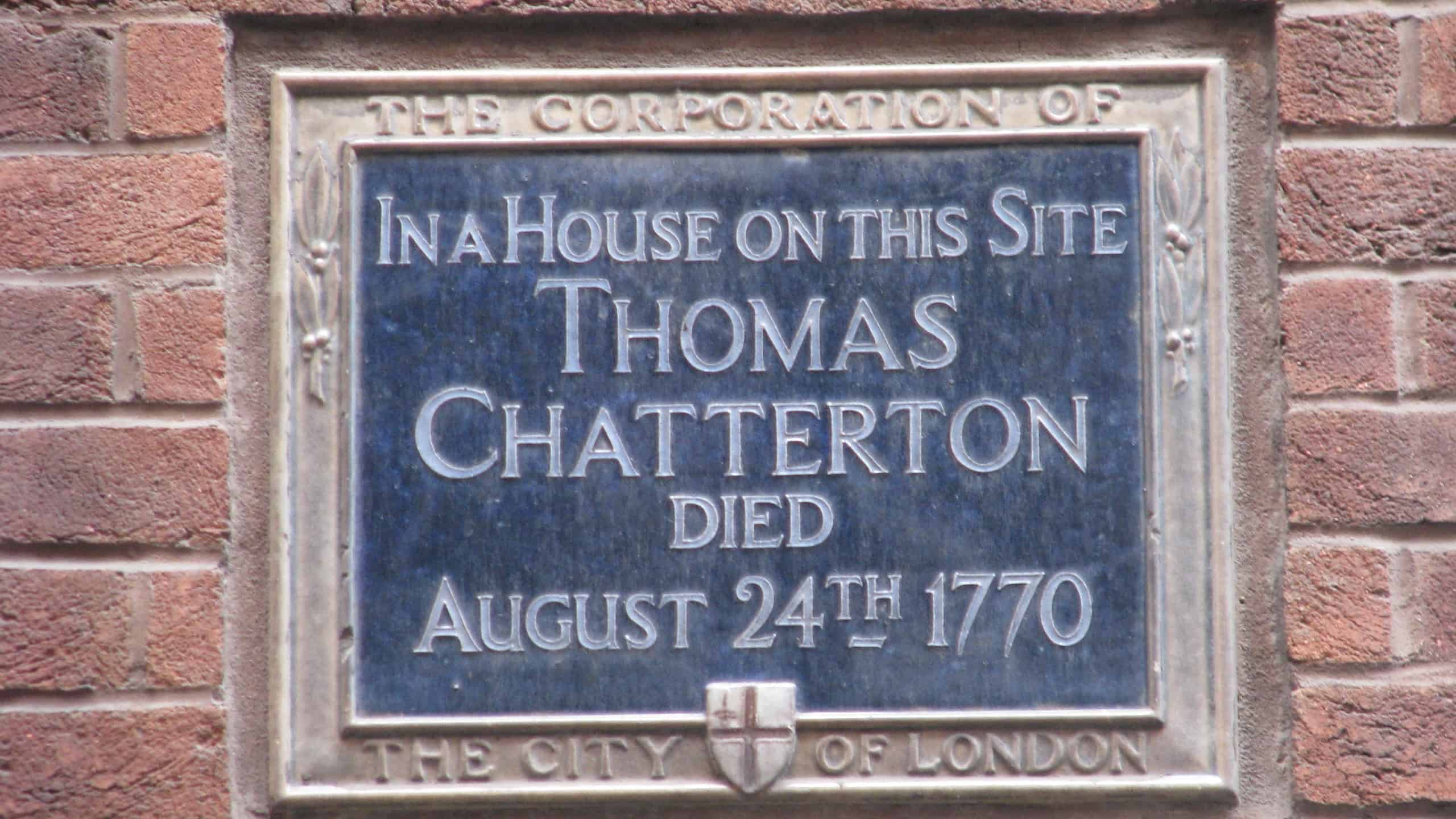
Thomas Chatterton started writing mock-medieval poems at the age of 12. He presented these poems as if they were the work of a fictional 15th-century monk, Thomas Rowley. Many people believed they were real.
When he moved to London at seventeen to make his mark as an author, he quickly learned that publisher payments were unreliable and he ran out of funds for food.
On August 24, 1770, Thomas Chatterton poisoned himself with arsenic in his garret in London. He was only 17 years old when he died. This early death went on to define him as the quintessential young Romantic poet who met an untimely end. His life went on to influence other writers and poets, such as William Wordsworth and John Keats.
King James II of Scotland (Died at 29)

Royal authority was often challenged in 15th-century Scotland. That’s why king James II wanted to create a stronger monarchy and modernize his army.
But in doing so, he made powerful enemies, including Clan Douglas. The Clan Douglas were among the mightiest people in all of Scotland.
James was obsessed with cannons. The king brought giant iron cannons over from Europe and used them to blast English defenses along the Scottish border. It was this obsession that ultimately led to his demise.
The king, only 29 at the time, stood by on August 3rd, 1460, during the Siege of Roxburgh Castle, witnessing one of his cannons fire. The cannon burst, and a fragment of metal struck the king, killing him almost immediately.
The king went to battle with powerful technology. Ironically, his own weaponry led to his demise.
Otto Lilienthal (Died at 48)

Nicknamed the “Flying Man”, this German aviation trailblazer devoted years of research towards flight. He was hell-bent on proving mankind could do the impossible and fly like a bird.
Captivated by birds and their ability to soar through the air, Lilienthal observed birds’ movements and created models of his own aircrafts. By the 1890s, he had completed hundreds of successful glides and was the first person to have recorded gliding flights. Aviation enthusiasts like the Wright brothers would later look to Lilienthal’s experimentations to try to build the world’s first powered airplanes.
But Lilienthal’s efforts to unlock the secrets of flight were incredibly dangerous.
While testing one of his homemade gliders in Rhinow Hills in August 1896, a gust of wind made his aircraft stall. He fell roughly 50 feet to the ground and broke his spine.
Lilienthal survived the fall, but he died one day later from a broken neck. He was just 48 years old when he died.
Anne Askew (Died at 25)

Anne Askew was a learned English poet and a committed Protestant woman who lived during one of England’s bloodiest seasons of religious persecution.
Accused of heresy amid the conservative political climate at the end of Henry VIII’s time on the throne, Askew was interrogated, hoping to get her to confess and provide the names of other Protestants. Anne Askew was put on the rack, but she would not denounce her beliefs. She also refused to identify men and women thought to be meeting under the guise of religious freedom.
The torture weakened Askew so severely that she was unable to stand or walk. On July 16, 1546 Askew was brought to Smithfield in a chair where she was burned alive at the stake.
Sources: Please see here for a complete listing of all sources that were consulted in the preparation of this article.
Like our content? Be sure to follow us.
11 women from history who lived under false names

Some of history’s most extraordinary women became famous under names that weren’t the ones they were born with.

