

Ancient Rome had some surprisingly strange laws that controlled everything from what people wore to how they mourned their dead.
Regal clothes

Purple dye was one of the costliest luxury commodities in antiquity. Made from thousands of marine snails in a labor-intensive process, Tyrian purple made textiles prized symbols of wealth and power. Senators and magistrates could wear clothes embroidered or bordered with purple, but some kinds of purple garments and dye were reserved for the emperor, especially in the later Empire.
If someone wore the emperor’s purple without authorization, they risked punishment for appearing to challenge his authority.
Silent mourning

Funeral behavior was subject to standing sumptuary legislation in Roman law. Behavior was strictly controlled to keep it from becoming disorderly or excessive in public. Twelve Tables X prohibited excessive mourning at private funerals, including women from tearing their cheeks (radere genas), and the traditional chant of mourning known as lessum funeris.
There were also temporary Senate decrees that were enacted only during severe military emergencies to evacuate public space and restrict the duration of mourning periods, but standing funeral laws were intended to limit only ostentatious displays of grief.
Under his authority

Under the archaic law of paterfamilias, the eldest living male in a family unit had unlimited and legally sanctioned authority over his children and grandchildren. Fathers could disown infants, control whom their children married, and sell their sons into temporary indentured servitude or slavery if his household accrued debts.
Roman legal experts created a loophole to this law stating that if a father sold his son into slavery three times, and each time that son somehow regained his freedom, then he would irrevocably lose his paternal power over that son. Adult sons are known to have invoked this principle to free themselves from domineering fathers.
A dangerous image
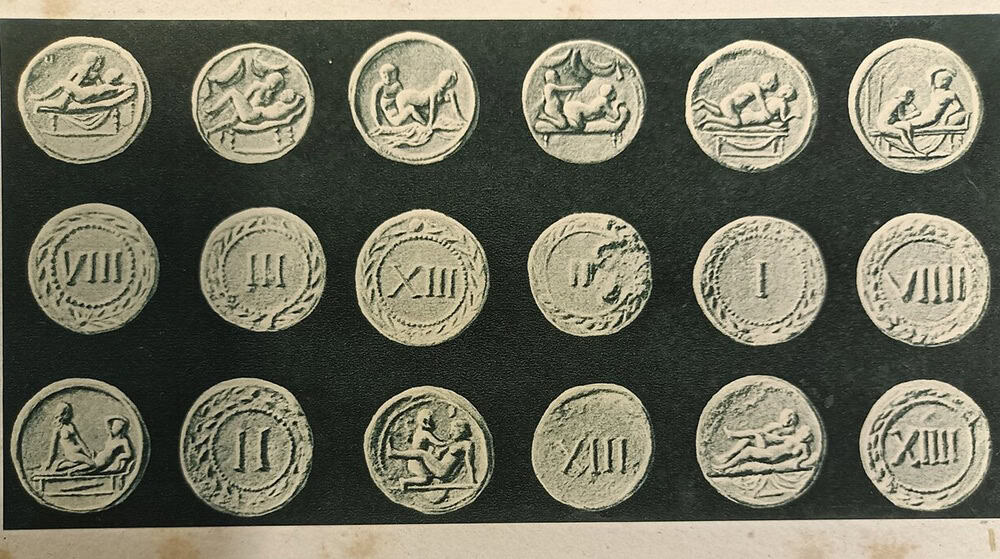
As the Emperor was considered the embodiment of the Roman state (and sometimes considered divine), money bearing his likeness was sacred. Bringing a coin with the Emperor’s image into a brothel (lupanarium), bathroom, or gambling house was considered offensive to the Emperor (crimen laesae maiestatis).
Customers at brothels were required to deposit their coins at a doorkeeper or exchange their cash for tokens made of bronze (spintriae) upon entering so that the Emperor’s image was not defiled by lewd activities.
Trouble from above

Roman multi-story apartment blocks (insulae) did not have indoor plumbing. Apartment dwellers would regularly pour their chamber pots, spoiled food, or heavy debris out of windows directly onto pedestrians walking below on the narrow sidewalks. Roman jurists created the law of effusis vel deiectis (“things poured or thrown down”) to deal with injuries and property damage that occurred from objects falling out of windows.
The owner of an apartment was liable if anything poured or fell from their apartment window, even if it was thrown by someone else besides themselves, such as a guest visiting their apartment. If urine or feces damaged a passerby’s tunic, the penalty was twice the clothes’ value. If someone was injured, the owner had to pay for all medical bills and lost wages.
Duty until death

Romans did not necessarily consider suicide wrong or immoral; however, suicide was illegal when it interfered with financial or military affairs. Roman law considered slaves as personal property (res) of their masters. Suicide committed by slaves was considered property damage, as if the slave was an expensive possession that was ruined.
Likewise, suicide was prohibited among soldiers and was considered desertion and treason to the legion. The penalty for suicide was death if he lived long enough to face the punishment. Additionally, the soldier’s family was stripped of all rights to his pension and estate.
Three nights apart
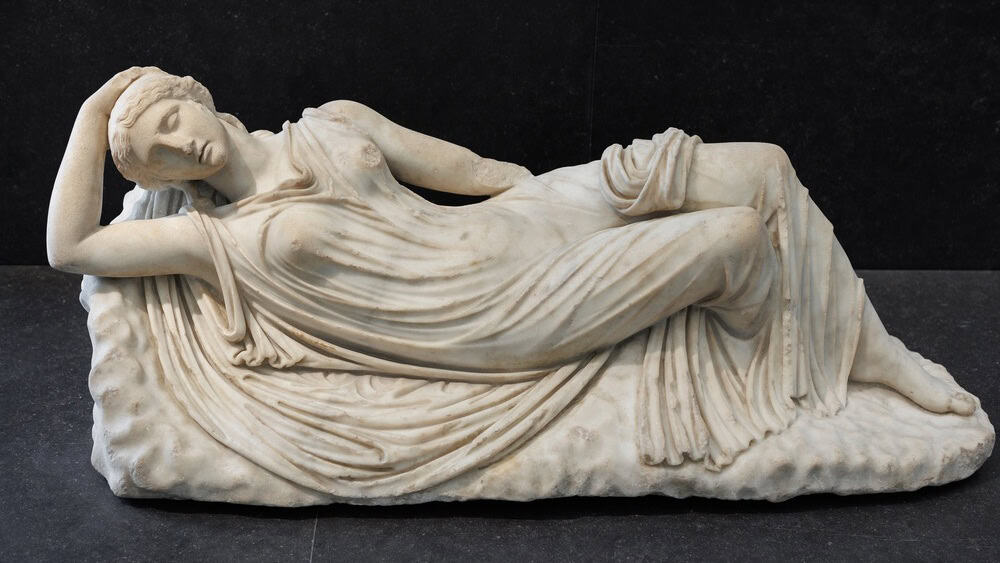
One form of marriage under early Rome, cum manu, transferred a woman completely from the legal control of her father to that of her husband and his family. She also lost the right to inherit from her birth family.
There was another style of marriage called sine manu, which allowed women to remain independent. As long as a woman avoided allowing her husband usus (automatic ownership) of herself and her property by living with him one full year, she maintained financial and legal independence through use of a law called usurpatio trinoctii.
If the married woman left her husband’s household for three nights in a row each year, she avoided this transfer of power, allowing her to maintain control of her own finances, belongings, and freedom to divorce if she wished.
Words that wounded

A Roman citizen’s public reputation (existimatio) was sacred, and attacks on the reputation of someone prominent could destroy that person’s political life and social existence. The Roman legal system punished those who wrote or sang a carmen famosum.
These songs were insulting, scurrilous, or mocking poems sung in the forum. Anyone found responsible for organizing these public attacks could be heavily fined under Roman law, a penalty during the early Republic being death by clubbing.
A sacred promise

The Vestal Virgins were a group of priestesses who were in charge of maintaining the eternal flame of Vesta located in the Roman Forum, because if the fire ever went out, it was believed that the Empire would fall. So, maintaining their ritual purity was essential for the stability of the state, and breaking their vow of celibacy (incestus) was considered treason against Rome itself.
However, Roman law forbade the spilling of the blood of a Vestal. Punishment was thus altered to become even more gruesome; the convicted Vestal was led through the streets to the Campus Sceleratus, a field outside Rome, in a closed litter. She was then taken down into a small, underground chamber that contained an oil lamp, a couch, and a little food (bread, water, and milk), and the opening was sealed shut with dirt, resulting in her death by suffocation.
Marked by the Gods

The Romans took omens very seriously. Lightning strikes were seen as clear and incontestable executions sent directly from Jupiter himself.
People killed by lightning were thought to have been personally cursed by the gods, so funeral rites such as carrying the body higher than the knee, bathing the body, or conducting public displays of mourning were expressly prohibited.
Instead, they were buried without traditional tombstones or family mourning; otherwise, Rome believed the city would fall under extreme divine retribution.
The question of ownership

Roman law did not recognize “finders keepers” rights as found in modern common law jurisdictions. If a Roman citizen walked up on a stray farm animal, dropped purse, or mislaid tool on a road and kept it without making reasonable efforts to locate the original owner, they could be sued for furtum (theft).
Someone claiming abandoned property could never acquire full legal ownership unless they possessed it openly and in good faith for one year (two years if the property was land or buildings) under the law of usucapio. Trying to conceal ownership of a found object or immediately selling it to someone else could earn you a fine of double or triple its assessed value paid to the loser.
An unusual sentence

The penalty for committing the worst crime of murder in Rome, parricide (literally killing one’s parent, but expanded to mean other close family members), was created to inflict the maximum levels of indignity both on the person and in death. This punishment was called poena cullei (“punishment of the sack”).
First, the perpetrator would be flogged with rod-like sticks, fitted with a wolf- skin hood on their head and wooden clogs on their feet. They would then be sewn up in a leather sack with a dog, a rooster, a viper, and a monkey and tossed into the Tiber River (or the ocean if Rome was far away).
Luxury under scrutiny

In an attempt to stop the extravagant displays of wealth by an elite few, corruption of public morality, and unnecessary social envy and resentment between rich and poor, Roman legislators enacted harsh laws limiting expenditure (see Lex Fannia and Lex Didia).
These laws placed legal limits on the number of guests a person could invite to a banquet, the amount of money which could be spent on food and wine per guest per meal, and the menu items which could be served. Certain delicacies (such as fattened fowl, dormice, sow’s udders and imported shellfish) were banned outright from party menus and state officials were authorized to enter private homes during dinner hours and inspect menus and guest lists.
Lethal wine

Roman sources describe a very old tradition in the early Roman Kingdom which forbade respectable women from consuming wine (temetum). Authors such as Pliny the Elder and Valerius Maximus write that it was customary for Roman men to kiss women of their household on the mouth to check if they smelled wine on their breath, and various stories tell of women being harshly punished by family members if they were caught drinking wine.
Sources: Please see here for a complete listing of all sources that were consulted in the preparation of this article.
Like our content? Be sure to follow us.
13 outdated beauty rules older women should leave behind

Let the archaic beauty rules fall away as you age gracefully.

