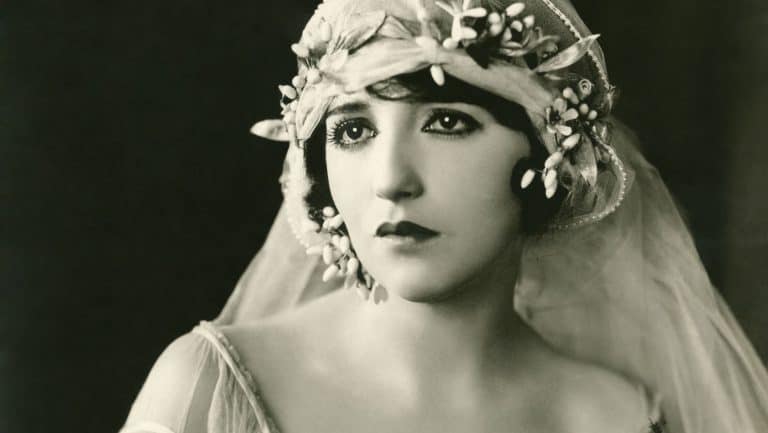

Weddings have always been about looking your best, but some bridal fashions took things a little too far.
Six-foot side hoops
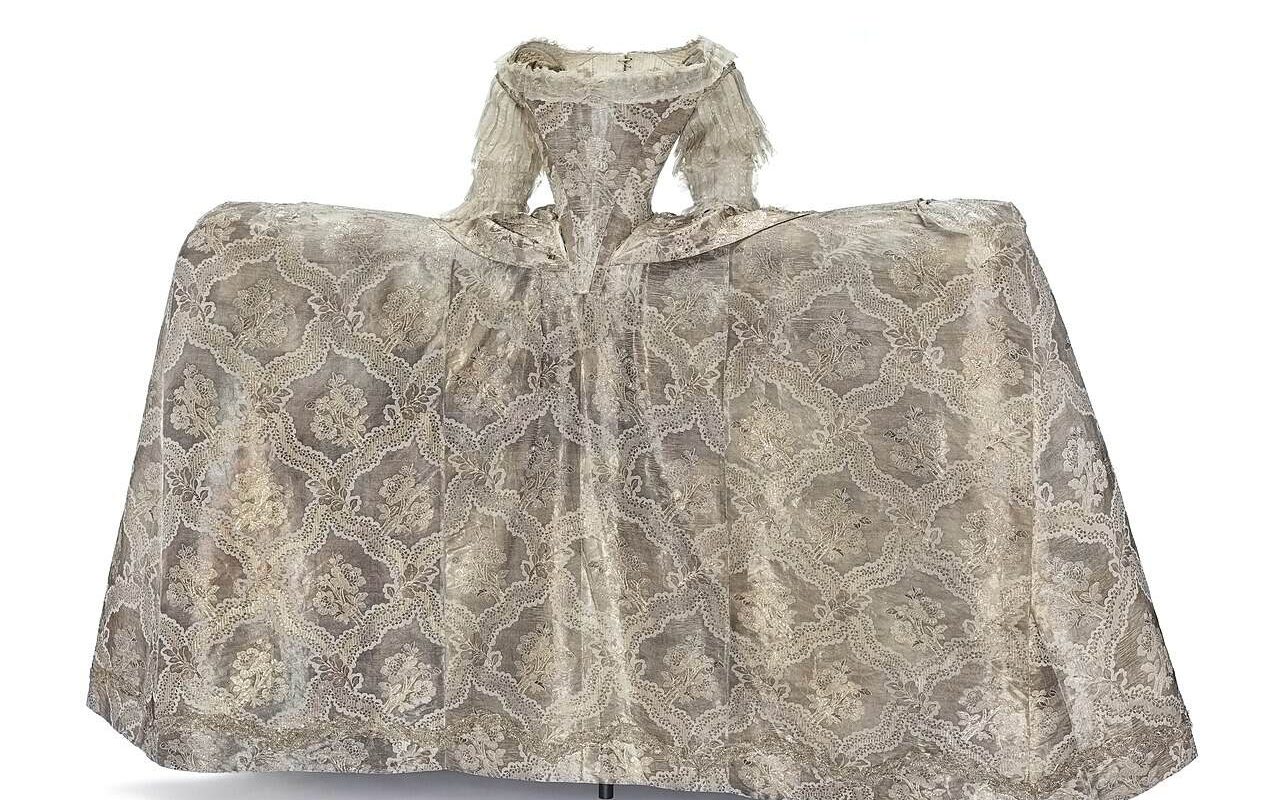
Mobility wasn’t nearly as much of a concern as exhibiting wealth for aristocratic European brides during the 1700s. Court wedding gowns of the period sported outrageous side-hoops (also called panniers) which ballooned the skirt to widths of six feet to each side, while staying flat at the front and rear. The bride appeared more like a movable room divider than a person, often needing double doors to fit through regular rooms and assistance walking through aisles sideways.
Toxic emerald silk
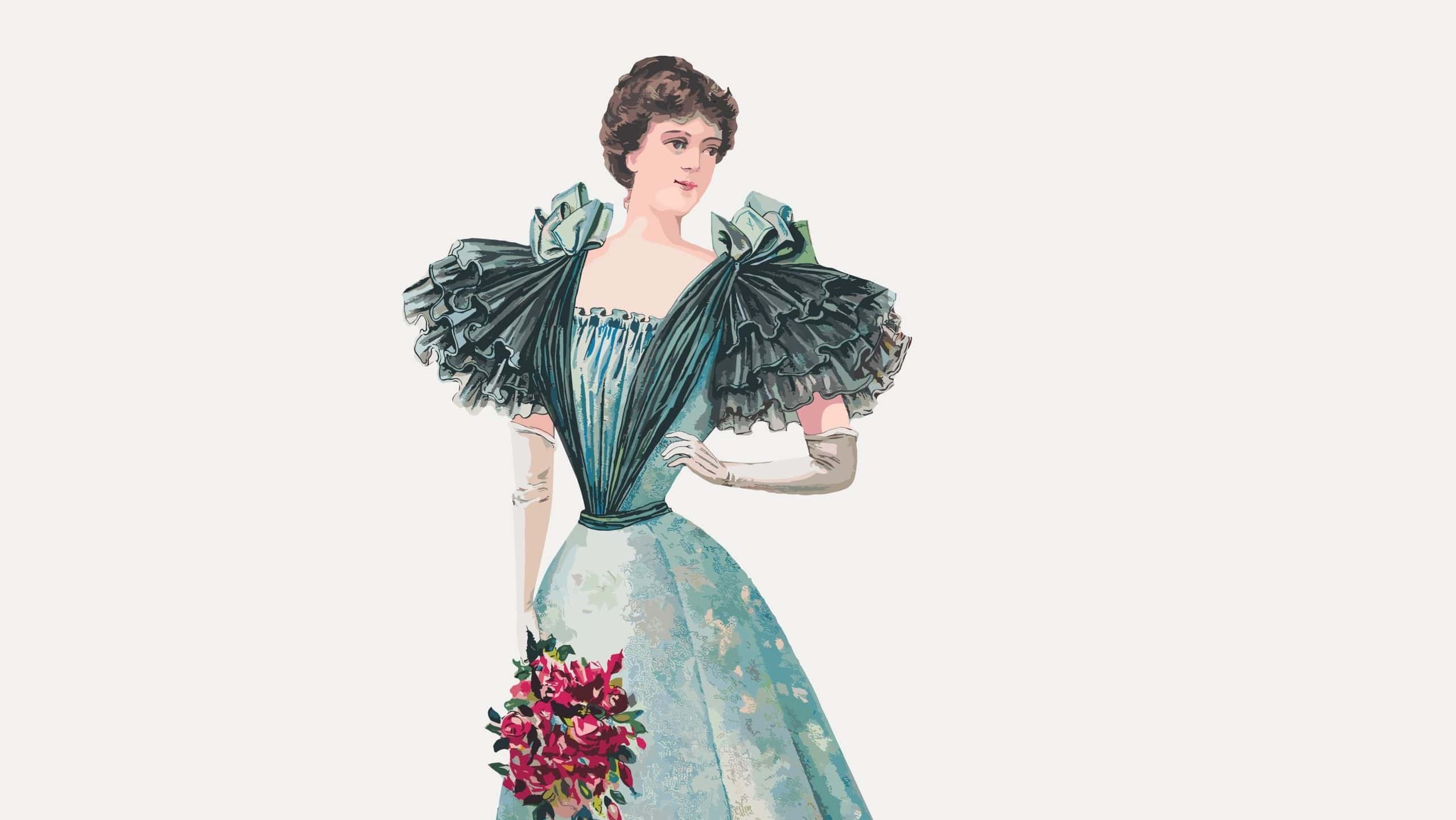
Before Queen Victoria made white wedding dresses fashionable in 1840, brides simply wore their finest garments regardless of color. In the mid-1800s, one of the most popular colors of bridal dress was deep emerald green silk.
Regrettably, bright verdant hues could only be obtained by using copper arsenite. So brides were literally wearing poisonous arsenic against their skin. The dresses burned skin, produced horrific nausea, and caused faintness. This was attributed to normal bride’s nerves.
Mutton-sleeve overkill
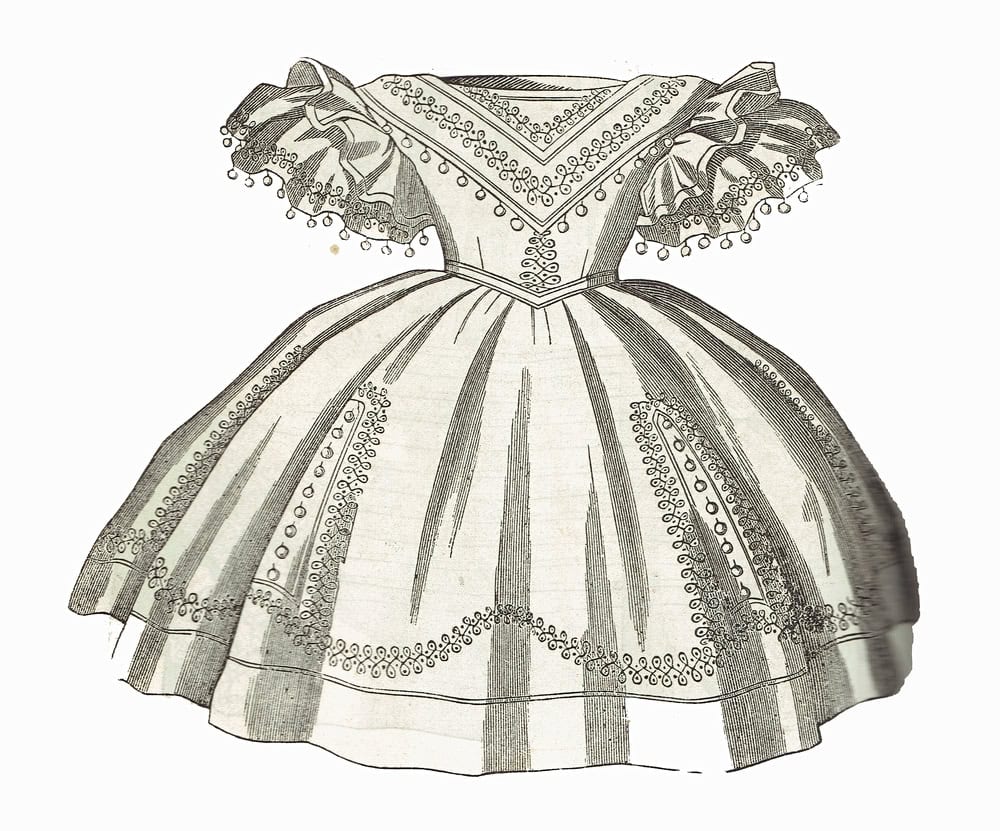
Late Victorian wedding dresses featured very exaggerated proportions. Gigot sleeves, also known as leg-o’-mutton sleeves, consisted of huge poufs of fabric at the shoulders that had yards of bulky buckram inserted into them before narrowing to very tight wrists.
The excess fabric volume at the upper half of the body made women look extremely top-heavy and broad-shouldered. They sometimes needed to squeeze through door frames at an angle to prevent damaging their stiffened silk sleeves.
The shapeless flapper sack
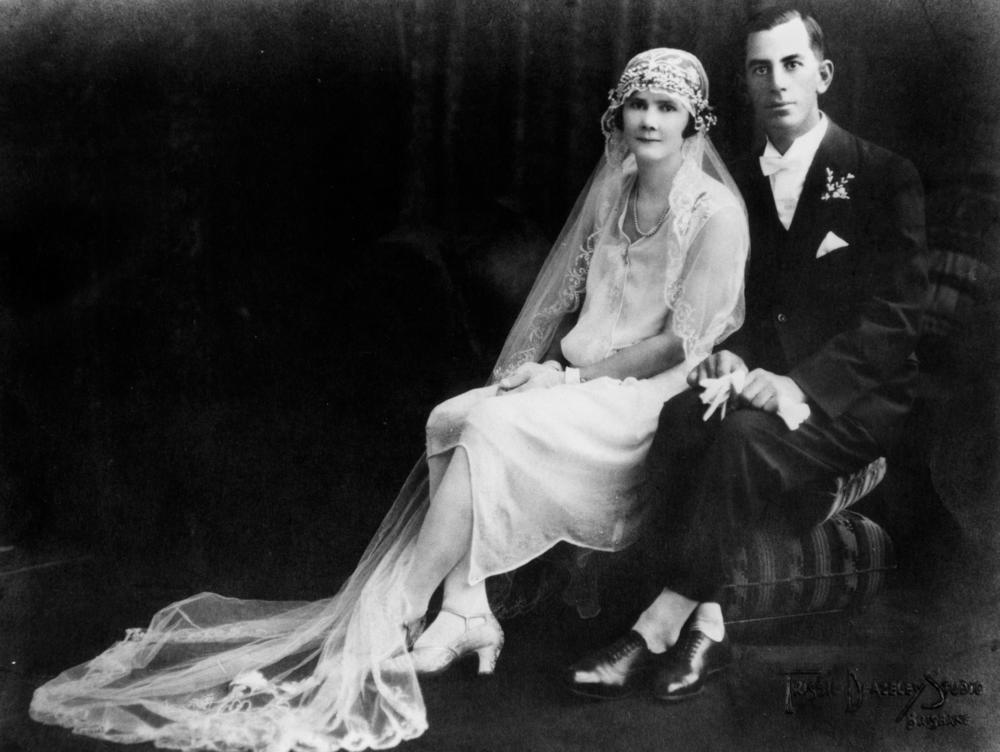
Women’s fashion of the Jazz Age liberated womenswear like never before, but didn’t do much for bridal beauty. Gone were any cinched waists of previous decades, as twenties wedding dresses were straight and boxy with hem-lines or hip-bands at the high thigh.
Paired with flat chest binding and heavy cloche-style bridal caps worn low down over the eyes, the look erased all human shape, causing brides to resemble satin pillowcases strolling down the aisle.
Taffeta explosion

Inspired by Princess Diana’s 1981 wedding dress, the 1980s went bridal crazy. Dresses featured huge stiff crinolines, enormous pouched sleeves, ruffled high necklines, billowing lace ruffles on top of stiff taffeta. Volume became so extreme that brides were often completely engulfed by their massive gowns.
Prairie bonnets & calico

Wedding traditions in the 1970s often involved rustic, back-to-nature wedding themes with a Victorian revival style. Brides wore high-necked, floor-sweeping cotton dresses embellished with calico lace and layered tiers of flounces.
Some chose wide-brimmed floppy sunhats while others donned oversized floppy veils that resembled huge bonnets. Some brides looked like 19th century pioneers or like they were auditioning for Little House on the Prairie.
Ruched pick-up skirts
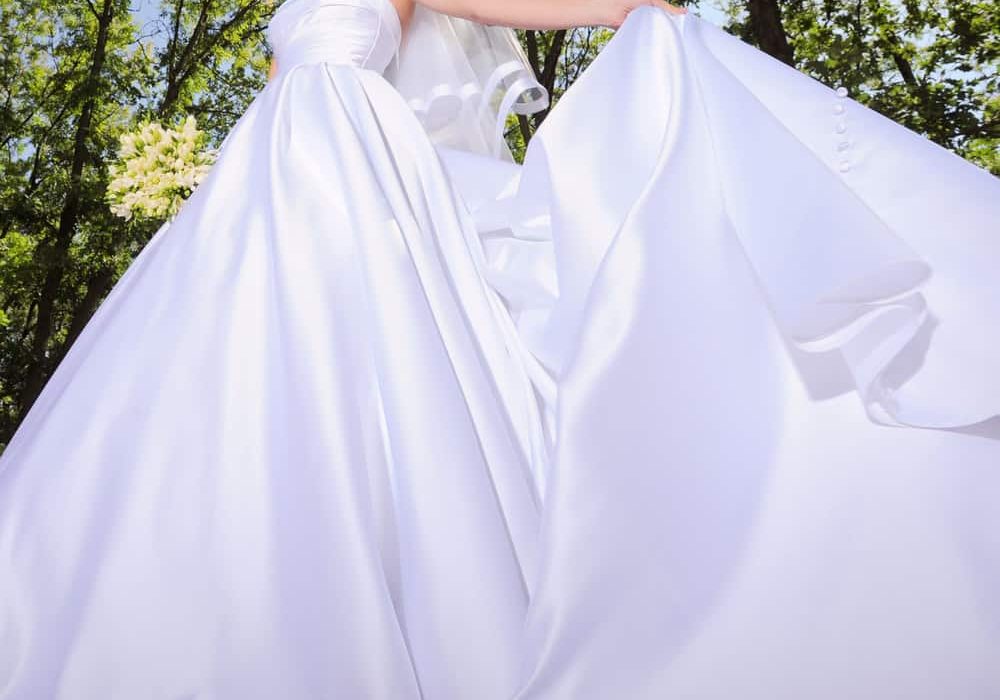
Wedding dresses in the early 2000s had one bridal silhouette that brides could not escape: a strapless satin bodice with a heavy pick-up skirt. These skirts had gathered hitches held together by rhinestone brooches.
The intention was to look like Victorian draped fabric. In reality, they often looked rumpled and bulky, and women had to constantly yank their dress up throughout their entire wedding reception because of the strapless bodice.
Space-age helmet veils

The Space Race and the 1960s mod fashion influenced bridal fashion designers to use futuristic materials such as plastics, vinyl and hard geometrics. Lace veils gave way to stiff pillbox helmets, plastic-ridged hoods and towering beehive hairstyles adorned with stiffened netting.
Many were matched with shift-style mini wedding dresses, making the wearer appear more like an extra in a futuristic sci-fi rather than a feminine vision of romance.
Sweating in heavy velvet
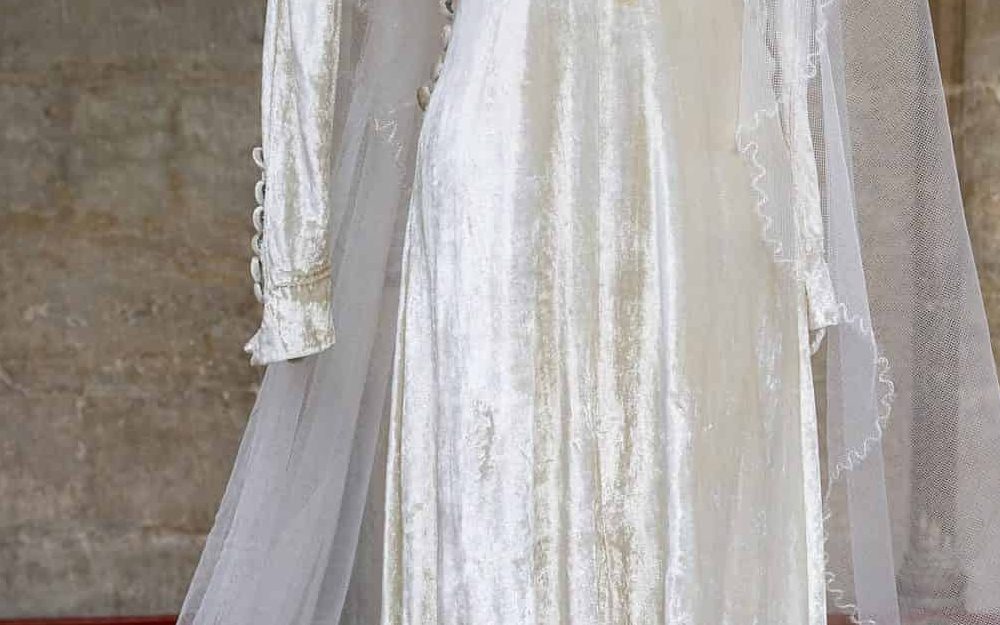
During the Great Depression era, winter weddings for high-class socialites involved bias-cut velvet gowns. Velvet feels incredibly luxe, but yards of heavy, thick fabric dragged and stretched out of shape by day’s end.
Not only that, but being trapped inside heated areas while wearing thick velvet made most brides sweat bullets under their dresses. This made it absolutely miserable to dance or have to stand through an entire wedding ceremony.
The hobble skirt

Made fashionable just before World War I, the hobble skirt was tight at the ankles, leaving it to have a long, slim look when the wearer was standing still. Walking was a chore with normal strides because of the narrow band around the legs.
Brides making their trip down the aisle were compelled to shuffle or frequently stumble over their own trains or require physical support from their fathers just to arrive at the altar without collapsing.
Airbrushed neon gradients
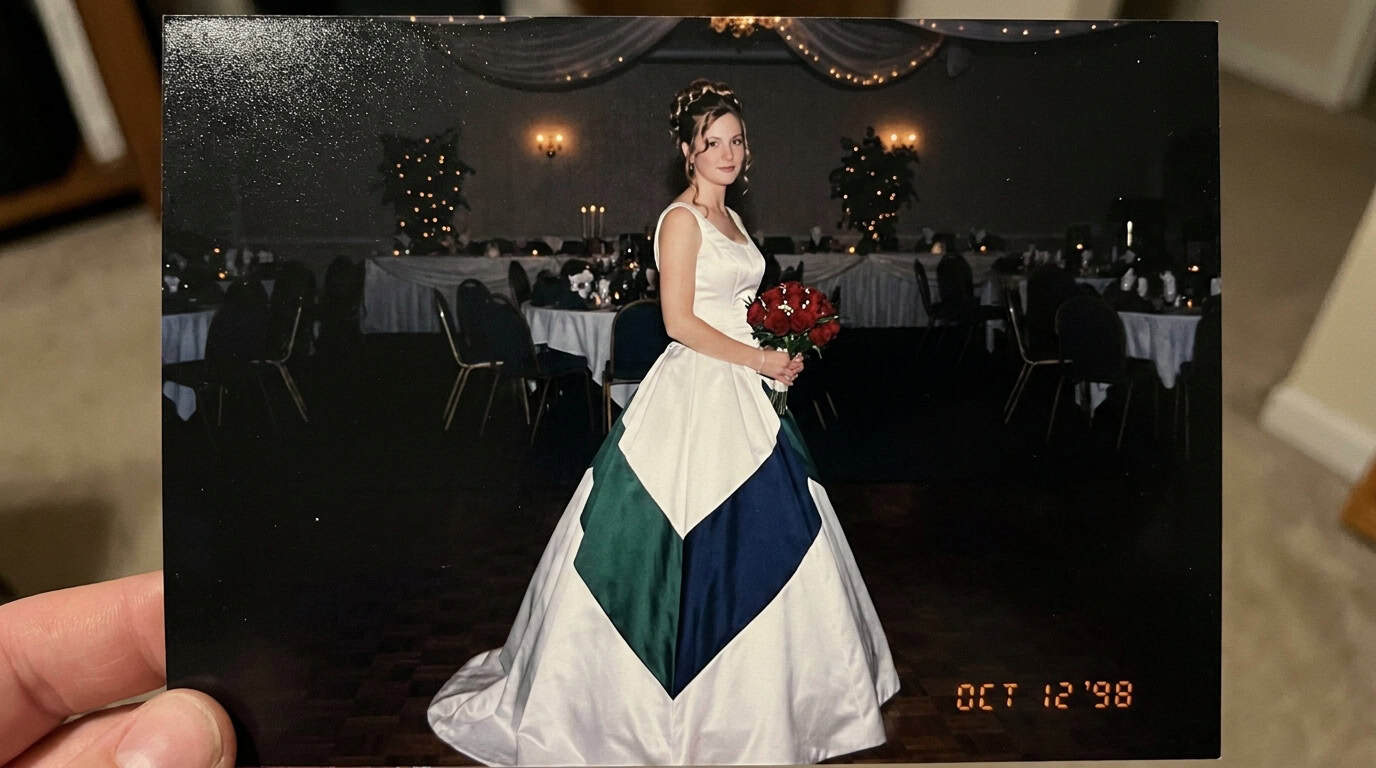
Experimenting with colors other than traditional white, the late 1990s saw wedding dresses splashed with contrasting airbrushed color gradients, spray-dyed hemlines, or bold color-blocked satin panels (typically dark jewel tones like navy, burgundy, or hunter green).
Rather than add sophistication, harsh color blocking often visually halved the bride’s body, or made it look like the bottom half of the dress had been dipped in paint.
The rigid lampshade netting
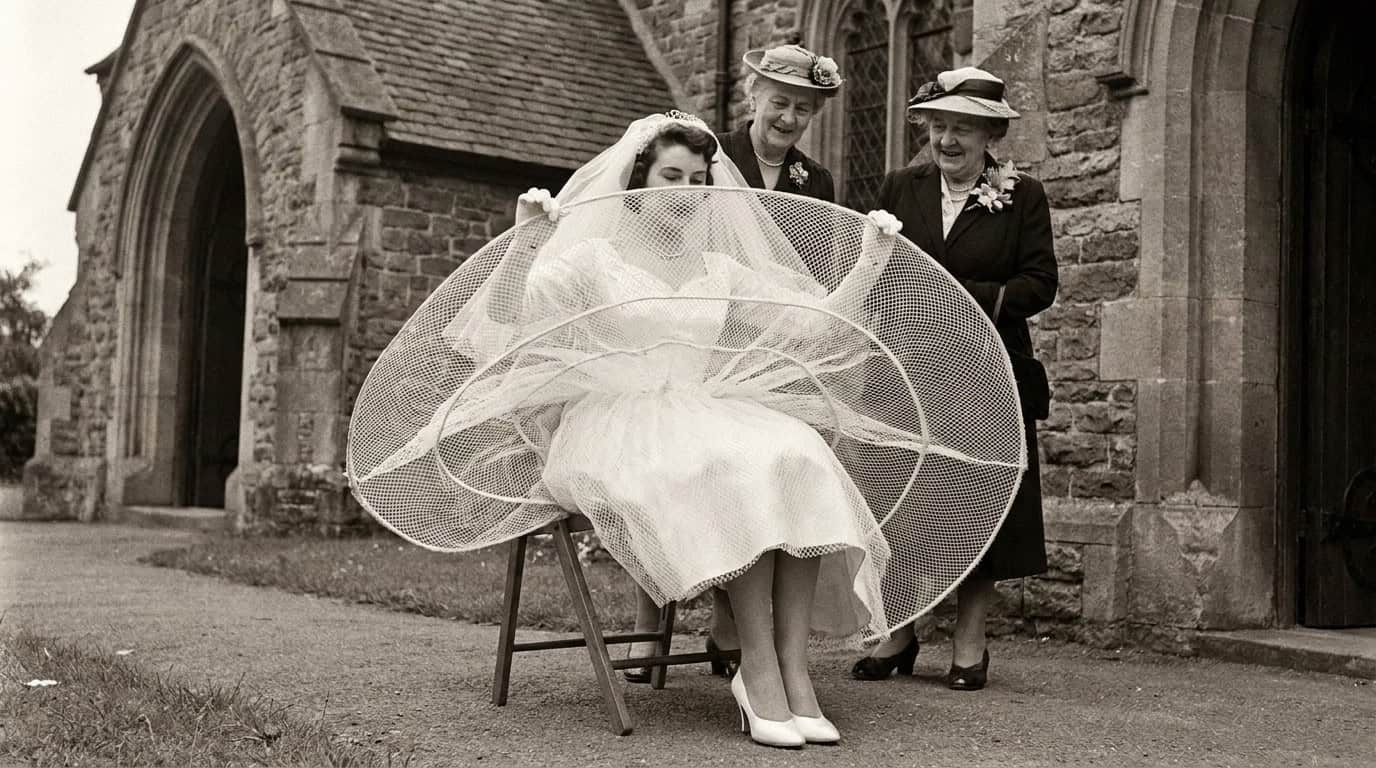
Although vintage 1950s tea-length wedding dresses are adorable now, some took things to an extreme with extremely stiffened petticoats made of itchy nylon netting.
The skirts cascaded out at 90-degree angles from the waist, creating severe silhouettes that resembled lampshades with arms and legs. They’d pop straight up into the bride’s face when she sat during the ceremony, or blow sideways dramatically in the wind.
Extreme illusion bodysuits
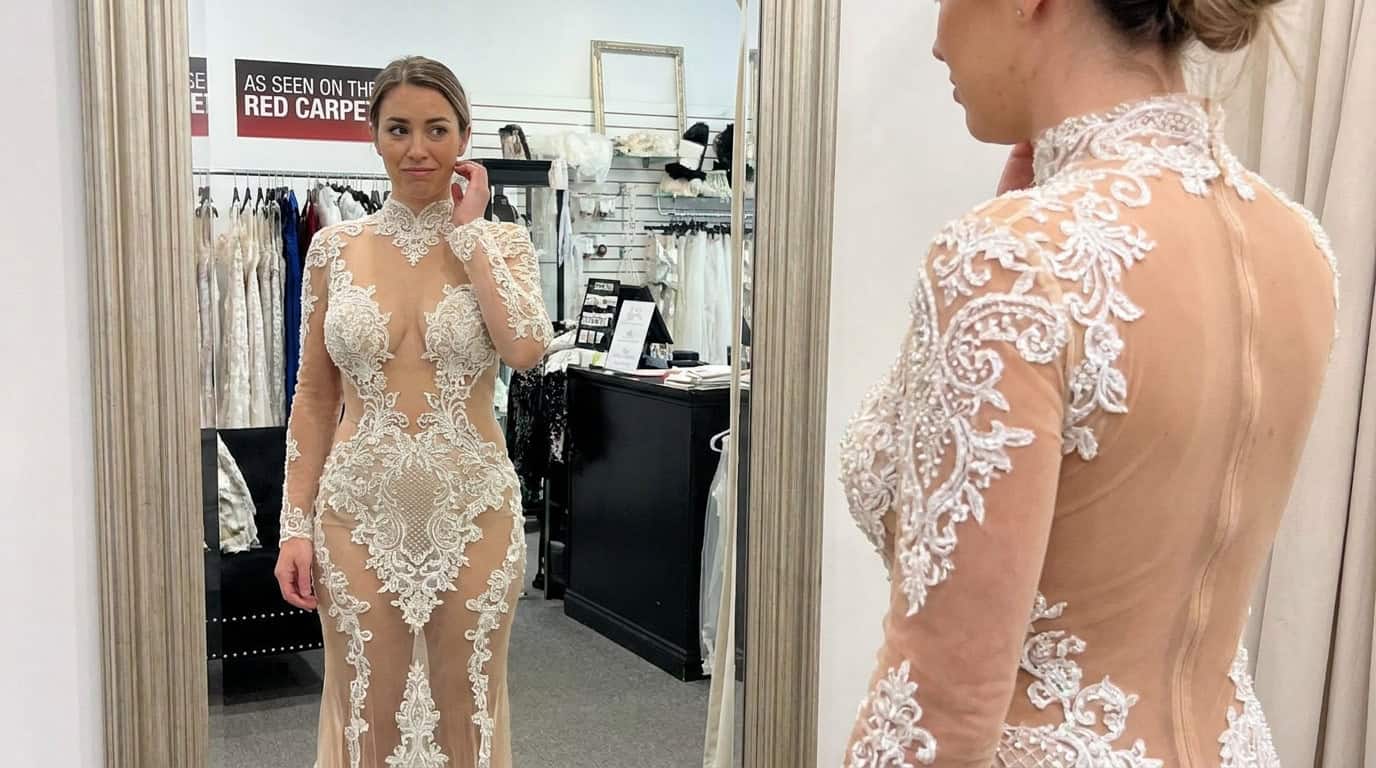
Extreme sheer gowns borrowed from high-fashion red carpet trends starting in the mid-2010s. Dresses made of sheer nude mesh appliquéd with lace tried to achieve an er***c sophistication but often went too far.
Harsh church lighting or photography flashes revealed nude mesh that didn’t match the bride’s skin tone, appearing to leave her half naked in front of all her relatives.
Like our content? Be sure to follow us.
13 small things people wear that make them seem more important
Sometimes, subtle additions to your wardrobe allow you to silently appear more authoritative, refined, and powerful than you actually are.
13 small things people wear that make them seem more important

