

Some historic rules seem utterly laughable today, but the truth is, Americans once had to follow them or face serious punishment.
An ice cream stop could break the rules

In 1915, female teachers in Massachusetts had to be careful where they went. The rules said they weren’t allowed to go to ice cream parlors. Yes, really, female teachers were banned from hanging around downtown ice cream parlors because it was seen as improper.
That was just the start of the ridiculous rules for teachers, though. They also had to be home by 8 p.m. and weren’t allowed to dye their hair. They also couldn’t wear bright colors because they attracted too much attention.
A wedding could end your flying career

There was a time when getting engaged wasn’t necessarily good news for flight attendants. Specifically, any woman working as a United Air Lines flight attendant would have to give up her job if she got married. The same rule didn’t apply to men.
It wasn’t until November 8, 1968, that the airline scrapped this policy, and it’s all thanks to a woman named Kathleen Inda. She wanted to get married and continue working, but the rules wouldn’t allow her to do so. So, she resigned before her wedding. The policy was later challenged in a federal discrimination lawsuit involving Kathleen Inda.
The six-inch gap on the dance floor

Things were rather complicated for couples dancing in Lincoln, Nebraska, during the 1920s. Not only did they have to find a partner, but they also had to follow a rule that said couples must keep at least six inches between their bodies while dancing. That definitely would’ve made things rather awkward.
It wasn’t simply distance either, as the rules were also quite clear about where people could put their hands. Women had to place one hand on their partner’s shoulder or arm. Men had to hold their partners in a specific way, too. Apparently, dancing in any other way was completely wrong.
Dancing required official permission

That’s not all for dancing. If you owned a bar in New York City in the 1920s, you actually had to get a license to allow your customers to dance. It was part of the city’s Cabaret Law. The rules said that establishments had to obtain a special license before allowing certain entertainment.
The ‘entertainment’ included dancing. Interestingly enough, the cabaret licensing law wasn’t actually repealed until November 27, 2017, although the government had stopped enforcing it long before then.
No playing allowed

You might’ve heard of blue laws, where people weren’t allowed to do certain things, like playing baseball, on a Sunday. Webster, Florida, took that rule a lot further. Starting on July 31, 1908, the town banned people from playing baseball anywhere within the town’s limits.
The rule applied every day, meaning that playing baseball at any time was illegal. That didn’t stop people from doing it, though. Nobody seems entirely sure why the town banned baseball, although the game was sometimes associated with drinking, gambling, and troublemaking back then. The rule lasted until April 1996, when Webster eventually repealed it.
A bathing suit needed measuring

In 1922, the rules in Washington, D.C., were pretty clear about female swimmers. They had to wear bathing suits that ended no more than six inches above the knee, and yes, there were people who would actually measure a woman’s bathing suit.
The restrictions came from Colonel Clarence Sherrell, who was in charge of all public buildings and grounds in Washington. Any woman visiting the bathing beach had to make sure her swimwear met the requirements, or be told to leave the beach. They could even be fined and detained.
Men had to cover their chests at the beach

Men also had rules to follow on the beaches. In 1933, several New Jersey resort towns, including Atlantic City, Ocean City, and Wildwood, had rules requiring male swimmers to wear bathing suits that covered their chests. In other words, they couldn’t walk around shirtless.
Atlantic City’s public safety director, William Cuthbert, really hated shirtless swimming and supported the city’s restrictions. It wasn’t only New Jersey, either. No, there were similar rules in other parts of the country, like Decatur, Illinois.
Shorts could land someone in jail

Simply wearing a pair of shorts could land you in trouble in New York City in the 1930s. The city banned people from wearing shorts on public streets in 1935, with a punishment of 30 days in jail and a $150 fine, around $3,690 today, for anyone who disobeyed the rule. Two newspaper reporters in Yonkers decided to do just that.
On June 21, 1936, they deliberately went outside while wearing shorts and were soon arrested. They both received a $10 fine, around $246 today, although their convictions were later overturned. The rule was also struck down.
Popcorn belonged outside the movie theater

It’s so normal to eat popcorn in the movie theater today that most of us don’t even think about it. But it wasn’t always that way. During the early 1900s, theater owners didn’t want people to bring the snack inside, as they wanted their buildings to feel respectable.
They thought popcorn would ruin that classy image. So, while they allowed street vendors to sell bags of it outside, customers weren’t allowed to take popcorn into the movie theater. They had to leave their snacks at the coat check. It wasn’t until the Great Depression hit that things changed, as theater owners realized they could make more money selling snacks.
Bread had to arrive in one piece

World War II changed American life in many ways, and one of the strangest ways involved people’s shopping habits. Namely, what they couldn’t buy. On January 18, 1943, the federal government introduced a law that banned commercial bakeries from selling ready-sliced loaves.
The goal was to save wrapping materials, especially waxed paper, and also reduce production costs. Families had to cut their bread at home. However, the rule didn’t last very long, as the government reversed the decision in March 1943. That was less than two months later.
Comic books couldn’t feature certain monsters
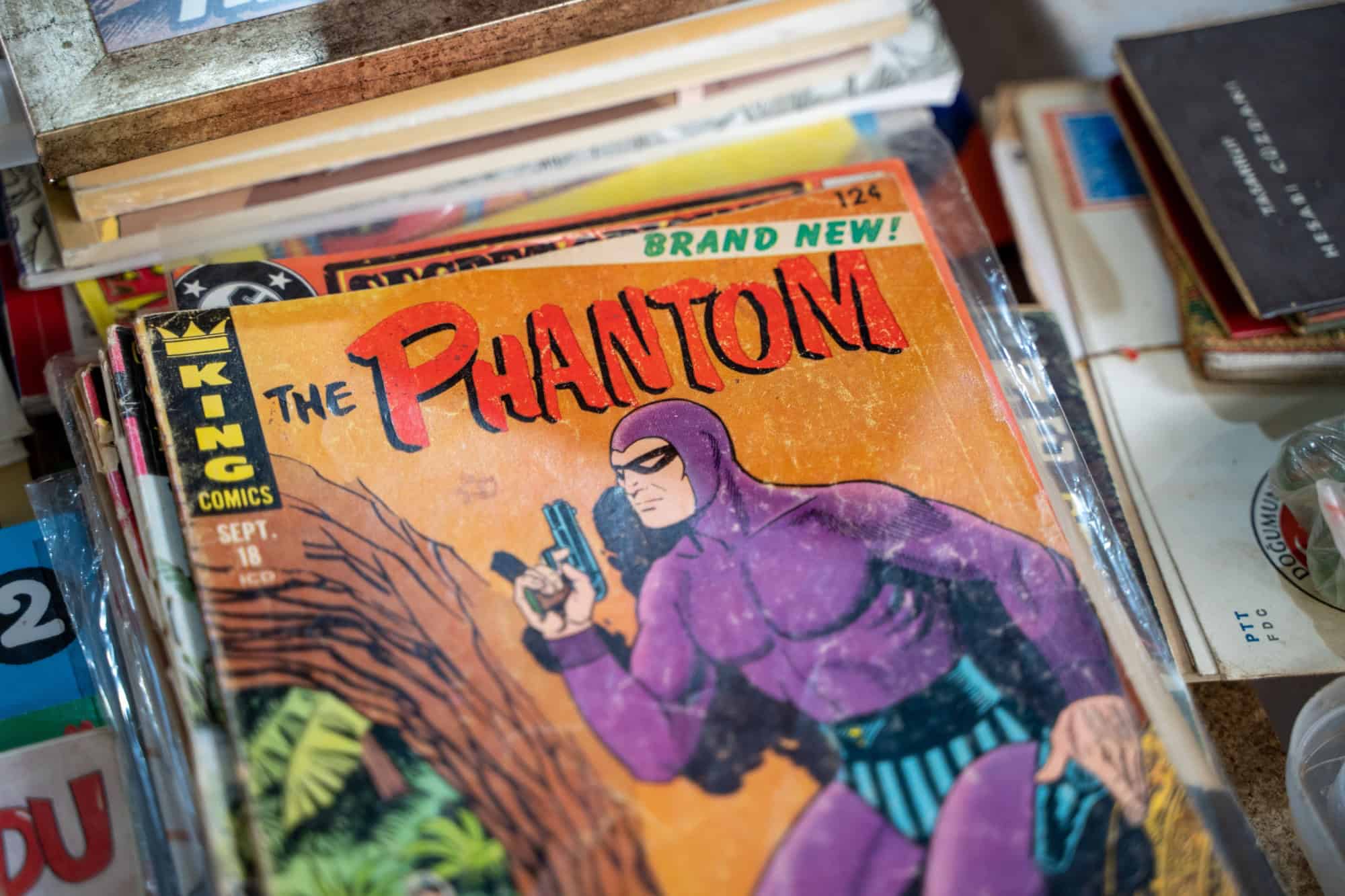
During the 1950s, you wouldn’t find many vampires or werewolves in American comic books. That was because of something called the Comics Code Authority. It was introduced in 1954, and it banned publishers from featuring these creatures, as well as ghouls and other monsters.
Publishers technically didn’t have to follow the rules. Still, many distributors refused to sell comics that hadn’t been approved by the Comics Code Authority, so a lot of publishers chose to follow the restrictions. In February 1971, the restrictions were finally relaxed.
Simply appearing in public could lead to a fine

Having a visible disability was once enough to get you fined. It didn’t matter that it wasn’t your fault, as in 1881, Chicago introduced a rule allowing officials to punish ‘unsightly’ people. The fines went from $1 to $50, simply for appearing in public. That’s around $33 to $1,654 today.
Chicago wasn’t the only city to follow this rule. No, Omaha, Nebraska, had similar restrictions, and these rules became known as ‘ugly laws.’ Disability rights advocates pushed for the rule to be removed, and in 1974, the Chicago government finally obeyed.
Swearing around women could become a criminal case

In 1999, Timothy Boomer was canoeing on Michigan’s Rifle River, and he fell into the water. He reacted as most of us would, and he started swearing. But then someone reported him. Turns out, Michigan had a rule dating from 1897 that banned vulgar language within hearing distance of women or children.
You weren’t supposed to use any indecent or insulting language, either. Boomer was convicted for his crime, although a court later overturned his conviction in 2002. They said the law was too vague. Even so, Michigan didn’t formally repeal the restriction until March 14, 2016.
Sources: Please see here for a complete listing of all sources that were consulted in the preparation of this article.
11 weird school rules we all had to follow for some reason

School was already hard enough for a lot of us, but then there were some strange rules that only made the thing a lot more difficult.

