

From the origins of life to the strange nature of time, some questions continue to challenge everything scientists think they know.
What is the 95% of the universe we still can’t identify?

All of the stars, planets, clouds of gas, and visible life that we are able to perceive make up just 5% of the energy density of the universe. About 27% of the universe is thought to be dark matter, and approximately 68% is dark energy.
Dark matter is known to exist due to the gravitational attraction of galaxies and galaxy clusters. Dark energy is defined as whatever is causing the acceleration of the universe. Scientists have yet to discover what either is composed of.
Why did matter survive when it should have been annihilated?

It seems that the early universe created matter and antimatter in nearly equal quantities. However, the observable universe contains far more ordinary matter than antimatter. When matter and antimatter meet, they annihilate and create radiation. So there must have been some phenomenon that gave slightly more matter than antimatter in the early universe.
Physicists understand that there are interactions that violate matter-antimatter symmetry. But these effects aren’t large enough in the Standard Model to account for the dramatic asymmetry we observe.
How does the human brain create consciousness?

Neuroscientists can observe what areas of the brain light up when we see something, hear something, remember something or feel something. They can map neural pathways and examine the electrical and chemical messages sent between trillions of synapses.
What they haven’t solved is why any of it should give rise to a subjective experience in the first place. There is still no mainstream scientific theory of why brain activity is accompanied by experience at all; why we experience redness when we see red, or pain when we are hurt, or recollection when we remember childhood.
Why does the placebo effect work?

Sometimes, people experience improvements in symptoms after being given a treatment that does not contain any active medication, but because they believe that it will help. This phenomenon is known as the placebo effect.
They are not the result of faking improvement. Research has shown that the brain can alter subjective feelings such as pain and stress, as well as other symptoms, through physiological pathways.
Research over the years has uncovered that expectations and previous experiences can affect the body’s response to treatment. How these mechanisms work, why they work better for some people, and what conditions they can modulate are still under investigation.
How did life begin?

The Earth formed approximately 4.5 billion years ago. At some point after that, non-living chemicals gave rise to the first living organisms. However, it isn’t known precisely how this first event happened.
It may be that molecules that acted like RNA figured out how to make copies of themselves. Simple evolution could proceed from there.
Perhaps life began near ocean floor hot vents, or in pools of shallow water. Some of the basic building blocks of life have been shown to arise from nonliving chemicals in lab experiments. However, no one has yet produced a fully-formed living thing from nonliving chemicals alone.
If the universe is so vast, why haven’t we found anyone else?
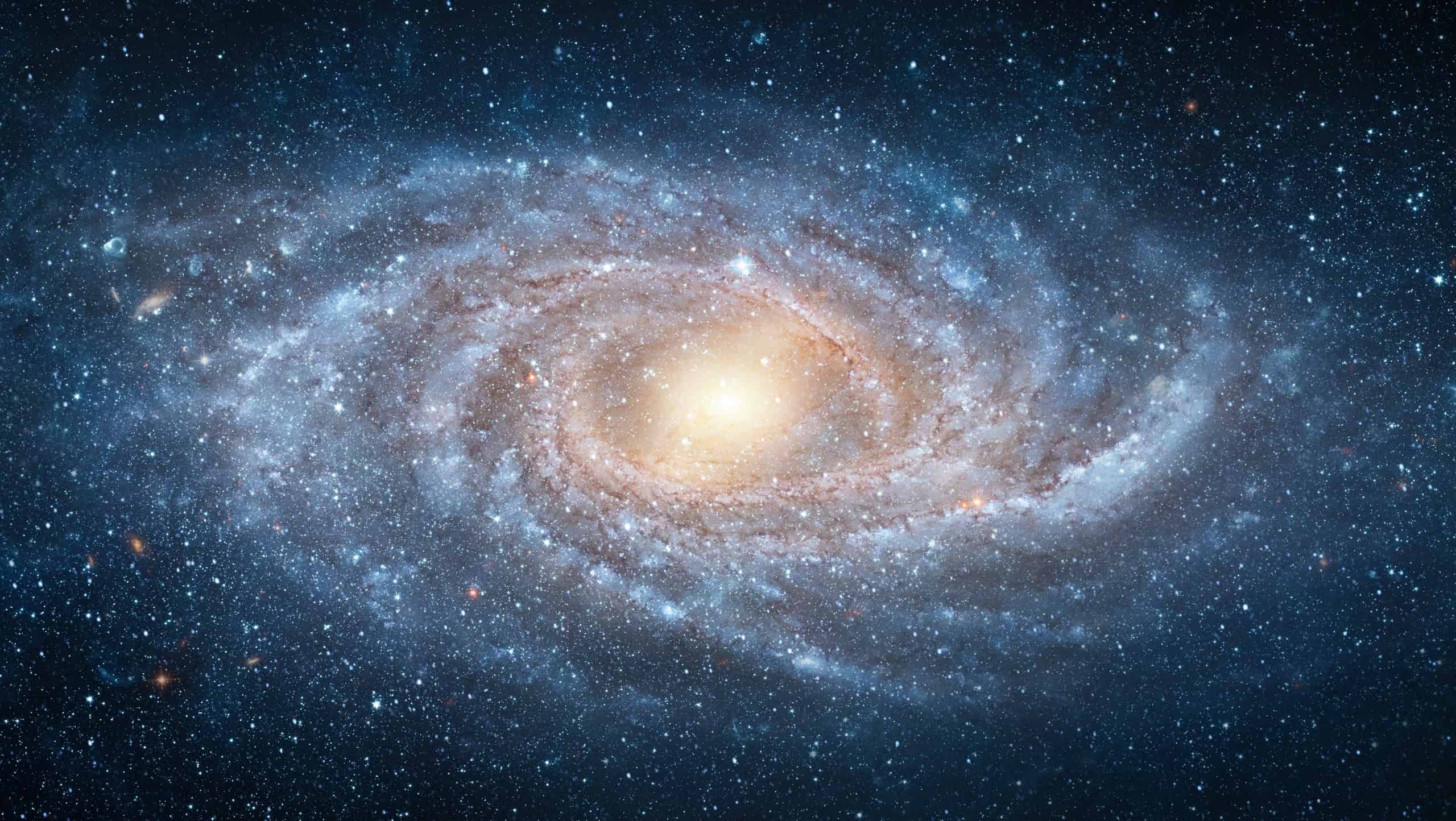
There are hundreds of billions of stars in the Milky Way galaxy, and presumably as many planets. Many of those planets may have orbits lying within the habitable zone where liquid water can exist, including several rocky worlds about the size of Earth.
Because the galaxy is so large and old, some astronomers believe that technologically advanced species ought to have evolved before humans.
However, despite many years of active searches using radio telescopes and other astronomical methods, astronomers have not found conclusive evidence of another civilization. This discrepancy between what we expect and what we observe is called the Fermi paradox.
Why do we yawn?

All humans yawn, and most animals yawn as well, yet there is no clear explanation for this. Yawning is often provoked by boredom, tiredness or waking up. One of the oldest theories that yawning increases oxygen intake has never been supported by evidence.
Some studies have shown that yawning helps cool down the brain or that it allows the brain to change states. Oddly enough, yawning is contagious; sometimes even seeing someone else yawn causes us to yawn. Scientists are still studying why such a simple behavior is so widespread.
What is still hiding in Earth’s deepest oceans and interior?

We have explored only a very small portion of the deep ocean, and many regions of the seafloor have never been mapped in high resolution. Below the crust, our knowledge dims further still. Without the ability to drill, scramble, or voyage into Earth’s mantle or core, we rely on seismology, gravity measurements, magnetic observations, mineral physics, and laboratory experiments to tell us about conditions inside Earth.
While we have learned an amazing amount from these studies, there are still many unknowns about circulation in the deep Earth, mantle structure, and how and why the processes within the liquid outer core create and vary Earth’s magnetic field.
What really caused the mysterious 72-second Wow! Signal?

At Ohio State University’s Big Ear radio telescope on August 15, 1977, astronomers picked up a strong narrowband radio signal of apparent extraterrestrial origin. It appeared to come from the direction of Sagittarius and persisted for the entire 72 seconds.
Astronomer Jerry Ehman, amazed by what he saw on the telescope’s printout, scribbled in large letters: “Wow!”. The signal’s name comes from his exclamation. Many natural and artificial sources have been suggested as its origin, but it has never been reliably detected again.
How do anesthetics actually switch off human consciousness?

Advances in anesthesia allow doctors to reliably induce unconsciousness and painlessness during complicated surgery. Neuroscientists know much about the receptors, ion channels and circuits perturbed by various anesthetics.
What’s less understood is how alterations at the molecular level interact throughout the brain to cause loss of consciousness. As such, learning how anesthesia works may help answer a bigger question: how consciousness arises from neuronal activity.
Why do we sleep?

Humans spend about one-third of their lives asleep, but there is no fully accepted theory explaining why sleep is so crucial. We know that sleep enables the brain to process memories, manage emotion, regulate immunity, metabolism, and clearance of select waste products, among other functions. And different stages of sleep appear to be important for different tasks, stimulating the brain in unique ways.
But if sleep is so beneficial, scientists have wondered, why have animals evolved to pass up hours each day vulnerable to predators and unable to forage for food, mate and look after their young?
Increasingly, scientists believe sleep serves several necessary functions, rather than one primary purpose. But why these functions can’t all be done while we are awake is unknown.
Why do we age?

Scientists understand many things that happen as our bodies grow older. Our DNA degrades, our cells alter, some of our cells lose the ability to divide properly, and our maintenance mechanisms start to break down. Aging, however, is not regulated by a master clock.
Perhaps more strangely, animals age at wildly different rates. Some organisms only live days while others live thousands of years. Researchers are still piecing together how these processes interact with each other and what causes such drastic variation between species.
Where did all the universe’s Lithium go?

Millions of years after the Big Bang, the universe made simple elements such as hydrogen, helium, and traces of lithium. Astrophysicists can estimate how much of each element they should have made.
Astrophysicists can estimate how much of each element should have been produced. The estimates of hydrogen and helium match the calculations very well, but standard cosmological models predict too much lithium-7. Some of the oldest stars have only about one third of the amount predicted.
Maybe stars depleted lithium over billions of years. Or maybe there’s something missing from our model of the early universe. Astrophysicists refer to this puzzle as the cosmological lithium problem.
Sources: Please see here for a complete listing of all sources that were consulted in the preparation of this article.
Like our content? Be sure to follow us.

