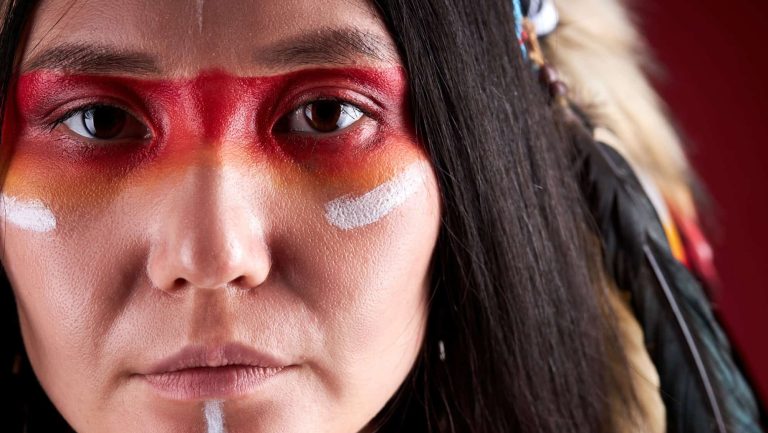

Most of the time, American history books spotlight the same names over & over. But there are plenty of Native figures who made big changes. Here are twelve Native American figures who changed U.S history, yet rarely get a mention. Which of these people do you think had the greatest impact on America?
Featured Image Credit: Shutterstock.
Ely S. Parker

When General Lee’s army was ready to call it quits, the paperwork had to be just right. So who actually put pen to paper? It was Ely S. Parker, a member of the Seneca tribe, who worked as Ulysses S. Grant’s secretary. He wrote the surrender terms across the table in April 1865 & effectively ended the Civil War.
Standing Bear
In Nebraska, Standing Bear wanted to bury his son on Ponca land, but the American Army stopped him. They locked him up for leaving Indian Territory. However, Standing Bear fought back in court & rejected the idea that Native Americans had to stay in one place. The judge agreed. He ruled that Native people counted as “persons” under U.S. law.
Polly Cooper

The Continental soldiers at Valley Forge were weak & freezing. They were also running out of food. But then Polly Cooper, an Oneida woman, showed up with white corn & stuck around to look after them. She refused to be paid for this. Instead, she took a shawl from Martha Washington, and that winter could’ve looked very different without her.
Samson Occom

Samson Occom was a Mohegan minister & preacher in the 1760s. He crossed the Atlantic to raise money for a school meant for Native students, and he packed churches in England & Scotland. He collected piles of donations. However, these funds were later used to create Dartmouth College instead of the Native school.
Mary Golda Ross

Long before one giant leap for mankind, Mary Golda Ross ran calculations on rockets at Lockheed. She was part of the Cherokee Nation. Ross joined their top-secret Skunk Works group & worked on early space missions, while also mapping out what interplanetary travel might look like. And that was even though almost all of her colleagues were men.
Susan La Flesche Picotte

Susan La Flesche Picotte grew up watching other Native people get sick without doctors. What did she do? She became one. By 1889, she was the first Native American woman with a medical degree, and in 1913, she opened her own hospital in Walthill, Nebraska. Picotte treated whoever came through the door, Native or not. That’s pretty incredible.
Ada Deer
In the 1950s, the Menominee Tribe lost federal recognition. But Ada Deer wasn’t having it. She organized & wrote letters, while also continually showing up, until Congress finally listened. They passed the Menominee Restoration Act in 1973. Two decades later, she ran the whole Bureau of Indian Affairs and became the first Native woman in that seat.
Esther Martinez

Esther Martinez was known in her community as P’oe Tsawa. She told Tewa stories & taught the language for decades, which helped to preserve this endangered Native American language. Congress later named its Native language funding program after her. Today, it’s thanks to her that we have Native language immersion schools & preservation projects.
Zitkala-Ša

Zitkala-Ša wasn’t afraid to write what others ignored. In 1924, she helped write a report that exposed fraud against oil-rich Native landholders in Oklahoma. She also co-founded the National Council of American Indians. With this group, Zitkala-Ša fought for Native people’s legal protection and helped secure their civil rights.
Charles Eastman

Charles Eastman grew up as a Dakota Sioux & studied medicine. Later, he ended up working with both Native communities and national groups. After helping survivors at Wounded Knee, he set up health programs through the American Red Cross, and his reports helped guide how the Red Cross delivered rural care across the country. We owe a lot to him.
Laura Cornelius Kellogg

Laura Cornelius Kellogg had big plans for economic reform, which she called the “Lolomi Plan.” What was it? Well, it focused on local self-rule & cooperative businesses. These were relatively unheard of economic structures in the 1910s. Years later, the Lolomi Plan influenced New Deal programs that affected rural America more broadly. And it’s all thanks to Kellogg.
Will Rogers

Will Rogers was a Cherokee who became one of the most popular columnists & radio voices of the 1920s–30s. In fact, he made a lot of jokes about American politics. This changed how ordinary Americans thought about national issues during the Depression. Some say he moved public opinion more than politicians’ speeches did.
Sources: Please see here for a complete listing of all sources that were consulted in the preparation of this article.
Like our content? Be sure to follow us.


