
Food is one weird kind of magic. What tastes like a warm hug to one person may resemble a science experiment to another.
The American kitchen contains products created from convenience needs and a distinct preference for sweet and salty taste combinations. If you grew up here, these 12 staples are no big deal. To an outsider, however, they can be utterly bewildering.
Peanut butter and jelly sandwich

Americans love their peanut butter and jelly sandwich. Ask any European or Asian traveler, though, and drop the words peanut butter and jelly, and you’ll receive a face of utter disgust.
In many cultures, bread is for savory spreads like cheese or meat. Top it with thick paste that coats your mouth and sugary jelly? It’s love it or hate it.
If you grew up near Ann Arbor, chances are you’ll find it strangely soul-satisfying. Everyone else is one taste away from never eating a P&J sandwich ever again.
American processed cheese slices

To most Americans, a burger served in the backyard probably doesn’t feel complete without a neon-orange slice of processed cheese. While processed cheese is a common element of American childhoods, travelers from other parts of the world typically make fun of it.
The slices are required by the FDA to be labeled a “cheese product” rather than cheese, since they’re made by grinding up actual cheese and adding emulsifiers and milk proteins.
True, science is there for a reason: When melted, the carefully calculated combination of fats and proteins results in a slice that perfectly unmolds into a smooth, glossy layer, not an oily pool like you’d get from a block of sharp cheddar.
But to those from countries with stringent cheesemaking laws, a slice of plastic-wrapped food that comes straight from the shelf can seem more of a chemical experiment than a dairy delicacy.
Corn dogs

To Americans, a corn dog is comfort food on a stick. This combination of cornmeal and sugar produces a coating density that surpasses typical edible standards in some cultures outside America.
Between that and the heaviness of a deep fry compared to, say, a light tempura batter or even something as simple as a flour dredge, most of the world finds our flagship funnel fry too heavy.
Plus, some cultures do not share the same enthusiasm as ours for blending sweet dessert flavors into savory dinner dishes.
Grits for breakfast

One has to grow up eating grits to love them. Sure, in the South, they are required to be served along with eggs and bacon, but to a tourist, grits are a bowl of bland mush.
Grits have little flavor because they don’t taste much when eaten alone. They rely heavily on what you put into them to make them delicious.
While every culture seems to have some variation of a breakfast grain dish, grits are notable for being almost exclusively prepared as a savory dish, slathered in butter, salt, or melted cheese.
In most of Europe and South America, hot cereal is served sweet, topped with sugar, honey, or fruit. It makes a mouthful of hot, grainy corn flavored with salt and butter (or worse yet, shrimp and gravy) feel like such a “category error” to tourists. Texture can also be a challenge for grits first-timers.
Jell-O salads

Jell-O salads are one of those things Americans all grew up eating that is completely bizarre to outsiders. Packing flavorless sugar cubes of gelatin with carrots or cottage cheese is very American.
Most cultures maintain a firm division between sweet foods and savory dishes and don’t mix the two. When a foreign visitor gets served a lime-green wobbly “salad,” that’s typically when they know American cuisine is a foreign planet.
Twinkies

If you were raised in America, Twinkies can be nostalgic for you. To the rest of the world, it’s a “sugar bomb.” Americans consume high fructose corn derivatives that are much less prevalent in other countries.
Our snacks pack a particularly heavy-handed sweetness. To a European or African trying a Twinkie, it tastes overly cloying and “fake.”
A Twinkie functions exclusively as a nostalgic snack that foreign markets simply cannot appreciate.
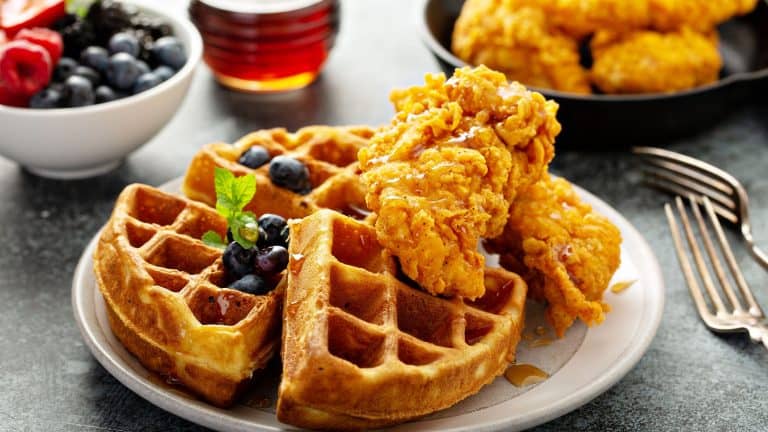
Chicken and waffles

Chicken and waffles is typically the featured entrée on the menu of an American-style brunch restaurant. The dish arose as a solution to feed late-night diners at Harlem jazz clubs who were in between dinner and breakfast hours.
Americans love salty fried chicken with sweet syrup, but visitors are surprised by what seems like breakfast and dinner crashing together on the same plate.
The majority of international diners do not typically expect to see “dessert” syrup served on meat dishes.
Meatloaf with ketchup glaze

Meatloaf is a Sunday dinner staple for many American families. Meatloaf was originally created to stretch small amounts of beef by combining it with bread and eggs. This is why meatloaf is so dense.
For the tourist, however, that brick of meat spells uncertainty. These visitors typically enjoy meatballs or barbecued skewers, which contain intense seasoning and exhibit a scorched surface.
Covering it in a sweet ketchup-based glaze seems too strange for people who are unfamiliar with this tradition. It’s not how they envision dinner should taste like.
Sweet potato casserole with marshmallows

If you’re looking to wow a tourist into utter confusion, show them a plate of sweet potatoes smothered in toasted marshmallows. To us Americans, it’s traditional Thanksgiving fare; but to anyone else, it’s dessert served on the wrong menu.
Most cultures season vegetables with salt and spices, so adding additional sugar to an already sweet potato crosses the line. It’s basically dessert disguised as a holiday tradition, and many foreigners think it’s sweeter than cake.
Bologna sandwiches

Want to know why Americans love bologna so much? Head back to the Great Depression. Back then, bologna was considered the ideal protein source for laborers. It was cheap and could survive weeks/months in the refrigerator.
Bologna originated from a basic form of Italian Mortadella. But what makes bologna special is how it’s processed. The meat is emulsified into a paste before it’s smoked.
Travelers from countries with longstanding histories of dry-curing salami or eating hearty, coarse sausages will often view silky, mild bologna as more of a chemical concoction than food.
Fried green tomatoes

Originating in the North and Midwest in the late 1800s as a means for farmers to use unripened tomatoes before the first winter frost, it was not until the release of the movie Fried Green Tomatoes in 1991 that they became a symbol of southern cuisine.
International guests find the concept of fried green tomatoes completely beyond their understanding. Used to only eating tomatoes when they are red and sweet, biting into a crunchy, tart green one is quite the jolt for the taste buds.
Sloppy Joe

Sloppy Joe originated as a “loose meat” sandwich, which was simply a hamburger without structure. Somewhere along the line, Americans decided it needed a thick tomato sauce, and thus created the cafeteria favorite we know and love today.
People from other countries cannot recognize the allure of this sandwich when they visit the States. After all, they aren’t accustomed to sandwiches this sweet or this difficult to eat without utensils.
The Sloppy Joe represents an untamed American culinary creation because it defies the dry and orderly sandwich construct found in other nations.
Sources: Please see here for a complete listing of all sources that were consulted in the preparation of this article.
Like our content? Be sure to follow us.


