
Looking back on what we used to accept as “normal” inside a car is kinda crazy. Years ago, the inside of your car was like a wild west free-for-all. Nothing mattered about safety.
As long as it looked cool or was convenient, that was all that mattered. Dealers would sell gadgets and features right off the lot. Others you just DIY’d. By today’s standards, some of these were hazardous.
Everyday consumer was buying and using these daily until it finally clicked how dangerous they were. Thankfully, today’s combination of rigorous safety regulations and common sense would prevent these inventions from being sold.
Rear-seat cigarette lighters

Half a century ago, car companies never bothered to consider that cigarette lighters located in the back seat of family sedans might harm children. Problem was, those thousand-degree metal blobs were frequently located low on the dashboard, rear-seat, or within center console armrests, right where tiny fingers can reach.
If a kid got bored and pushed that button, they were suddenly holding a thousand-degree heating element with zero warning.
Emergency room visits during the 1960s and ’70s involved many cases of child patients suffering serious burns due to accessing lighters. Thankfully, regulatory officials and climbing statistics necessitated a redesign of interior trim. No one wants a lit cigarette lighter within a child’s reach.
Asbestos-lined engine pads

What still gives me goosebumps is that asbestos was considered “engine protection” back in the day. It didn’t rust, and it could handle heat, so it lined up perfectly with profits.
Automakers installed asbestos in firewalls and hood insulation for many years to prevent paint damage while harming people who worked with cars.
Mechanics breathed in asbestos whenever they crawled under a car or closed a hood. It took mountains of medical bills and lawsuits in the 80s before the industry switched materials.
Back then, workers’ lungs were just something to think of after protecting the engine.
Steering wheel Brodie Knobs

Brodie knobs have ebbed and flowed with trends in American automobiles. They were like doorknob handles to assist with steering and turns. They became necessary as automobiles of the 1940s had heavy steering, especially important to urban drivers who would often make left turns.
But driving trends in the United States changed in the 1960s and drivers began to value speed more than everything else. At high speeds, suicide knobs could catch onto anything and send your wheel spinning wildly.
Following 10 years of suicide knob related horror stories with broken forearms and decapitations, the government regulated them heavily during the 1970s.
Gasoline-powered cabin heaters

In the late 1940s, nobody wanted to sit in a freezing cold car while waiting fifteen minutes for their engine to warm up. The solution? “South Wind” heaters.
They mounted right under your dash and were essentially a small gasoline fueled furnace. They sold a lot of them. However, if you think about it today, they sound incredibly deadly.
You had an open flame fueled by liquid gasoline inches away from you. Leak a seal or clog a vent and you had either a cabin fire or deadly carbon monoxide filling your car. It’s one of those inventions that worked a little too well for its own good.
Lead-weighted hood ornaments

If there’s one thing design history has taught us, it’s that sometimes solving one problem creates a bigger one. Hood ornaments suffered from an unfortunate flaw; when fixing one problem they managed to become a serious safety concern.
Automakers originally used lead cores in their ornaments to solve the “vibration issue.” This choice transformed what used to be harmless decorations into deadly hazards.
These ornaments presented health hazards because of their lead content, even when residents kept the car parked. Safety concerns for pedestrians and harmful chemical materials resulted in the discontinuation of these “heavyweights” during the 1960s and led to today’s streamlined designs.
Asbestos-lined brake pads

Asbestos has been used for decades in car brakes to keep them cool and durable. Sure, it worked great but breathing the dust causes fatal illnesses such as mesothelioma. The industry has since moved on to ceramic and semi-metallic pads.
While asbestos became illegal throughout most countries, it continued to be legal within the United States for many years after its ban elsewhere. Asbestos demonstrates how a material once celebrated for its amazing properties became a major safety hazard.
Rumble seats without restraints

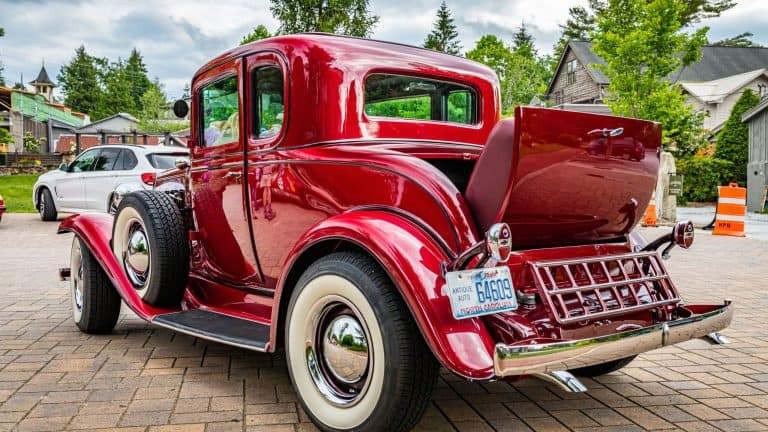
Rumble seats may have been the pinnacle of the “fun but deadly” car trend. They allowed couples to transport additional passengers, but those passengers were afforded absolutely zero protection from anything and the road itself.
Vulnerable to wind, rain, and snow without so much as a roof or seatbelt, a decent sized bump could launch someone from the rear seat.
In every accident scenario, the back seat passenger acted as the direct point of collision while lacking all forms of safety protection.
Automobile manufacturers realized that exposing passengers to uncompromised dangers through the “hot seat” made it a problematic feature, which led to its discontinuation after 1939.
Built-in car ashtrays in every door panel

Air quality wasn’t a priority for car designers. Not until the late 20th century, anyway. Designers knew you smoked. So every driver, front-seat passenger and rear-seat passenger needed an ashtray starting in the 1950s.
Automakers designed car cabins that maximized cigarette smoke and trapped odors in a breathable cloud of filth.
Then in the 1990s they realized smoking was bad for you. So, the engineers removed stainless steel trays from cars and installed cupholders along with storage compartments. Who knew interior design could save so many lungs?
Mercury-based tilt switches

You never really thought twice about your trunk light, did you? Mercury switches illuminated our trunk lights because they were convenient.
That convenience started in the 50’s and didn’t end until 2002. They worked perfectly until the car was crushed and they released that mercury into our environment.
It’s disturbing knowing that just one gram of mercury from your trunk light could make fish in a large lake unsafe for consumption. Today scrapyards offer bounties on these switches so we can prevent this 20th century “convenience” from polluting the 21st century water table.
Vinyl seats treated with toxic flame retardants

Cars became another secret source of toxins in the 1970s. To meet new fire safety requirements at that time, automakers started drowning their interiors in toxic flame retardants.
Flame retardants are famous for off-gassing, which means they turn your car into a concentrated cloud of neurotoxic fumes. You know that “new car smell?” Yeah, that was your car trying to warn you about the substances that mess with your thyroid and delay childhood development.
The auto industry thankfully phased out the most deadly versions of these chemicals in the early 2000s. But, car seats still use versions of these chemicals today.
Sources: Please see here for a complete listing of all sources that were consulted in the preparation of this article.
Like our content? Be sure to follow us.

