

We try our best to clean chemicals and toxins from our homes, yet sometimes we forget that what’s inside cleaning products can harm us more than the dirt on our floors.
It’s not just bleach that stings anymore. Many household cleaning products appear harmless but actually contain powerful agents that are stronger than they seem.
They can affect your internal health or cause chemical burns that are much deeper than a rash. Here are some cleanings products to be extra careful with.
Industrial oven degreasers with sodium hydroxide

In America, industrial degreasers aren’t simply labeled as “heavy-duty soaps.” These chemicals are something that OSHA (The Occupational Safety and Health Administration) fully recognizes as being as dangerous as battery acid. The majority of industrial degreasers contain sodium hydroxide.
When this stuff makes contact with your skin, it causes what’s known as liquefaction necrosis. Liquefaction necrosis results in skin tissue becoming fluid-like immediately upon contact with the chemical.
Due to the numbing effect it can have on your nerves as it burns through your skin, you may not even realize the damage happening.
For this reason, OSHA laws require you to have an eyewash station within reach at all times, as well as rubberized nitrile gloves. Your average kitchen glove will not suffice.
Creolin-type phenolic disinfectants

You won’t find Creolin at your local grocery store. This industrial-strength biocide contains phenolic compounds that actively break down bacterial cells apart. While great for killing germs, that strength is also what makes it so dangerous if it comes into contact with your skin.
Creolin causes serious burns and is fairly toxic when mist or vapors are inhaled. Messing around with something this strong without industrial protection is asking for serious trouble.
Turpentine-based solvent cleaners

Turpentine is sometimes found as an ingredient in furniture waxes and paint cleaners. Although turpentine is distilled from pine-resin, it is also a strong irritant that can be harmful if used improperly.
Turpentine should never be used with bare hands. Because turpentine disrupts the skin’s barrier function, it can lead to chemical burns or sensitivities.
Turpentine vapors can cause immediate irritation to both the eyes and throat upon inhalation. Exposure to high concentrations of turpentine can cause chemical pneumonia.
High-concentration sodium hypochlorite solutions

Concentrated bleach is essentially molecular fire on your skin. Sure, it will kill anything you want dead. It’s fantastic at killing even hardy viruses and bacteria, but since it doesn’t have a single target, it burns down whatever organics it contacts.
It’s highly underestimated simply because it smells like “clean”. Bleach at industrial concentrations is a powerful corrosive, meant to be handled by professionals in controlled environments.
Using it inside your home without heavy duty protective gear is essentially putting your bare hands on a hot stove.
Perchloroethylene spot removers

When you have a tough stain and reach for “pro-strength” spot remover, read the label. Look for perchloroethylene. That’s what dry cleaners use, and it’s way stronger than that spray bottle of soap water.
It’s a solvent designed to dissolve oils. But human skin is made up of oils and fats that it can dissolve too. If you get it on your hands and it gets absorbed into your body, that’s where the headaches or dizziness can come from, something people often mistake for just a strong smell.
Dishwashing liquid with strong phosphates and fragrances
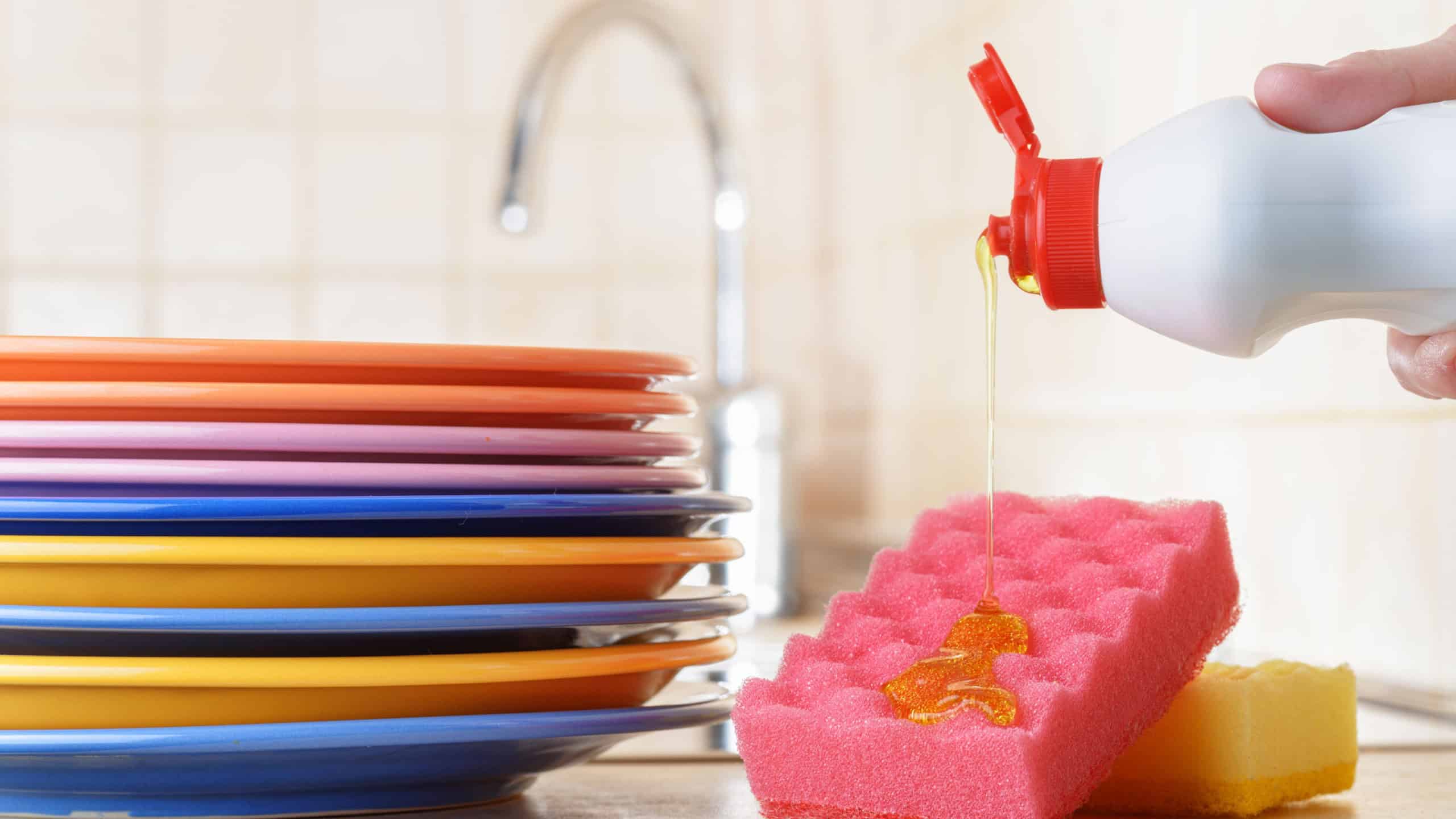
Cold weather isn’t always to blame for dry, itchy hands. Your dishwasher might be. Some dish liquids have concentrated amounts of phosphates, which are designed to dissolve fats and oils, making them excellent at cutting through grease from pans and baking dishes, but horrible for our hands.
Many dishwashing liquids contain extreme amounts of chemicals and artificial fragrances.
People with sensitive skin commonly experience irritation from artificial ingredients and fragrances. It’s not like pouring bleach on your hands, where you feel immediate “burn.” But consider how your hands feel after continually touching these chemicals every day.
Strong floor scrub solutions with VOCs

High-potency floor strippers or scrubbers are strong chemicals that were never designed for frequent, unprotected use. VOCs found in these solutions are well-known asthma triggers and cause dizziness due to the effect they have on your body’s oxygen absorption and toxin elimination process.
Your skin provides an easy route for the solvents to get into your bloodstream whenever you touch a freshly treated surface. This is one instance where “If it smells clean, it is clean” does not apply.
If it smells like cleaning chemicals, it can not be good for your lungs and nervous system.
Ammonia-heavy glass and window cleaners

We’re all familiar with ammonia-based glass cleaners sitting beneath kitchen sinks all across the world. But these “pro-grade” formulas are not even in the same league as what you’ll find in a typical spray bottle.
Upon fact-checking labels from commercial formulas, we found that while most consumer brands are heavily diluted (sometimes less than 3%), the industrial stuff packs a much bigger punch.
Ammonia is “hydrophilic,” or attracted to water, which is also what makes it so horrific to eyes, throats, and skin.
It will burn right through your tissue upon contact because the chemical will react with the water in your cells and instantly start eating away at you, causing possible permanent scarring or even blindness from just one drop.
Antibacterial cleaners with quaternary ammonium compounds

We reach for antibacterial wipes and wipe away without thinking twice. However, those “quats” you’re wiping with? They’re sensitizers. You can touch them ten times and be completely fine, but the next time you touch it, you end up with an allergy that gives you an ugly, itchy rash.
Antibacterial wipes effectively remove germs from surfaces yet they were not built for repeated direct skin contact.
Heavy-duty machinery and engine degreasing solvents

When you start looking at solvents capable of degreasing engine components or heavy machinery, you’re way past the realm of soap.
Check the facts on industrial degreasers. Many are composed of harsh hydrocarbons like heptane, kerosene, or xylene.
They’re literally chemically attracted to fats and oils (“lipophilic”). Since your skin is designed to hold moisture in with a lipid (fat) barrier, these solvents actually dissolve that barrier on contact. So now, your skin can’t hold moisture at all. It’s literally porous, meaning whatever you put on it can now enter your system.
Carpet fresheners with unknown chemical blends

The problem with carpet fresheners is that we don’t know what’s in them. Manufacturers cleverly disguise hundreds of different chemicals by simply labeling them “fragrance.”
If you have sensitive skin or allergies, carpet powders are just torture in slow motion.
You may not notice it at first, but hours later after your skin has absorbed the chemicals, you could be itching bright red splotches or sneezing your head off from the dust that resettles on the carpet every time you walk by.
Tub and tile cleaners with strong acids

Heavy-duty bathroom cleaners are essentially “liquid sandpaper.” They contain powerful acids that work hard to break down filth and will break down your skin’s natural oils just as easily. We see these bottles on store shelves so often that we forget they can cause major irritation, peeling, and long-term sensitivity if we come into contact with them.
Next time you plan on tackling the bathroom during your deep clean, spare yourself the pain and wear a mask or keep the door open for ventilation, and never let that stuff get on your bare skin.
Sources: Please see here for a complete listing of all sources that were consulted in the preparation of this article.
Like our content? Be sure to follow us.