
Advertising today might seem sneaky to you, but it’s squeaky clean compared to decades past. Prior to Federal Trade Commission regulations, companies faced no consequences when advertising to any audience they chose.
Brands leveraged shocking messages combined with pseudoscience and fear tactics to market their goods. From soap to soda, everyone was doing it, and most of it was effective, which is why they did it.
It’s difficult to believe people fell for these ads. Mostly because every single tactic on this list is illegal today.
Smoking ads marketed directly to children

For some stark perspective on just how much the world has progressed, spend some time browsing mid-century tobacco advertisements. It was completely normal to see smoking ads starring children, or depictions of cartoon characters.
Without age-related regulations to heed, companies marketed to youth at the earliest opportunity.
Joe Camel stands out as the most recognizable case of this advertising practice. The Joe Camel marketing campaign reached such high visibility that young children in kindergarten became familiar with the product he promoted.
After years of litigation, the practice was prohibited following a billion dollar settlement in 1998. Now, tobacco companies face legal repercussions for employing cartoons and celebrities in their marketing strategies.
Radio ads claiming products were “doctor approved” without proof

Fake doctors have been running rampant throughout advertising history. In the early 20th century, radio advertisements bragging about products’ medical benefits were absolutely rampant.
Products that had no real medicinal value were selling themselves by promising miraculous health benefits.
Because there was no substantiation required at this time, companies were free to make up “leading doctors” who endorsed their products.
Because of the outrageous false advertising, the Wheeler-Lea Act was passed in 1938 which essentially put the FTC (Federal Trade Commission) on guard for health claim lies.
Miracle weight‑loss ads

We’ve all seen enough thin quick schemes to know they’re just a scam. By any measure, modern infomercials cannot match the outrageous claims made by their equivalents from a century ago.
Crazy as it sounds, before the FDA was looking over their shoulders, manufacturers could pretty much say whatever they wanted.
These companies advertised pills that supposedly melted fat without requiring exercise. Lose weight by popping these pills filled with who-knows what.
Stimulants? Tapeworms? Yeah, they did that too. The only fine print was “Results not guaranteed.”
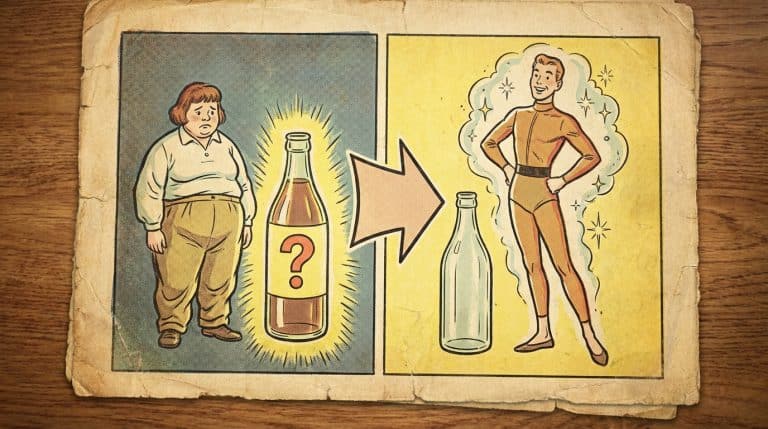
“Before and after” photos that were staged or reversed

Once upon a time, miracle cures depended on one trick. Optical illusion.
Long before Uncle Sam regulated advertising, companies simply reversed their before-and-after photos. The model would strike a healthy pose for the “after” photo and pout miserably for the “before.”
The advertisement was published weeks later, but the “magical” results were already visible by then.
Today, that could land you in court. Now advertisers are legally obligated to prove their claims. Many countries actually ban misleading transformations or require advertisers to put prominent disclosure labels on them.
Baby food ads claiming products were better than breast milk

There was a time in the 20th century when formula companies tried to one-up nature. They used advertisements to make breastfeeding seem like a primitive practice and their formulas became the high-tech alternative.
This wasn’t harmless name-calling. Advertisements were sent worldwide, many straight to impoverished nations.
The consequence was an international tragedy that required decades of effort to fix.
For that reason, the WHO now enforces a strict code of conduct. Modern advertisements cannot insult breastfeeding or imply that formula is the “better” option through false claims.
Ads promoting household products with radioactive materials

This situation feels ripped straight from a terrible sci-fi movie. But for a while, radioactive products were sold as health tonics.
During the 1920’s and 30’s companies advertised radium as a body “recharger.” They slipped it into everything from lipsticks to beverages to home appliances with zero warning labels.
Customers were unknowingly participating in human trials that caused radiation poisoning.
When enough people died, and science took notice, governments took action. These items were removed and made illegal to sell. Thankfully, today we have laws regulating products from being accidentally “charged” to death.
Beauty ads claiming permanent physical changes

Some old-school beauty commercials didn’t even claim to work on your skin. They promised to change your underlying bone and tissue forever.
Everything from structural face creams to mechanical contraptions that promised to reshape your nose, were sold directly to consumers with zero medical supervision or validation required.
Advertisers literally considered the human skeleton something you could reshape with devices bought from department stores.
Thankfully, consumer protection laws now prevent this. Any claim of structural change today requires medical-level research to support it. Legal standards dictate that only certified medical devices may claim permanent body transformation abilities.
False “limited supply” ads that were permanently running

The old retail world operated without rules so sellers could endlessly promote “last chance!” deals.
Retail stores could advertise endless sales and beg customers to “buy now,” because no one verified their inventory books or sales records.
Sellers took advantage of the mental anxiety that signaled you might miss out on an opportunity.
Now you actually have laws to protect you from retailers’ false marketing. If they say the sale ends today, or they only have “X” amount left, they better be able to back it up, or they get fined heavily.
Alcohol ads claiming improved work performance

Beer was originally an energy drink. Back when we didn’t have occupational safety laws telling us what we can and cannot do at work, advertisements were telling consumers to drink while they were on the job to increase productivity and stay energized.
There were no rules and corporations didn’t care that you were driving a machine with impairment. They just cared that you were buying their product.
When workplace injuries skyrocketed and doctors learned about impairment science, things changed. Modern day ads focus on “responsibly” chilling out, because it’s illegal for brands to suggest that alcohol helps you get stuff done.
Ads hiding dangerous side effects in unreadable fine print

Remember those radio commercials where the announcer starts sounding like a robot at the very end? The practice originated during times when businesses tried to openly hide side effects from consumers.
Print ads used to show the ‘good stuff’ in large print and the ‘you’ll die!’ warnings in tiny print that you couldn’t even read.
The primary purpose of their communication was legal protection from potential lawsuits instead of consumer education.
These days they can’t do that. Regulatory bodies now demand transparent disclosure from companies so consumers know that the product can be lethal. Modern TV ads need to dedicate a significant portion of their runtime to discuss potential side effects because of regulatory requirements.
Gender‑based fear advertising aimed at women

Advertising from the 1930s and 40s gives us some great examples of fear-mongering in marketing.
There were countless “shame ads” that would explicitly play on the fear of rejection and being left out. Women, in particular, were told that if they didn’t use Brand “X”, they would be unmarriageable and alone.
It was shame-based bullying targeted specifically at women. Today the advertising industry operates under regulations designed to prevent fear-based marketing which previously weaponized social anxiety.
Products advertised as cures for serious diseases

The first decade of the 20th century was the heyday of medical quackery. Some marketers preyed on public fears by selling miracle “secret formulas” that promised to cure tuberculosis or cancer.
With no FDA to rein them in, they made whatever outrageous claims they wanted. Most of their products didn’t work, and some were downright hazardous due to their concealed ingredients.
It wasn’t until several celebrities were poisoned that the laws began to change.
Now we have a bright line rule: You cannot advertise a product as anything that will treat a medical condition unless it has been rigorously tested and legally defined as a drug.
Sources: Please see here for a complete listing of all sources that were consulted in the preparation of this article.
Like our content? Be sure to follow us.

