

Misconceptions about heaven often paint a picture that reduces heaven from something vibrant and life-giving to something stagnant, bizarre, or completely unbelievable.
Wings

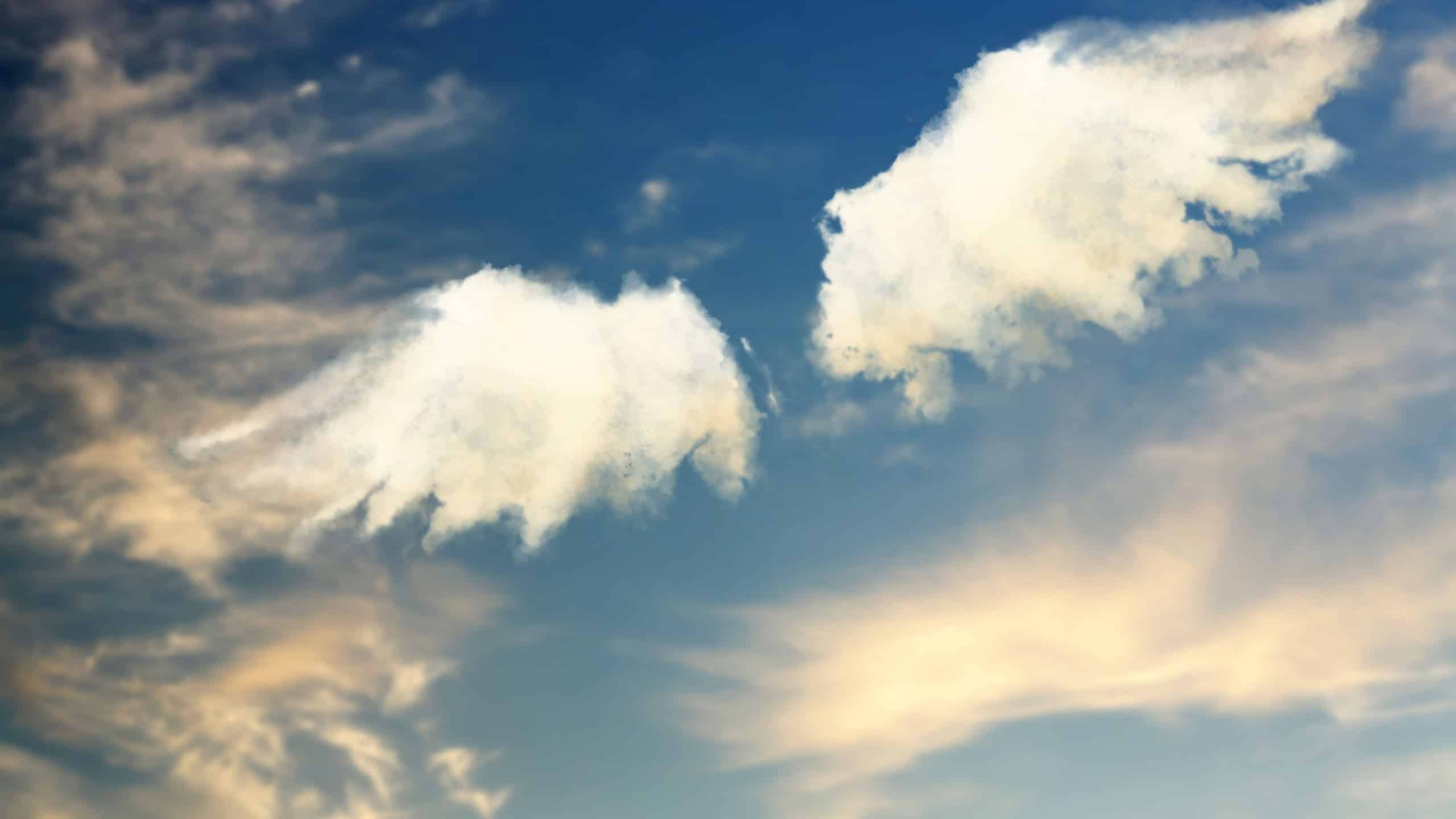
Humans growing wings and transforming into angels upon arrival in heaven is probably the most widespread misconception of them all. Most descriptions of angels across religious traditions are explicit that angels and humans are different species of creation. When we enter the afterlife, we do not morph into another type of heavenly creature.
Artists hundreds of years ago painted angels with wings because wings were symbolic of swiftness and of delivering messages from God; this was not meant to be a literal description of what happens to human souls at death.
Clouds
People sitting on clouds aimlessly floating around in a white fog isn’t actually in the Bible (or any other traditional teachings). They became a popular depiction due to Renaissance-era paintings.
Artists put angels on clouds to convey the idea that they were in a place above. Heaven, however, is usually depicted as being physical and tangible.
Harps

Another misconception that actually goes hand-in-hand with clouds is harps. Most references to harps and music in ancient scripture are actually poetic metaphors. Music symbolizes joy and harmony.
The silly idea that God wants us to spend eternity playing the exact same instrument as everyone else misses the point about what a joyful place heaven is.
Boredom

Many people envision heaven to be this unimaginably boring place where we have no autonomy of movement and are forced to sing hymns forever. Eternal rest has been misconstrued to mean doing nothing for all eternity.
In reality, most views of heaven are highly social and involve active, creative engagement where our unique talents and purposes are finally fully realized.
Disconnection
Heaven is sometimes feared as a place where we will be ghosts floating around, forgetting our families, our lives, our everything. Traditional teachings about heaven, however, claim we will be more ourselves than we are now.
We will have our memories, our personality, and our love of sports or science fiction kept. God will not make heaven a place where we are robbed of our identities.
Isolation

Some think of heaven as a person existing alone, communing with the divine in isolation. However, most described Heaven in terms of groups of people.
Heaven is a city full of people, or a family existing together. Social interaction and communal existence are part of the fun, not something you escape to get away from in heaven.
Timing

Most people think of heaven as something that only starts after they die and is a distant destination far away in the cosmos.
In most religious teachings, heaven is viewed as partially present now, destined to be fully realized on Earth later, rather than the other way around.
Genderlessness
We vaguely assume that our gender will cease to exist or be pressed down by the higher plane of existence. But every orthodox narrative of heaven says the core of who we are as humans, man and woman, won’t be eradicated.
In fact, they’ll be secured and completed. Our individuality is important and celebrated as part of our story.
Exclusive access
Too many of us view heaven like an exclusive country club with some strict, stringent list of qualifications or technicalities humans made up.
Theology, throughout history, typically paints heaven as full of abundant grace and an invitation so wide that it blows right past our human understanding of who should be turned away or kept out.
Strangers
Heaven is feared by some as a place where they won’t know anyone. However, heaven is described as a massive reunion of everybody who chose the right path.
Family members we knew on Earth and those who have joined the family in heaven, will be together forever.
Static

Finally, we often view heaven as a final state that never changes or grows. This is a misunderstanding of what eternity means. Eternity isn’t just a long time. It is a different kind of time altogether.
Instead of a frozen, unchanging moment, it is often described as an endless journey of discovery, where we continue to learn, grow, and explore for the rest of time.
Sources: Please see here for a complete listing of all sources that were consulted in the preparation of this article.

