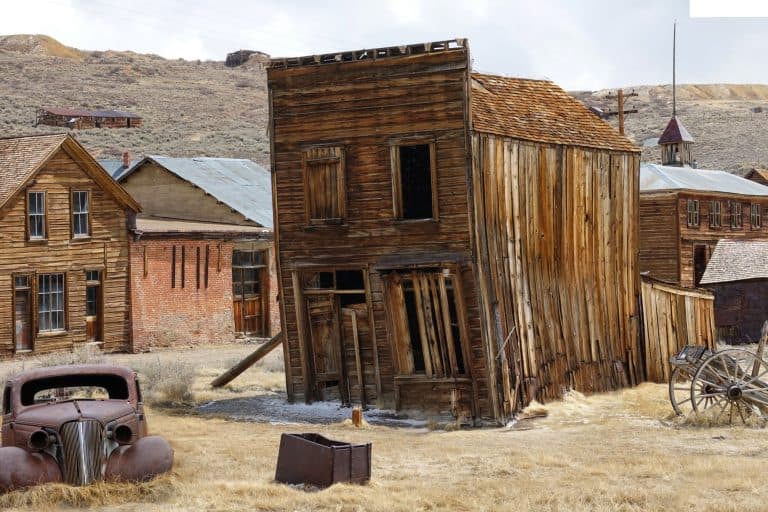

Close your eyes for a moment and picture a bustling town. Shops full of people, streets teeming with life. Now picture it all gone the next day. Empty and abandoned. All over the United States, this has happened, multiple times. Some towns simply vanished overnight. Lost to floods or fires or the government’s and corporations’ ambitions. Walking through the empty shells and cracked streets can be a haunting experience. Here are ten such towns that were destroyed in the blink of an eye.
Featured Image Credit: Shutterstock.
Elbowoods, North Dakota

Elbowoods didn’t linger and die. It was drowned. When the Garrison Dam was completed, the Missouri River flooded up over houses, a school, and farm fields. The families had no choice but to evacuate. They loaded up trucks and wagons, and watched their town be flooded. By the mid-1950s, Elbowoods was gone for good, beneath the surface of the lake Sakakawea.
Iola, Colorado

Iola wasn’t large, but it was a community, a post office, and several hundred people. It all ceased in the 1960s when Blue Mesa Reservoir was created. The government needed the valley and people had to leave. Their homes were submerged and soon all of town was gone. Now Iola survives in memory only, beneath Colorado’s largest lake.
Graysonia, Arkansas

Timber built Graysonia. Timber killed it. 1920s: sawmills. Families. Stores. 1930s: the boom was over. Graysonia was left behind. Families moved on. In 1951, the last person left town. No more saws. No more Graysonia.
Centralia, Pennsylvania

The situation in Centralia is an extreme example of a town that has been almost entirely ruined by an accident. A fire had started in an abandoned strip mine in 1962 and traveled underground to the coal mines under the town.
Sinkholes opened up and toxic gases came out of the ground, so the people were told to evacuate. By the 1980s the town was abandoned and most of the buildings were torn down. Now it’s just a ghost town with a few ruins left.
Bodie, California

Picture streets bustling with miners, horses, and wagons. Saloons belting out music and laughter. That was Bodie at the height of its prosperity. Then it went silent. Gold mines dried up and families moved on. The population faded. Now, Bodie is a ghost town frozen in time. Empty buildings and relics tell tales of gold, greed, and decay.
Dawson, New Mexico
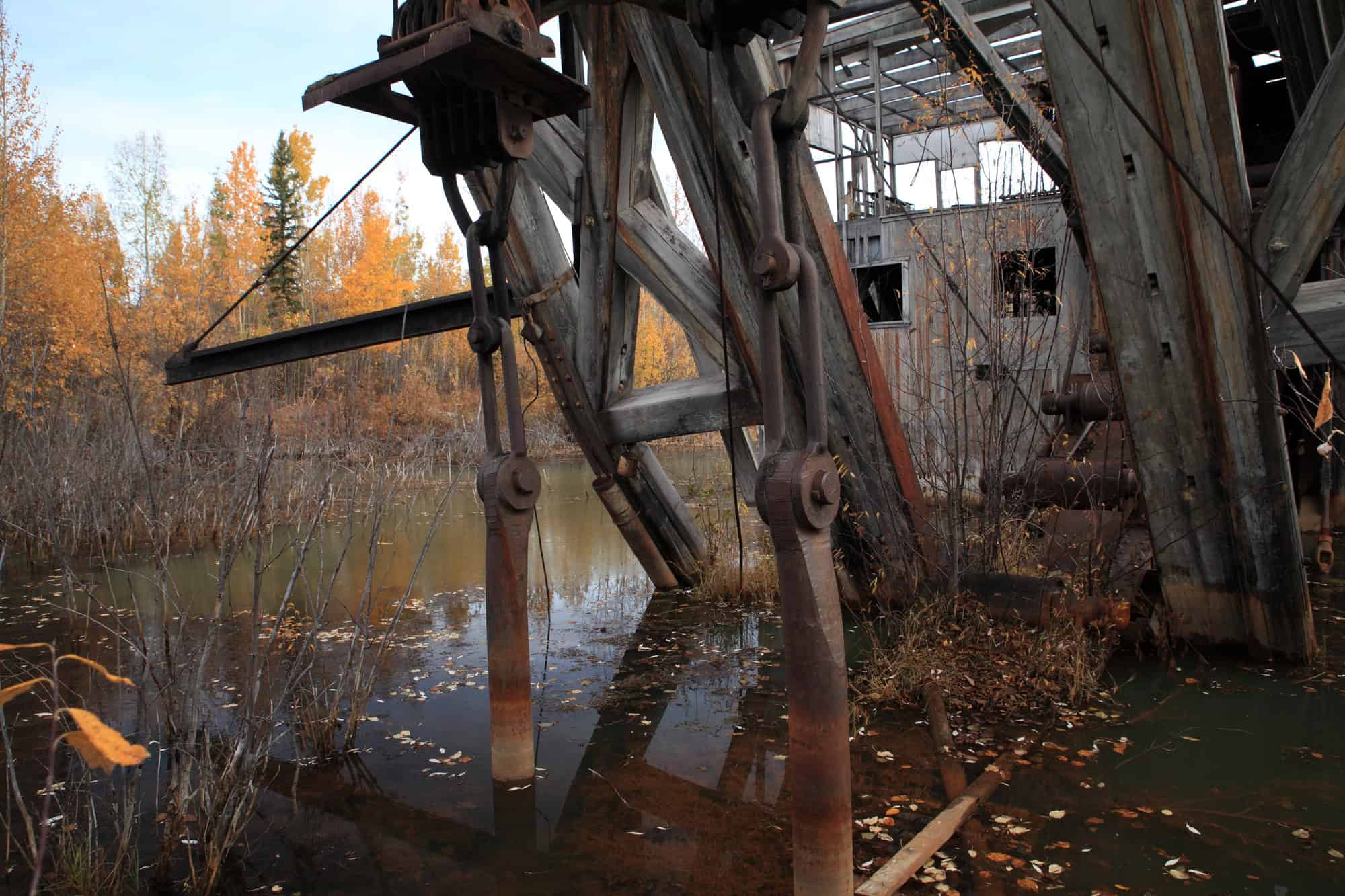
Think of the coal dust falling over town. The clamor of mining work. Then, the explosions. Homes and mines collapsing. Hundreds of lives lost. Families leaving. Shops shuttered. By the 1950s, Dawson is silent. Now, a hushed cemetery is all that remains. A monument to the town’s troubled past.
Rhyolite, Nevada

Rhyolite must have looked like it was on its way to becoming indestructible. The town had electric lights, a hospital, even its own stock exchange. It was a new frontier, so people flocked there to seek their fortunes in gold. But gold is a finite resource. As production dwindled, the town lost residents. By 1916, the place was deserted, leaving only a few structures in the desert.
Shaniko, Oregon

Wool was Shaniko’s lifeblood. Railroads and industry built it into a boomtown. But trains bypassed Shaniko, and wool prices fell. A place that became world-renowned for its wool was built on trade and transport. When both stopped, the town went into economic free fall. Businesses closed and people moved away. And the streets became ghostly quiet.
Fonta Flora, North Carolina

Fonta Flora did not vanish because the people living there wanted to go somewhere else. It was the water that did the vanishing. The Fonta Flora Dam was constructed in the 1960s, and the water behind it soon engulfed the town. People moved away, houses were flooded, and now little remains except for memories and a few scattered remnants.
Kelso, Texas

Kelso was a lie. In the early 1900s, promoter George G. Wright erected fake buildings. They were convincing enough from the road: hotel, store, schoolhouse. But the buildings were empty shells. The goal wasn’t to create a town. It was to sell land. Once the buyers discovered the deception, they scattered. Kelso went from “new settlement” to ghost town almost instantly.
Sources: Please see here for a complete listing of all sources that were consulted in the preparation of this article.
Like our content? Be sure to follow us.

