
Take a look at a world map. On it, you’ll see that it has a line titled “0° longitude” that goes straight through a little place called Greenwich in London, England. The line is where the world officially starts counting time. But why Greenwich? Why was this chosen as the official starting point for time? Let’s find out.
What “starting point for time” actually means

The 0° longitude point is an invisible line that divides the east from the west on the globe. Every single map & GPS system, every time zone & satellite uses the 0° longitude as the official zero line. Well, technically.
The modern 0° longitude point is slightly east of where the original one was. It relies on Earth’s gravity field, rather than the original telescope alignment.
The 1884 International Meridian Conference
So how did this all begin? In October 1884, delegates from 25 countries gathered to finally settle, once and for all, how maps & times would work across the world. There were a lot of debates.
Eventually, they agreed by a vote of 22 to 1 that they’d use the Greenwich meridian as the world’s reference line. 2 delegates sat out. The agreement also stated that the “universal day” would start at midnight in Greenwich.
Greenwich before 1884
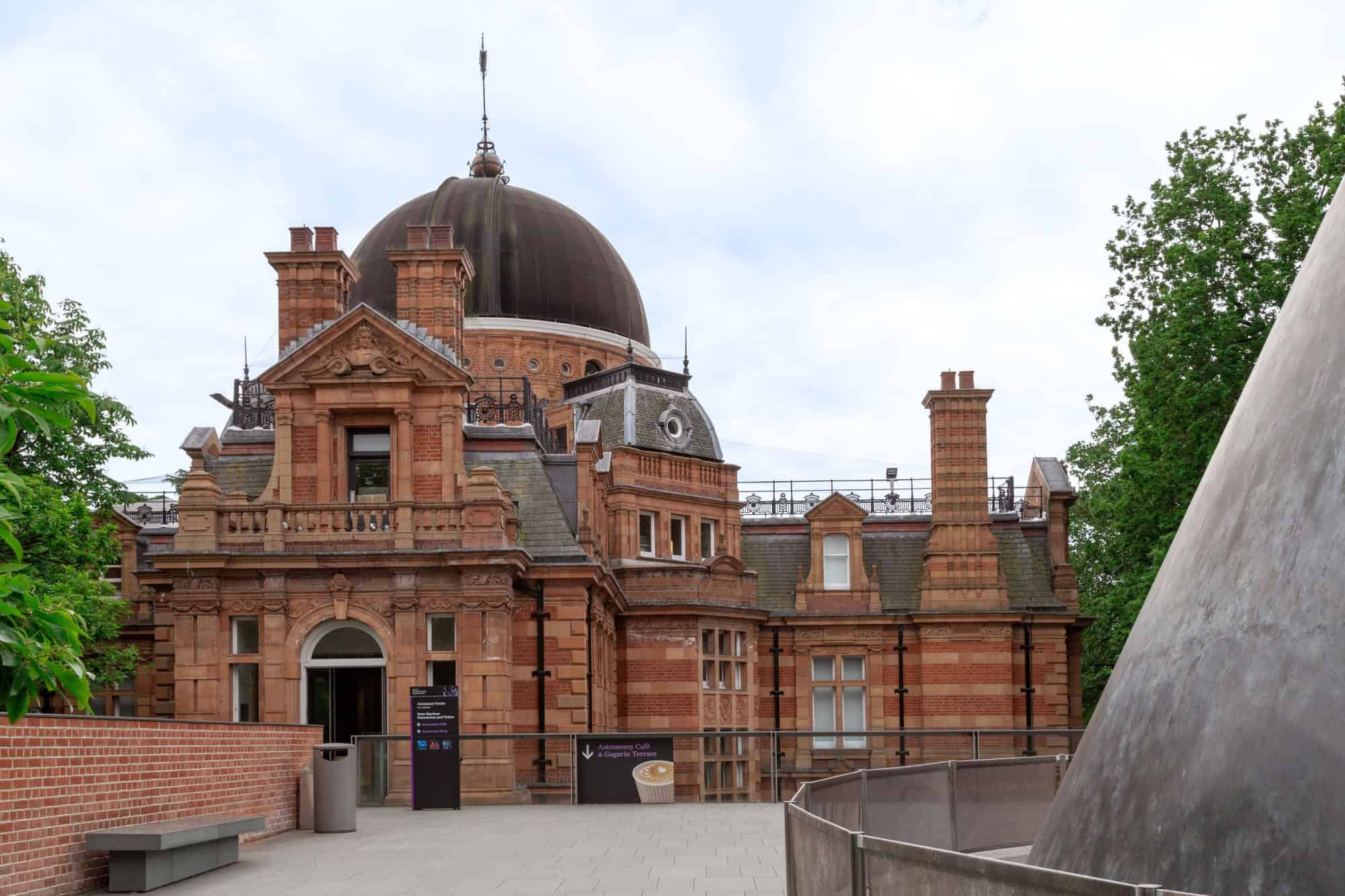
The reason they chose Greenwich dates back before the 1884 meeting. In 1675, King Charles II created the Royal Observatory in Greenwich to make navigation safer for British ships.
Many astronomers worked at the Observatory. They tracked stars & published charts that sailors worldwide used. Since many maps already used the Greenwich meridian, it made sense to continue with the same location.
No need to change clocks

People didn’t have to change their watches after the 1884 vote. The agreement focused on having a reference point, rather than forcing everyone to change their local time overnight.
Governments could still decide their own “standard time.” The difference now was that all systems worked off the same zero & local laws could catch up whenever they were ready.
A note on France’s timing

A few countries didn’t agree with the changes. France was one of them. It took the French government nearly 30 years to officially base its time zone on Greenwich.
It defined French time as “Paris mean time minus 9 minutes 21 seconds” in 1911, lining it up with Greenwich time. But they refused to actually use the word “Greenwich.”
What changed in 1925

There were further developments to come. Before 1925, astronomers had started the astronomical day at noon instead of midnight because it made the math easier when using telescopes. It was more confusing for everyone else.
They finally agreed to switch in 1925. From that point on, they counted from midnight as part of what we’d call Greenwich Civil Time or GCT.
From GMT to UTC
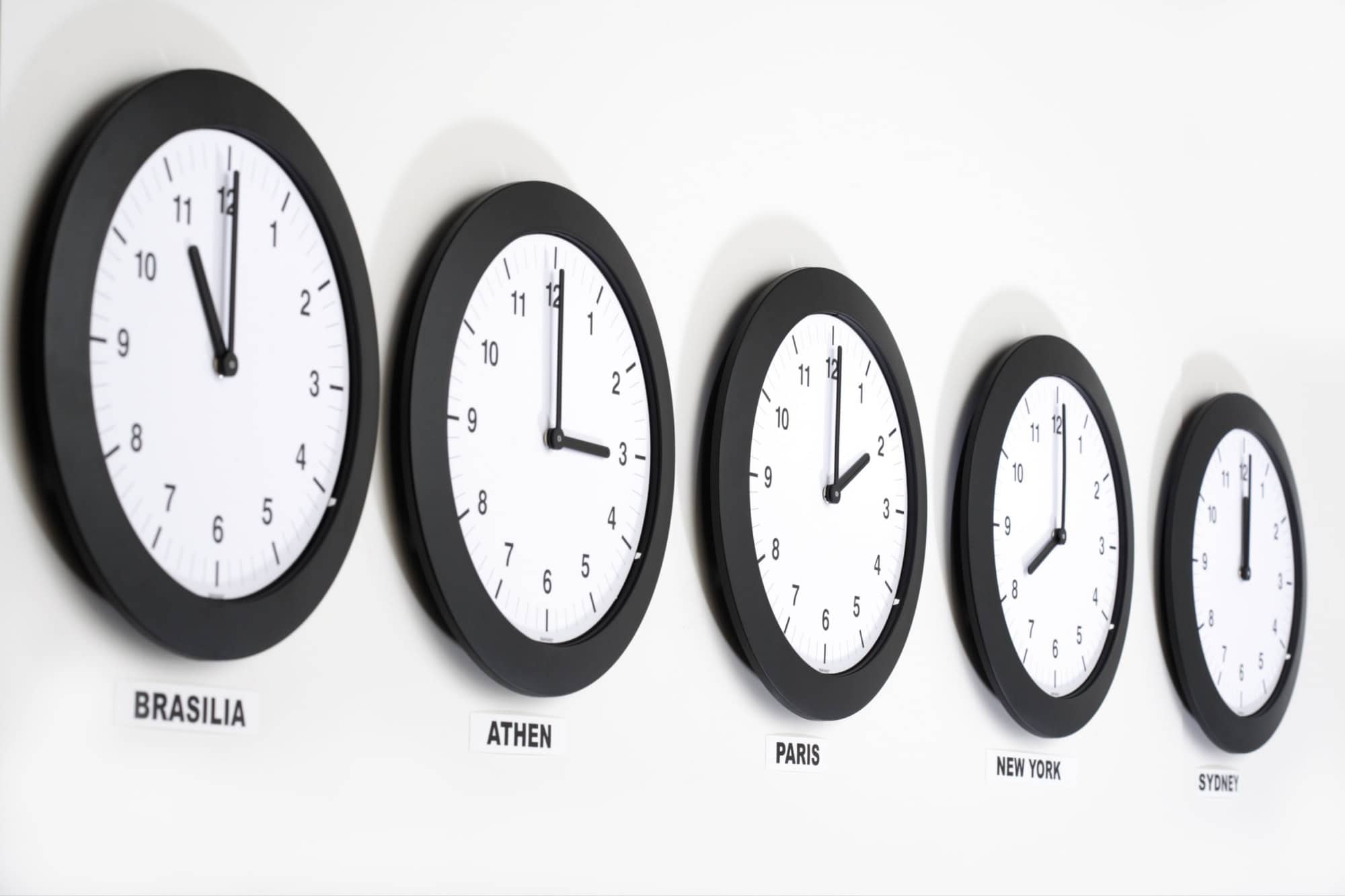
Greenwich Mean Time was the standard until 1972, when Coordinated Universal Time (UTC) emerged. Technology had become more advanced by that point. Now, scientists could make their clocks more accurate by using atomic vibrations.
GMT uses the Sun to make these measurements. Scientists could also use leap seconds with UTC to avoid the time drifting from Earth’s rotation.
Who maintains the global reference now

The International Earth Rotation & Reference Systems Service (IERS) is responsible for making sure the world’s clocks all line up. The group tracks Earth’s rotation & runs mathematical models. Then, they decide when leap seconds are needed.
Every mapping system in the world and digital clock relies on the IERS’s coordinates. The clock on your phone? Even that uses the IERS’s system to stay aligned with the correct time.
How national time is realized in practice
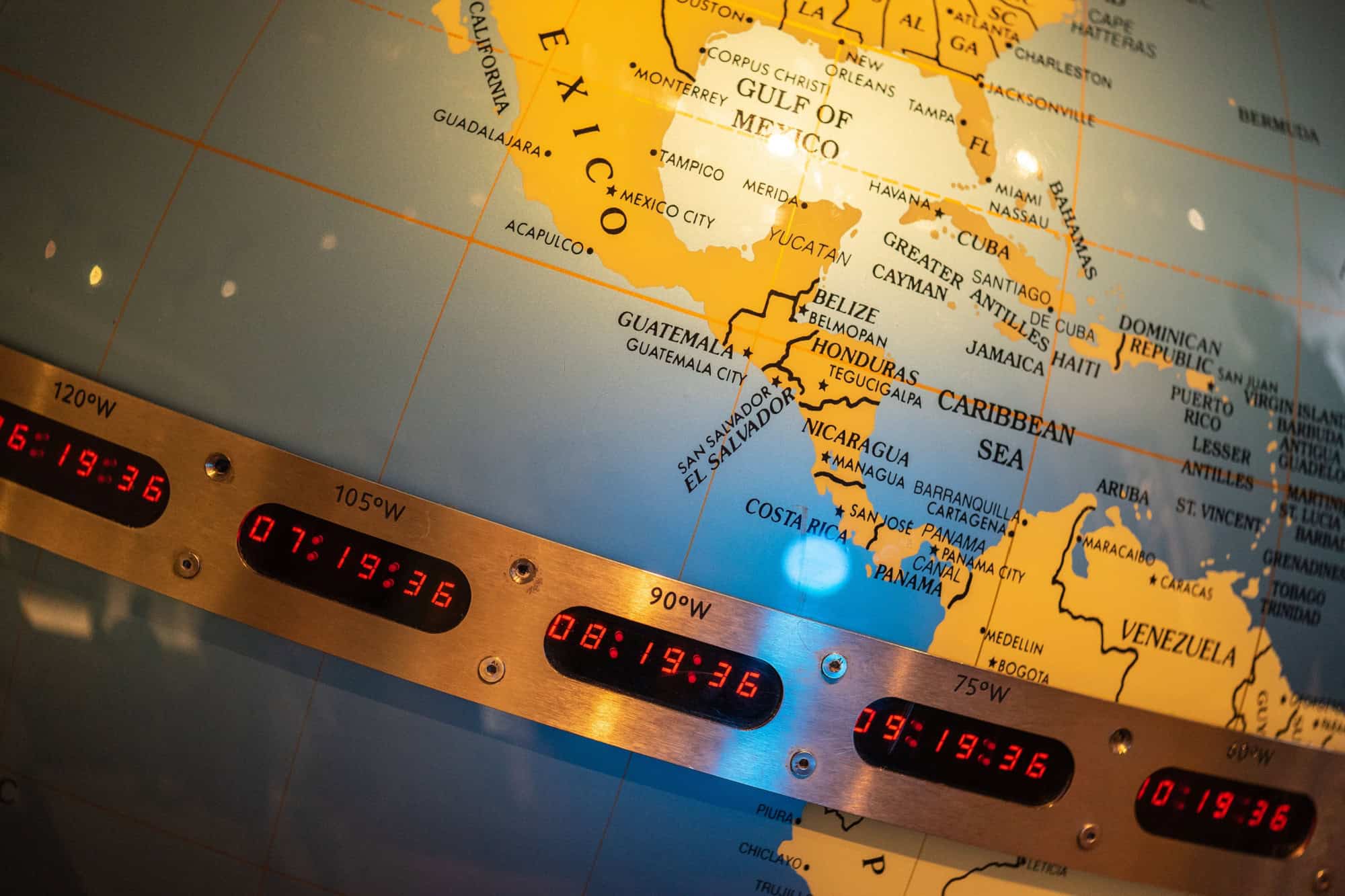
Interestingly, there’s an official version of the UTC in every country across the world. The National Physical Laboratory (NPL) deals with the U.K.’s version of UTC, known as UTC(NPL). It then broadcasts its national time signal. The NPL’s version of UTC helps the IERS to work out the worldwide UTC.
Sources: Please see here for a complete listing of all sources that were consulted in the preparation of this article.

