
Embark on a journey through history, culture, and natural beauty as we explore 19 incredible UNESCO World Heritage Sites from around the globe. Each of these remarkable destinations has been recognized for its outstanding universal value, offering visitors a glimpse into the richness and diversity of our shared heritage.
From ancient wonders like the Pyramids of Giza to natural marvels like the Great Barrier Reef, these sites are a testament to human ingenuity, creativity, and perseverance. Join us as we discover the awe-inspiring beauty and historical significance of these UNESCO-listed treasures.
Featured Image Credit: Wikimedia Commons.
#1. Taj Mahal, India

The Taj Mahal was inscribed on the UNESCO World Heritage List in 1983 due to its outstanding universal value. This exquisite monument stands as a testament to the artistic and architectural achievements of the Mughal Empire during the 17th century. Emperor Shah Jahan commissioned its construction in 1632, and it took over 20 years to complete, with the final touches being made in 1653. The Taj Mahal’s architectural brilliance lies not only in its breathtaking beauty but also in the intricate craftsmanship and meticulous planning involved in its design. It symbolizes the enduring love between Shah Jahan and Mumtaz Mahal, making it a poignant memorial and a cultural treasure. The UNESCO designation recognizes the Taj Mahal’s significance as a masterpiece of human creativity and an iconic symbol of India’s rich heritage.
#2. Machu Picchu, Peru

Machu Picchu was added to the UNESCO World Heritage List in 1983 due to its outstanding cultural significance and remarkable preservation. This ancient Incan citadel, located high in the Andes Mountains of Peru, was built in the 15th century during the reign of the Inca emperor Pachacuti. Its precise construction and strategic location atop a mountain ridge demonstrate the advanced engineering and architectural skills of the Inca civilization.
#3. Pyramids of Giza, Egypt

Constructed over 4,500 years ago during the Fourth Dynasty of the Old Kingdom of Egypt, these monumental structures stand as enduring symbols of the ancient world’s architectural achievements.
The Great Pyramid of Khufu, the largest of the three pyramids at Giza, is one of the most iconic and well-preserved examples of ancient Egyptian engineering. Its construction required the labor of thousands of workers over a span of around 20 years, showcasing the remarkable organizational and technological capabilities of the ancient Egyptians.
The Pyramids of Giza served as royal tombs for the pharaohs Khufu, Khafre, and Menkaure, reflecting the ancient Egyptians’ beliefs in the afterlife and the divine power of their rulers. Surrounding the pyramids are numerous associated structures, including temples, causeways, and smaller pyramids for royal family members, all contributing to the complex funerary landscape of Giza.
#4. Great Wall of China, China

The Great Wall of China, a marvel of ancient engineering, was inscribed on the UNESCO World Heritage List in 1987, acknowledging its immense cultural significance and historical importance. Stretching over 13,000 miles across rugged terrain, it remains one of the most iconic symbols of China’s rich heritage and resilience.
Constructed over several centuries, beginning in the 7th century BCE and continuing into the Ming Dynasty (1368–1644 CE), the Great Wall served as a formidable defensive barrier against invading forces from the north. It comprises various sections, including walls, watchtowers, and fortifications, strategically positioned along China’s northern border.
#5. Acropolis of Athens, Greece

Dating back to the 5th century BCE, the Acropolis is home to some of the most renowned structures of classical antiquity, including the Parthenon, the Erechtheion, the Propylaea, and the Temple of Athena Nike. These architectural masterpieces exemplify the principles of classical Greek design, characterized by harmony, balance, and mathematical precision.
The Acropolis served as the religious and cultural center of ancient Athens, embodying the city-state’s democratic ideals, artistic achievements, and intellectual pursuits. Its UNESCO designation underscores its significance as a symbol of Western civilization and a source of inspiration for generations of artists, architects, and scholars.
The Parthenon, dedicated to the goddess Athena, is perhaps the most famous structure on the Acropolis. Its majestic columns, intricate friezes, and sculptural decorations are testament to the skill and artistry of ancient Greek craftsmen. Similarly, the Erechtheion with its iconic columns showcases the innovative architectural techniques and aesthetic refinement of the ancient Greeks.
#6. Colosseum, Italy

Being the largest amphitheater ever built, the Colosseum in Rome is a symbol of the power and grandeur of the Roman Empire. Constructed between 70 and 80 AD under the Flavian dynasty, the Colosseum served as a venue for various public spectacles and events, including gladiatorial contests, animal hunts, mock naval battles, and theatrical performances. Its massive elliptical structure could accommodate up to 50,000 spectators, showcasing the Romans’ engineering ingenuity and organizational capabilities.
Despite centuries of natural disasters, vandalism, and neglect, the Colosseum has survived as an iconic symbol of ancient Rome, inspiring awe and fascination in visitors from around the world. Its UNESCO designation highlights its significance as a cultural heritage site of universal value, preserving the legacy of one of the greatest civilizations in history.
#7. Angkor Wat, Cambodia

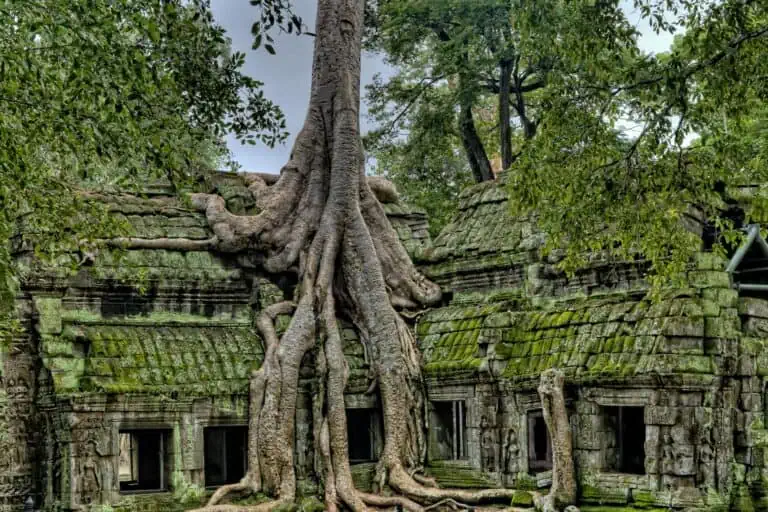
As the most extensive religious monument in the world, Angkor Wat stands as a remarkable illustration of Khmer architecture. Originating in the 12th century, it commenced as a Hindu temple honoring the deity Vishnu before transitioning into a Buddhist temple.
Despite centuries of natural wear and human intervention, Angkor Wat remains a cultural and spiritual masterpiece, attracting visitors from around the world to marvel at its beauty and historical significance.
#8. Petra, Jordan

Carved into the rose-red cliffs of southern Jordan, Petra is an ancient city dating back to the 3rd century BCE. Its elaborate rock-cut architecture, including the iconic Treasury, is a UNESCO World Heritage Site and one of the New Seven Wonders of the World.
#9. The Historic Center of Florence, Italy

Florence, hailed as the cradle of the Renaissance, exudes cultural opulence. Its UNESCO World Heritage Site designation encompasses a historic core adorned with majestic cathedrals, opulent palaces, and world-class museums. Visitors can immerse themselves in the artistic treasures of the Uffizi Gallery, behold the magnificent dome of the Florence Cathedral, and wander through the storied halls of the Palazzo Vecchio. Each corner of Florence tells a story of unparalleled artistic and architectural achievement, making it a haven for culture enthusiasts worldwide.
#10. Mesa Verde National Park, USA

Located in Colorado, Mesa Verde is home to some of the best-preserved cliff dwellings in North America, built by the Ancestral Puebloans over 700 years ago. These ancient ruins offer insights into the lives of the people who once called this area home.
#11. Bryggen, Norway
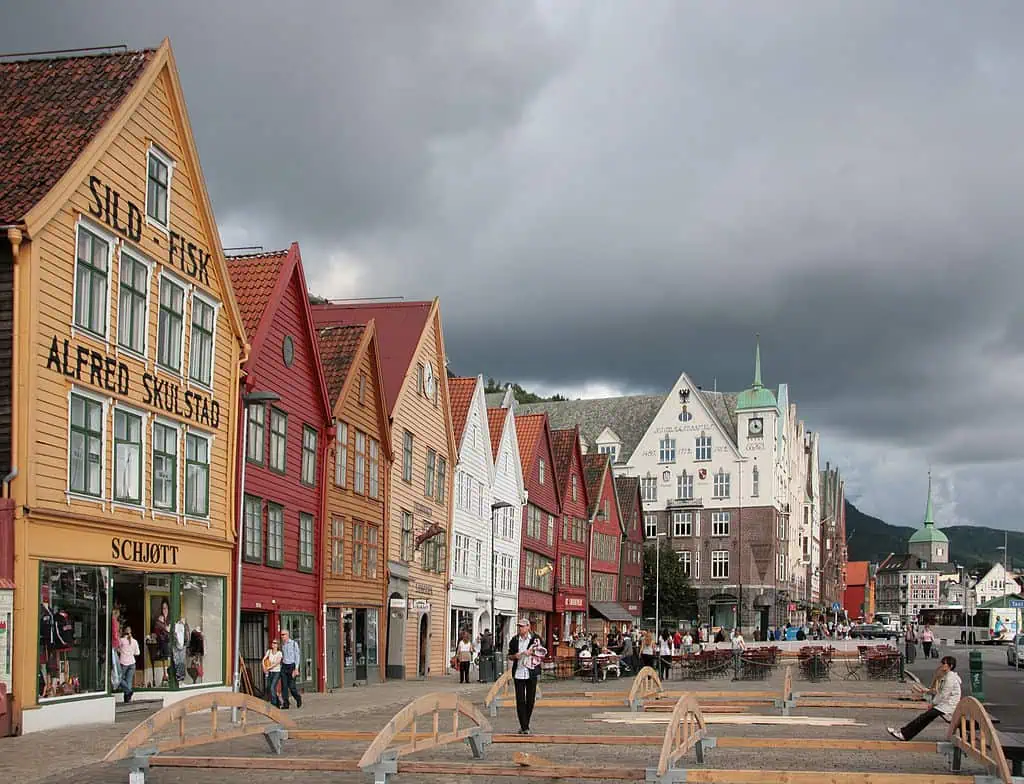
Situated within Bergen, Bryggen comprises a collection of Hanseatic merchant structures lining the eastern shore of Vågen harbor. With origins tracing back to the 14th century, these vibrant wooden houses are recognized as a UNESCO World Heritage Site, symbolizing Bergen’s illustrious maritime heritage. Guests have the opportunity to wander through the labyrinthine alleys, tour museums, and delve into the city’s trading legacy.
#12. Historic Centre of Prague, Czech Republic

With its stunning architecture, charming cobblestone streets, and rich history, the historic center of Prague is a UNESCO World Heritage Site and one of Europe’s most beautiful cities. Highlights include Prague Castle, Charles Bridge, and the historic Old Town Square, home to the famous Astronomical Clock.
#13. Göreme National Park and the Rock Sites of Cappadocia, Turkey

Known for its otherworldly landscapes, Cappadocia is another UNESCO World Heritage Site and an existing paradise for outdoor enthusiasts and history buffs alike. Visitors can explore ancient cave dwellings, hike through surreal rock formations, and take hot air balloon rides over the stunning landscape.
#14. Great Barrier Reef, Australia

Being the largest coral reef system in the world, the Great Barrier Reef is considered a UNESCO World Heritage Site and one of Australia’s most prominent natural wonders. Home to an incredible diversity of marine life, including colorful coral reefs, tropical fish, and sea turtles, it offers unparalleled opportunities for snorkeling, diving, and marine exploration.
#15. Old Town of Dubrovnik, Croatia

Featuring medieval fortifications, winding alleyways, and remarkable architectural marvels, Dubrovnik’s Old Town holds the esteemed status of a UNESCO World Heritage Site and stands as one of Croatia’s premier tourist attractions. Guests have the opportunity to stroll atop the ancient city walls, discover renowned landmarks such as the Rector’s Palace and the Cathedral of St. James, and immerse themselves in the city’s vibrant history and cultural heritage.
#16. Historic City of Ayutthaya, Thailand

Founded in the 14th century, Ayutthaya was the second capital of the Siamese Kingdom and a major trading port in Southeast Asia. Today, it is a UNESCO World Heritage Site and a fascinating archaeological park, with ancient temples, palaces, and Buddha statues scattered across its sprawling grounds.
#17. Rock-Hewn Churches of Lalibela, Ethiopia

Crafted from solid rock during the 12th century, the Rock-Hewn Churches of Lalibela stand as a distinguished UNESCO World Heritage Site and hold profound significance as Ethiopia’s paramount religious and historical landmarks. Travelers have the opportunity to venture through the elaborate churches, several of which remain active to this day, and admire their captivating architectural and artistic excellence.
#18. Historic Centre of Salvador de Bahia, Brazil

With its colorful colonial architecture, vibrant culture, and rich Afro-Brazilian heritage, the historic center of Salvador de Bahia is a UNESCO World Heritage Site and one of Brazil’s most enchanting cities. Visitors can explore historic landmarks like the Pelourinho district, visit museums and art galleries, and experience the city’s lively music and dance scene.
#19. Hiroshima Peace Memorial, Japan

Built in honor of those affected by the atomic bombing of Hiroshima in 1945, the Hiroshima Peace Memorial holds distinction as a UNESCO World Heritage Site and serves as a poignant emblem of peace and reconciliation. Guests have the opportunity to delve into the history of the bombing, contemplate the profound repercussions of nuclear warfare, and offer their respects to the victims at the Peace Memorial Park and Museum.
Disclaimer – This list is solely the author’s opinion based on research and publicly available information.
Like our content? Be sure to follow us.
11 Things That Will Vanish With the Baby Boomer Generation

Change is on the horizon, and as the baby boomer cohort gracefully transitions into their senior phase, a consensus among many users emerges: specific facets of life are destined to become relics of the past. Let’s explore a selection of social media remarks that illuminate the potential contours of the times ahead.
14 Modern Luxuries That Were Standard For Baby Boomers 40 Years Ago

In our rapidly evolving world, what used to be standard fare has now become a rarity for many. From tailored clothing to personalized travel, the things we once took for granted are now seen as special treats. In this slide show, we’ll explore how these everyday items and experiences have shifted from being necessities to privileges. Join us as we unravel the journey from common to exclusive and understand the evolving landscape of modern luxuries.


