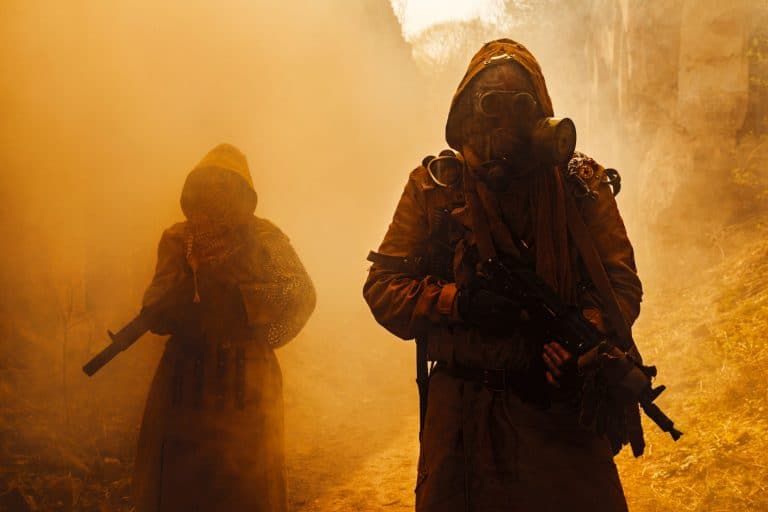

Rewind your clock back to 1983. You’re sitting in a bunker outside Moscow, it’s after midnight…and the screen in front of you suddenly says the U.S. has launched a missile. Then four more. What do you do? This is exactly what happened on September 26, 1983, when a glitch in the Soviet early-warning system nearly set off a disaster.
Let’s find out what happened.
Featured Image Credit: Shutterstock.
Key points
As you read, you’ll learn:
- What exactly happened that night
- How the Soviet satellites spotted something that wasn’t there
- What one man did that stopped the end of the world
- What changes came afterward so it wouldn’t happen again
High tension, tight timelines
The early ’80s weren’t exactly calm. Washington & Moscow were fighting the Cold War & NATO was running large-scale drills. Both sides were on edge over a possible surprise attack. In fact, the Soviets had a program, called Operation RYaN, to keep watch for the tiniest sign the West was about to strike.
With so much tension in the air, any signal from a missile-warning system was a guarantee for panic.
Five launches detected
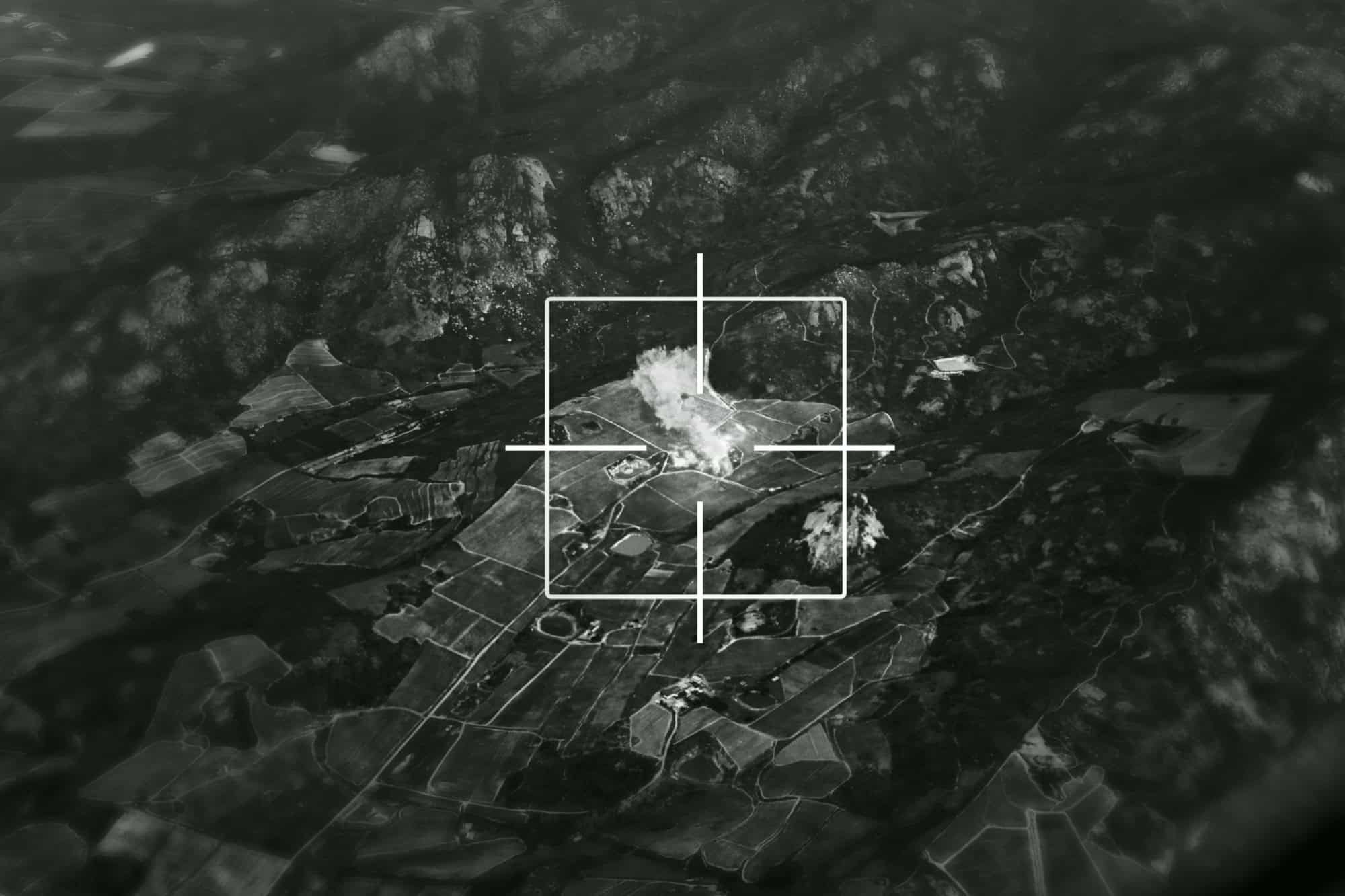
The drama began at Serpukhov-15, a secret command post not far from Moscow. This is where the Soviet Union’s space-based early-warning system was being monitored. It was called Oko, meaning “Eye”, and its job was simply to spot American missiles. That was it.
Just after midnight on September 26, 1983, the alarms began blaring because the system showed a single intercontinental missile lifting off from the U.S. A few seconds later, four more appeared. Five incoming weapons in total, apparently heading to Moscow.
Since the Oko system was fairly new & designed specifically to detect missile flame, any “missiles” it detected weren’t maybes. They read like solid hits. Seeing multiple missiles also fit the picture of a real attack. Sure, one blip you could shrug off as a glitch, but five together? Harder to ignore.
For anyone sitting in that bunker, it was the nightmare scenario they had trained for.
What stopped a retaliatory move
Normally, a report like that would’ve gone straight up the chain of command & led to a retaliatory launch. However, the officer on duty, Stanislav Petrov, didn’t buy it because he believed a real U.S. airstrike would involve more than five missiles.
So, he marked the alert as a probable false alarm. He waited for backup confirmation from radar. That never came because there was no attack, meaning nothing went any further.
At the time, Soviet command was designed for quick decisions, meaning that officials would likely have retaliated to the “threat” within minutes. That night, it didn’t happen because Petrov decided not to trust a single source of data.
The real “threat”

So what fooled the system? For starters, the first-generation Oko satellites had strengths & weaknesses. They could pick up the bright flames of rockets against the black of space. But they were vulnerable to reflections from the Earth’s atmosphere.
Later investigations found that the “missiles” were a mix of bad luck & physics. Sunlight reflecting off high-altitude clouds lined up just right with the satellites’ view, which were in what’s called Molniya orbits. From that angle, the reflections tricked their infrared sensors.
The software didn’t help either because it made the signals look stronger than they were. As such, the system ended up “seeing” missiles that didn’t exist.
The aftermath

The incident stayed secret for years. Unfortunately, inside the Soviet chain of command, they refused to celebrate Petrov & instead criticized him for not logging everything perfectly. But his choice not to rush a report may have kept the world from a very different outcome.
Petrov himself didn’t talk much about what happened that night. He lived in a small apartment outside Moscow & kept to himself. His son Dmitry later explained that the family only pieced it together well after the Soviet Union had fallen & stories about the false alarm began spreading.
According to Dmitry, Petrov never bragged about it. Why? Because his dad wasn’t interested in chasing awards or attention & honestly didn’t care for the sudden fame that came decades later. He cared more about his family & day-to-day life.
After the scare, the Soviets made changes to the satellite software & sensitivity settings so reflections wouldn’t trigger such strong alarms. They also put more effort into adding geostationary satellites. These were in different orbits that gave a clearer angle & made cross-checking easier.
But what if things had gone differently? That one false reading could have turned into something much worse. Thank goodness for hesitation.
Sources: Please see here for a complete listing of all sources that were consulted in the preparation of this article.
Like our content? Be sure to follow us.
