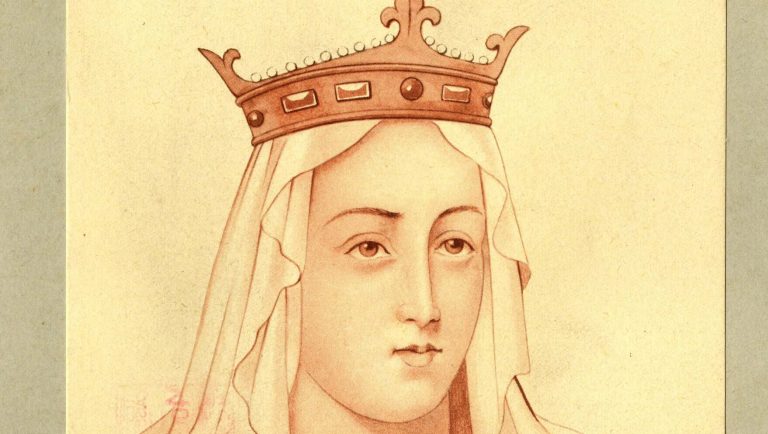

Although there are many happy stories of motherly love throughout history, some stories are much darker.
Theresa Knorr (born 1946)

California mother Theresa Knorr tortured many of her children for years during the 1980s. In 1984, Knorr shot her daughter Suesan. Suesan survived for some time before her infection set in and she succumbed to her wound. Knorr then had her sons bury her body, or else.
Knorr later sealed another daughter in a closet. Starvation and neglect were the cause of Sheila’s death while she was locked up. Years later Knorr’s remaining children contacted authorities and reported what had happened.
Knorr was eventually found guilty of murdering her two daughters. She was originally sentenced to death, however her sentence was later reduced to life in prison.
Empress Lü Zhi of the Han Dynasty (241–180 BC)

When Emperor Gaozu died, Lü Zhi became the power behind the throne and she tried to shield her son Emperor Hui from challenges to his throne.
Sources say that Lü had Gaozu’ son Liu Ruyi poisoned. She then proceeded to torture her mother-in-law Consort Qi. She had Qi’s limbs cut off, her eyes stabbed out and her tongue cut off.
Afterward, the brutalized Consort Qi was brought forth for Emperor Hui’s eyes. A gentle soul, seeing Qi in such a state, it’s said Hui broke down and essentially gave up on politics. He lived a life of overdrinking and women till he died just a few years later.
Mary Ann Cotton (1832–1873)

Mary Ann Cotton was a Victorian English serial killer. She was convicted of poisoning her stepson Charles Edward Cotton to death. She is suspected to have poisoned many other relatives including multiple husbands and children.
Historians believe anywhere up to 11 of her 13 children were victims of her murders, though the true number could be higher or lower. Many of the suspected murders were financially motivated where Cotton would gain access to money or insurance.
Given the high rates of infant mortality and the limited medical understanding of the era, certain suspicious fatalities were often dismissed as gastric fever. Cotton was arrested, found guilty, and hanged in 1873.
Marie Noe (1928–2016)

Marie Noe and her husband had ten children, with eight succumbing to what was then believed to be “sudden infant death syndrome” over a nineteen-year span. Marie was known for decades as a woman who lost most of her children to unexplained deaths as infants.
This case was reopened in the late 1990s, and Noe eventually confessed to smothering four of her children. She claimed to have no recollection of what happened to the other children who died. In 1999, she pled guilty to eight counts of second degree murder.
Instead of jail time, Marie was sentenced to 20 years probation. The first five years of her sentence involved house arrest.
Gertrude Baniszewski (1929–1990)

Gertrude Baniszewski was paid $20 a week in 1965 to babysit 16-year-old Sylvia Likens and her younger sister while their parents worked. Baniszewski started physically punishing Sylvia for not obeying and also brought her own children and neighborhood kids into it.
Sylvia was beaten, burned, tortured, starved and constantly humiliated until she died from her abuse and extreme malnutrition.
Gertrude Baniszewski was convicted of murder and received a life sentence. She was released on parole in 1985 and died four years later.
Queen Fredegund of Neustria (d. 597 AD)

Medieval sources depict Fredegund, queen of Neustria (ruling region of modern-day France), as a killer who ruthlessly seized and maintained power. One story alleges she murdered her daughter, Rigunth.
According to sixth-century historian Gregory of Tours, Rigunth and her mother fought over riches. Fredegund supposedly coaxed Rigunth closer to a chest and reach for the treasures within. As Rigunth leaned into the chest, Fredegund slammed the lid shut on her neck. When servants rushed in to help Rigunth, they reportedly found her dead.
However, much of what we know about Fredegund comes from Gregory of Tours, whose stories of incest and slaughter at the Merovingian court are better read as Medieval historical fiction than modern eye-witness journalism.
Gesche Gottfried (1785–1831)

Dubbed the “Angel of Bremen” by many in Bremen due to her devoted nature towards sick relatives and neighbors, Gesche Gottfried quietly murdered people by poisoning them with arsenic.
Eventually arrested, she confessed to murdering 15 people. These victims included her parents, brother, three children, two husbands, and other family members and acquaintances.
Many of her victims died violently and suddenly after becoming terribly ill. Gottfried’s outward compassion for her victims earned her many trusting friendships and relationships that were free of suspicion.
Historians are still unsure of her true motives. Although it has been suggested many times that money was the motivating factor and that she inherited from her victims, no single explanation fits all of Gottfried’s murders. Gottfried was executed in the town square of Bremen in 1831.
Magda Goebbels (1901–1945)

Married to Nazi propaganda minister Joseph Goebbels, Magda Goebbels was depicted by the Nazi party as the ideal German woman and mother. Magda and Joseph stayed with their six children in Hitler’s bunker in Berlin as the Second World War came to a close.
On May 1, 1945, Magda sedated each of her children before giving them cyanide in the bunker’s basement. The consensus among historical sources indicates that Joseph Goebbels, at his wife’s behest, carried out the killings of the children before they both took their own lives.
While there is disagreement among historians about who literally gave the children poison, Magda’s devotion to the Nazi party certainly contributed to her desire to stay with her husband and to kill their children rather than allow them to live in a world without Hitler.
Minnie Dean (1844–1895)

Minnie Dean was a “baby farmer” who collected unwanted or illegitimate babies from their mothers during the nineteenth century. Mothers would pay Dean to care for their children. Baby farming was not illegal, but suspicion surrounded Dean when babies she took from their mothers were reported missing or turned up dead.
In 1895, Dean was found guilty of the murder of baby Dorothy Carter. The prosecution presented a suspicious hatbox at trial, one Dean had used to transport an infant on a train journey previously. Later, the police uncovered the bodies of children who had been under Dean’s care.
Dean was executed by hanging in 1895, becoming the first and only woman in New Zealand to be legally executed. It is unclear how many babies died while in Dean’s care and if she killed them herself.
Stacie Parsons (born 1991)

Texas mother Stacie Parsons was sentenced to life for capital murder after strangling her four-year-old daughter Victoria Wyatt. The murder transpired in the wake of a heated exchange between Parsons and Gary Wyatt concerning their relationship and his stance on Victoria’s care.
Court documents state that Parsons hit Victoria, including placing a pillow on her face, prior to driving the child to a creek. Once there, she stabbed Victoria with a metal object, hit her head with a rock, and drowned her. Parsons placed the victim’s body in her trunk and drove to a police station, where she confessed to killing her daughter.
And Parsons was sentenced to life imprisonment without parole.
Waneta Hoyt (1946–1998)

Waneta Hoyt’s five children all died in infancy between 1965 and 1971. At the time, the children’s deaths were attributed to sudden infant death syndrome (SIDS) and the family participated in genetic research to determine whether SIDS might have a genetic basis.
Years later, Hoyt’s case was reopened and during interrogation she confessed to smothering all five children. Hoyt was convicted of five counts of second-degree murder and sentenced to 75 years to life in prison.
Hoyt later recanted her confession, which called into question both the methods used during the interrogation as well as the validity of her confession. The circumstances surrounding Waneta Hoyt’s case demonstrate that a confession or even a conviction doesn’t automatically resolve all uncertainties.
Queen Irene of Athens (c. 752–803 AD)
Irene of Athens began her reign as a regent to her young son Constantine VI. Later she assumed power for herself as ruler of the Byzantine Empire. As Constantine matured, disagreements surfaced between him and his mother regarding imperial authority.
The year 797 saw Constantine’s abduction by Irene’s followers inside the palace, leading to his blinding. Legend holds that his blinding took place in the Porphyra, the room reserved for the birth of Imperial heirs. Irene thereafter ruled the Byzantine Empire unopposed.
Not much is known about Constantine after this. Eventually he died, but there is some historical debate as to when he died and if his death could be attributed directly to his blinding.
Sources: Please see here for a complete listing of all sources that were consulted in the preparation of this article.
Like our content? Be sure to follow us.

