
Some of the strangest Christian hoaxes are the ones that managed to fool a huge number of people into thinking they were real, except they absolutely weren’t.
The voice nobody else could hear

Peter Popoff is a televangelist who claimed he could heal people with just a touch. Part of his trick involved him pointing to strangers and somehow knowing everything about them. He revealed their names and addresses, as well as medical problems, because God told him. But it was all fake.
Investigator James Randi was skeptical about the whole thing and launched an investigation into Popoff’s claims. Turns out, Popoff’s wife, Elizabeth, was feeding him the answers through a tiny receiver hidden in his ear. Randi’s team intercepted these radio messages during several rallies, and then they revealed the truth on The Tonight Show in April 1986.
There weren’t enough rooms

Christian televangelist Jim Bakker’s Heritage USA resort was pretty appealing. He claimed that you just had to pay $1,000 for a lifetime partnership, then you’d get a few nights’ lodging at his resort for the rest of your life. One offer was connected to the Grand Hotel. It was supposed to be limited to 25,000 partnerships.
Yet Bakker completely ignored that limit, and his organization sold as many as 66,683 instead. It sold around 153,000 partnerships across all of the lodging offers. The resort simply didn’t have enough rooms to honor all those promises, and federal prosecutors were forced to step in. Bakker was convicted in 1989 of fraud and conspiracy.
Twenty million viewers saw the wood

Some hoaxes were made for television, and The Incredible Discovery of Noah’s Ark was one of them. It was a special aired by CBS in 1993 and was watched by around 20 million Americans. It featured actor George Jammal showing off a piece of ancient wood. He talked about his journey climbing Mount Ararat in Turkey, where he’d found Noah’s Ark.
Except, none of it was true. Jammal later confessed that the piece of ‘ark wood’ was simply a bit of modern pine that he’d deliberately aged to look older. He never even climbed Mount Ararat, it was all a lie.
Heaven disappeared from the story

Six-year-old Alex Malarkey went through something unimaginable in 2004. He was involved in a car crash that left him badly injured and in a coma. Later, he shared his memories of being in a coma and how he’d supposedly visited Heaven. His story became the basis of The Boy Who Came Back from Heaven, and the 2010 book sold over a million copies.
But the truth came out in January 2015. Malarkey revealed that, actually, the whole Heaven part of his coma experience wasn’t true, and he hadn’t actually died. He had been in a coma, yes. But his trip to the afterlife was completely false.
The Satanist past didn’t add up

Mike Warnke had a story to tell that seemed almost too incredible to be real. It was. Warnke claimed in his best-selling book The Satan Seller to have been a high-ranking Satanist before seeing the truth and becoming a devout Christian. He even became a popular speaker on Satanism and the occult.
But Cornerstone magazine was suspicious of his claims, and it decided to investigate the case. It interviewed around 100 people and checked the historical record. What it found was that, actually, a lot of his claims didn’t add up, like his alleged Satanic rituals with Charles Manson. He’d actually been a Christian his entire life.
Four words caused an international stir

A tiny scrap of papyrus was all it took to create a huge religious argument in 2012. Harvard professor Karen King was presented with an ancient scrap that contained the words, ‘Jesus said to them, ‘My wife.’’ As you can probably imagine, that got people’s attention, as it seemed to be proof that Jesus had been married.
Early tests suggested the papyrus was old, too, and that only made it all seem more believable. But it wasn’t real. Yes, researchers noticed that the wording had an error that was suspiciously the same as a modern online version of the Gospel of Thomas. King conducted her own tests and said in 2016 that it was a forgery.
The famous inscription remains disputed
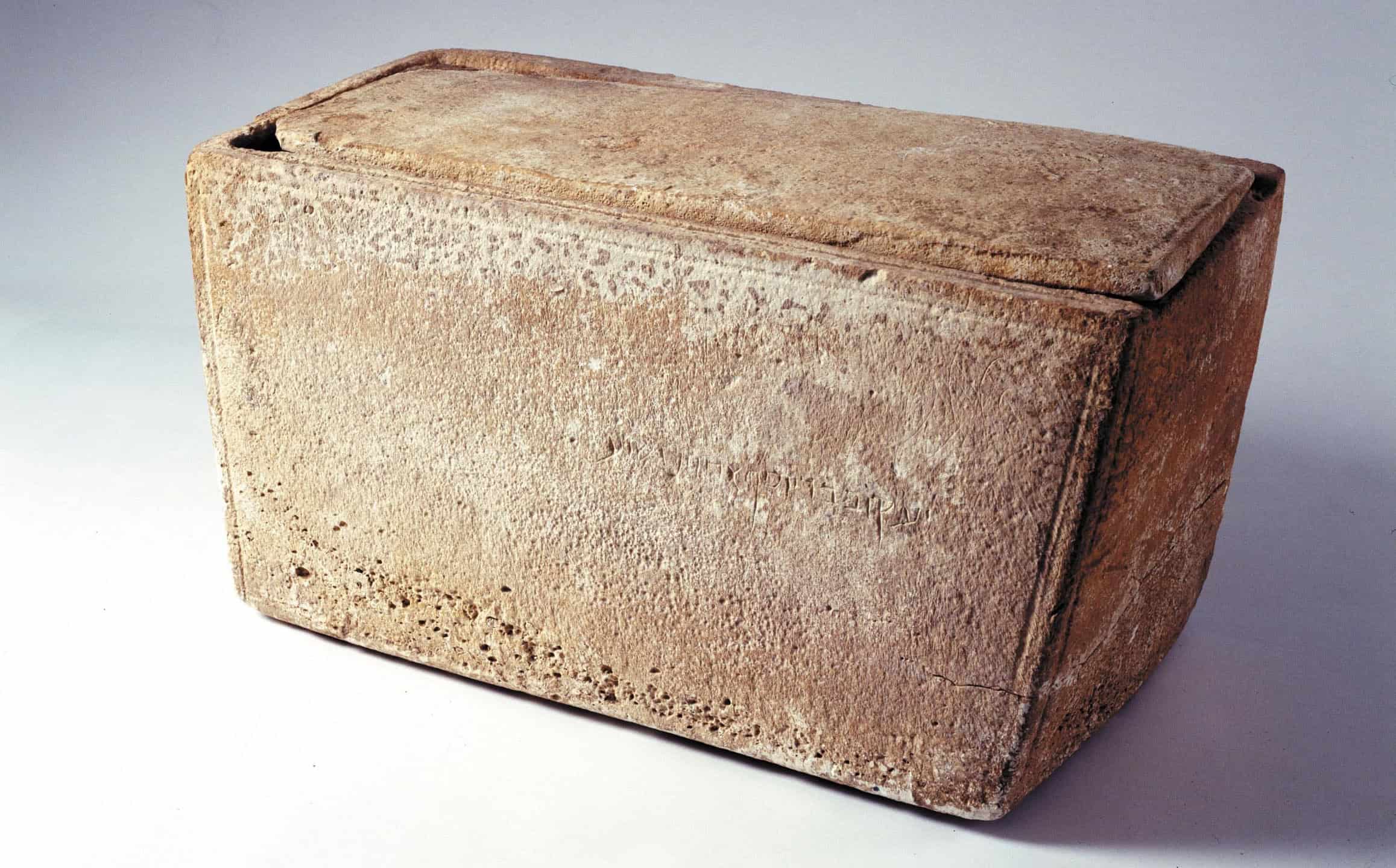
The James ossuary was something that really did look ancient, and that’s probably why people thought it was real. It was a seemingly old limestone burial box that had the inscription, ‘James, son of Joseph, brother of Jesus’ on it. To nobody’s surprise, the story about the box traveled the world in 2002.
Israeli antiquities experts, however, said that the inscription had been added to the box in modern times, although collector Oded Golan was acquitted of forgery charges in 2012. It’s a near-enough fact that the box is ancient. As for the inscription, well, most scholars think it’s not so old, although there are still some believers.
Famous names appeared on somebody else’s books

In 1926, a book collection named Lost Books of the Bible became pretty popular. It allegedly contained newly discovered works by Gospel writers Thomas and Peter. It seemed too good to be true, and it was.
The texts weren’t actually written by Thomas or Peter. No, they were what scholars call pseudepigraphal texts, or in other words, texts written under another person’s name. The writings themselves might be old, but the authorship isn’t real.
The footprints changed under scrutiny

The Paluxy River tracks near Glen Rose, Texas, were quite a big deal. At least, they were for a while. Dinosaur footprints had already been discovered there, and then there were some human ones nearby that looked around the same age. The discovery became supposed evidence that people and dinosaurs had walked around together.
All it took was a little examination to find that wasn’t true, though, as some of the ‘human’ prints were simply stretched-out dinosaur tracks. The toe marks had worn away. Some of the other human ones were simply natural shapes, or they’d been altered by determined creationists.
Michigan kept producing ancient strangers

Michigan was the place to be for ancient objects in the late 1800s. Digs revealed all sorts of incredible Biblical artifacts, including tablets, tools, and carved pieces. Together, these pieces seemed to show that Biblical figures had reached North America long before Columbus. Many people believed they were real. Catholic priest James Savage was one of them.
But researchers found signs that these pieces weren’t all that old, especially since they seemed to have modern saw marks on them. They were also made from commercially worked slate and appeared to have recent metalworking. James Scotford’s stepdaughter later revealed she’d seen him make relics. They were fake.
Sources: Please see here for a complete listing of all sources that were consulted in the preparation of this article.
10 things Christians are tired of hearing from outsiders

Talking about faith is made so difficult when you have to explain away the same distracting, overbearing caricatures before any real discussion can even start.
