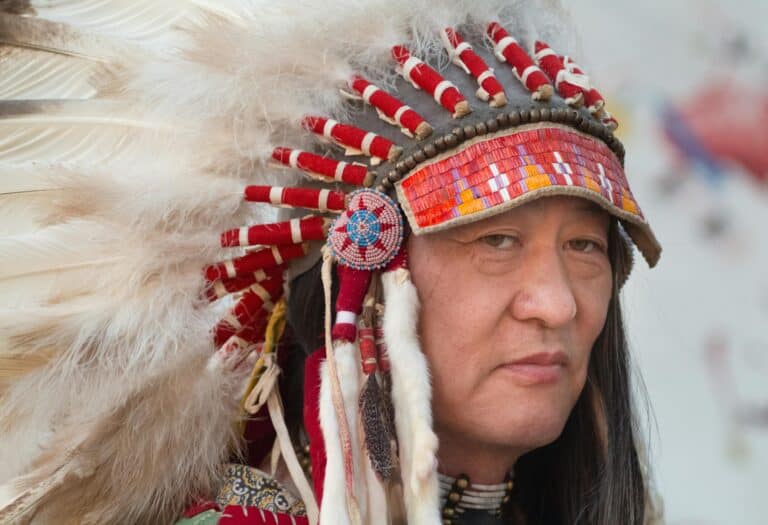

Native American history is more than simply the stories we learned in school as it also includes plenty of incredible facts that often go unnoticed. There are plenty of ancient cities & remarkable achievements that changed America long before the Europeans arrived! Here are eleven amazing facts about Native Americans that might surprise you and give you a new perspective on American history. It’s about time we showed some more appreciation for the rich cultures & histories of Native American communities.
Featured Image Credit: Pexels.
Ancient Villages Lie Beneath Los Angeles

Most people don’t realize that there’s an ancient village lying under the streets of modern Los Angeles—yes, really! It’s where the Gabrielino-Tongva people used to live and the village dates back thousands of years. Archeologists have found signs that point to these people having quite a sophisticated society, including trade networks reaching as far as Arizona & Baja California.
Oklahoma’s Name Comes from Choctaw Words

The state name “Oklahoma” comes directly from the Choctaw language—the word “okla” means “people” and “humma” means “red.” Together, they mean “red people,” and Choctaw Chief Allen Wright first suggested the name during treaty negotiations in 1866. It took until 1890 for the Oklahoma Territory to be established and for the government to officially adopt the name. These days, Oklahoma is home to 39 federally recognized tribes.
The Hopi Have Lived in the Same Place for Over a Thousand Years

The Hopi people have lived in northeastern Arizona for more than a millennium and they established the village of Oraibi around 1100 AD—it’s one of the oldest continuously inhabited settlements in the United States! Even all these years later, the Hopi have preserved their way of life, with the same ceremonies & traditions of days gone by. They also follow some of the same agricultural practices like dry farming and continue to live on their ancestral lands.
Ancient Puebloans Built Homes in Cliffs

In places like Mesa Verde, Colorado, the Ancient Puebloans built more than 600 huge homes into cliff faces. They did so between 1190 and 1300 AD and used sandstone, mortar & wooden beams to build structures that include one-room houses and multi-story complexes. Some of them have over 150 rooms! The most famous is Cliff Palace, which archeologists believed was once an important cultural & administrative center for the community.
Cahokia Was a Massive Ancient City

There used to be a huge city near what’s now St. Louis called Cahokia and, around 1250 AD, it had a population larger than London at the time. The city had giant earthen mounds and a complex society with trade networks stretching across the continent, which was why Cahokia was so important for culture & commerce in North America. Today, we only have the monumental structures that continue to fascinate archeologists.
Mount Rushmore Is on Sacred Land

Mount Rushmore might be one of the most famous American landmarks, but most people don’t realize it’s actually carved into the Black Hills of South Dakota, a sacred region for the Lakota Sioux and other tribes. In the 1868 Treaty of Fort Laramie, the U.S. government promised the Black Hills to the Lakota people, but they broke the treaty after discovering gold in 1874. The tribes have fought hard to have the land returned, yet nothing has really changed.
Iroquois Confederacy Influenced the U.S. Constitution

The Iroquois Confederacy (also known as the Haudenosaunee) was a powerful alliance of six Native American nations and was a kind of government system that was created long before European contact. It included a democratic council where each nation had a voice and founding Fathers like Benjamin Franklin & Thomas Jefferson studied the Confederacy’s Great Law of Peace. It’s where they got their ideas for federalism, checks and balances and representative government!
Native Americans Have a Strong Tradition of Military Service

Native Americans have served in the U.S. military at a higher rate per capita than any other ethnic group, with thousands of them taking part in almost every major conflict. In World War II alone, an estimated 44,000 Native Americans served our country and many of them have been recognized with medals & honors for their bravery. They’ve contributed quite a bit to our nation’s defense!
Many Native American Languages Are Endangered

Today, people still speak over 175 Native American languages but many are critically endangered—some languages have only a few fluent speakers left, most of whom are elders in the community. Linguists are trying to protect these languages through immersion schools and language classes, as well as documentation projects. Organizations and tribes are also working together to make sure they can pass on their languages to future generations.
The Zuni Language Stands Alone

Speaking of language, the Zuni people of New Mexico speak a language isolate, which means it’s not related to any other known language—even though linguists have studied Zuni quite a lot! The Zuni people have made contact with other tribes & cultures but their language has remained relatively unique for over 7,000 years. It’s an important part of their heritage that they continue to use in their daily life & ceremonies.
Sequoyah Created a Writing System for the Cherokee Language

Sequoyah was a Cherokee silversmith who, in the early 1800s, developed a unique writing system for his people—even though he couldn’t read or write English! He invented the Cherokee written language and made it possible for the Cherokee Nation to read & write in their own language. Thanks to Sequoyah, many Cherokee people became literate and they even published the Cherokee Phoenix in 1828, the first Native American newspaper in America.
Disclaimer: This list is solely the author’s opinion based on research and publicly available information.
Like our content? Be sure to follow us on MSN.


