

Faking that you’re a member of the royal family should be hard. And it is. But that didn’t stop one Tournai teenager called Perkin Warbeck, who walked into royal courts across Europe & told royals that he was the lost Prince of England. Surprisingly, he convinced some rather powerful people to support him.
How? Why? And what were the consequences of this? Let’s take a look.
Featured Image Credit: Shutterstock.
Key takeaways
You’ll learn about:
- How Warbeck went from a Flemish nobody to a “royal”
- Why rulers in Burgundy & Scotland believed him
- What went wrong in his English landings & marches
- How he was eventually exposed
Who he said he was

Originally, Perkin Warbeck claimed he was Richard, Duke of York. Richard was one of the two famous Princes in the Tower, two heirs to the British throne who vanished from the Tower of London in 1483.
If Warbeck’s claims were true, that would’ve made him the rightful heir of the House of York. But in reality, he was almost certainly no prince at all. He was an imposter who knew how to work a crowd. Records from the time, along with his later “confession,” point to the fact that he had a Flemish upbringing, not an English royal childhood.
Where he actually came from
So what were Warbeck’s real roots? Well, far more ordinary.
He was born around 1474 in Tournai, a busy cloth town in modern-day Belgium, and his family background was modest. Accounts describe him as the son of a local man named Jehan de Werbecque.
By his teens, Perkin had gone from merchant household to merchant household & picked up skills that would help him seem more noble than he actually was. This included learning languages & courtly manners. Later, he’d use these skills to pull off his big masquerade.
How the claims began
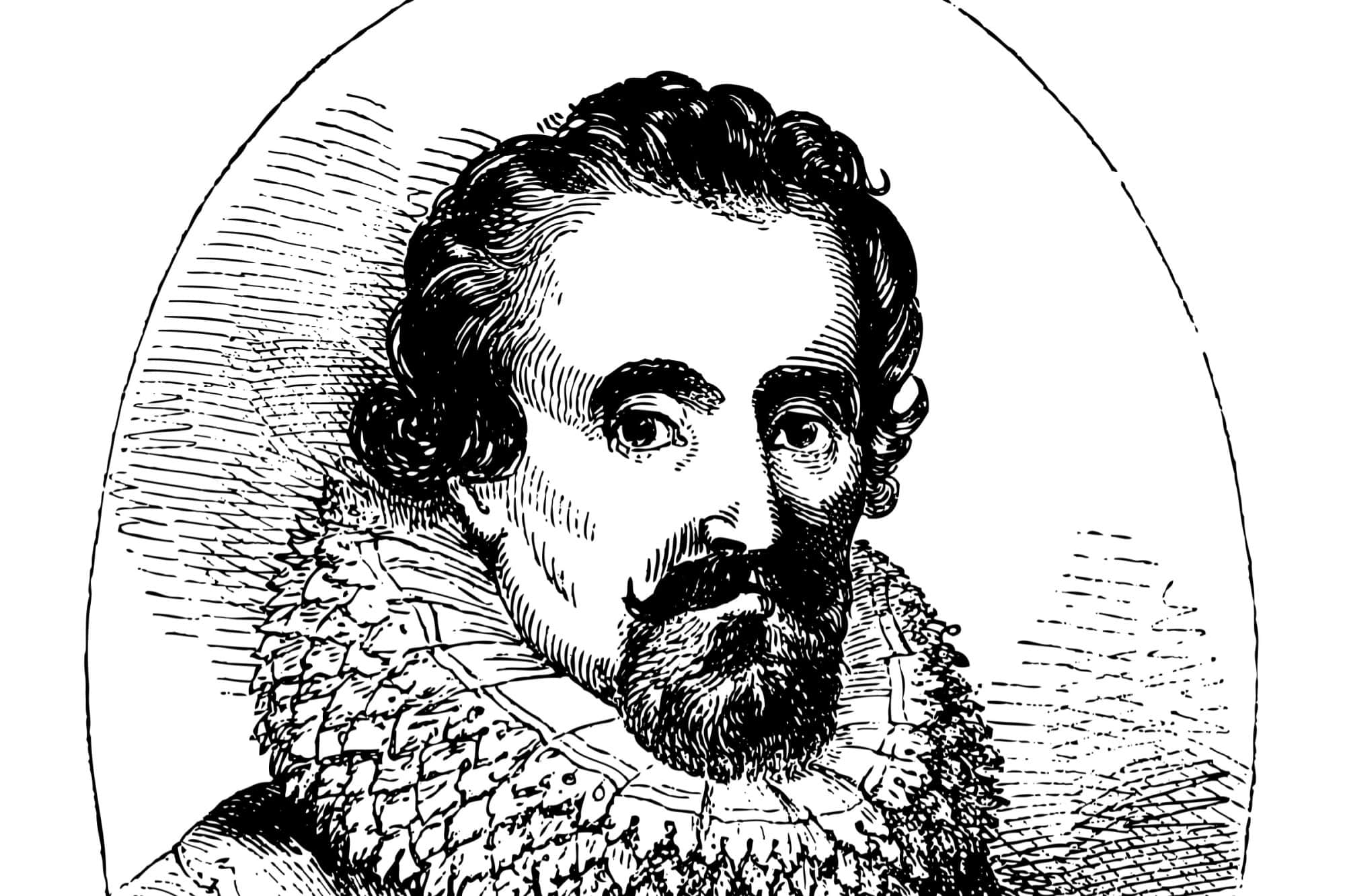
At some point, Warbeck decided that he was Richard, Duke of York. And he didn’t keep this idea to himself.
By 1491, Margaret of York, the Dowager Duchess of Burgundy (part of modern-day France), believed his claims. She was the sister of Edward IV & Richard III. Soon enough, Margaret embraced Warbeck as her long-lost nephew & such support gave him a lot of credibility in Yorkist circles.
Maximilian I, King of the Romans, also believed him. Convincing people as powerful as these two about his claims gave Warbeck the money & stage to play prince. And that he did.
His next big break came in 1495 when he headed north to Scotland. King James IV of Scotland welcomed him warmly & even gave him a royal bride by the name of Lady Catherine Gordon. She was the daughter of a powerful Scottish earl. Now, Warbeck looked more legitimate than ever.
In September 1496, he marched with Scottish forces into northern England, although the locals didn’t exactly rise up in his favor. Warbeck did manage to do some raiding. But the Scots pulled back & the invasion fizzled.
England clamps down on Burgundy
Not everyone was so blind to Warbeck’s claims, though. King Henry VII of England slapped trade sanctions on Burgundy, which put a lot of pressure on its merchants. This kind of economic squeeze led to a treaty called the Intercursus Magnus (1496). It restored trade between England and Burgundy, yet also forced Burgundy to stop openly backing Warbeck.
They agreed. Without this massive support, Warbeck’s campaign lost a major lifeline.
But that wasn’t all. After Scotland’s opinion changed on him, Warbeck tried one last push. He landed in Cornwall in September 1497 & hoped that the anger from a recent tax revolt would convince people to support him. He picked up followers & marched on Exeter. He even pressed toward Taunton.
His forces were no match for the real royal troops. As soon as he met them, his support melted away & Warbeck fled. He was cornered at Beaulieu Abbey before officially surrendering.
Why he never made it
There are a few main reasons why he never actually made it to the throne. These included:
- He lacked strong noble backing
- His foreign friends didn’t fully support him
- Every campaign collapsed
While some powers did support him, many English lords weren’t willing to risk their lands & lives on Warbeck. Then, Burgundy stepped back after the treaty & Scotland lost interest after the failed raid.
In 1495, Warbeck tried to land in Kent, England & tried fighting off Henry VII’s troops. He failed. A year later, he tried to do the same thing in Northumberland but also failed. Then again, in 1497, in Cornwall. Can you guess what happened? Yes, another failure, one that led to him surrendering.
After the surrender
At first, Henry tried a softer approach by parading Warbeck at court, almost like a curiosity. But then Warbeck tried to escape. This led to Henry locking him up in the Tower of London. One thing Warbeck’s lies proved was that the Tudor dynasty was willing & able to weather a pretender.
In November 1499, Warbeck was executed at Tyburn, while his wife, Catherine Gordon, was treated kindly. She lived out her days in England under royal protection. After all, she had had nothing to do with Warbeck’s lies. Gordon remarried three more times before dying in 1537. She had no children
Sources: Please see here for a complete listing of all sources that were consulted in the preparation of this article.
Like our content? Be sure to follow us.
- Letter from London to the Duke of Milan, 24 Aug. 1497
- A New Transcription and Translation of Pedro de Ayala’s 1498 Letter
- The ‘Masked Comedian’: Perkin Warbeck’s Adventures in Scotland and England from 1495 to 1497
- Chivalry, British sovereignty and dynastic politics: undercurrents of antagonism in Tudor-Stewart relations, c.1490-c.1513
- Eight Lives of Remarkable English and Scots Women from the Reigns of Henry VI to Henry VII by Petruccio Ubaldini

