It’s weird but some authors have an uncanny ability to predict the future in their novels, although they’re not necessarily magicians. No, they’re just able to observe the world & imagine where we might end up. Let’s look at eight classic novels that got it eerily right. These stories are proof that, sometimes, fiction is just as weird as the truth!
Featured Image Credit: Pexels.
“1984” by George Orwell
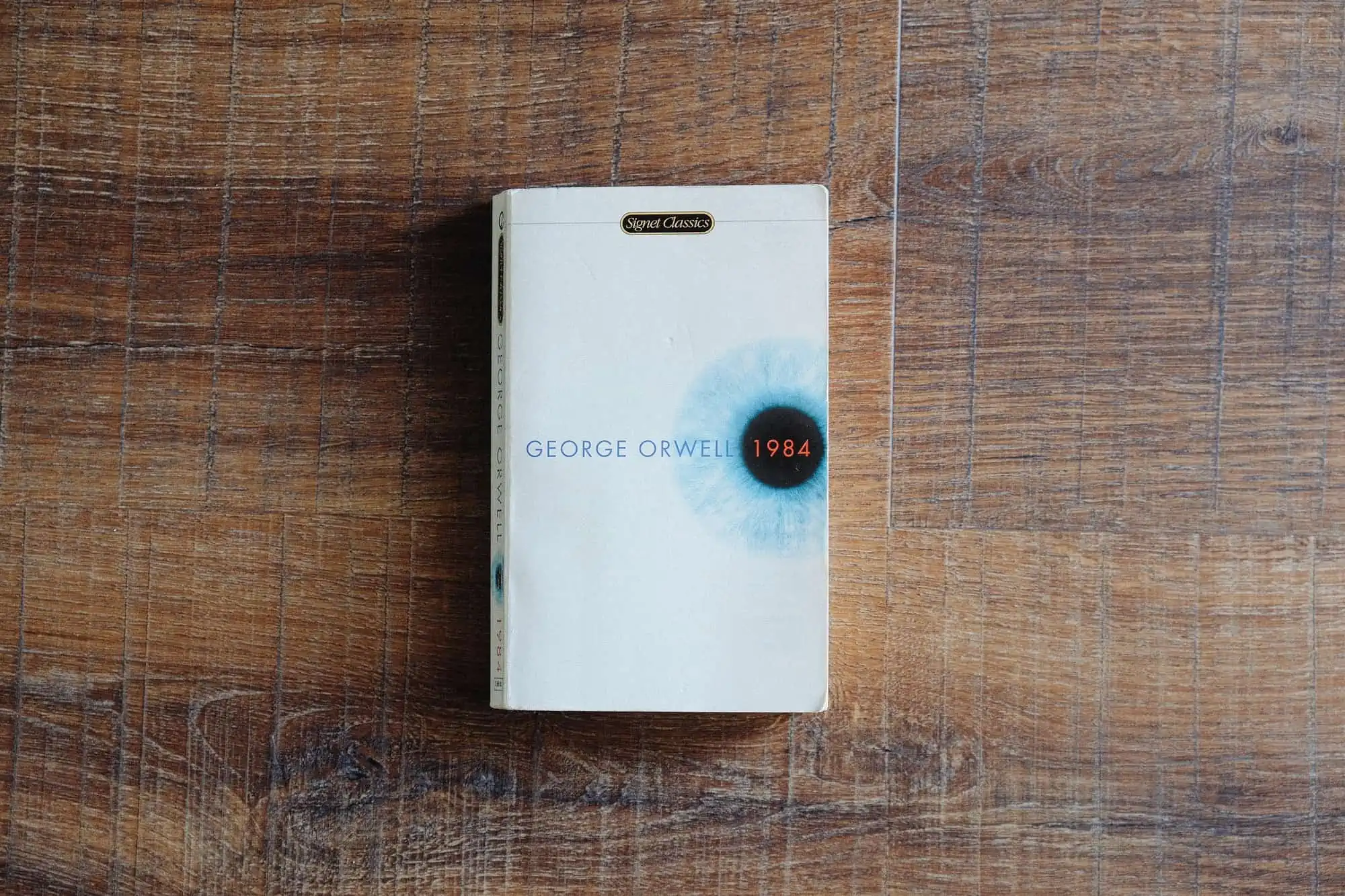
Written in 1949, “1984” shows a world filled with government surveillance—“Big Brother” is always watching. That’s not so different from today as cameras are on every street corner and data tracking at every click. Orwell might have seemed a bit paranoid back then but he was onto something big about privacy concerns in a society driven by technology.
“Brave New World” by Aldous Huxley

Huxley imagined a future where babies are made in labs and society is controlled by addictive happiness drugs. Sounds familiar? Today’s technological advances in genetic engineering & the opioid crisis mean that Huxley’s predictions don’t seem so far off. His novel’s discussion on how much science should mess with nature is a pretty relevant one.
Like our content? Be sure to follow us.
“Fahrenheit 451” by Ray Bradbury

Bradbury’s 1953 novel imagined wall-sized TVs and earbuds—back then, black-and-white TVs were still a luxury! His main worry was that society would choose technology over books, which he felt would create a culture of superficiality. Looking at how things are now with streaming binges and our short attention spans, Bradbury wasn’t too far off the mark.
“The Machine Stops” by E.M. Forster

“The Machine Stops” is a short story from 1909 that eerie predicted both the internet & our reliance on it. Forster described a world where people live alone and communicate through screens. In fact, they barely ever leave their homes. His story has become the blueprint for our modern life—especially during the pandemic.
“Neuromancer” by William Gibson

Before the internet was even a word, Gibson’s 1984 novel “Neuromancer” introduced the idea of a digital society connected by computers. Essentially, it was his version of cyberspace. His vision included hackers and a network of information that people could use. It’s as real today as the physical world around us.
“Stand on Zanzibar” by John Brunner

In 1969, Brunner wrote about the year 2001 and predicted we’d be living on a crowded planet with giant corporations running the show and influencing government decisions. He also wrote that mood-enhancing drugs would become widely popular. Today, his words seem more accurate than ever.
“The World Set Free” by H.G. Wells

In 1914, Wells predicted the future again when he wrote a weapon that could devastate cities with nuclear reactions. His book came decades before the actual development and use of nuclear weapons in World War II. Somehow, Wells understood the potential for both the energy & danger of splitting the atom and wanted to warn the world about it.
“Looking Backward: 2000-1887” by Edward Bellamy

Bellamy’s 1888 novel “Looking Backward: 2000-1887” spoke about a society driven by convenience and people using things very similar to credit cards. He imagined a future where people would use a single card instead of cash to buy things. His predictions about a cashless society? Way too real.
Disclaimer: This list is solely the author’s opinion based on research and publicly available information.
Like our content? Be sure to follow us.
Read More: