
Who is Katherine Johnson, Rosalind Franklin, Jane Goodall? These women may not always be front and center, but they are all genuinely amazing scientists. They broke barriers, both social & professional, and made discoveries that altered history. From cracking the codes of DNA to space exploration, they left a mark that is irreversible on our perception of the world. So let’s dig a little deeper and learn about 10 amazing women scientists whose discoveries made the world change.
Featured Image Credit: Wikimedia Commons.
Rosalind Franklin: The Woman Who Saw DNA
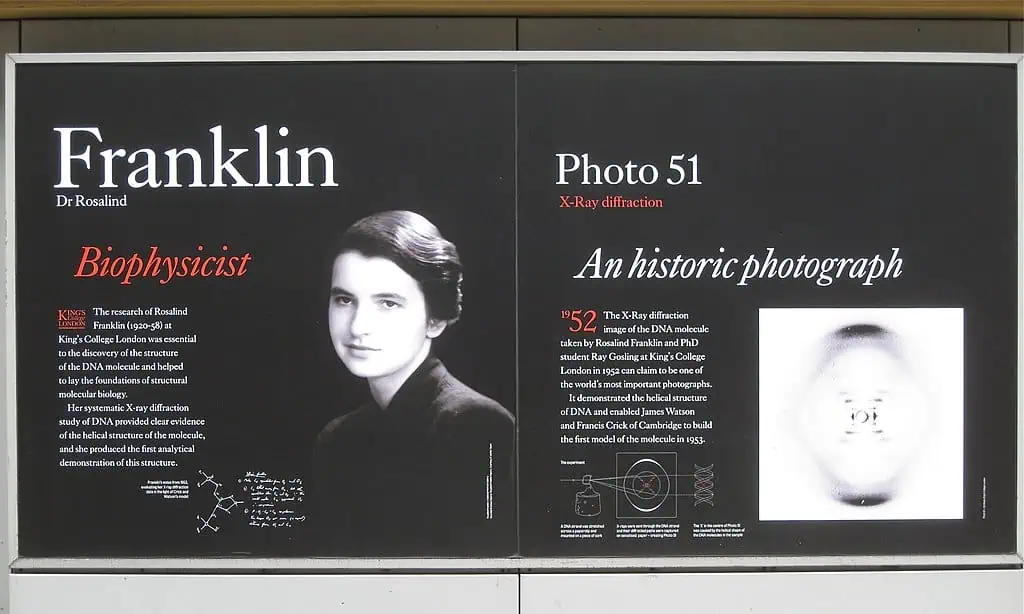
Rosalind Franklin was one of the first people to figure out the structure of DNA, but she wasn’t appreciated enough while she was alive. Franklin scanned DNA with X-ray crystallography to take the iconic photo that revealed DNA’s double-helix structure, which Watson and Crick would go on to complete. She’s the woman who cracked the genetics code, and now she’s regarded as a founding figure of molecular biology. We’d have such different concepts of genetics and inheritance without her work.
Katherine Johnson: NASA’s Human Calculator

Katherine Johnson was a mathematician genius who made calculations to launch astronauts to the moon. Her calculations were critical to determining flight paths, launch windows and landing areas for the Apollo missions. Johnson’s work made the early space program successful, and she’s frequently hailed as a model for African American women in science and technology. Her tale went viral when the movie Hidden Figures revealed her marvelous works to a wider audience.
Like our content? Be sure to follow us.
Ada Lovelace: The First Computer Programmer

The first computer programmer in the world was Ada Lovelace – though her time was before the age of computers. She’d spent time with Charles Babbage on his mechanical computer, the Analytical Engine, and saw how it could do more than just computations. The machine’s power had impressed Ada, who wrote the first algorithm for a machine. Her visionary work became the basis of computing, and her vision remains the source of technology to this day.
Marie Curie: The Nobel Prize Pioneer

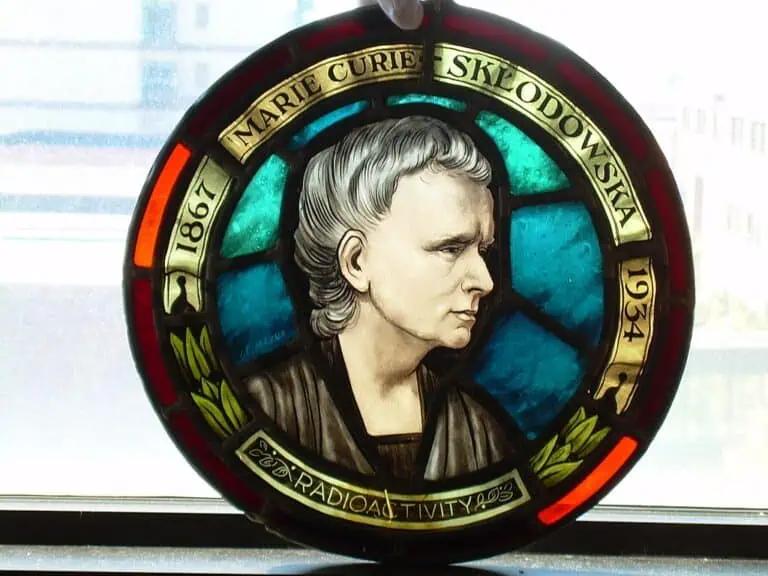
Marie Curie is one of the greatest scientists ever. She was the first woman to win a Nobel Prize and is the only person to ever have won two Nobel Prizes in two different sciences – Physics and Chemistry. Her seminal studies of radioactivity defined science and medicine. From Curie came X-ray machines, cancer cures, even nuclear power. She became a scientist icon, and her legacy continues to inspire scientists to this day.
Jane Goodall: The Chimpanzee Whisperer

The most famous of these was Jane Goodall’s chimpanzee research that revolutionized our perceptions of animal behavior and human evolution. She studied chimpanzees in Tanzania for years, and she found that they could make and use tools – something that was once thought to be limited to humans. Goodall’s work changed primatology and dismantled centuries-old assumptions about human-animal distinctions.
Barbara McClintock: The Gene Jumper

Barbara McClintock was a first-generation geneticist who came across “jumping genes” (transposons) – moving genes in an organism’s DNA. Her studies transformed genetics and evolution completely. She received the 1983 Nobel Prize in Physiology or Medicine for finding that genes are not really so static after all. Her results opened new research windows and revolutionized the field of genetics today.
Rachel Carson: The Nature Protector

Rachel Carson is perhaps best known for Silent Spring, which warned the world of the dangers of pesticides (most notoriously DDT) and the damage they do to wildlife, particularly birds. Her work inspired the environmental movement, and eventually made policy changes – such as the decriminalization of DDT. Carson’s books helped publicize the delicate connection between people and nature, and she became a voice in environmental conservation.
Mae Jemison: Breaking Barriers in Space

It was in 1992 that Mae Jemison became the first African American woman to go into space. Doctor and engineer by training, Jemison was called by NASA to crew the Space Shuttle Endeavour. Her scientific and racial frontier crossings compelled a new generation of scientists, engineers and astronauts.
Dorothy Hodgkin: Molecule Mapper

Dorothy Hodgkin was a chemist and the first British woman to win the Nobel Prize in Chemistry in 1964. She used X-ray crystallography to map the structures of important molecules such as penicillin and vitamin B12. Hodgkin’s discoveries paved the way for many subsequent developments in medical science and drug discovery.
Lise Meitner: The Unsung Physicist of Nuclear Fission

Lise Meitner was an Austrian-Swedish physicist who discovered nuclear fission, the process driving nuclear reactors and atomic bombs. She didn’t receive the Nobel Prize, which was awarded to her male co-worker Otto Hahn, despite her involvement in the team that had discovered it. Even so, Meitner’s theory was crucial to the theory of nuclear fission. She was later acknowledged, and she’s still venerated today as one of the great figures in the history of nuclear physics.
Disclaimer: This list is solely the author’s opinion based on research and publicly available information.
Like our content? Be sure to follow us.
Read More: