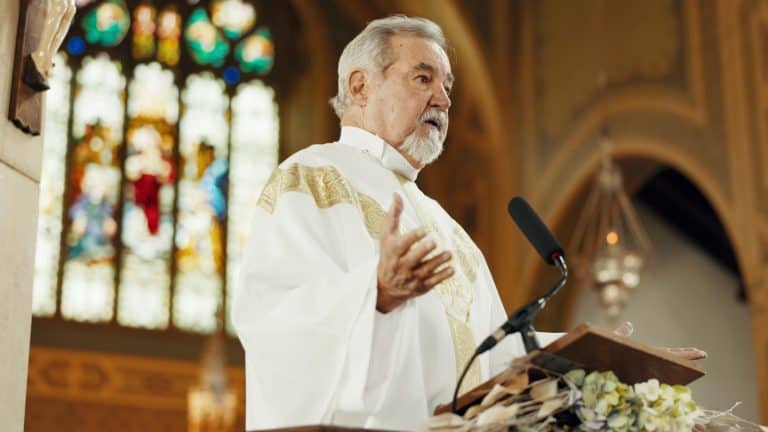

A lot of church ideas feel biblical, but they really aren’t, and here are nine of these common beliefs that don’t actually appear in Scripture.
It sounds familiar

People have repeated the saying ‘cleanliness is next to godliness’ for many generations, and it’s something that you’ll likely hear in a lot of Christian settings. It sounds like it came straight from the Bible. But it isn’t.
The truth is, it comes from an eighteenth-century sermon by John Wesley, which helped the phrase to stick in church culture and become something that sounds biblical. Yet Scripture doesn’t actually talk about cleanliness in the same way that a lot of churchgoers believe it does. That’s not to say you shouldn’t keep your home clean, but it’s not a biblical command.
It got a name later

You might be surprised to learn that Genesis doesn’t include any mention of what kind of fruit Eve gives to Adam, and it’s only ever described as being a ‘fruit.’
The idea of it being an apple came much later. In fact, it’s due to interpretations of the Bible and art, especially in the West, that we associate apples with the forbidden fruit.
The image of the apple has been repeated so often in churches, and children’s materials make it seem like Genesis must explicitly talk about it. There’s also the wordplay side of things.
In Latin, ‘malum’ means evil and also ‘apple,’ and that helped to reinforce the connection between the two in medieval Europe.
It became a fixed number
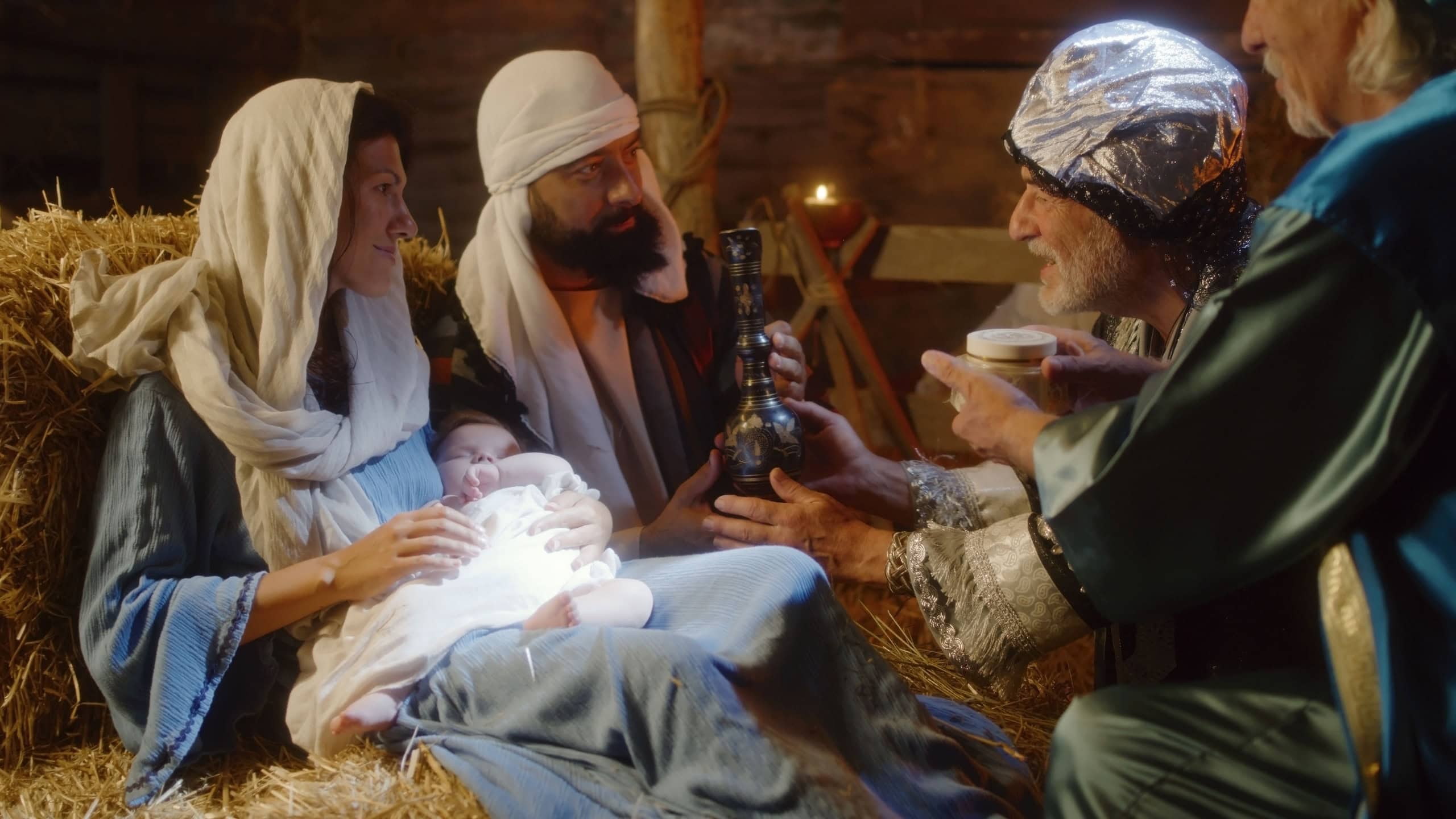
A lot of Christians show three wise men during the nativity, yet Matthew never gives a number of how many there actually were. Instead, he talks about there being ‘Magi from the east,’ as well as three gifts of gold, frankincense, and myrrh. People in the West took the number of gifts to mean that there were three wise men.
But over in a lot of Eastern traditions, there’s a different number entirely, and some early Christian art actually shows groups ranging from two to twelve visitors. Church retellings eventually simplified the scene over time by settling on three wise men, even though that number never appears in the Bible.
It landed on a date

Speaking of the nativity, December 25th is the church calendar date for Christmas, despite the fact that Scripture never gives Jesus’s birthdate. It wasn’t even common for early Christians to celebrate His birth at first.
Only much later did churches fix December 25th as the supposed day when Jesus was born, which became the standard across the religion.
The date became formally recognized by the fourth century and became generally recognized. In fact, some historians believe that religious leaders chose December 25th because it aligned with existing Roman festivals like Saturnalia or Sol Invictus. The season of Jesus’s birth is never specified.
It picked up a gatekeeper

It’s thanks to cartoons that we have the image of Peter standing at heaven’s gate, deciding who gets in, and church culture tends to repeat it.
Yes, Revelation does describe pearly gates, but Peter is never mentioned as being the doorman, and such an image grew from the mention of Peter receiving the ‘keys of the kingdom.’
Christian art and storytelling helped to popularize the idea of saints like Peter being at the entrance to heaven. Now, a lot of Christians have that image in their heads when they think of heaven, despite there being no basis for it in Scripture.
It gets taught as the final destination

You’ll probably hear the same thing in a lot of churches about heaven. They’ll tell you it’s where everyone good ends up going, but take a look at Revelation 21 and you’ll see something rather different. The Bible talks about a new heaven and a new Earth, with the New Jerusalem coming down to the planet.
There’s no mention of people leaving permanently to go to heaven.
Scholars like N. T. Wright have repeatedly pointed out this fact and how early Christians were focused on resurrection and renewal over anything else. They didn’t believe that good humans were going to escape to heaven forever.
It’s often described as a place of torment underground

On the opposite side is hell, a place traditionally seen as full of fire and punishment, deep below everything else. It’s quite a common image to hear in sermons and see in Christian art.
But in the Bible, there are several terms that are used to talk about hell, including Sheol, Hades, and Gehenna, none of which mean the same thing.
Gehenna referred to an actual valley outside Jerusalem, while Hades was a more generic term that referred to the realm of the dead.
The idea of hell as an underground place came later from different interpretations, and Christian teaching over time also helped with this.
It arrived with a list

Christian or not, you can probably rattle off the seven deadly sins without thinking too much about it, and many churches would have you believe that there’s a list of these sins in Scripture. There isn’t.
In reality, the idea of the seven deadly sins came from Pope Gregory I in the sixth century, and Thomas Aquinas later adjusted it slightly, too.
The Bible does talk about each of the sins as being transgressions, but there’s never an explicit grouping of them as a fixed set of seven. We have art and religious teaching to thank for that number.
It’s treated as the standard weekly day

Sunday is the Sabbath for a lot of Christians, no questions asked, but the truth is that it’s not that way in the Bible. Scripture states that the Sabbath is the seventh day, and according to the original Jewish calendar, that would’ve been Saturday. Just take a look at Exodus 20:8-11 for more proof.
Early Christians met on the first day of the week, with one of the prime examples being in Acts 20:7, yet there’s no mention in the New Testament of Sunday being the Sabbath.
It’s a change that came from church habits settling into a weekly pattern, focused on Sunday gatherings.
Sources: Please see here for a complete listing of all sources that were consulted in the preparation of this article.
11 biblical warnings about the church that are coming true

Highlights New Testament warnings about declining commitment, external pressure, and internal challenges within churches that remain relevant today.

