

Aside from the Bible stories we’ve all heard a thousand times, Scripture is filled with some of the most practical lessons on how we should treat each other and live with integrity.
Scriptures like these aren’t interested in simply telling you to do good. Rather, they reflect the complexities of our behavior towards others when we think no one is watching. Here are seven obscure Bible passages that will change the way you see the world.
Elijah and the widow’s last meal

(1 Kings 17:8–16)
It happened during a famine when Elijah encountered a widow. She was boiling the ashes of sticks to have just enough flour and oil for one last meal for her son and herself. She intended to eat the meal and then die because there would be nothing left.
Elijah asks her to “feed him first.” That’s harsh, right? You have a widow with nothing in the world and he says, “Feed me first.” It was that ultimatum that caused her to either trust her human instincts or take that huge leap of faith.
This isn’t coming from someone who had excess laying around. He’s asking her to give up the very last meal she needs to survive.
The deepest level of trust is shown when we face complete loss. God will ask you for obedience before you’re comfortable. Sometimes he asks you for the very thing you fear losing the most so he can show you who truly provides it.
David spares Saul’s life in the cave
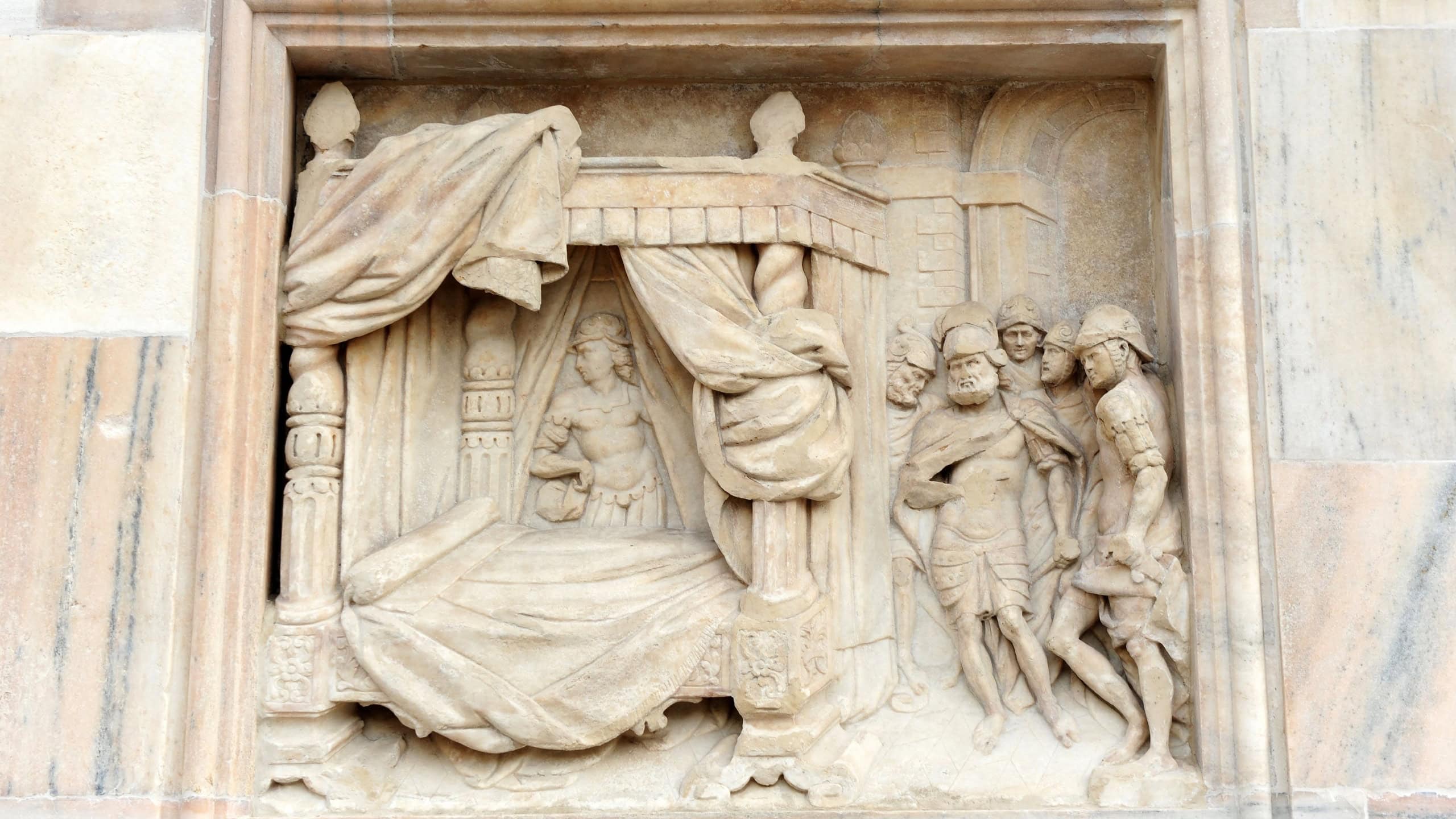
(1 Samuel 24)
King Saul entered a dark cave at En Gedi, completely unaware that David was lurking nearby in the shadows, mere inches away. His intention was to rest, as David’s men prodded him to kill his pursuer right there and then.
It would’ve been perfect, David thought to himself; he could end the king’s pursuit and never have to live one day on the run. David approached Saul and sliced off the corner of his robe without waking him.
But as soon as David did it, he knew it was wrong. He instantly regretted his actions, because even disobeying and disrespecting the king God had appointed over him was simply not acceptable.
David redefines heroism. We praise our heroes who take action, but David showed strength in his inaction. Just because he had the opportunity to better his own life, didn’t mean he was allowed to take someone else’s life to do it.
Gehazi’s secret greed turns into leprosy

(2 Kings 5:20–27)
Even though he had just performed a huge miracle and healed the Syrian commander Naaman from leprosy, Elisha refused any money or gifts. Gehazi, however, wasn’t about to let that wealth drive away from his doorstep. He ran after Naaman’s chariot, lied about having students in town who needed supplies, and took the silver and costly clothing for himself.
When he returned, Elisha confronted him, revealing that his spirit had gone with him and seen the whole transaction. From that moment forward, Naaman’s leprosy clung to Gehazi.
Don’t let this be you. Despite standing close to God’s most extraordinary work on Earth, you can still maintain a corrupt heart.
Zacchaeus pays back four times what he took

(Luke 19:1–10)
Zacchaeus moves beyond legal debt repayment to demonstrate lavish restitution towards others. First century tax collectors were viewed as traitors who were getting rich off of their own people’s poverty. The religious tax law allowed for a 20% confession rate interest. Zacchaeus took it upon himself to pay out a 400% penalty.
He showed that restoration is better than requiting the law. When our hearts experience transformation our financial decisions will reflect that change. Zacchaeus went from draining his community to restoring it.
Shunammite woman’s silence before God

(2 Kings 4:8–37)
She did not go crazy and began screaming at the heavens when her son died. She didn’t negotiate for anything. She quietly went to Elisha.
Can you imagine the dignity she displayed? Even in her sadness she continued pressing toward her goal. It was all about persistence. There are times in life when screaming and shouting cease to get results and it just takes a quietly determined soul to never give up.
Pilate’s wife warned him in a dream

(Matthew 27:19)
In the middle of Jesus’ trial, the Bible records an interesting statement: Pilate’s wife sends him a message telling him not to harm Jesus. She said Jesus was an “innocent man” because she dreamed about him and had bad dreams.
It is historically accurate that Roman wives could travel with their husbands, meaning she was present in the palace at this time. The story uses this Roman woman to show that even a pagan recognized Jesus’ innocence while the religious leaders who knew him the best still demanded his execution.
Jesus and the coin in the fish’s mouth

(Matthew 17:24–27)
One might assume Jesus would hold firm against paying temple tax since he was exempt as Son of God. He didn’t protest or blow up about what he deserved. He simply dealt with it. Interestingly enough, he didn’t wave his magic wand and poof up a coin. He told Peter to go fishing.
Peter possessed fishing skills and discovered the precise amount he needed in his first catch.
The fact that Peter found a four-drachma coin in the mouth of the very first fish he caught illustrates that God’s provision can be outrageously specific. The divine provision usually arrives to support us in our exact places of work alongside our unique talents.
Sources: Please see here for a complete listing of all sources that were consulted in the preparation of this article.
Like our content? Be sure to follow us.

